


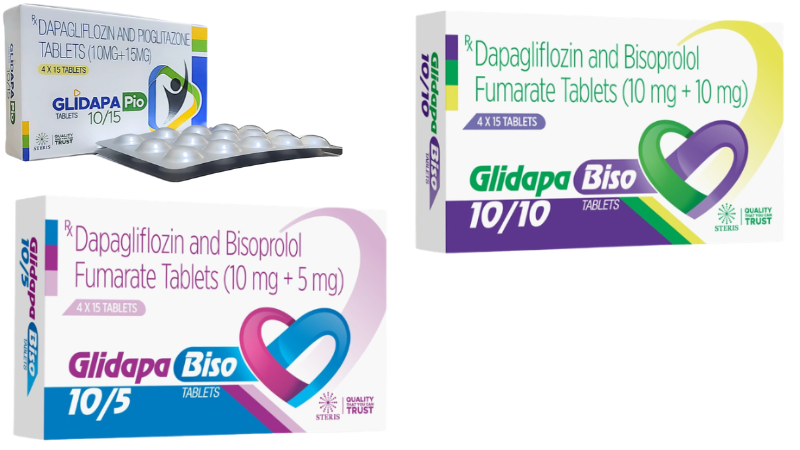


Dapagliflozin 10 mg Combinations: Uses, Benefits & Side Effects | GLIDAPA PIO & GLIDAPA BISO
Nov 28, 2026
Diabetes and cardiovascular diseases are two major health challenges affecting millions of people worldwide. Type 2 diabetes can increase the risk of cardiovascular complications, while conditions such as heart failure and hypertension require carefully selected treatments to support heart function and overall health. Modern pharmaceutical treatments increasingly focus on medicines that target different biological pathways to address specific patient requirements.
Dapagliflozin 10 mg is an established medicine belonging to the sodium-glucose cotransporter-2 (SGLT2) inhibitor class. It works by reducing glucose reabsorption in the kidneys, increasing glucose elimination through urine. In addition to its glucose-lowering action, dapagliflozin has demonstrated important clinical benefits in selected patients with heart failure and chronic kidney disease.
Steris Healthcare Pvt. Ltd. presents two combination product ranges featuring dapagliflozin:
-
GLIDAPA PIO: Dapagliflozin 10 mg + Pioglitazone 15 mg.
-
GLIDAPA BISO: Dapagliflozin 10 mg + Bisoprolol Fumarate 5 mg.
-
GLIDAPA BISO: Dapagliflozin 10 mg + Bisoprolol Fumarate 10 mg.
These combinations have different therapeutic purposes and should not be considered interchangeable.
-
GLIDAPA PIO combines two antidiabetic medicines to support blood glucose management in appropriate adults with type 2 diabetes mellitus.
-
GLIDAPA BISO combines an SGLT2 inhibitor with a beta-blocker for the management of eligible patients with heart failure with reduced ejection fraction (HFrEF), according to the relevant approved indication.
The Central Drugs Standard Control Organisation (CDSCO) lists approvals for dapagliflozin 10 mg + pioglitazone 15 mg for type 2 diabetes and dapagliflozin 10 mg + bisoprolol fumarate 5 mg and 10 mg for HFrEF.
CDSCO+1
1. What Is Dapagliflozin?
Dapagliflozin is an oral prescription medicine classified as an SGLT2 inhibitor. It acts on the sodium-glucose cotransporter-2 protein, which is primarily responsible for reabsorbing filtered glucose in the kidneys.
By inhibiting this transporter, dapagliflozin allows more glucose to pass into urine rather than returning to the bloodstream.
Its main pharmacological effects include:
-
Reducing renal glucose reabsorption.
-
Increasing urinary glucose elimination.
-
Supporting blood glucose control in type 2 diabetes.
-
Producing mild osmotic diuresis.
-
Supporting treatment of eligible patients with heart failure.
-
Reducing the risk of certain adverse kidney outcomes in approved patient populations.
3. GLIDAPA PIO: Dapagliflozin 10 mg + Pioglitazone 15 mg
What is GLIDAPA PIO used for?
GLIDAPA PIO contains dapagliflozin 10 mg and pioglitazone 15 mg. It is a combination of two antidiabetic medicines that work through different mechanisms to improve blood glucose regulation.
According to the CDSCO's published list of approved fixed-dose combinations, dapagliflozin 10 mg + pioglitazone 15 mg is indicated for adults with type 2 diabetes mellitus inadequately controlled on earlier metformin-containing monotherapy.
Mechanism of action of dapagliflozin
Dapagliflozin inhibits the SGLT2 transporter in the kidneys.
This action:
-
Reduces glucose reabsorption.
-
Increases glucose elimination through urine.
-
Helps reduce elevated blood glucose.
-
Produces a mild diuretic effect.
Mechanism of action of pioglitazone
Pioglitazone belongs to the thiazolidinedione (TZD) class of antidiabetic medicines.
It activates peroxisome proliferator-activated receptor gamma (PPAR-γ), a nuclear receptor involved in regulating glucose and lipid metabolism.
Its actions include:
-
Improving insulin sensitivity in peripheral tissues.
-
Increasing insulin responsiveness in muscle and adipose tissue.
-
Reducing insulin resistance.
-
Helping reduce excessive glucose levels.
-
Improving glycaemic control over time.
Pioglitazone does not directly stimulate insulin secretion.
Why combine dapagliflozin and pioglitazone?
The two medicines target different mechanisms involved in type 2 diabetes.
Complementary mechanism of GLIDAPA PIO
Dapagliflozin
Increases glucose elimination through the kidneys.
Pioglitazone
Improves insulin sensitivity in body tissues.
Different pathways of glucose regulation
Improved glycaemic control
This combination may offer additional glucose-lowering support for appropriately selected adults with type 2 diabetes.
4. Key Benefits of GLIDAPA PIO
When prescribed to suitable patients, Dapagliflozin 10 mg + Pioglitazone 15 mg may offer the following therapeutic benefits.
1. Complementary glucose-lowering action
Dapagliflozin increases urinary glucose elimination, while pioglitazone improves insulin sensitivity. Their different mechanisms can provide additional glycaemic control.
2. Support for HbA1c management
Both medicines help reduce elevated blood glucose through different biological pathways. Regular HbA1c testing helps determine treatment effectiveness.
3. Improved insulin sensitivity
Pioglitazone helps body tissues respond more effectively to insulin, supporting glucose utilisation.
4. Reduced glucose reabsorption
Dapagliflozin reduces the reabsorption of filtered glucose in the kidneys, increasing glucose excretion.
5. Potential weight-related effects
Dapagliflozin may contribute to modest weight reduction. However, pioglitazone can cause weight gain and fluid retention. Therefore, the overall weight effect varies between individuals.
6. Additional treatment option
The combination provides another treatment approach for eligible patients whose type 2 diabetes remains inadequately controlled on previous therapy.
Important safety consideration
Pioglitazone carries a boxed warning in US prescribing information concerning congestive heart failure. It can cause or worsen heart failure through fluid retention. Combining it with dapagliflozin does not eliminate this risk. Patients with heart failure or a history of fluid retention require careful medical assessment.
5. GLIDAPA BISO: Dapagliflozin 10 mg + Bisoprolol Fumarate 5 mg and 10 mg
What is GLIDAPA BISO used for?
GLIDAPA BISO is a combination of dapagliflozin and bisoprolol fumarate.
Unlike GLIDAPA PIO, which is intended for type 2 diabetes management, GLIDAPA BISO is associated with heart failure management.
The combination brings together:
-
Dapagliflozin 10 mg, an SGLT2 inhibitor.
-
Bisoprolol fumarate 5 mg or 10 mg, a selective beta-1 adrenergic receptor blocker.
Understanding heart failure with reduced ejection fraction
Heart failure with reduced ejection fraction is a condition in which the heart's left ventricle cannot pump blood as effectively as it should.
The ejection fraction (EF) represents the percentage of blood pumped out of the left ventricle with each heartbeat. In HFrEF, this measurement is generally 40% or lower.
Common symptoms include:
-
Breathlessness during physical activity.
-
Difficulty breathing when lying flat.
-
Swelling in the feet, ankles, or legs.
-
Persistent tiredness and weakness.
-
Reduced exercise tolerance.
-
Rapid or irregular heartbeat in some patients.
-
Sudden weight gain due to fluid accumulation.
Mechanism of action of dapagliflozin in heart failure
Dapagliflozin works through SGLT2 inhibition and produces several physiological effects relevant to heart failure.
These include:
-
Increasing urinary glucose excretion.
-
Promoting sodium and fluid excretion.
-
Producing mild osmotic diuresis.
-
Reducing certain measures of cardiac congestion.
-
Supporting heart failure treatment independently of its glucose-lowering effect.
Its benefits in heart failure are not limited to patients who have diabetes. Dapagliflozin has demonstrated clinical benefits in eligible patients with and without type 2 diabetes.
Mechanism of action of bisoprolol fumarate
Bisoprolol is a cardioselective beta-1 adrenergic receptor blocker.
It acts primarily on beta-1 receptors in the heart, reducing the effects of sympathetic nervous system stimulation.
Its actions include:
-
Reducing heart rate.
-
Decreasing myocardial oxygen demand.
-
Reducing certain effects of excessive sympathetic activity.
-
Supporting blood pressure control.
-
Helping improve cardiac function over time in appropriately treated patients with chronic HFrEF.
Bisoprolol is generally introduced at a low dose in heart failure and gradually increased under medical supervision as tolerated.
Why combine dapagliflozin and bisoprolol?
Both medicines act on different physiological pathways relevant to heart failure.
Complementary actions of GLIDAPA BISO
Dapagliflozin
Supports heart failure management through SGLT2 inhibition and fluid-related effects.
Bisoprolol
Reduces excessive heart-rate stimulation through beta-1 blockade.
Different cardiovascular mechanisms
Heart failure treatment support
6. Difference Between GLIDAPA PIO and GLIDAPA BISO
|
Parameter |
GLIDAPA PIO |
GLIDAPA BISO |
|---|---|---|
|
Composition |
Dapagliflozin 10 mg + Pioglitazone 15 mg |
Dapagliflozin 10 mg + Bisoprolol 5 mg or 10 mg |
|
Main therapeutic area |
Type 2 diabetes |
Heart failure |
|
Drug classes |
SGLT2 inhibitor + TZD |
SGLT2 inhibitor + beta-blocker |
|
Main action |
Glucose regulation and insulin sensitivity |
Heart failure management and heart-rate regulation |
|
Important risk |
Fluid retention and heart failure worsening |
Bradycardia and hypotension |
7. Clinical Evidence and Efficacy
The therapeutic rationale behind the GLIDAPA combinations is supported by clinical evidence for their individual ingredients and relevant combination studies.
Evidence for dapagliflozin
Dapagliflozin has been studied extensively in patients with type 2 diabetes, heart failure, and chronic kidney disease.
The DAPA-HF trial evaluated dapagliflozin in patients with heart failure and reduced ejection fraction. It demonstrated a reduction in the risk of worsening heart failure or cardiovascular death compared with placebo when added to standard therapy.
The DELIVER trial also demonstrated benefits in patients with heart failure and mildly reduced or preserved ejection fraction.
These studies established the role of dapagliflozin in a broad range of heart failure populations.
Evidence for pioglitazone
Clinical studies have demonstrated that pioglitazone improves insulin sensitivity and supports glycaemic control in adults with type 2 diabetes.
It can contribute to HbA1c reduction when used appropriately. However, its potential to cause fluid retention, oedema, and heart failure worsening is an important treatment limitation.
Evidence for bisoprolol
Bisoprolol is an established beta-blocker used in chronic heart failure management.
The CIBIS-II study demonstrated that bisoprolol, when added to standard therapy in eligible patients with chronic heart failure, reduced all-cause mortality compared with placebo.
Evidence for the combinations
The evidence supporting each combination must be interpreted separately:
-
The dapagliflozin-pioglitazone combination has an approved Indian FDC indication for selected adults with type 2 diabetes inadequately controlled on earlier metformin-containing therapy.
-
Dapagliflozin and bisoprolol are recognised heart failure treatment components, and their 10 mg + 5 mg and 10 mg + 10 mg FDC strengths appear in the CDSCO approved FDC list.
-
Evidence for the individual ingredients does not mean that every clinical outcome has been independently demonstrated for every branded fixed-dose product.
8. Possible Side Effects of GLIDAPA PIO
Dapagliflozin and pioglitazone can produce side effects. Their occurrence and severity vary between patients.
Common or recognised adverse effects
1. Increased urination
Dapagliflozin increases urinary glucose excretion and may increase urination frequency.
2. Genital fungal infections
Glucose in urine can increase the risk of genital fungal infections, causing itching, redness, irritation, or discomfort.
3. Urinary tract infections
Some patients may experience urinary discomfort, urgency, or frequent urination.
4. Fluid retention
Pioglitazone can cause fluid retention, which may lead to swelling in the ankles, feet, or legs.
5. Weight gain
Pioglitazone may cause weight gain through fluid retention and changes in body fat distribution.
6. Hypoglycaemia
The risk can increase when these medicines are used alongside insulin or insulin-releasing antidiabetic medicines.
Serious side effects
-
Worsening or new-onset heart failure.
-
Severe oedema or fluid accumulation.
-
Diabetic ketoacidosis.
-
Serious urinary or genital infections.
-
Bone fractures, particularly with prolonged pioglitazone exposure in susceptible patients.
-
Bladder cancer-related precautions associated with pioglitazone prescribing information.
-
9. Possible Side Effects of GLIDAPA BISO
The adverse effects of GLIDAPA BISO are related to dapagliflozin and bisoprolol.
Common side effects
Dapagliflozin-related:
-
Increased urination.
-
Genital fungal infections.
-
Urinary tract infections.
-
Thirst.
-
Bisoprolol-related:
-
Slow heart rate (bradycardia).
-
Tiredness.
-
Dizziness.
-
Low blood pressure.
-
Cold hands and feet.
-
Gastrointestinal discomfort.
-
Serious side effects
-
Severe symptomatic bradycardia.
-
Significant hypotension.
-
Worsening heart failure during inappropriate initiation or dose changes.
-
Diabetic ketoacidosis.
-
Severe dehydration.
-
Acute kidney injury associated with volume depletion.
-
Serious genitourinary infections.
-
10. Dosage Guidelines and Administration
The dosage of GLIDAPA PIO and GLIDAPA BISO must be determined by a qualified healthcare professional according to the approved product information and the patient's medical condition.
GLIDAPA PIO dosage considerations
GLIDAPA PIO contains:
-
Pioglitazone 15 mg.
-
The prescriber should consider the patient's HbA1c, previous antidiabetic treatment, kidney function, fluid-retention risk, and history of heart failure.
Pioglitazone may take several weeks to achieve its full glucose-lowering effect. Patients should not increase the dose independently.
GLIDAPA BISO dosage considerations
GLIDAPA BISO is available in the following compositions supplied in your brief:
Product
Composition
GLIDAPA BISO
Dapagliflozin 10 mg + Bisoprolol 5 mg
GLIDAPA BISO
Dapagliflozin 10 mg + Bisoprolol 10 mg
Bisoprolol treatment in HFrEF generally starts at a low dose and is gradually titrated according to heart rate, blood pressure, symptoms, and tolerability.
The 5 mg and 10 mg combinations should not be viewed as automatic starting doses. A patient who requires gradual bisoprolol titration may need separate tablets or another prescribed regimen.
General administration precautions
-
Follow the prescription and product-specific instructions.
-
Take the medicine at the recommended time.
-
Do not change the dose without medical advice.
-
Maintain adequate hydration unless fluid restriction has been prescribed.
-
Do not discontinue bisoprolol suddenly.
-
Attend scheduled blood pressure, heart rate, kidney function, and other recommended monitoring appointments.
-
11. Precautions and Warnings
Before starting either combination, the patient's medical history and current medicines should be reviewed.
Precautions for GLIDAPA PIO
Heart failure: Pioglitazone can worsen heart failure due to fluid retention. Patients with current or previous heart failure require careful assessment.
Kidney function: Dapagliflozin requires assessment of renal function before and during treatment. Its suitability depends on the clinical indication and eGFR.
Liver disease: Pioglitazone treatment requires consideration of liver health and liver enzyme monitoring when clinically appropriate.
Pregnancy: Diabetes treatment during pregnancy requires specialist medical advice. These combinations should not be used without an appropriate assessment.
Bladder cancer history: Patients with a history of bladder cancer should discuss pioglitazone suitability with their doctor.
Oedema: New or worsening swelling requires medical evaluation.
Precautions for GLIDAPA BISO
Low heart rate: Bisoprolol reduces heart rate and may cause excessive slowing in susceptible individuals.
Low blood pressure: Both dapagliflozin-related fluid loss and bisoprolol's blood-pressure-lowering effects may contribute to dizziness or hypotension.
Kidney impairment: Dapagliflozin requires appropriate kidney-function assessment.
Respiratory conditions: Although bisoprolol is relatively beta-1 selective, caution is required in patients with asthma or certain obstructive airway conditions.
Diabetes: Beta-blockers may mask some warning symptoms of hypoglycaemia, particularly a rapid heartbeat.
Peripheral circulation: Patients with certain peripheral vascular disorders may require additional monitoring.
Abrupt discontinuation: Bisoprolol should not be stopped suddenly without medical supervision because this can worsen cardiac symptoms.
12. Drug Interactions
Both combinations require a review of medicines being taken concurrently.
GLIDAPA PIO interactions
Medicine or category
Important consideration
Insulin
Increased risk of fluid retention and hypoglycaemia
Sulfonylureas
Increased risk of hypoglycaemia
Diuretics
Potential changes in fluid balance
Gemfibrozil
May increase pioglitazone exposure
Rifampicin
May reduce pioglitazone exposure
Alcohol
May increase metabolic risks, including ketoacidosis risk in susceptible patients
GLIDAPA BISO interactions
Medicine or category
Important consideration
Other beta-blockers
Increased risk of excessive beta blockade
Verapamil or diltiazem
Increased risk of bradycardia and conduction problems
Digoxin
May increase the risk of bradycardia
Other antihypertensives
Increased risk of hypotension
Diuretics
Increased risk of volume depletion and electrolyte disturbances
Insulin and sulfonylureas
Beta-blockers may mask some symptoms of hypoglycaemia
Patients should provide their complete medication list to their healthcare professional before starting treatment.
13. Who Should Avoid These Medicines or Use Them With Caution?
The suitability of treatment depends on individual health conditions.
Condition
Important consideration
Severe dehydration
Dapagliflozin may increase fluid-loss risks
Diabetic ketoacidosis
Dapagliflozin should not be used during active ketoacidosis
Symptomatic heart failure
Pioglitazone may worsen fluid retention and heart failure
Severe bradycardia
Bisoprolol may be unsuitable
Certain heart blocks
Bisoprolol requires careful assessment and may be contraindicated
Severe hypotension
GLIDAPA BISO may worsen low blood pressure
Significant kidney impairment
Dapagliflozin suitability must be assessed
Pregnancy
Specialist treatment assessment is necessary
The exact contraindications must be checked against the approved prescribing information of the particular medicine.
14. Lifestyle Recommendations for Better Treatment Outcomes
Medicines are an important part of managing diabetes and heart failure, but lifestyle practices and regular medical monitoring also contribute to long-term health.
For patients with type 2 diabetes
-
Follow a balanced diet with controlled carbohydrate intake.
-
Include fibre-rich vegetables and appropriate protein sources.
-
Limit sugary beverages and highly processed foods.
-
Maintain regular physical activity.
-
Monitor blood glucose as recommended.
-
Attend routine HbA1c assessments.
-
Maintain a healthy body weight.
-
For patients with heart failure
-
Follow the prescribed fluid and salt recommendations.
-
Monitor body weight regularly.
-
Report sudden weight gain or increasing swelling.
-
Avoid excessive alcohol consumption.
-
Follow an appropriate physical activity plan.
-
Take prescribed medicines consistently.
-
Attend regular cardiology appointments.
-
Frequently Asked Questions
Q1. What is GLIDAPA PIO used for?
GLIDAPA PIO contains Dapagliflozin 10 mg and Pioglitazone 15 mg. It is used for prescribed management of type 2 diabetes in eligible patients.
Q2. What is the composition of GLIDAPA PIO?
It contains Dapagliflozin 10 mg and Pioglitazone 15 mg.
Q3. How does Dapagliflozin 10 mg + Pioglitazone 15 mg work?
Dapagliflozin increases glucose elimination through urine, while pioglitazone improves insulin sensitivity in body tissues.
Q4. What are the main benefits of GLIDAPA PIO?
Its complementary mechanisms may provide additional blood glucose control in appropriately selected adults with type 2 diabetes.
Q5. Can GLIDAPA PIO be used for heart failure?
Pioglitazone can cause fluid retention and worsen heart failure. GLIDAPA PIO should not be considered a heart failure treatment.
Q6. What is GLIDAPA BISO?
GLIDAPA BISO is the product name supplied for the combination of Dapagliflozin 10 mg and Bisoprolol Fumarate.
Q7. What is the composition of GLIDAPA BISO 5 mg?
It contains Dapagliflozin 10 mg and Bisoprolol Fumarate 5 mg.
Q8. What is the composition of GLIDAPA BISO 10 mg?
It contains Dapagliflozin 10 mg and Bisoprolol Fumarate 10 mg.
Q9. What is Dapagliflozin 10 mg + Bisoprolol Fumarate used for?
The combination is indicated in the relevant Indian FDC approval for patients with heart failure with reduced ejection fraction.
Q10. How does dapagliflozin help patients with heart failure?
Dapagliflozin produces physiological effects through SGLT2 inhibition, including increased urinary glucose and sodium excretion, and has demonstrated benefits in eligible heart failure populations.
Q11. How does bisoprolol help the heart?
Bisoprolol blocks beta-1 receptors, reducing heart rate and excessive sympathetic stimulation. It is used in appropriately selected patients with chronic heart failure
-
For Further More Information:
Mail Us: contact@sterispharma.com or info@sterispharma.com
Call Now: +918824175417, +919982524671
Recent Post
Acotiamide 300 mg: Uses, Benefits, Dosage, Side Effects & Precautions
Dapagliflozin + Metformin SR Tablets: Uses, Benefits & 4 Strengths | GLIDAPAFLOZIN MET
Dapagliflozin 5 mg & 10 mg Tablets – Uses, Benefits | GLIDAPAFLOZIN
Obeticholic Acid 10mg: Liver-Related Uses, Risks and Safety Information

Multi-Ingredient Face Wash: Benefits of Niacinamide, Glycolic Acid and Salicylic Acid
Venlafaxine 37.5 mg: Uses, Benefits, Side Effects & Precautions
Glimepiride 0.5mg: Uses, Blood Sugar Control and Possible Side Effects
Linagliptin 5mg and Metformin Hydrochloride SR 500mg for Type 2 Diabetes
Eperisone Hydrochloride and Paracetamol Tablets: Uses, Benefits, Dosage
Phenoxymethylpenicillin Potassium 250 mg: Benefits, Safety and Common Side Effects