


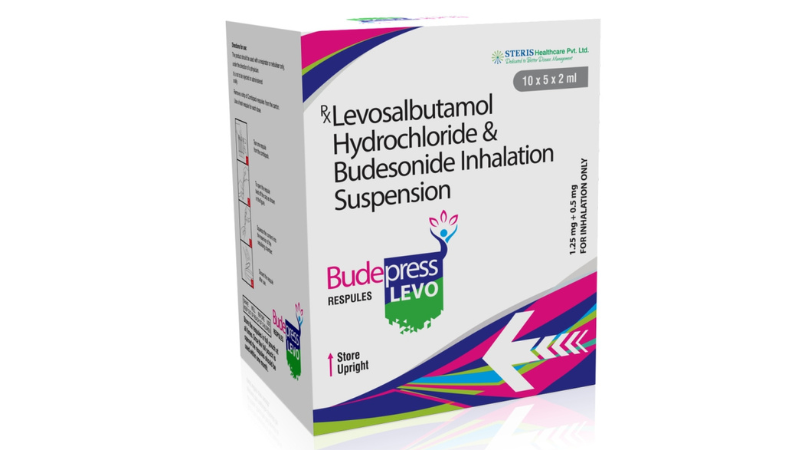


R.S. BUDEPRESS LEVO :Uses, Benefits, Side Effects, Price, Composition and More...
Jul 22, 2024
R.S. BUDEPRESS LEVO, manufactured by Steris Healthcare, is a combination nebulizer suspension containing Levosalbutamol Hydrochloride 1.25 mg and Budesonide 0.5 mg, designed for the management of bronchial asthma and Chronic Obstructive Pulmonary Disease (COPD). This dual-action respiratory formulation is administered via a nebulizer, delivering medication directly to the airways for rapid and effective symptom relief. Levosalbutamol hydrochloride is a fast-acting bronchodilator that relaxes constricted airway muscles, while budesonide is an inhaled corticosteroid that reduces airway inflammation over time. Together, this levosalbutamol hydrochloride and budesonide inhalation suspension addresses both the immediate breathing difficulty and the underlying inflammatory process that drives recurrent respiratory symptoms, making it a widely used levosalbutamol budesonide nebulizer solution in both hospital and home-care respiratory management.
Why It's Important
Asthma and COPD are among the most prevalent chronic respiratory conditions worldwide, and in India specifically, rising pollution levels, seasonal allergen exposure, and respiratory infections contribute to frequent acute exacerbations. When airway inflammation and bronchospasm are left inadequately treated, patients face an increased risk of severe asthma attacks, COPD exacerbations, hospitalization, and progressive decline in lung function over time. This is where the combination approach of levosalbutamol hydrochloride and budesonide nebulizer suspension becomes clinically significant—using a bronchodilator alone provides only short-term symptom relief without addressing the chronic inflammatory component, while using budesonide (an inhaled corticosteroid) alone does not offer the fast bronchodilation needed during acute breathlessness.
R.S. BUDEPRESS LEVO's dual mechanism allows for both immediate symptomatic relief and longer-term inflammatory control, which is particularly valuable during acute exacerbations, seasonal flare-ups, or in patients with moderate to severe persistent asthma who require regular nebulization therapy. For patients and caregivers searching "levosalbutamol hydrochloride and budesonide inhalation suspension" or "budesonide respules," this combination format simplifies treatment by reducing the number of separate nebulization sessions needed, improving both convenience and consistency of therapy—which directly correlates with better long-term respiratory outcomes.
Key Benefits
What are the benefits?
- Provides rapid relief from bronchospasm, wheezing, and breathlessness
- Reduces airway inflammation with regular, consistent use
- Combination formula reduces need for multiple separate nebulization sessions
- Suitable for both acute exacerbation management and maintenance therapy
- Well-established efficacy in asthma and COPD symptom control
- Ready-to-use nebulizer suspension format for accurate, consistent dosing
- Manufactured under WHO-GMP and ISO 9001:2018 certified facility standards by Steris Healthcare, ensuring assured potency and quality with every dose
INDICATIONS, EFFICACY, AND CLINICAL EVIDENCE
R.S. BUDEPRESS LEVO is indicated for the treatment and prevention of bronchospasm in patients with reversible obstructive airway disease, including bronchial asthma and COPD. Clinical use of levosalbutamol hydrochloride as a nebulizer suspension is well established in acute care settings for its rapid onset of bronchodilation, typically within minutes of administration, with effects sustained for several hours. Budesonide nebuliser suspension BP has extensive clinical evidence supporting its role in reducing airway hyperresponsiveness, decreasing the frequency of asthma exacerbations, and improving overall lung function indices when used consistently as part of maintenance therapy.
The rationale for combining levosalbutamol and budesonide in a single nebulizer suspension is supported by respiratory pharmacology principles recognizing that obstructive airway disease involves both an acute bronchoconstrictive component and a chronic inflammatory component—addressing both simultaneously offers more comprehensive symptom and disease control than bronchodilator or corticosteroid therapy alone. This levosalbutamol hydrochloride budesonide respiratory suspension is commonly used across pediatric, adult, and elderly populations under physician guidance, adapted to age-appropriate dosing.
Side Effects
Common side effects of R.S. BUDEPRESS LEVO may include mild tremors, throat irritation, dry mouth, headache, nervousness, or a slightly increased heart rate. Local effects such as oral thrush (due to the inhaled corticosteroid component) can occur if the mouth is not rinsed after nebulization. These effects are typically mild and manageable, and many resolve as the body adjusts to therapy.
Available Substitute
Several branded levosalbutamol hydrochloride and budesonide nebulizer suspension combinations are available in the Indian respiratory pharmaceutical market at comparable strengths and formats, including respule and vial presentations. Patients should not switch between brands or nebulizer suspension formats without consulting their physician, as differences in particle size, suspension stability, and delivery consistency can affect the amount of medication actually reaching the lower airways.
Dosage Guidelines
The dosage of this levosalbutamol hydrochloride and budesonide combination is individualized by the treating physician based on patient age, severity of symptoms, and response to therapy. It is administered via a jet or mesh nebulizer, typically once or twice daily during acute phases, and adjusted to a lower maintenance frequency as symptoms stabilize. The suspension should be used immediately after opening and should not be mixed with other medications in the nebulizer chamber unless specifically advised by a physician. Patients should rinse the mouth and gargle with water after each nebulization session to reduce the risk of oral thrush and hoarseness associated with the inhaled corticosteroid component. Missed doses should be taken as soon as remembered, without doubling the next scheduled dose.
Precautions & Warnings
R.S. BUDEPRESS LEVO should be used with caution in patients with cardiovascular disease, hypertension, hyperthyroidism, or diabetes, as levosalbutamol may cause elevated heart rate and mild fluctuations in blood glucose. Caution is also advised in patients with active or latent pulmonary tuberculosis, ocular herpes simplex, or systemic fungal infections due to the corticosteroid component. It should not be used as a sole treatment for acute, severe, or life-threatening asthma episodes without appropriate emergency backup. Long-term high-dose use should be monitored for potential effects on growth in pediatric patients and bone mineral density in adults. Always inform your doctor of all current medications, including other bronchodilators or corticosteroids, to avoid duplicate therapy.
Mechanism of Action
Levosalbutamol Hydrochloride: Levosalbutamol hydrochloride is the pharmacologically active (R)-enantiomer of salbutamol and functions as a selective beta-2 adrenergic receptor agonist. Upon nebulized administration, it binds to beta-2 receptors located on bronchial smooth muscle, activating adenylyl cyclase and increasing intracellular cyclic AMP (cAMP) levels. This rise in cAMP relaxes the smooth muscle surrounding the bronchi and bronchioles, resulting in rapid bronchodilation and relief of airway constriction. Because levosalbutamol hydrochloride is the isolated active enantiomer rather than the racemic mixture, it is associated with a more targeted bronchodilator effect and potentially reduced incidence of certain side effects such as tremor and tachycardia compared to conventional salbutamol, making it a preferred choice in many levosalbutamol hydrochloride uses and benefits discussions among treating physicians.
Budesonide Inhaler Component: Budesonide, the inhaled corticosteroid component of this suspension, works through a distinctly different but complementary mechanism. After deposition in the airway epithelium, budesonide diffuses into airway cells and binds to intracellular glucocorticoid receptors. This receptor complex translocates to the cell nucleus, where it modulates gene transcription—downregulating pro-inflammatory cytokines, chemokines, and inflammatory cell recruitment (such as eosinophils and mast cells) into the airway tissue, while upregulating anti-inflammatory protein synthesis. Over time, this reduces airway mucosal edema, mucus hypersecretion, and bronchial hyperresponsiveness, addressing the chronic inflammatory backbone of asthma and COPD rather than just the acute bronchospasm. Budesonide's relatively high topical anti-inflammatory potency combined with rapid first-pass hepatic metabolism of any swallowed portion contributes to a favorable local-to-systemic effect ratio when used via nebulizer as directed.
Frequently Asked Questions
1. What is levosalbutamol hydrochloride used for?
Levosalbutamol hydrochloride is used as a fast-acting bronchodilator to relieve bronchospasm, wheezing, and breathlessness in patients with asthma and COPD by relaxing the muscles around the airways.
2. What is budesonide nebulizer suspension BP used for?
Budesonide nebuliser suspension BP is an inhaled corticosteroid used to reduce airway inflammation and prevent asthma and COPD exacerbations when used regularly as maintenance therapy.
3. How do levosalbutamol hydrochloride and budesonide inhalation suspension work together?
Levosalbutamol provides quick relief by relaxing airway muscles, while budesonide reduces underlying inflammation over time—together they manage both immediate symptoms and long-term airway control.
4. What is the usual levosalbutamol hydrochloride dosage for nebulization?
Dosage varies by patient age, severity of symptoms, and physician assessment; it is typically administered once or twice daily via nebulizer as prescribed by a treating doctor.
5. Can R.S. BUDEPRESS LEVO be used for children?
Yes, under physician guidance, with dosage adjusted specifically for pediatric patients based on age and weight.
6. How is budesonide nebulizer suspension different from a budesonide inhaler?
A budesonide nebulizer suspension is delivered through a nebulizer machine that converts liquid medication into a fine mist for inhalation, while a budesonide inhaler is a handheld metered-dose or dry powder device; both deliver the same active ingredient via different administration methods.
7. What are the common side effects of levosalbutamol hydrochloride?
Common side effects include mild tremors, headache, nervousness, and a slightly increased heart rate, which are usually temporary and mild.
8. Is oral thrush a side effect of budesonide resupplies?
Yes, oral thrush can occur with inhaled corticosteroids like budesonide if the mouth is not rinsed with water after each nebulization session.
9. How long does it take for levosalbutamol hydrochloride to start working?
Levosalbutamol hydrochloride typically begins working within a few minutes of nebulization, providing rapid relief from bronchospasm.
10. Can R.S. BUDEPRESS LEVO be used daily for asthma maintenance?
Yes, when prescribed for maintenance therapy, it is used consistently as directed by a physician to control chronic airway inflammation and reduce exacerbation frequency.
11. What precautions should be taken while using levosalbutamol hydrochloride and budesonide nebulizer suspension?
Patients with heart conditions, hypertension, diabetes, or thyroid disorders should use this medication cautiously and only under medical supervision, with regular monitoring.
12. Is R.S. BUDEPRESS LEVO safe for COPD patients?
Yes, it is commonly prescribed for COPD to relieve bronchospasm and reduce inflammation, though the exact regimen should be determined by a pulmonologist based on disease severity.
13. Can levosalbutamol budesonide inhalation suspension be mixed with other nebulizer medications?
It should only be combined with other medications in the nebulizer chamber if specifically advised by a physician, as compatibility can affect suspension stability and drug delivery.
14. What happens if a dose of R.S. BUDEPRESS LEVO is missed?
The missed dose should be taken as soon as remembered; the next dose should not be doubled to make up for it.
15. Does budesonide nebulizer suspension BP have long-term safety concerns?
With appropriate medical supervision, budesonide nebuliser suspension BP is considered safe for long-term use, though periodic monitoring for local and systemic effects is recommended, especially with high-dose or prolonged therapy.
Conclusion
R.S. BUDEPRESS LEVO by Steris Healthcare combines the rapid bronchodilator action of levosalbutamol hydrochloride with the anti-inflammatory power of budesonide in a single, ready-to-use nebulizer suspension, offering comprehensive relief for patients managing asthma and COPD. This levosalbutamol hydrochloride and budesonide inhalation suspension addresses both the acute symptomatic and chronic inflammatory dimensions of obstructive airway disease, supporting better symptom control, fewer exacerbations, and improved quality of life when used consistently as prescribed. As with all respiratory medications, nebulization therapy should be initiated, dosed, and monitored under the guidance of a qualified physician, with regular follow-up to assess lung function and treatment response.
For Further Information:
Mail Us: contact@sterispharma.com or info@sterispharma.com
Call Now: +91 8824175417, +91 9982524671
Recent Post
How Do Linagliptin and Metformin Work Together to Manage Type 2 Diabetes?
Oxymetazoline Nasal Solution: A Complete Guide to Uses and Safety
What Are Methylcobalamin Sublingual Tablets 1500 mcg Used For?

L Lysine Hydrochloride Syrup: Uses, Benefits, Dosage and Side Effects
What Is Amino Acids Injection Used For?
How Do Empagliflozin, Sitagliptin, and Metformin Work Together?
Empagliflozin, Sitagliptin, and Metformin: Uses, Benefits, and Side Effects
D-Panthenol and Sodium Hyaluronate Eye Drops: Uses and Precautions
How Do Ketorolac Tromethamine Eye Drops Work?
Ofloxacin and Dexamethasone Eye Drops: Uses, Benefits, and Side Effects

