



What Are Methylcobalamin Sublingual Tablets 1500 mcg Used For?
Oct 21, 2026
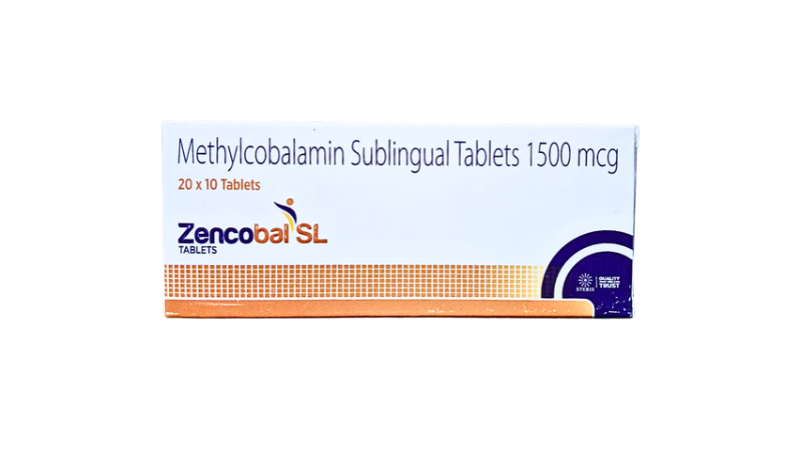
ZENCOBAL SL by Steris Healthcare is a methylcobalamin sublingual tablet 1500 mcg, a fast-dissolving tablet placed under the tongue that delivers the active form of vitamin B12. It is commonly used to correct vitamin B12 deficiency and to support nerve health in people with tingling, numbness, or burning in the hands and feet.
Methylcobalamin sublingual tablets uses generally include:
- Vitamin B12 deficiency: correcting low B12 caused by diet, absorption problems, or medicines
- Peripheral neuropathy: tingling, numbness, burning, and pins-and-needles in the hands and feet
- Diabetic neuropathy: nerve symptoms in people with diabetes, often as part of a wider treatment plan
- Megaloblastic anemia: supportive treatment where anemia is caused by B12 deficiency
- Low B12 from metformin: long-term metformin use can reduce B12 absorption, and supplementation is often advised when levels drop
- Vegetarian and vegan diets: B12 occurs naturally almost only in animal foods, so people who avoid them may need a supplement
- Older adults: B12 absorption often declines with age
- Fatigue, weakness, and memory complaints linked to proven deficiency
- Elevated homocysteine: where it is related to B12 shortage, as judged by a doctor
ZENCOBAL SL is a nutritional and supportive therapy. It treats a B12 shortfall, and does not treat every cause of tingling, tiredness, or anemia.
Why Is Methylcobalamin Important?
Vitamin B12 is essential for making red blood cells, building DNA, and keeping nerves healthy. The body cannot make it, so it must come from food or supplements, and it is stored in the liver for a few years. Deficiency therefore often develops slowly and quietly.
Methylcobalamin sublingual tablets matter for several reasons:
- Deficiency is common and easy to miss. Symptoms such as tiredness, tingling, and forgetfulness are easily blamed on something else.
- Nerve damage can become permanent. If a B12 deficiency is left untreated for long, nerve injury may not fully recover, so early treatment matters.
- Some groups are at higher risk. These include people on metformin or acid-reducing medicines, older adults, vegetarians and vegans, and people with gut or stomach conditions.
- The active form is ready to use. Methylcobalamin does not need to be converted by the body before it works.
- The sublingual route offers convenience. There are no injections, and the tablet is simple to take.
Key Benefits
What Are the Benefits of Methylcobalamin Sublingual Tablets?
1. Replenishes vitamin B12. A 1500 mcg dose is a generous amount that helps raise low blood levels of B12.
2. Supports nerve health. Methylcobalamin is involved in maintaining the myelin sheath, the protective coating around nerves, and may ease neuropathic symptoms where B12 shortage is a factor.
3. Helps red blood cell formation. It works with folate to make healthy red blood cells, which can help correct anemia caused by B12 deficiency and ease the tiredness that goes with it.
4. Lowers homocysteine. By helping convert homocysteine into methionine, it supports healthy homocysteine levels.
5. Supports energy and well-being. Correcting a real deficiency often improves energy, concentration, and mood.
6. Convenient sublingual form. The tablet dissolves under the tongue and is easy for people who find swallowing tablets difficult.
7. Active form of B12. Methylcobalamin is already in a form the body can use, which is why it is popular for nerve-related use.
8. Useful in people with absorption problems. In some conditions, a high daily oral or sublingual dose can be absorbed in small amounts by passive diffusion, even when normal absorption is reduced.
Mechanism of Action:
The mechanism of action of methylcobalamin centers on one key enzyme reaction and its effects on nerves and blood.
- Methionine synthase cofactor. Methylcobalamin is the cofactor for methionine synthase, the enzyme that converts homocysteine into methionine. Methionine is then used to make S-adenosylmethionine (SAMe), the body’s main methyl donor, which supports DNA, proteins, neurotransmitters, and myelin.
- DNA synthesis and red blood cells. This pathway works together with folate. When B12 is low, folate gets “trapped” and DNA synthesis in rapidly dividing cells, such as red blood cells, slows, causing megaloblastic anemia.
- Nerve and myelin maintenance. B12-dependent methylation is needed to maintain the myelin sheath that insulates nerves. Low B12 can damage this coating and lead to numbness, tingling, balance problems, and, in severe cases, cognitive changes.
- Homocysteine control. Reduced methionine synthase activity allows homocysteine to build up, and supplementation helps restore normal turnover.
- Absorption under the tongue. The thin lining of the mouth under the tongue has a rich blood supply, so some of the dose can be absorbed directly into the bloodstream, bypassing the stomach. In addition, at higher doses, around 1 to 2 percent of the vitamin can be absorbed by passive diffusion without the intrinsic factor protein that normal B12 absorption requires.
In plain terms, methylcobalamin keeps the body’s methylation and red blood cell machinery running and helps nerves stay insulated and working.
Indications, Efficacy and Clinical Evidence
Indications: Treatment and prevention of vitamin B12 deficiency, and supportive treatment of peripheral neuropathy, including diabetic neuropathy, and of megaloblastic anemia caused by B12 deficiency, as stated on the product label. Approved uses differ between countries, so follow the label for ZENCOBAL SL.
What does the evidence say?
- Raising B12 levels: Research reviews, including work summarized by Cochrane, have found that high-dose oral vitamin B12 is about as effective as intramuscular injections at correcting deficiency in most people, including many older adults. Studies comparing sublingual with oral tablets have generally found similar increases in blood B12, so the sublingual route is a reasonable option, though it is not clearly superior to swallowing a tablet.
- Metformin-related deficiency: Long-term metformin use is associated with lower B12 levels. Guidelines from diabetes organizations suggest checking B12 periodically in metformin users, particularly those with anemia or neuropathy, and supplementing if low.
- Diabetic and other neuropathies: Several trials and meta-analyses of methylcobalamin, often at doses of 500 mcg three times a day or 1500 mcg daily, report improvement in symptoms such as numbness, pain, and nerve function. Many of these studies are small, short, or use mixed treatment, so the evidence is encouraging but not definitive. Benefit is most likely where B12 deficiency contributes to the neuropathy.
- Pernicious anemia and severe malabsorption: For severe deficiency with neurological symptoms, or pernicious anemia, doctors often start with B12 injections and may move to high-dose oral or sublingual maintenance afterward. This decision should be made by a doctor.
- Safety: Vitamin B12 has a very good safety record. The body excretes extra amounts in urine, and no tolerable upper limit has been set for it, although high doses are still best taken with medical guidance.
Dosage Guidelines
Always follow your doctor’s prescription and the leaflet in your pack. General guidance for methylcobalamin sublingual tablets 1500 mcg:
- Adults: Commonly one tablet (1500 mcg) once daily, or as directed by your doctor. Some prescribers use 500 mcg three times daily with other tablet strengths. The dose and duration depend on the cause and severity of deficiency.
- How to take it:
- Place the tablet under your tongue.
- Let it dissolve completely, without chewing or swallowing it whole.
- Avoid eating, drinking, or smoking until it has dissolved.
- Wash your hands afterward.
- Timing: Take it at the same time each day. It can be taken with or without food. Some people prefer the morning, since B12 can occasionally cause a feeling of alertness.
- Duration: Often for several weeks to months, and longer for ongoing risk such as long-term metformin use, a strict vegan diet, or malabsorption. Your doctor may recheck B12 levels after a few months.
- Children: Use only on medical advice and with a dose set by the doctor.
- Elderly: Generally suitable, since B12 absorption falls with age. Follow your doctor’s dosing.
- Missed dose: Take it when you remember, unless it is nearly time for the next dose. Do not take a double dose.
- Overdose: B12 is generally low in toxicity, and excess is passed in urine. If you take much more than prescribed, or if you feel unwell, speak to your doctor or pharmacist.
Side Effects
Most people tolerate methylcobalamin very well, and side effects are uncommon and usually mild:
- Nausea or upset stomach
- Loose stools or diarrhea
- Headache
- Dizziness
- Mild skin rash or itching
- Tingling or a temporary mild reaction under the tongue
- Feeling restless or unusually alert (uncommon)
- Reddish discoloration of the urine (harmless, because B12 is naturally pink-red)
These generally settle quickly. Tell your doctor or pharmacist if they continue.
Available Substitutes
If ZENCOBAL SL is unavailable, other methylcobalamin tablets are sold under various brand names, and availability differs by country. Your pharmacist can help you choose one with the same strength (1500 mcg, or 500 mcg and 1000 mcg in some markets) and a similar form.
Other options your doctor may suggest include:
- Methylcobalamin oral tablets or capsules (non-sublingual) at 500 mcg, 1000 mcg, or 1500 mcg
- Methylcobalamin combinations: for example, with alpha lipoic acid, folic acid, vitamin B6, benfotiamine, or pregabalin, often used for neuropathy
- Cyanocobalamin tablets or injections, a more stable, widely used synthetic form of B12
- Hydroxocobalamin injections, often used in some countries for deficiency treatment
- B-complex supplements that include B12 along with other B vitamins
- Vitamin B12 injections (intramuscular), which are preferred for severe deficiency, neurological involvement, or pernicious anemia
- Dietary sources: meat, fish, eggs, dairy, and fortified foods such as cereals and plant milks
Do not switch forms or doses on your own. Which form is best depends on the cause and severity of your deficiency.
Precautions and Warnings
- Get the cause confirmed. Tingling, tiredness, or anemia can have many causes. A blood test for B12 (and sometimes homocysteine, methylmalonic acid, folate, and a complete blood count) helps confirm the need and guide the dose.
- Allergy: Do not use if you are allergic to methylcobalamin, vitamin B12, cobalt, or any ingredient in the tablet.
- Leber’s disease (hereditary optic nerve atrophy): Cyanocobalamin has been linked to worsening in this condition. Tell your doctor if you have it or a family history.
- Polycythemia vera or blood cancers: B12 can interfere with these conditions, so use only under medical supervision.
- Severe deficiency or pernicious anemia: Injections are often needed at the start. Do not rely on tablets alone if your doctor has recommended otherwise.
- Folic acid and masking: Taking folic acid alone for a megaloblastic anemia can correct the blood picture but leave a B12 deficiency, and nerve damage can progress. Have both nutrients assessed.
- Potassium monitoring: In severe deficiency, your doctor may check potassium during early treatment.
- Heart conditions: Report any heart disease, because correcting severe anemia can affect the circulation.
- Medicines that lower B12: Metformin, proton pump inhibitors and H2 blockers (for acid reflux), colchicine, neomycin, and long-term use of some other medicines can reduce B12 absorption. Chloramphenicol may blunt the response to B12 treatment. Tell your doctor about all medicines you take.
- Tests: High-dose B12 can occasionally interfere with some lab tests. Tell the lab or your doctor that you take it.
- Pregnancy and breastfeeding: B12 is important in pregnancy and lactation, but supplement dose and form should be advised by your doctor.
- Children: Use only under medical advice.
- Not a cure-all: Do not use it as a general energy booster or as a substitute for investigating persistent symptoms.
- Sublingual tablet handling: Do not swallow it whole, chew it, or take it with a large drink while it is dissolving. Keep your hands dry when removing it from the pack.
- Storage: Keep in a cool, dry place, below 30°C, away from direct sunlight and moisture, in the original blister pack. Methylcobalamin is sensitive to light. Keep out of the reach of children and check the expiry date.
Frequently Asked Questions (FAQs)
1. What are methylcobalamin sublingual tablets 1500 mcg used for?
They are used to treat and prevent vitamin B12 deficiency and to support nerve health in conditions such as peripheral and diabetic neuropathy.
2. What is ZENCOBAL SL?
ZENCOBAL SL is a methylcobalamin 1500 mcg sublingual tablet by Steris Healthcare, placed under the tongue to dissolve.
3. What are the uses of methylcobalamin sublingual tablets?
Common uses include B12 deficiency, tingling and numbness in the hands and feet, diabetic neuropathy, B12-related anemia, and low B12 from metformin or a vegan diet.
4. What is methylcobalamin?
It is the active, ready-to-use form of vitamin B12 that the body uses in nerve maintenance, red blood cell formation, and DNA synthesis.
5. How do I take a sublingual tablet?
Place it under your tongue, let it dissolve completely, and do not chew or swallow it whole. Avoid eating or drinking until it has dissolved.
6. How often should I take methylcobalamin 1500 mcg?
Usually once daily, or as your doctor prescribes.
7. Can I take it with or without food?
Yes, it can be taken with or without food. Keep your mouth free of food and drink while the tablet dissolves.
8. How long does methylcobalamin take to work?
Blood levels often improve within days to weeks, while nerve symptoms may take weeks to months to ease.
9. Is methylcobalamin better than cyanocobalamin?
Methylcobalamin is already an active form, while cyanocobalamin is converted by the body. Both can correct deficiency, and the best choice depends on your doctor’s advice and your condition.
10. Are sublingual tablets better than ordinary tablets?
Studies show similar effectiveness for raising B12 levels, so the sublingual form is a convenient option but is not clearly superior to oral tablets.
Conclusion
ZENCOBAL SL by Steris Healthcare is a methylcobalamin sublingual tablet 1500 mcg that supplies the active form of vitamin B12 to correct deficiency and support nerve health and red blood cell production. Methylcobalamin acts as a cofactor in the methionine synthase pathway, helping DNA synthesis, homocysteine control, and the maintenance of the myelin coating around nerves. Studies show that high-dose oral and sublingual B12 can raise blood levels about as well as injections in most people, and trials in neuropathy are encouraging though still limited. It is generally well tolerated and carries few serious risks, but the cause of low B12 needs to be identified, and severe deficiency or pernicious anemia may still require injections. Take it as directed, let the tablet dissolve under the tongue, and review your B12 levels with your doctor.
For Further Information:
Mail Us: contact@sterispharma.com or info@sterispharma.com
Call Now: +91 8824175417, +91 9982524671
Recent Post
How Do Linagliptin and Metformin Work Together to Manage Type 2 Diabetes?
Oxymetazoline Nasal Solution: A Complete Guide to Uses and Safety
L Lysine Hydrochloride Syrup: Uses, Benefits, Dosage and Side Effects
What Is Amino Acids Injection Used For?
How Do Empagliflozin, Sitagliptin, and Metformin Work Together?
Empagliflozin, Sitagliptin, and Metformin: Uses, Benefits, and Side Effects
D-Panthenol and Sodium Hyaluronate Eye Drops: Uses and Precautions
How Do Ketorolac Tromethamine Eye Drops Work?
Ofloxacin and Dexamethasone Eye Drops: Uses, Benefits, and Side Effects
How Does S-Adenosyl-L-Methionine Support Normal Body Functions?

