



L Lysine Hydrochloride Syrup: Uses, Benefits, Dosage and Side Effects
Oct 21, 2026
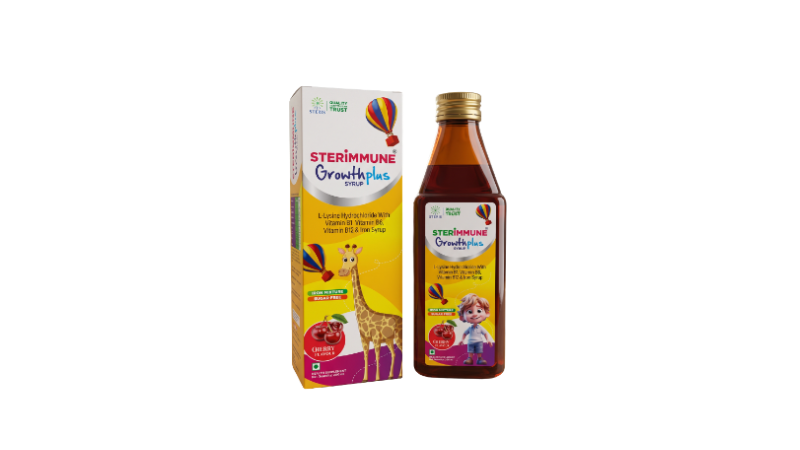
STERIMMUNE GROWTH PLUS by Steris Healthcare is a multinutrient oral syrup that combines L-lysine hydrochloride with vitamin B6, vitamin B1, vitamin B12, and iron. It is used as a nutritional supplement to support appetite, healthy growth, energy metabolism, and the prevention or correction of mild nutritional gaps, mainly in children.
Common uses of this kind of syrup generally include:
- Poor appetite and picky eating: supporting nutrition in children who eat little or have a limited diet
- Nutritional support during growth: providing amino acid, B vitamins, and iron during periods of rapid growth, such as early childhood and puberty
- Mild iron deficiency or risk of it: supporting iron intake, particularly where the diet is low in iron-rich foods
- Recovery after illness: replenishing nutrients after infections, fever, or poor eating
- Vegetarian or low-protein diets: where lysine and B12 intake may be lower
- Low energy and tiredness: where a deficiency of B vitamins or iron is contributing
- Supporting immune health: as part of an overall nutritional plan
If your child has a diagnosed condition such as anemia, a growth disorder, or malabsorption, the syrup should be used only as part of a plan set by your doctor.
Why Is L Lysine Hydrochloride Important? Why Do These Nutrients Matter?
Each ingredient in this syrup plays its own role, and together they support some of the body’s most basic functions.
L-lysine hydrochloride is an essential amino acid. The body cannot make it, so it must come from food (meat, fish, eggs, dairy, legumes). Lysine is needed to build proteins, including muscle and collagen, and it helps the body absorb calcium and make enzymes and hormones. In children, adequate lysine is part of normal growth and tissue repair.
Vitamin B6 (pyridoxine) helps the body use protein, make neurotransmitters and hemoglobin, and support the nervous and immune systems.
Vitamin B1 (thiamine) helps turn carbohydrates into energy and supports nerve and muscle function. Low thiamine can lead to tiredness and loss of appetite.
Vitamin B12 (cyanocobalamin) is essential for red blood cell formation, nerve health, and DNA synthesis. People who eat little or no animal food are particularly at risk of low B12.
Iron is a core part of hemoglobin, the protein in red blood cells that carries oxygen. Iron is also needed for brain development, concentration, and immunity. Iron deficiency is one of the most widespread nutritional problems in children worldwide.
A shortage of any of these can slow growth, reduce appetite, and affect energy and concentration, which is why a balanced supplement can be helpful when food alone is not enough.
Key Benefits
What Are the Benefits of L Lysine Hydrochloride, Vitamin B6, and Iron in One Syrup?
1. Supports healthy growth. Lysine supplies an essential amino acid for building body proteins, while B vitamins and iron support the energy and oxygen needed for growth.
2. May help appetite. Deficiencies in B vitamins, iron, and zinc are sometimes linked to poor appetite, and correcting a real shortage can help appetite return to normal. This is not guaranteed, and appetite problems have many causes.
3. Helps prevent iron deficiency. The iron content contributes toward daily needs and supports hemoglobin production.
4. Supports energy metabolism. Vitamins B1, B6, and B12 are all involved in turning food into usable energy, which can help with tiredness caused by shortfalls.
5. Supports the nervous system. B1, B6, and B12 contribute to normal nerve function, concentration, and mood.
6. Contributes to normal immune function. Iron, vitamin B6, vitamin B12, and protein-building nutrients all play parts in the immune system.
7. Convenient liquid form. A syrup is easier for young children than tablets, and the measured dose is simple to give.
8. All-in-one convenience. One bottle covers several nutrients, which can be easier than managing several separate supplements.
Mechanism of Action:
A supplement like this works by replacing nutrients the body needs, so the “mechanism” is really about the role each one plays.
L-lysine hydrochloride
- Provides lysine for protein synthesis, which builds muscle, enzymes, and connective tissue.
- Is needed to make carnitine, a compound that helps cells use fat for energy.
- Helps in collagen formation and supports calcium absorption and retention in bone.
Vitamin B6 (pyridoxine)
- Is converted in the body to pyridoxal 5'-phosphate (PLP), an active coenzyme that takes part in more than 100 enzyme reactions.
- Helps break down and reuse amino acids, so it works closely with lysine and other proteins.
- Is needed to make hemoglobin, as well as neurotransmitters such as serotonin and dopamine, and supports immune cell function.
Vitamin B1 (thiamine)
- Becomes thiamine pyrophosphate, a coenzyme that helps the body convert carbohydrates into energy and supports nerve signaling.
Vitamin B12 (cyanocobalamin)
- Works as a coenzyme in DNA synthesis and in the maintenance of nerve cell coverings.
- Works with folate to form healthy red blood cells.
Iron
- Is absorbed mostly in the small intestine and incorporated into hemoglobin and myoglobin, which carry and store oxygen.
- Is also part of enzymes involved in energy production and brain function.
In simple terms, lysine and the B vitamins help the body build tissue and run its energy systems, while iron and B12 support the red blood cells that deliver oxygen to growing tissues.
Indications, Efficacy and Clinical Evidence
Indications: Nutritional supplementation to support growth, appetite, and general well-being, and to help prevent or correct mild deficiencies of lysine, B vitamins, and iron, as stated on the product label. Approved uses differ between countries, so follow the label for STERIMMUNE GROWTH PLUS.
What does the evidence say?
- Iron: Iron supplementation is well established for treating and preventing iron deficiency and iron-deficiency anemia in children and adolescents. Studies and health agency guidance show that correcting iron deficiency can improve hemoglobin levels, energy, and, in some cases, cognitive and developmental outcomes. Iron should be given where there is a risk of or confirmed deficiency, not routinely to every child.
- Vitamins B1, B6, and B12: These vitamins are essential, and deficiency states respond well to replacement. For children eating a varied diet, deficiency is uncommon, but diets lacking animal foods, restricted diets, or malabsorption can create gaps, particularly of B12.
- L-lysine: Lysine is an essential amino acid, and shortage can limit growth, particularly in populations that rely heavily on cereal-based diets low in lysine. Some studies of lysine-fortified foods in lysine-poor diets have reported benefits for growth and nutritional status. Evidence that lysine supplements help appetite or growth in well-nourished children is limited, so benefits are most likely where the diet is genuinely low in lysine.
- Appetite and “growth-boosting” claims: Multinutrient syrups are widely used, but the evidence for improving height or appetite in healthy, well-fed children is modest. They help most when a real nutritional gap exists.
- Safety: At the label dose, the nutrients in this syrup are generally well tolerated. The main safety issue is iron, which can be dangerous in overdose, particularly in young children (see Precautions).
Dosage Guidelines
Always follow your doctor’s instructions and the leaflet in your pack. The following is general guidance only, and the correct dose depends on your child’s age, weight, diet, and medical needs.
- Usual measure: Commonly 5 mL (one teaspoon, using the supplied measuring cup or spoon) once or twice daily, or as advised by the doctor. Check how many mL the nutrient amounts on your label refer to.
- Children: The dose is set by age and weight. Use only the measuring device that comes with the bottle, not a kitchen spoon.
- Infants and toddlers: Give only under medical advice, particularly because of the iron content.
- Adolescents and adults: Use only if advised by a doctor, as the dose may differ.
- When to give it: After food is usually best to reduce stomach upset. If your doctor wants maximum iron absorption, they may advise otherwise.
- Shake well before each use.
- Foods to separate: Avoid giving it with milk, tea, or coffee at the same time, since calcium and tannins can reduce iron absorption. A source of vitamin C, such as fruit or juice, can help iron absorption.
- Duration: Often given for a few weeks to a few months. Your doctor will decide how long, and may check hemoglobin and iron levels along the way.
- Missed dose: Give it when you remember, unless it is nearly time for the next dose. Never double up.
- Overdose or accidental ingestion: Iron overdose is a medical emergency, particularly in children. Seek immediate medical help or call your local poison control or emergency service, even if the child seems well.
Side Effects
Most children tolerate the syrup well. Common side effects are mild and are mostly linked to the iron:
- Dark or black stools (harmless and expected with iron)
- Constipation or, less often, loose stools
- Nausea or upset stomach
- Stomach discomfort or cramps
- Metallic taste
- Temporary staining of teeth (more common with iron liquids)
- Reduced appetite in some children
These often settle with time, with taking the syrup after food, or with a dose adjustment from the doctor. Brushing the teeth after the dose can help prevent staining.
Available Substitutes
If STERIMMUNE GROWTH PLUS is unavailable, other multivitamin, amino acid, and iron syrups are sold under various brand names, and availability varies by country. Your pharmacist can help you choose a product with similar ingredients and amounts.
Options your doctor or pharmacist may suggest include:
- Other lysine-containing multivitamin syrups, with or without added minerals such as zinc
- Iron syrups or drops alone (for example, ferrous or ferric salts), when iron is the main need
- Multivitamin syrups without iron, when iron is not needed
- Vitamin B12 or B-complex syrups, for a specific B vitamin gap
- Zinc supplements, which are sometimes recommended alongside nutrition support
- Food-based approaches: iron-fortified cereals, eggs, dairy, lentils, meat, fish, green leafy vegetables, and fruit
Do not switch products or combine several supplements without advice, because doubling up on iron or vitamins can cause an overdose.
Precautions and Warnings
- Keep out of reach of children. Accidental iron overdose is a leading cause of poisoning in young children. Store the bottle in a secure place, and never describe it as candy.
- Do not exceed the recommended dose. More does not mean faster growth, and excess iron can be harmful.
- Do not use for self-diagnosed anemia. If your child looks pale or tired, see a doctor for a blood test first.
- Allergy: Do not use if allergic to any ingredient in the formulation, including flavors, colors, or preservatives.
- Conditions that need caution: Iron overload disorders such as hemochromatosis, thalassemia (unless a doctor advises iron), repeated blood transfusions, and certain anemias not caused by iron deficiency. Also take care with ulcers, inflammatory bowel disease, and severe liver or kidney disease.
- Kidney disease: High lysine intake should be discussed with a doctor if there is kidney impairment.
- Medicine interactions: Iron can reduce the absorption of some antibiotics (such as tetracyclines and quinolones), thyroid medicine (levothyroxine), and some other drugs. Separate doses by a few hours and ask your pharmacist. Vitamin B6 can interact with levodopa and some anti-seizure medicines. Calcium and antacids can reduce iron absorption. Lysine may increase calcium absorption, so tell your doctor if your child is taking calcium supplements or has a condition affecting calcium.
- Dental care: Iron liquids can stain teeth. Brush after the dose.
- Stool color: Dark stools are expected, but tell your doctor if they are tarry or accompanied by pain, because that could indicate bleeding.
- Avoid giving with milk, tea, or coffee at the same time.
- Pregnancy and breastfeeding: Use only under medical advice. Supplement needs differ in pregnancy.
- Do not replace a balanced diet. The syrup is a supplement, not a substitute for meals.
- Know the limits of supplements. A child who is not gaining weight, is persistently tired, or has frequent infections needs a full medical assessment.
- Check the product: Do not use if the seal is broken, the syrup looks cloudy or has changed color or smell, or the expiry date has passed.
- Storage: Keep in a cool, dry place below 30°C, away from direct sunlight, with the cap tightly closed, and discard after the period stated on the label once opened.
Frequently Asked Questions (FAQs)
1. What is L lysine hydrochloride used for?
It is an essential amino acid used in supplements to support protein building, growth, and nutrition, especially when the diet is low in lysine.
2. What is STERIMMUNE GROWTH PLUS?
It is a syrup by Steris Healthcare that combines L-lysine hydrochloride, vitamins B6, B1, and B12, and iron for nutritional support.
3. What is vitamin B6 used for?
Vitamin B6 helps the body use protein, make hemoglobin and neurotransmitters, and support the nervous and immune systems.
4. What is iron used for in a syrup?
Iron supports hemoglobin and oxygen delivery, and it helps prevent or correct iron deficiency.
5. What is the composition of STERIMMUNE GROWTH PLUS?
It contains L-lysine hydrochloride 150 mg, vitamin B6 1.5 mg, vitamin B1 1.1 mg, vitamin B12 2.2 mcg, and iron 5 mg per dose measure. Check your pack for the exact measure.
6. Does STERIMMUNE GROWTH PLUS help with appetite?
It may help when poor appetite is linked to a real nutritional shortfall, but it does not work for every child, and appetite problems can have many causes.
7. Can this syrup make my child grow taller?
It supports healthy growth by supplying nutrients, but it cannot increase height beyond a child’s genetic potential or replace a balanced diet.
8. How should I give STERIMMUNE GROWTH PLUS?
Shake the bottle, measure the dose with the supplied cup or spoon, and give it as your doctor advises, usually after food.
9. How much should I give?
The dose depends on age and weight, and it is commonly around 5 mL once or twice daily. Follow your doctor’s instructions and the leaflet.
10. How long can my child take it?
Usually for a few weeks to a few months, as advised by the doctor, who may check blood tests during treatment.
Conclusion
STERIMMUNE GROWTH PLUS by Steris Healthcare is a nutritional syrup combining L-lysine hydrochloride 150 mg, vitamin B6 1.5 mg, vitamin B1 1.1 mg, vitamin B12 2.2 mcg, and iron 5 mg. It supplies an essential amino acid, key B vitamins, and iron to support growth, energy, red blood cell production, and general well-being, especially when a child’s diet is limited. It is generally well tolerated, though iron can darken stools and upset the stomach, and accidental overdose is dangerous, so it must be stored safely and given only as directed. It supplements a healthy diet and does not replace one, so see a pediatrician if your child has poor growth, ongoing tiredness, pale skin, or very little appetite.
For Further Information:
Mail Us: contact@sterispharma.com or info@sterispharma.com
Call Now: +91 8824175417, +91 9982524671
Recent Post
How Do Linagliptin and Metformin Work Together to Manage Type 2 Diabetes?
Oxymetazoline Nasal Solution: A Complete Guide to Uses and Safety
What Are Methylcobalamin Sublingual Tablets 1500 mcg Used For?
What Is Amino Acids Injection Used For?
How Do Empagliflozin, Sitagliptin, and Metformin Work Together?
Empagliflozin, Sitagliptin, and Metformin: Uses, Benefits, and Side Effects
D-Panthenol and Sodium Hyaluronate Eye Drops: Uses and Precautions
How Do Ketorolac Tromethamine Eye Drops Work?
Ofloxacin and Dexamethasone Eye Drops: Uses, Benefits, and Side Effects
How Does S-Adenosyl-L-Methionine Support Normal Body Functions?

