




Ofloxacin and Dexamethasone Eye Drops: Uses, Benefits, and Side Effects
Oct 21, 2026
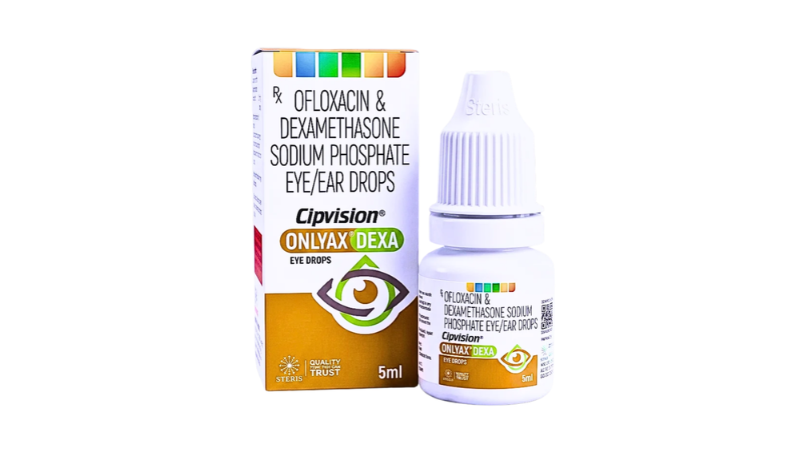
Cipvision Onlyax Dexa by Steris Healthcare is a combination of an antibiotic and a steroid, supplied as sterile eye/ear drops. It is used when a bacterial infection and inflammation occur together, for example a red, sore, watery eye or an inflamed, painful ear canal.
Ofloxacin and dexamethasone eye drops uses generally include:
- Bacterial conjunctivitis with significant inflammation: a red, irritated, discharging eye
- Blepharitis: inflamed, crusty eyelid margins with infection
- Blepharoconjunctivitis: infection and inflammation of the lids and the eye surface together
- Bacterial keratitis and corneal ulcers: only under specialist care, because steroids need careful timing in corneal infections
- After eye surgery: to prevent infection and control inflammation after procedures such as cataract surgery, as directed by the surgeon
- Eye injury or inflammation with infection risk: where both effects are needed
- Otitis externa (outer ear infection): inflamed, painful, sometimes discharging ear canal
- Chronic suppurative otitis media with a perforated eardrum: in some cases, when advised by an ENT specialist and when the product is labeled for ear use
Cipvision Onlyax Dexa is a short-course treatment. It is not meant for long-term use or for routine red eyes with no clear cause.
Why Are Ofloxacin and Dexamethasone Eye Drops Important?
Eye and ear infections are often painful and can threaten function if neglected. In the eye, untreated bacterial infection can damage the cornea and affect vision. Inflammation alone can cause scarring and prolonged discomfort. In the ear, infection can cause severe pain, discharge, and temporary hearing difficulty.
The combination matters for several reasons:
- It treats cause and symptom together. The antibiotic clears bacteria, while the steroid relieves the swelling and discomfort that make the condition so unpleasant.
- It simplifies treatment. One bottle and one schedule are easier to follow than two separate medicines, which helps people complete the course.
- It protects healing after surgery. After eye operations, controlling inflammation and preventing infection both matter for a good recovery.
- It works locally. Drops deliver medicine right where it is needed, with little reaching the rest of the body.
- It speeds comfort. People often feel relief from pain and redness earlier than with an antibiotic alone.
Key Benefits
What Are the Benefits of Ofloxacin and Dexamethasone Eye Drops?
1. Broad antibacterial coverage. Ofloxacin is active against many Gram-positive and Gram-negative bacteria that commonly cause eye and ear infections.
2. Fast control of inflammation. Dexamethasone is a strong anti-inflammatory, so redness, swelling, and irritation often settle quickly.
3. Reduces pain and light sensitivity. Calming inflammation can ease soreness, tearing, and discomfort in bright light.
4. Good penetration. Fluoroquinolones such as ofloxacin reach useful levels in eye tissues, which supports their use in surface infections.
5. Convenient combined therapy. One preparation covers two needs, which can improve adherence.
6. Useful around eye surgery. It can help prevent infection and limit postoperative inflammation, under the surgeon’s direction.
7. Flexible eye or ear use. Where the product is labeled for both, one formulation can be used for either route, as prescribed.
Mechanism of Action:
The mechanism of action of ofloxacin and dexamethasone eye drops combines two separate effects.
Ofloxacin (antibacterial)
- Blocks two bacterial enzymes, DNA gyrase and topoisomerase IV, which bacteria need to copy and repair their DNA.
- Without these enzymes, bacterial DNA cannot be replicated properly, and the bacteria die. This is a bactericidal (killing) action.
- It does not work against viruses or fungi.
Dexamethasone (anti-inflammatory)
- Binds to glucocorticoid receptors inside cells and changes how genes are switched on and off.
- Suppresses the production of inflammatory chemicals such as prostaglandins and cytokines.
- Reduces the leakage of fluid from blood vessels and limits the movement of white blood cells into the tissue, which lowers swelling, redness, and pain.
- In the eye, this also helps limit scarring and protects tissue from inflammatory damage.
In plain terms, ofloxacin removes the infection and dexamethasone settles the body’s reaction to it. Because steroids also dampen local immunity, they must be used carefully and only when bacterial infection is being treated at the same time.
Indications, Efficacy and Clinical Evidence
Indications: Treatment of bacterial infections of the eye and ear that are accompanied by inflammation, and prevention or management of infection and inflammation after eye surgery, as approved on the product label. Approved uses differ between countries, so follow the label for Cipvision Onlyax Dexa.
What does the evidence say?
- Ofloxacin: Ofloxacin eye drops have long been used for bacterial conjunctivitis and have shown good clinical and microbiological cure rates in trials. Fluoroquinolones are among the standard antibiotic options for surface eye infections. Ofloxacin ear drops are also well established for outer ear infections and for middle ear infections with a perforated eardrum.
- Antibiotic plus steroid combinations: Studies of antibiotic-corticosteroid eye drops show they can reduce inflammatory signs and symptoms faster than an antibiotic alone, particularly after cataract surgery and in inflamed lid and conjunctival conditions. Evidence that adding a steroid improves the cure of the infection itself is more limited, so the main gain is symptom and inflammation control.
- Resistance: Some bacteria have become less sensitive to older fluoroquinolones, so a doctor may choose a different antibiotic depending on local resistance patterns and the type of infection.
- Safety: When used for the prescribed short course, these drops are generally well tolerated. The main safety concerns come from the steroid, particularly with prolonged use (raised eye pressure, cataract, and delayed healing).
Dosage Guidelines
Always follow your doctor’s prescription and the leaflet in your pack. General guidance for ofloxacin and dexamethasone eye/ear drops:
For the eye (adults):
- Usually 1 to 2 drops into the affected eye(s), commonly four times a day, or as directed. Your doctor may start with more frequent dosing for the first day or two in severe cases and then reduce it.
- Treatment is usually limited to about 5 to 7 days. Steroid-containing drops should not be used for long periods unless a specialist is monitoring eye pressure.
For the ear (adults):
- Usually 4 to 5 drops into the affected ear, two to three times a day, or as directed. Lie on your side with the affected ear up, keep still for about 5 minutes after instilling, and gently press the small flap in front of the ear canal a few times to help the drops work in.
- Warm the bottle in your hands before use to avoid dizziness from cold drops.
Children: Use only when prescribed by a doctor, with the dose and duration set by the prescriber. Ofloxacin products often have age limits (for example for use under one year), so check the label.
How to put in eye drops:
- Wash your hands.
- Tilt your head back and pull down the lower eyelid to form a small pocket.
- Hold the bottle upside down above the eye without touching the tip to the eye, lashes, or fingers.
- Squeeze one drop in, close your eye gently for one to two minutes, and press lightly on the inner corner of the eye to reduce drainage into the nose.
- Wipe away any excess and replace the cap.
Other points:
- If you use other eye drops, wait at least 5 minutes between them. Use eye ointments last.
- Missed dose: Use it when you remember, unless it is nearly time for the next dose. Do not double up.
- Overdose or accidental swallowing: A few extra drops in the eye are usually harmless, but rinse with water. Seek medical help if a large amount is swallowed, especially by a child.
Side Effects
Most people tolerate the drops well. Common side effects are mild and local:
- Temporary burning, stinging, or discomfort when the drops go in
- Mild eye irritation, redness, or itching
- Blurred vision for a few minutes after instilling
- A bitter or unusual taste in the mouth
- Watery eyes
- Mild ear discomfort or dizziness (with ear use, especially with cold drops)
These usually settle quickly. Tell your doctor or pharmacist if they continue.
Available Substitutes
If Cipvision Onlyax Dexa is unavailable, other ofloxacin and dexamethasone combination drops are sold under different brand names in various markets, and availability varies by country. Your pharmacist can confirm a product with the same strengths of both ingredients.
Other combinations your doctor may consider include:
- Ciprofloxacin and dexamethasone (for example, ear or eye preparations)
- Tobramycin and dexamethasone
- Moxifloxacin or gatifloxacin combined with a steroid, in some markets
- A separate antibiotic drop and steroid drop, which allows the doctor to adjust each independently
Do not swap to a different steroid or antibiotic product without medical advice, because the choice depends on the infection, the eye or ear condition, and local resistance patterns.
Precautions and Warnings
- Prescription use only. Do not use leftover steroid drops for a red eye without a diagnosis.
- Do not use in viral, fungal, or mycobacterial infections. This includes herpes simplex keratitis (dendritic ulcer), chickenpox or shingles of the eye, and fungal eye infections, where a steroid can make things much worse.
- Allergy: Do not use if you are allergic to ofloxacin, other quinolone antibiotics, dexamethasone, other corticosteroids, or any ingredient in the formulation, including preservatives.
- Contact lenses: Remove them before using the drops and avoid wearing them during an eye infection. Some preservatives can be absorbed by soft lenses.
- Eye pressure monitoring: If used for more than about 10 days, intraocular pressure should be checked. People with glaucoma or a history of raised eye pressure should use these drops only under specialist care.
- Short courses only. Prolonged steroid use risks cataract, glaucoma, thinning of the cornea, and secondary infection.
- Do not touch the dropper tip to your eye, skin, or any surface, to avoid contamination. Do not share the bottle.
- Eardrum perforation: Use ear drops only as directed if the eardrum is perforated, and only if the product is labeled for that purpose.
- Pregnancy and breastfeeding: Use only if your doctor judges the benefit outweighs the risk.
- Children: Use only under medical guidance and observe age limits on the label.
- Driving and machinery: Blurred vision can follow instillation. Wait until your vision is clear before driving.
- Other eye medicines: Tell your doctor about all drops, ointments, and medicines you use.
- Complete the full prescribed course, but do not continue beyond it without review.
- Storage: Keep in a cool, dry place, away from direct sunlight, with the cap tightly closed. Discard the bottle about 28 days after first opening (or as stated on the label), even if some remains, and keep it out of the reach of children.
Frequently Asked Questions (FAQs)
1. What are ofloxacin and dexamethasone eye drops used for?
They treat bacterial infections of the eye or ear that come with inflammation, and help control infection and inflammation after some eye surgeries.
2. What is Cipvision Onlyax Dexa?
It is an ofloxacin and dexamethasone sodium phosphate eye/ear drop by Steris Healthcare that combines an antibiotic with a steroid.
3. What are the uses of ofloxacin and dexamethasone eye/ear drops?
Common uses include bacterial conjunctivitis, blepharitis, post-operative eye care, outer ear infection, and some middle ear infections with a perforated eardrum, as prescribed.
4. What is the composition of ofloxacin and dexamethasone eye drops?
They usually contain ofloxacin 0.3% w/v and dexamethasone sodium phosphate (about 0.1% w/v dexamethasone). Check your pack for the exact strength.
5. How do I use ofloxacin and dexamethasone eye drops?
Wash your hands, tilt your head back, put 1 to 2 drops in the lower eyelid pocket, close your eye gently, and avoid touching the dropper tip to anything.
6. How often should I use these drops?
Typically about four times a day for the eye, or as your doctor directs. Ear dosing is usually two to three times a day.
7. How long can I use ofloxacin and dexamethasone drops?
Usually about 5 to 7 days. Longer use needs medical supervision because of the steroid.
8. Can I use them in my ear?
Only if the product is labeled for ear use and your doctor advises it. Cipvision Onlyax Dexa is supplied as eye/ear drops, but follow your prescription.
9. What is ofloxacin eye drop used for?
Ofloxacin is a fluoroquinolone antibiotic used to treat bacterial infections such as conjunctivitis and some corneal infections.
10. What does dexamethasone do in eye drops?
Dexamethasone is a steroid that reduces inflammation, redness, swelling, and pain.
Conclusion
Cipvision Onlyax Dexa by Steris Healthcare is an ofloxacin and dexamethasone combination for bacterial eye and ear infections that come with inflammation, and for infection control and inflammation after some eye procedures. Ofloxacin kills the bacteria, and dexamethasone calms the redness, swelling, and pain. It is generally well tolerated over a short course, but because it contains a steroid, it should be used only when prescribed, never for viral or fungal infections, and not for longer than advised. Use it exactly as directed, keep follow-up appointments if you have eye pain or vision changes, and see a doctor if your symptoms do not improve within a few days.
For Further Information:
Mail Us: contact@sterispharma.com or info@sterispharma.com
Call Now: +91 8824175417, +91 9982524671
Recent Post
How Do Empagliflozin, Sitagliptin, and Metformin Work Together?
Empagliflozin, Sitagliptin, and Metformin: Uses, Benefits, and Side Effects
D-Panthenol and Sodium Hyaluronate Eye Drops: Uses and Precautions
How Do Ketorolac Tromethamine Eye Drops Work?
How Does S-Adenosyl-L-Methionine Support Normal Body Functions?
What Is S-Adenosyl-L-Methionine (SAMe)? Uses and Benefits
Benzydamine Mouthwash: How It Works for Mouth Pain and Inflammation
Polyethylene Glycol 3350 Powder: Uses, Dosage, Precautions, and Price
Probiotic Sachet with FOS, L-Glutamine & Colostrum – Uses and Benefits
How Telmisartan and Nebivolol Work to Manage High Blood Pressure

