


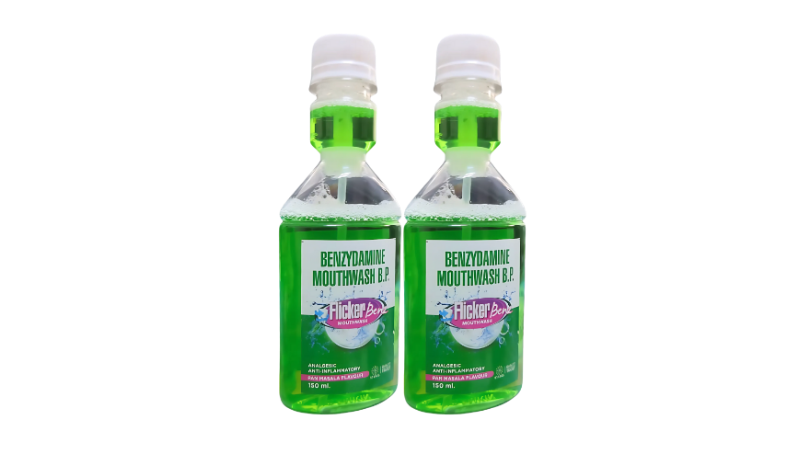


Benzydamine Mouthwash: How It Works for Mouth Pain and Inflammation
Oct 21, 2026
FLICKER BENZ M/W by Steris Healthcare is a benzydamine mouthwash used to relieve pain, soreness, and inflammation in the mouth and throat. If a sore throat makes swallowing a struggle, a mouth ulcer makes eating a chore, or a dental procedure has left your gums tender, this is the kind of product a dentist or doctor may suggest.
What Is FLICKER BENZ M/W Benzydamine Mouthwash For?
Benzydamine is a locally acting anti-inflammatory and analgesic (pain-relieving) agent. Unlike a typical antiseptic rinse, which mainly targets germs, benzydamine mouthwash targets the discomfort and inflammation you feel.
Benzydamine mouthwash uses generally include:
- Sore throat and pharyngitis: relief of pain and irritation from common throat infections
- Mouth ulcers (aphthous ulcers): soothing the sting that makes eating and talking uncomfortable
- Gingivitis and gum inflammation: easing soreness, swelling, and tenderness of the gums
- Oral mucositis: painful inflammation of the mouth lining, often seen in people receiving radiotherapy to the head and neck
- After dental procedures: discomfort after tooth extraction, scaling, or oral surgery
- Denture-related irritation: sore spots caused by ill-fitting dentures
- Tonsillitis and post-tonsillectomy discomfort: relief of throat pain when a doctor advises it
In practice, FLICKER BENZ M/W is a symptom-relief product. It helps you stay comfortable while your body or your main treatment deals with the underlying problem.
Why Is Benzydamine Mouthwash Important?
Mouth and throat pain affects more than comfort. When swallowing hurts, people eat less, drink less, and sleep badly. For someone recovering from surgery or undergoing cancer therapy, poor nutrition and dehydration can slow healing.
Benzydamine mouthwash matters for several reasons:
- It treats the symptom directly. The liquid reaches inflamed tissue right where the pain is.
- It works locally. Because you rinse and spit, little of the drug reaches your bloodstream compared with oral painkillers.
- It supports normal eating and oral hygiene. People in pain often stop brushing gently or rinsing, which can make oral problems worse.
- It is a non-steroidal option. Benzydamine is chemically distinct from the usual NSAID tablets, which makes it a useful local choice.
Key Benefits
What Are the Benefits of Benzydamine Mouthwash?
1. Fast, local pain relief. Many users notice a numbing, soothing effect within a minute or two of rinsing. It is a local effect and does not last all day, which is why the rinse is repeated at intervals.
2. Reduces inflammation and swelling. It works against the inflammatory process in the tissue, not just the pain signal.
3. Mild antimicrobial activity. Laboratory studies show benzydamine has some activity against bacteria and fungi commonly found in the mouth. This is a secondary effect and should not be relied on to treat an infection.
4. Helps with eating, drinking, and talking. Comfort lets people maintain normal nutrition during an uncomfortable episode.
5. Useful in special situations. Clinical guidelines for cancer supportive care have recognized benzydamine for preventing oral mucositis in certain head and neck radiotherapy settings. This use should always be directed by an oncology team.
6. Easy to use. There is no tablet to swallow and no special device. You measure, rinse, gargle, and spit.
Mechanism of Action
The mechanism of action of benzydamine differs from many familiar painkillers.
- Inhibits inflammatory chemicals. Benzydamine reduces the release of pro-inflammatory cytokines such as tumor necrosis factor-alpha (TNF-α) and interleukin-1β. These signaling molecules drive swelling and pain in inflamed tissue.
- Weak effect on prostaglandin synthesis. Unlike aspirin or ibuprofen, benzydamine is only a weak inhibitor of cyclooxygenase (COX) enzymes, so its action does not depend mainly on blocking prostaglandins.
- Local anesthetic-like action. Benzydamine stabilizes cell membranes and has a mild numbing effect on nerve endings, which explains the tingling or numb feeling after rinsing.
- Tissue penetration. It is absorbed into inflamed tissues in the mouth and throat, where it reaches useful concentrations.
- Membrane-stabilizing and antimicrobial effects. These add to its soothing profile.
In plain terms, benzydamine calms the inflammatory signals, dulls the nerve endings, and so reduces pain at the surface where it is applied.
Indications, Efficacy and Clinical Evidence
Indications: Symptomatic relief of pain and inflammation of the oropharynx, including sore throat, mouth ulcers, gingivitis, post-surgical or post-dental discomfort, and radiation-induced mucositis (under medical supervision).
What does the evidence say?
- Sore throat: Randomized, placebo-controlled trials of benzydamine in sore throat have generally reported greater pain relief than placebo, with effects seen within minutes in some studies. As with most sore throat products, the benefit is symptomatic, and viral sore throats still need to run their course.
- Radiation-induced oral mucositis: Controlled studies in head and neck cancer patients receiving radiotherapy have shown benzydamine rinse can reduce the severity and duration of mucositis in patients receiving moderate-dose radiation. International supportive-care guidelines have supported its use in that specific setting, though not for patients receiving chemoradiation. If you are on cancer treatment, follow your oncologist’s plan.
- Dental and oral surgery: Studies and clinical experience support its use for post-procedure discomfort, though the evidence base is smaller and the products are typically used as an adjunct to standard care.
- Safety: As a topical rinse that is spat out, it has a good tolerability record when used for short periods at the labeled dose.
A realistic expectation: It relieves symptoms and does not cure the cause. If the problem is a bacterial infection, a dental abscess, or something more serious, you need targeted treatment, not just a soothing rinse.
How to Use Benzydamine Mouthwash (Step by Step)
A simple routine:
- Measure. Pour the recommended amount (commonly 15 mL, about one tablespoon) into the measuring cup. Do not guess.
- Check whether to dilute. Some products can be used undiluted, while some people find the sting strong and are advised to dilute with an equal volume of water. Follow your label or healthcare provider.
- Rinse and gargle. Swish around the mouth, then gargle at the back of the throat if your throat is the problem, for about 30 seconds.
- Spit it out. Do not swallow it.
- Wait. Avoid eating or drinking for about 30 minutes afterward so the medicine stays in contact with the tissue.
- Best timing. Many people use it after brushing, since toothpaste ingredients can interfere with some mouthwashes, and before meals if pain makes eating hard.
Dosage Guidelines
Always follow your doctor’s instructions and the leaflet in your pack. General guidance for benzydamine mouthwash BP products:
- Adults and children over 12 years: About 15 mL of the rinse, used as a mouthwash or gargle for roughly 30 seconds, two to three times a day, or as directed by the prescriber. Some labels allow more frequent use for short periods.
- Children 6 to 12 years: Use only on medical advice. Dilution and a lower volume may be advised.
- Children under 6 years: Generally not recommended unless a doctor directs it.
- Duration: For short-term use. If symptoms continue beyond about 7 days, see a doctor or dentist.
- Missed dose: Simply use the next rinse when due. Do not double up.
- Overdose or swallowing: Swallowing small amounts is usually not dangerous, but large amounts can cause nausea, agitation, or other symptoms. Seek medical help if a large quantity is swallowed, especially by a child.
Side Effects
Most people tolerate it well. Common side effects are mild and local:
- Numbness or tingling in the mouth or tongue
- Mild burning or stinging, especially with undiluted use
- Dryness of the mouth
- Temporary change in taste
- Mild irritation of the throat
These usually settle quickly. Diluting the rinse may help if the sting bothers you, but check with your pharmacist first.
Available Substitutes
If FLICKER BENZ M/W is unavailable, other benzydamine mouthwash products with the same active ingredient exist, such as Tantum Verde and Difflam in various markets. Availability and strengths differ by country, so confirm the exact composition and strength with your pharmacist. Do not switch to a different type of rinse, such as a chlorhexidine or povidone-iodine product, without advice, because those have different purposes. Your doctor or dentist may also suggest alternatives such as lozenges or sprays, depending on your condition.
Precautions and Warnings
- Do not swallow. It is for rinsing and gargling only.
- Allergy: Do not use if you are allergic to benzydamine or any ingredient in the formulation.
- Asthma or allergy to aspirin/NSAIDs: Use with caution. Benzydamine can occasionally trigger bronchospasm in sensitive people. Ask your doctor first.
- Pregnancy and breastfeeding: Safety data are limited. Use only if your doctor judges the benefit outweighs the risk.
- Children: Do not use in young children without medical advice.
- Eyes: Avoid contact. Rinse with plenty of water if it happens.
- Don’t combine with other mouthwashes at the same time. Space them apart.
- Persistent symptoms: A sore throat lasting more than a few days, fever, white patches, a lump, or an ulcer that does not heal in two to three weeks needs professional evaluation.
- Prolonged use: Avoid long-term use without supervision. Because it numbs, it can mask problems that need attention.
- Hot food and drinks: Be careful right after rinsing, since numbness can make it easy to bite your tongue or burn your mouth.
- Storage: Keep in a cool, dry place, away from direct sunlight, and out of the reach of children. Check the expiry date.
Frequently Asked Questions (FAQs)
1. What is benzydamine mouthwash used for?
It is used to relieve pain and inflammation in the mouth and throat, including sore throat, mouth ulcers, gum inflammation, and post-dental or post-surgical discomfort.
2. What is FLICKER BENZ M/W?
FLICKER BENZ M/W is a benzydamine mouthwash by Steris Healthcare, used for local relief of oral and throat pain and inflammation.
3. How do I use benzydamine mouthwash?
Measure about 15 mL (or the labeled amount), rinse and gargle for roughly 30 seconds, then spit it out. Do not swallow.
4. How often can I use benzydamine mouthwash?
Typically two to three times daily, or as directed by your doctor or the product label.
5. What is benzydamine mouthwash BP?
“BP” means it conforms to the British Pharmacopoeia quality standards. It is commonly a 0.15% w/v benzydamine hydrochloride rinse, but check your pack for the exact strength.
6. Can I use benzydamine mouthwash for a sore throat?
Yes. Gargling helps the rinse reach the throat, and it is commonly used for symptomatic relief of sore throat pain.
7. Should I dilute benzydamine mouthwash?
Some labels allow undiluted use, while others suggest dilution if it stings. Follow your product leaflet or ask your pharmacist.
8. Is benzydamine mouthwash safe for children?
It is generally not recommended for children under 6, and children aged 6 to 12 should use it only on medical advice.
9. Can I use benzydamine mouthwash during pregnancy?
Safety data are limited. Use only if your doctor advises it.
10. How long does it take to work?
Many people feel a soothing or numbing effect within a few minutes, though this varies.
Conclusion
FLICKER BENZ M/W by Steris Healthcare is a benzydamine mouthwash that provides local relief from the pain and inflammation of sore throats, mouth ulcers, gum problems, post-dental discomfort, and oral mucositis. It works by calming inflammatory signals and numbing irritated tissue. Used correctly (measured, gargled for about 30 seconds, and spat out) it is generally well tolerated for short periods. It treats symptoms and not their cause, so persistent or worsening problems deserve a visit to your doctor or dentist.
For Further Information:
Mail Us: contact@sterispharma.com or info@sterispharma.com
Call Now: +91 8824175417, +91 9982524671
Recent Post
Betahistine 16 mg Tablets: Uses, Benefits and Precautions
What Is Colchicine 0.5 mg Used For? A Complete Guide
Sitagliptin and Metformin Tablets for Type 2 Diabetes: Uses and Benefits
Fluticasone Furoate Nasal Spray: Uses, Benefits and Precautions
Atomoxetine 10 mg Tablet Price in India
L-Carnitine and CoQ10: Benefits, Uses and Precautions
Doxepin Hydrochloride 25 mg Tablets: Uses, Benefits & Price in India
Understanding the Benefits of Astaxanthin and Lycopene Tablets
Donepezil Hydrochloride 10 mg Tablet – Uses, Price & Buy Online in India
What Is Tiapride 50 mg Used For? A Complete Guide

