




What Is Colchicine 0.5 mg Used For? A Complete Guide
Oct 22, 2026
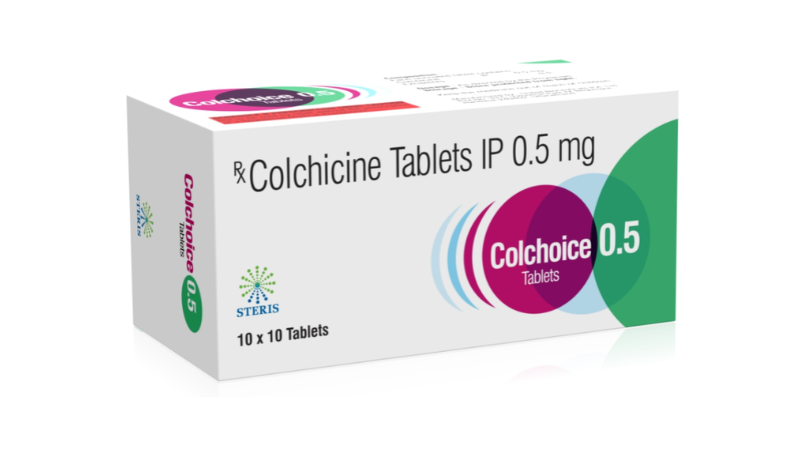
COLCHOICE 0.5, from Steris Healthcare, is a tablet containing colchicine 0.5 mg. Colchicine is a plant-derived anti-inflammatory medicine that has been used for centuries, originally extracted from the autumn crocus (Colchicum autumnale). Today it is a purified, standardised medicine used under medical supervision.
The colchicine uses that doctors commonly consider include:
- Treatment of acute gout flares
- Prevention (prophylaxis) of gout flares when starting urate-lowering therapy such as allopurinol or febuxostat
- Familial Mediterranean fever (FMF), an inherited condition causing recurrent fever and abdominal, chest or joint pain
- Pericarditis, including recurrent pericarditis, in some guideline-based regimens
- Reducing cardiovascular events in selected patients with established coronary disease, in some regions and under specialist advice
- Behçet’s disease and some other inflammatory conditions, in specialist care
Approved indications differ between countries and brands. This is a prescription medicine, and your doctor will decide whether a colchicine tablet is right for you and at what dose.
Why Is Colchicine Important?
Gout is not simply “a painful toe”. It is a metabolic condition in which excess uric acid forms needle-shaped monosodium urate crystals inside joints. The immune system treats these crystals as invaders, triggering intense inflammation. Left poorly controlled, gout can lead to repeated attacks, joint damage, hard lumps called tophi and kidney problems.
Here is why colchicine holds an important place in treatment:
- It targets the inflammation, not the uric acid. Painkillers and NSAIDs ease pain, whereas colchicine interferes with the immune response to the crystals themselves.
- It is an option when NSAIDs are unsuitable. People with kidney disease, stomach ulcers, heart disease or those on blood thinners often cannot use NSAIDs safely. Colchicine, used with care and appropriate dose adjustment, can be an alternative.
- It protects the start of uric-acid-lowering therapy. When allopurinol or febuxostat is started, uric acid levels fall and old crystals begin to dissolve, which can paradoxically trigger flares. A low daily dose of colchicine in the first months helps prevent this.
- It controls autoinflammatory conditions. In FMF, regular colchicine reduces attacks and, importantly, helps prevent a serious long-term complication called amyloidosis.
- It is low in cost and widely available.
For patients, the practical gain is fewer disabling flares, protection of joints and the ability to keep working, sleeping and walking normally.
Mechanism of Action
What Is in COLCHOICE 0.5?
Each tablet contains colchicine 0.5 mg as the active ingredient, together with inactive excipients that form the tablet. Always read the carton for the full ingredient list.
How Does Colchicine Work?
Colchicine works at the level of the cell’s internal scaffolding and inflammatory machinery.
- Binds to tubulin: Colchicine attaches to tubulin, the protein that forms microtubules. This prevents microtubules from assembling properly.
- Slows neutrophil movement: Neutrophils are white blood cells that rush into a joint when urate crystals appear. Without functioning microtubules, they cannot migrate, stick and engulf crystals efficiently, so the inflammatory flood is reduced.
- Blocks the NLRP3 inflammasome: Urate crystals activate this cellular alarm system, which then releases interleukin-1 beta (IL-1β), a major driver of gout pain and swelling. Colchicine dampens this pathway.
- Reduces release of inflammatory mediators: It lowers the output of other pro-inflammatory signals from white blood cells.
An important point: colchicine does not lower uric acid levels and is not a conventional painkiller. It will not help ordinary headaches or injuries. Its effect is specific to certain types of inflammation.
Key Benefits
What Are the Benefits of COLCHOICE 0.5?
- Effective relief of acute gout flares, especially when started early.
- Prevention of flares while uric-acid-lowering treatment is being established.
- Flexible 0.5 mg strength that allows precise low-dose regimens, which is important because colchicine has a narrow safety margin.
- Useful when NSAIDs are unsuitable, subject to kidney and liver function.
- Supports long-term control of FMF and reduces the risk of amyloidosis.
- Helpful in pericarditis, where it reduces recurrence in many patients.
- Not an opioid or steroid: No habit formation, and it avoids the blood sugar and bone effects of long-term steroids.
- Long clinical track record supported by decades of use.
Indications, Efficacy and Clinical Evidence
A balanced summary of the evidence:
- Acute gout: The AGREE trial, a randomised, placebo-controlled study, found that a low-dose regimen (1.2 mg followed by 0.6 mg one hour later) was about as effective as a much higher dose for reducing pain within 24 hours, with significantly fewer gastrointestinal side effects. This finding reshaped modern practice, which now favours low doses over the old “hourly until diarrhoea” approach.
- Timing matters: Colchicine tends to work best when started within the first 12 to 36 hours of a flare. Later starts are generally less effective.
- Prophylaxis: Trials and guidelines support low-dose colchicine for flare prevention during the first 3 to 6 months of urate-lowering therapy, which is when flares are most likely.
- FMF: Colchicine is the established first-line treatment. Most patients have a marked reduction in attacks, and regular use lowers the risk of renal amyloidosis.
- Pericarditis: Randomised trials such as COPE, ICAP, CORE and CORP showed that adding colchicine to standard anti-inflammatory therapy reduced recurrence of pericarditis.
- Cardiovascular prevention: Large trials such as LoDoCo2 and COLCOT found that low-dose colchicine (0.5 mg once daily) reduced major cardiovascular events in patients with recent heart attack or chronic coronary disease. Regulatory approval and guideline recommendations vary by country, and the decision belongs with a cardiologist.
- Limits of the evidence: Colchicine can cause side effects at doses not far above the therapeutic range, and some patients, including those with advanced kidney disease, need special caution. Many older studies were small, and evidence for newer uses continues to evolve.
Dosage Guidelines
Doses depend on the condition, age, kidney and liver function and other medicines. Always follow your doctor’s prescription. The following is general information only.
- Acute gout flare (adults): Commonly an initial dose, followed by a smaller dose about an hour later, and then a lower maintenance dose for the following days if the doctor advises. With 0.5 mg tablets, the exact number of tablets depends on the regimen your doctor selects. Do not repeat the course more often than your doctor allows.
- Gout prophylaxis: Commonly a low once-daily or twice-daily dose during the initial months of urate-lowering therapy, as directed.
- Familial Mediterranean fever: Usually a daily dose, which may be taken once or divided, adjusted to response.
- Pericarditis and cardiovascular indications: Dosing is specialist-directed, often weight-based or fixed low-dose once daily.
- Kidney or liver impairment: Doses must be reduced, and in severe impairment colchicine may be unsuitable or needs strict monitoring.
- With interacting medicines: Doses are significantly reduced or the drug is avoided (see Precautions).
- How to take it: Swallow with water, with or without food. Taking it with food may reduce stomach upset.
- Do not exceed the prescribed dose. More does not mean faster relief, and overdose can be life-threatening.
- Missed dose (prophylaxis): Take it when you remember unless the next dose is near. Never double up.
- Avoid grapefruit juice in large amounts, as it can raise colchicine levels.
Side Effects
Most side effects involve the gut, and they are often an early warning sign that the dose is too high. Possible effects include:
- Diarrhoea, which is the most common
- Nausea and vomiting
- Abdominal cramps or pain
- Loss of appetite
- Mild headache
- Temporary hair thinning (uncommon)
- Muscle aches or weakness
- Numbness or tingling in the fingers or toes
If diarrhoea, vomiting or cramps develop, tell your doctor. The dose may need to be lowered or the medicine paused, and you should not push through the symptoms.
Available Substitutes
Several pharmaceutical companies market colchicine 0.5 mg tablets in India and other markets, and some products come in other strengths such as 0.6 mg or 1 mg depending on the country. Because strengths, tablet counts per dose and approved uses differ, a substitute is not automatically equivalent. Other medicines used for gout flares or prevention include NSAIDs, corticosteroids, allopurinol and febuxostat, but these work differently and are not direct replacements. Never switch products yourself. Ask your doctor or pharmacist to confirm the strength, regimen and suitability for you.
Precautions and Warnings
Do not use colchicine if you:
- Are allergic to colchicine or any ingredient in the tablet
- Have severe kidney or liver impairment together with taking certain interacting medicines (for example, strong CYP3A4 or P-glycoprotein inhibitors)
- Have a serious blood disorder, unless your specialist directs otherwise
Tell your doctor before starting if you:
- Have kidney disease, liver disease or blood disorders
- Are elderly or frail, since toxicity risk is higher
- Have gastrointestinal disease such as inflammatory bowel disease or ulcers
- Have heart disease
- Are pregnant, planning pregnancy or breastfeeding. Colchicine is used in some conditions during pregnancy under specialist care, but the decision must be individual.
- Are a man trying to conceive, as colchicine may transiently affect sperm in some cases. Discuss it with your doctor.
Practical advice:
- Start treatment at the first sign of a gout flare if your doctor has advised this approach.
- Drink plenty of fluids and limit alcohol, which can trigger gout.
- Avoid or reduce purine-rich foods such as red meat, organ meats and some seafood, and sugary drinks.
- Maintain a healthy weight and exercise regularly.
- Do not use colchicine as a daily painkiller.
- Have blood counts, kidney and liver tests done as your doctor advises during long-term therapy.
- Store at room temperature, away from moisture, light and children.
- Keep the original pack, and never transfer tablets into unmarked containers.
Frequently Asked Questions (FAQs)
1. What is colchicine 0.5 mg used for?
Colchicine 0.5 mg is used to treat and prevent gout flares, and in some patients for familial Mediterranean fever, pericarditis and cardiovascular risk reduction under medical supervision.
2. What is COLCHOICE 0.5?
COLCHOICE 0.5 is a colchicine 0.5 mg tablet marketed by Steris Healthcare.
3. What are the main colchicine uses?
Acute gout, gout prophylaxis, familial Mediterranean fever, pericarditis and selected cardiovascular indications.
4. How does colchicine work?
It binds to tubulin, slows the movement of neutrophils into the inflamed joint and dampens the NLRP3 inflammasome and IL-1β release, which reduces inflammation.
5. Is colchicine a painkiller?
Not in the usual sense. It reduces gout-related inflammation, so it will not relieve other kinds of pain such as headaches.
6. Does colchicine lower uric acid?
No. It treats inflammation from urate crystals but does not reduce uric acid levels. Medicines such as allopurinol or febuxostat do that.
7. How quickly does colchicine work for gout?
Relief often begins within 12 to 24 hours when started early in a flare, and it works best in the first day or two.
8. How many colchicine 0.5 mg tablets should I take?
It depends on the condition and your doctor’s regimen. Never exceed the prescribed amount.
9. Can I take colchicine every day?
Yes, in low doses for prevention or conditions such as FMF, when prescribed. Regular medical review is important.
10. Should I take colchicine with food?
It can be taken with or without food. Taking it with food may ease stomach upset.
Conclusion
COLCHOICE 0.5 by Steris Healthcare, containing colchicine 0.5 mg, is a time-tested anti-inflammatory medicine used for acute gout flares, flare prevention, familial Mediterranean fever, pericarditis and, in selected patients, cardiovascular risk reduction. Its strength lies in targeting the immune response to urate crystals, which makes it a valuable option when NSAIDs are unsuitable. Its weakness is a narrow safety margin: doses must be correct, kidney and liver function must be considered, and interactions with other drugs must be checked. Used exactly as prescribed, it can dramatically reduce pain and protect long-term joint health. Report persistent diarrhoea, muscle weakness, unusual bleeding or allergic symptoms promptly.
For Further Information:
Mail Us: contact@sterispharma.com or info@sterispharma.com
Call Now: +91 8824175417, +91 9982524671
Recent Post
Betahistine 16 mg Tablets: Uses, Benefits and Precautions
Sitagliptin and Metformin Tablets for Type 2 Diabetes: Uses and Benefits
Fluticasone Furoate Nasal Spray: Uses, Benefits and Precautions
Atomoxetine 10 mg Tablet Price in India
L-Carnitine and CoQ10: Benefits, Uses and Precautions
Doxepin Hydrochloride 25 mg Tablets: Uses, Benefits & Price in India
Understanding the Benefits of Astaxanthin and Lycopene Tablets
Donepezil Hydrochloride 10 mg Tablet – Uses, Price & Buy Online in India
What Is Tiapride 50 mg Used For? A Complete Guide
Tiapride 25 mg: Uses, Dosage and Possible Side Effects

