




Fluticasone Furoate Nasal Spray: Uses, Benefits and Precautions
Oct 22, 2026
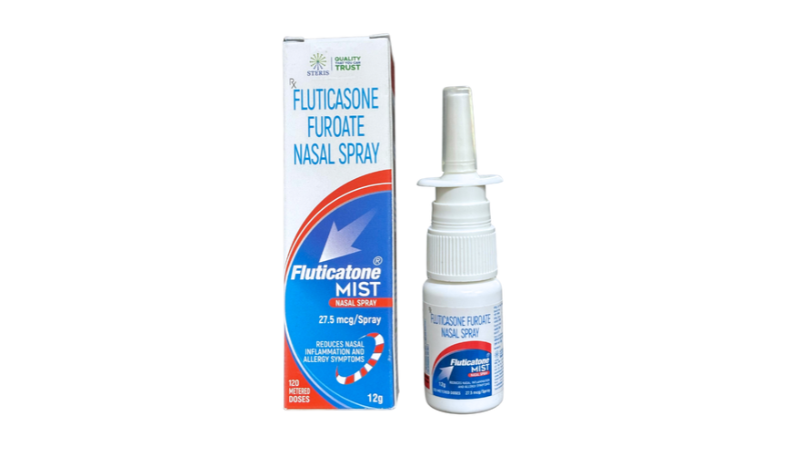
FLUTICATONE MIST Nasal Spray, from Steris Healthcare, is a nasal spray containing fluticasone furoate. It is a prescription-strength corticosteroid delivered directly to the lining of the nose, so the medicine acts where the problem is.
The fluticasone furoate nasal spray uses that doctors commonly consider include:
- Seasonal allergic rhinitis (hay fever)
- Perennial (year-round) allergic rhinitis
- Nasal congestion, sneezing, itching and runny nose caused by allergy
- Allergic eye symptoms linked to rhinitis (itchy, watery, red eyes), as reported in clinical studies of some formulations
- Non-allergic (vasomotor) rhinitis, in some cases, under medical advice
- Support in managing nasal polyps or chronic sinus inflammation, where a doctor considers it suitable
This is a prescription medicine, and the right strength, schedule and duration should come from your doctor.
Why Is Fluticasone Furoate Nasal Spray Important?
Allergic rhinitis is not only a nuisance. Poor sleep, daytime fatigue, reduced concentration, school or work absence and recurrent sinus problems are all common knock-on effects. In people with asthma, uncontrolled nasal inflammation can also make breathing symptoms harder to manage, because the nose and lungs share the same airway lining and similar inflammatory processes.
Here is why a nasal corticosteroid is valued:
- It treats the cause of symptoms, not just one symptom. Antihistamines block histamine, but corticosteroids reduce the wider inflammatory response that produces congestion, mucus and sneezing.
- It is usually the most effective single option for nasal congestion. Guidelines on allergic rhinitis generally rank intranasal corticosteroids as first-line therapy for moderate to severe or persistent symptoms.
- It acts locally. Because the dose is small and delivered directly to the nasal lining, there is lower exposure to the rest of the body compared with tablets or injections.
- It is convenient. Many people use it once daily.
For families dealing with allergy season, a well-chosen nasal spray can be the difference between a miserable few months and a manageable routine.
Mechanism of Action
What Is in the Spray?
The active ingredient is fluticasone furoate, a synthetic trifluorinated corticosteroid. The spray also contains inactive ingredients that form the suspension and help it spray evenly. Please read the carton for the exact strength per actuation, since it is the printed label that applies to your pack.
How Does Fluticasone Furoate Work?
When an allergen lands on the nasal lining, immune cells release chemicals such as histamine, leukotrienes and cytokines. These cause blood vessels to swell, glands to produce mucus, and nerves to trigger sneezing and itching.
Fluticasone furoate works by:
- Binding to glucocorticoid receptors inside nasal cells, with high affinity and prolonged receptor occupancy
- Switching off inflammatory genes and reducing production of inflammatory mediators
- Reducing the number and activity of inflammatory cells, such as eosinophils and mast cells, in the nasal lining
- Reducing swelling of the nasal tissue, which opens the airway and eases congestion
- Staying largely local: the drug has very low systemic bioavailability because most of what is swallowed is extensively metabolised in the liver and gut wall on first pass
Because it is a corticosteroid, it takes a little time to build up its full effect. Some people notice improvement within hours to a day, but the maximum benefit usually needs several days of regular use. This is why it should not be judged after a single spray.
Key Benefits
What Are the Benefits of FLUTICATONE MIST Nasal Spray?
- Relief of the full set of nasal symptoms: blockage, sneezing, itching and runny nose.
- Once-daily convenience in most regimens, which supports adherence.
- Targeted action within the nose, with low systemic absorption at recommended doses.
- Fine mist delivery: Many users find the gentle mist more comfortable than older sprays.
- Suitable for long-term seasonal or year-round control under medical supervision.
- Helpful for eye symptoms linked to allergic rhinitis in some studies, probably because treating nasal inflammation reduces the reflex that triggers eye symptoms.
- Benefit for sleep and quality of life when congestion is the main problem.
Indications, Efficacy and Clinical Evidence
A balanced summary of the evidence:
- Seasonal and perennial allergic rhinitis: Multiple randomised, placebo-controlled trials in adults and children have shown that fluticasone furoate nasal spray significantly improves total nasal symptom scores compared with placebo. Improvements in congestion, sneezing, itching and runny nose have been reported.
- Ocular symptoms: Several trials reported improvement in eye symptom scores alongside nasal symptoms, which is a feature that clinicians value in hay-fever patients.
- Onset of action: Some studies reported symptom improvement within the first day of treatment, with continued gains over the following days.
- Safety in studies: Trials of up to a year in adults and children found that growth, eye pressure and adrenal function were generally unaffected at recommended doses, though regular monitoring is still advised in long-term paediatric use.
- Comparison with other options: Intranasal corticosteroids are generally more effective than oral antihistamines for nasal congestion and are comparable to or better than leukotriene antagonists for allergic rhinitis. Differences between individual nasal steroids are usually small, and patient preference (scent, feel, spray device) often decides.
- Limits of the evidence: Results vary between individuals. Non-allergic causes of a blocked nose, such as structural problems or infections, will not respond the same way.
Dosage Guidelines
Always follow the prescription and the patient leaflet that comes with your pack. The following is general information only.
- Adults and adolescents: Commonly two sprays in each nostril once daily to start, and the dose may be reduced to one spray in each nostril once daily once symptoms are controlled, as directed by the doctor.
- Children: Lower doses are used and the product must be approved for the child’s age. Use only under medical supervision.
- How to use the spray correctly:
- Gently blow your nose to clear it.
- Shake the bottle well and remove the cap.
- Prime the pump if it is new or has not been used for a while, as per the leaflet.
- Tilt your head slightly forward, and keep the bottle upright.
- Insert the nozzle into one nostril, pointing it away from the centre wall (septum), towards the outer side of the nose.
- Breathe in gently through the nose while pressing the pump.
- Repeat for the other nostril, and wipe the nozzle clean before replacing the cap.
- Do not sniff hard after spraying. This pulls the medicine down the throat and reduces effectiveness.
- Consistency matters: Regular daily use works better than occasional use.
- Missed dose: Use it when you remember, but do not double the dose.
- Duration: Your doctor will decide. For seasonal allergies, start just before the season if advised and continue through exposure.
Side Effects
Most side effects are local and mild. They may include:
- Nosebleeds or blood-streaked mucus
- Nasal dryness, irritation or a stinging sensation
- Sneezing right after spraying
- Headache
- Sore throat or throat irritation
- Unpleasant taste or smell
- Cough
- Small nasal sores or crusting
These often improve with correct technique, aiming the spray away from the septum, and with saline spray if your doctor suggests it.
Available Substitutes
Other nasal sprays containing fluticasone furoate are available from different pharmaceutical companies, and other nasal corticosteroids such as fluticasone propionate, mometasone, budesonide and triamcinolone are also used for similar purposes. They are not always interchangeable in strength, age approval or dosing. Do not switch on your own. Your doctor or pharmacist should confirm that the substitute matches your prescription.
Precautions and Warnings
Do not use if you:
- Are allergic to fluticasone furoate or any ingredient in the spray
- Have a untreated nasal infection involving a fungal or bacterial cause, unless your doctor advises it
Tell your doctor before using if you:
- Have had recent nasal surgery, injury or nasal ulcers, since steroids can slow wound healing
- Have glaucoma, cataracts or a family history of eye problems, since regular eye checks may be needed
- Have tuberculosis, herpes eye infections or any untreated infection
- Have liver disease, since the drug is cleared by the liver
- Are on other steroids or on certain medicines that block liver enzymes, such as ritonavir, cobicistat or ketoconazole. These can raise fluticasone levels in the body and increase side effects.
- Are pregnant or breastfeeding. Use only when the doctor decides the benefit outweighs the risk.
- Are giving the spray to a child. Growth should be monitored with long-term use.
Practical tips:
- Use the lowest dose that controls your symptoms.
- Do not use more than prescribed. A higher dose does not make it work faster.
- Do not share your spray bottle, as this can spread infection.
- Keep the bottle upright, store it below the temperature stated on the pack, and keep it away from children.
- Check the discard date after opening, as written on the leaflet.
- If symptoms do not improve after a couple of weeks, or if they worsen, see your doctor. There may be another cause, such as sinusitis, a deviated septum or polyps.
- Avoid allergen triggers where possible: wash bedding in hot water, use dust-mite covers, keep windows closed during high pollen days, and shower after outdoor exposure.
Frequently Asked Questions (FAQs)
1. What is fluticasone furoate nasal spray used for?
It is used to treat symptoms of seasonal and year-round allergic rhinitis, including nasal congestion, sneezing, itching and a runny nose.
2. What are the fluticasone furoate nasal spray uses?
Main uses include hay fever, perennial allergic rhinitis, nasal congestion and, in some cases, support for non-allergic rhinitis or nasal polyps under a doctor’s direction.
3. What is FLUTICATONE MIST Nasal Spray?
It is a fluticasone furoate nasal spray marketed by Steris Healthcare for allergic nasal conditions.
4. What is fluticasone furoate?
Fluticasone furoate is a synthetic corticosteroid that reduces inflammation in the nasal lining.
5. How does fluticasone furoate work?
It binds to glucocorticoid receptors, reduces the release of inflammatory chemicals and decreases swelling in the nose, which relieves congestion and other allergy symptoms.
6. How quickly does fluticasone furoate nasal spray work?
Some people notice relief within hours to a day, but the full effect often builds over several days of regular use.
7. How many times a day should I use it?
Usually once daily. Follow your doctor’s instructions and the leaflet.
8. Can I use fluticasone furoate nasal spray every day?
Yes, when prescribed, many people use it daily during allergy season or year-round, with periodic review by a doctor.
9. Is fluticasone furoate nasal spray a steroid?
Yes, it is a corticosteroid, but it acts locally in the nose and has very low absorption into the body at recommended doses.
10. Is it safe for children?
Approved for certain ages at lower doses. Use only as directed by a paediatrician, with growth monitoring in long-term use.
Conclusion
FLUTICATONE MIST Nasal Spray by Steris Healthcare, containing fluticasone furoate, is a corticosteroid nasal spray used to relieve the blocked nose, sneezing, itching and runny nose of allergic rhinitis. By acting directly on the inflamed nasal lining, it addresses the underlying inflammation rather than just masking one symptom. With correct technique, regular use and medical guidance, it can improve sleep, concentration and daily comfort for people living with seasonal or year-round allergies. Report persistent nosebleeds, vision changes or any signs of allergic reaction promptly, and review long-term use with your doctor.
For Further Information:
Mail Us: contact@sterispharma.com or info@sterispharma.com
Call Now: +91 8824175417, +91 9982524671
Recent Post
Betahistine 16 mg Tablets: Uses, Benefits and Precautions
What Is Colchicine 0.5 mg Used For? A Complete Guide
Sitagliptin and Metformin Tablets for Type 2 Diabetes: Uses and Benefits
Atomoxetine 10 mg Tablet Price in India
L-Carnitine and CoQ10: Benefits, Uses and Precautions
Doxepin Hydrochloride 25 mg Tablets: Uses, Benefits & Price in India
Understanding the Benefits of Astaxanthin and Lycopene Tablets
Donepezil Hydrochloride 10 mg Tablet – Uses, Price & Buy Online in India
What Is Tiapride 50 mg Used For? A Complete Guide
Tiapride 25 mg: Uses, Dosage and Possible Side Effects

