


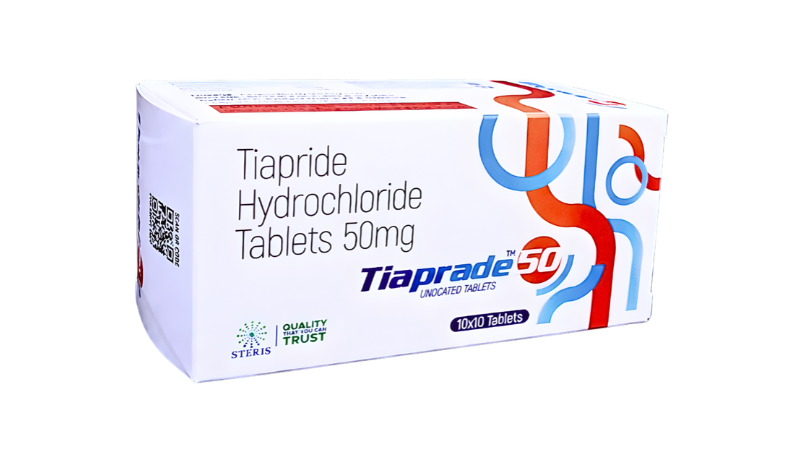


What Is Tiapride 50 mg Used For? A Complete Guide
Oct 22, 2026
TIAPRADE 50, from Steris Healthcare, is a tablet containing tiapride hydrochloride equivalent to tiapride 50 mg. Tiapride belongs to a group of medicines called substituted benzamide antipsychotics (neuroleptics). Unlike many older antipsychotics, it acts quite selectively on specific dopamine receptors in the brain, which shapes both its benefits and its side-effect profile.
The tiapride uses that doctors commonly consider include:
- Agitation and aggressive behaviour, particularly in elderly patients
- Alcohol withdrawal symptoms, such as restlessness, irritability and agitation
- Involuntary movement disorders, including chorea (as seen in Huntington’s disease) and tardive dyskinesia
- Tics and Tourette’s syndrome, in some specialist settings
- Severe behavioural disturbances where other treatments have not worked
- Painful conditions, where it is sometimes used as an adjunct under specialist guidance
Please note that approved indications differ between countries and brands. TIAPRADE 50 is a prescription-only medicine, and the decision to use it, and for how long, belongs to your doctor.
Why Is Tiapride Important?
Many drugs that calm agitation or control abnormal movements bring heavy baggage: strong sedation, severe stiffness, significant weight gain or effects on the heart. Tiapride earned its place because it offers a more targeted alternative.
Here is why tiapride hydrochloride matters in clinical practice:
- It fills a gap in alcohol withdrawal care. Patients who cannot tolerate or should not receive other agents may benefit from a medicine that eases agitation without heavy sedation.
- It helps in the elderly. Agitation in older adults is common and difficult to manage. A selective agent used at low doses can be a practical option when non-drug measures are not enough.
- It treats movement disorders. Abnormal involuntary movements are distressing and socially isolating. Dopamine-modulating treatment can reduce them.
- It has a relatively gentle profile compared with many classical antipsychotics. At usual doses, it tends to cause fewer movement-related side effects than strongly D2-blocking drugs, though this is not a guarantee.
For patients and caregivers, the value is simple: calmer days, better sleep, fewer distressing movements and a more manageable routine.
Mechanism of Action
Tiapride is a selective dopamine D2 and D3 receptor antagonist. Dopamine is a chemical messenger involved in movement, mood, motivation and behaviour. When dopamine signalling becomes excessive or disordered in certain brain regions, symptoms such as agitation, abnormal movements or aggressive behaviour can appear.
Key points about its mechanism:
- Selective action: Tiapride preferentially blocks D2 and D3 receptors in limbic areas of the brain, which are linked to emotion and behaviour.
- Low affinity for other receptors: It has little effect on serotonin, histamine, adrenaline or acetylcholine receptors, which helps explain why it causes less sedation, dry mouth and low blood pressure than many older antipsychotics.
- Rapid, modest effect: It generally acts without strong sedation, which is why it is often described as having a calming rather than sedating effect.
- Kidney elimination: Tiapride is excreted mostly unchanged by the kidneys, which is why dose adjustment is important in kidney impairment.
Key Benefits
What Are the Benefits of TIAPRADE 50?
- Calms agitation and aggression without causing deep sedation in most patients.
- Supports alcohol withdrawal management, easing restlessness, irritability and anxiety during detoxification.
- Reduces involuntary movements in conditions such as chorea and tardive dyskinesia.
- Suitable for older adults when carefully dosed, as one of the options for behavioural disturbances.
- Simple, flexible dosing with a 50 mg tablet strength that allows careful titration.
- Lower interaction burden than many psychiatric drugs, because it is not heavily metabolised by the liver.
- Generally less sedating compared with many older antipsychotic medicines.
Indications, Efficacy and Clinical Evidence
Here is a balanced summary of what the evidence shows:
- Alcohol withdrawal: Clinical studies, mainly in Europe, have evaluated tiapride in alcohol withdrawal and found improvement in agitation and withdrawal symptoms, sometimes used alongside or instead of other agents. Benzodiazepines remain the standard first-line therapy for many patients, and tiapride is often considered where they are unsuitable or as an adjunct.
- Agitation in the elderly: Trials in older adults with behavioural disturbances have reported reductions in agitation and aggression at low doses, with generally acceptable tolerability. As with all antipsychotics in older people with dementia, careful risk assessment is essential.
- Movement disorders: Studies and clinical experience support its use in chorea and tardive dyskinesia, and some evidence supports its use in tics and Tourette’s syndrome, though larger modern trials are limited.
- Overall quality of evidence: Much of the data comes from older or smaller studies. That is why treatment should be individualised, monitored and regularly reviewed by a doctor.
Dosage Guidelines
The dose of tiapride must always be set by your doctor based on your condition, age and kidney function. The information below is general.
- Alcohol withdrawal: Doses commonly range from 300 to 800 mg per day in divided doses for a short initial period, then gradually reduced, under medical supervision.
- Agitation and aggression in elderly patients: Lower doses are typically used, often in the range of 100 to 200 mg per day in divided doses.
- Movement disorders: Commonly 300 to 400 mg per day in divided doses, adjusted to response.
- Kidney impairment: The dose is reduced based on the degree of impairment. This is important because the kidneys clear the drug.
- How to take it: Swallow the tablet with water, with or without food, at the times your doctor prescribed. Try to take doses at evenly spaced intervals.
- Missed dose: Take it when you remember, but skip it if it is nearly time for the next dose. Never double up.
- Do not stop suddenly after long-term use without medical advice.
Side Effects
Many patients tolerate tiapride well, especially at lower doses. Possible side effects include:
- Drowsiness or sleepiness
- Dizziness
- Insomnia
- Fatigue or weakness
- Headache
- Constipation or nausea
- Raised prolactin levels, which may cause breast tenderness, milk discharge (galactorrhoea), missed periods or sexual difficulties
- Weight gain
- Muscle stiffness, tremor or restlessness (extrapyramidal symptoms)
These often improve over time or with dose adjustment. Do not change your dose yourself.
Available Substitutes
Several pharmaceutical companies in India and elsewhere market tiapride hydrochloride tablets with the same 50 mg strength. Brand availability varies by region and pharmacy. Always confirm with your doctor or pharmacist that a substitute has the same salt, strength and formulation before switching. Do not swap between brands without professional advice.
Precautions and Warnings
Do not use tiapride if you:
- Are allergic to tiapride or any ingredient in the tablet
- Have prolactin-dependent tumours, such as breast cancer or a pituitary prolactinoma
- Have phaeochromocytoma
- Are taking levodopa or certain dopamine agonists (a direct pharmacological opposition)
- Are taking other medicines that can seriously prolong the QT interval, unless your doctor advises it
Use with caution and tell your doctor if you:
- Have kidney disease, since doses need to be reduced
- Have heart disease, a slow heart rate, low potassium or magnesium, or a family history of heart rhythm problems
- Have Parkinson’s disease
- Have epilepsy or a history of seizures
- Are elderly, particularly with dementia, as antipsychotics carry a higher risk of stroke and mortality in this group
- Have a history of blood clots
- Are pregnant or breastfeeding. Use only if your doctor decides the benefit outweighs the risk.
Practical advice:
- Avoid driving or operating machinery until you know how the medicine affects you.
- Report any new movement, heart or fever symptoms promptly.
- Keep regular follow-up appointments so your doctor can review whether you still need the medicine.
- Store the tablets in a cool, dry place away from children.
Frequently Asked Questions (FAQs)
1. What is tiapride 50 mg used for?
Tiapride 50 mg is used for agitation and aggression (especially in the elderly), alcohol withdrawal symptoms and involuntary movement disorders such as chorea and tardive dyskinesia.
2. What is TIAPRADE 50?
TIAPRADE 50 is a tablet from Steris Healthcare containing tiapride hydrochloride equivalent to 50 mg of tiapride.
3. What type of medicine is tiapride?
It is a substituted benzamide antipsychotic that selectively blocks dopamine D2 and D3 receptors.
4. How does tiapride work?
It reduces excessive dopamine activity in certain brain regions, helping to calm agitation and reduce abnormal movements.
5. Is tiapride a sleeping pill?
No. It may cause drowsiness in some people, but it is not a hypnotic and is not meant to be used as a sleep aid.
6. Is tiapride used for alcohol withdrawal?
Yes. It is used in some countries to ease agitation and restlessness during alcohol withdrawal, usually under medical supervision.
7. Can tiapride be used for anxiety?
It is not a standard anxiety treatment. Doctors may use it for agitation, but anxiety disorders usually have other first-line therapies.
8. What is the usual dose of tiapride?
It varies by condition, from about 100 mg per day in some elderly patients to 300 to 800 mg per day in alcohol withdrawal. Always follow your doctor’s prescription.
9. Can I take tiapride with food?
Yes. It can be taken with or without food.
10. What are the common side effects of tiapride?
Drowsiness, dizziness, insomnia, fatigue, headache, constipation and hormonal effects such as raised prolactin.
Conclusion
TIAPRADE 50 by Steris Healthcare, containing tiapride hydrochloride 50 mg, is a selective dopamine D2/D3 antagonist used for agitation, alcohol withdrawal symptoms and certain involuntary movement disorders. Its main appeal is a relatively calming, less sedating profile with a straightforward dosing structure. At the same time, it is a prescription antipsychotic that needs careful dosing, especially in older adults and those with kidney or heart conditions. Use it exactly as your doctor directs, report unusual symptoms early, and attend follow-ups.
For Further Information:
Mail Us: contact@sterispharma.com or info@sterispharma.com
Call Now: +91 8824175417, +91 9982524671
Recent Post
Fluticasone Furoate Nasal Spray: Uses, Benefits and Precautions
Atomoxetine 10 mg Tablet Price in India
L-Carnitine and CoQ10: Benefits, Uses and Precautions
Doxepin Hydrochloride 25 mg Tablets: Uses, Benefits & Price in India

Understanding the Benefits of Astaxanthin and Lycopene Tablets
Donepezil Hydrochloride 10 mg Tablet – Uses, Price & Buy Online in India
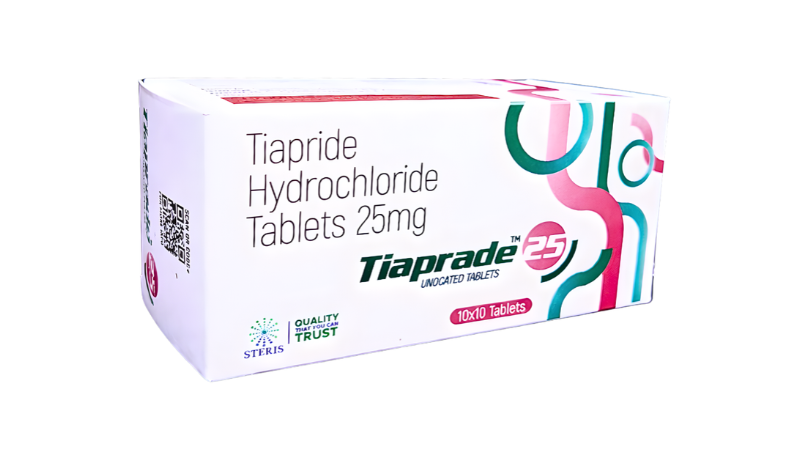
Tiapride 25 mg: Uses, Dosage and Possible Side Effects
Aceclofenac, Paracetamol and Serratiopeptidase: Uses, Dosage and Precautions
How Do Linagliptin and Metformin Work Together to Manage Type 2 Diabetes?
Oxymetazoline Nasal Solution: A Complete Guide to Uses and Safety

