




Tiapride 25 mg: Uses, Dosage and Possible Side Effects
Oct 22, 2026
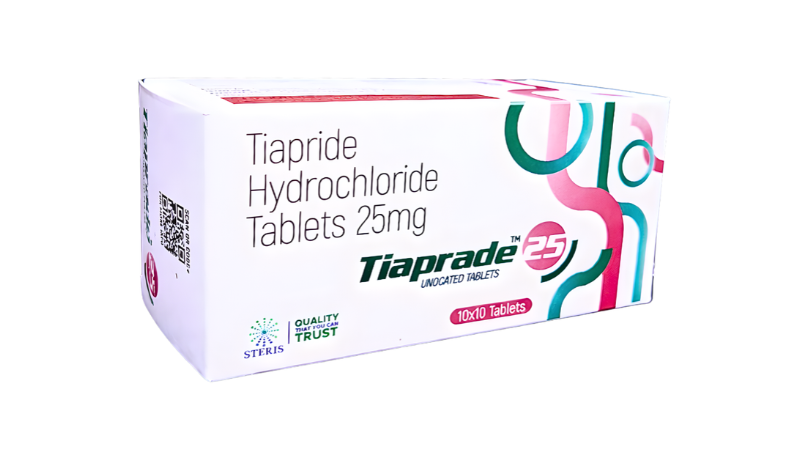
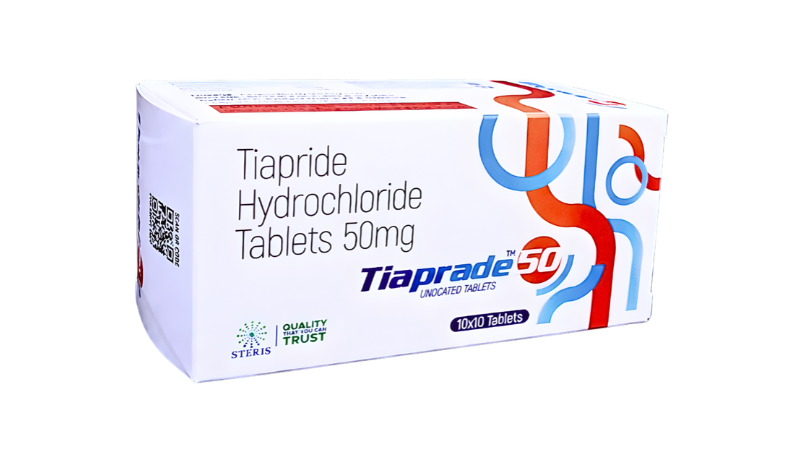
TIAPRADE 25, from Steris Healthcare, belongs to the second group. Each tablet contains tiapride hydrochloride equivalent to tiapride 25 mg, a prescription medicine that acts on dopamine pathways in the brain.
Tiapride is a substituted benzamide, a class related to, but distinct from, conventional antipsychotics. Doctors prescribe tiapride hydrochloride tablets mainly for:
- Alcohol withdrawal symptoms, such as agitation, irritability, anxiety, restlessness and aggression
- Abnormal involuntary movements (dyskinesias), including those linked to long-term antipsychotic treatment (tardive dyskinesia) and some movement disorders such as Huntington’s chorea
- Agitation and aggressive behaviour, particularly in elderly people, when other measures have not worked
- Behavioural disturbances in selected patients, under specialist care
The 25 mg strength is a lower-dose tablet. It is commonly used for gradual dose titration, for elderly or frail patients, for people with reduced kidney function and for flexible dosing under a doctor’s guidance.
TIAPRADE 25 is a prescription-only medicine. It should be started, adjusted and stopped only by a qualified physician.
Why Is Tiapride Important?
Alcohol withdrawal and movement disorders are conditions where the right medicine can change how safe and manageable recovery is.
- Alcohol withdrawal can bring tremor, sweating, anxiety, sleeplessness and, in severe cases, seizures or delirium. Many people drop out of treatment because of distressing symptoms. Controlling agitation can help them stay in a supervised programme.
- Drug-induced or inherited movement disorders can affect speech, swallowing, walking and dignity. A medicine that reduces abnormal movements can improve daily function.
- Agitation in older adults is hard on patients and caregivers. Many older medicines for this problem cause heavy sedation or worsen confusion.
Tiapride is important because it offers a selective option. It blocks dopamine D2 and D3 receptors mainly in the limbic system, the brain region tied to emotion and behaviour. It has relatively little effect on other receptor systems, so it tends to be less sedating than many traditional antipsychotics. That is not the same as having no side effects, as described below.
Mechanism of Action
How Tiapride Works
Dopamine is a chemical messenger involved in movement, mood, motivation and reward. Too much dopaminergic signalling in certain pathways can contribute to agitation, aggression and abnormal movements.
- Selective D2/D3 antagonism: Tiapride blocks dopamine D2 and D3 receptors, with preference for limbic regions over the motor areas (the striatum). This is why it can calm behaviour and reduce abnormal movements without causing as much parkinsonian stiffness as some other dopamine blockers.
- Low affinity for other receptors: Unlike many older antipsychotics, it has little affinity for serotonin, histamine, adrenergic or muscarinic receptors. In practice this usually means less weight gain, dry mouth and low blood pressure, although these can still occur.
- Pharmacokinetics in brief: Tiapride is absorbed orally, reaches peak levels in roughly 1 to 2 hours, has a fairly short half-life (around 3 to 4 hours), is not extensively metabolised and is largely excreted unchanged by the kidneys. This is why kidney function matters so much for dosing.
Key Benefits
What Are the Benefits of TIAPRADE 25?
- Eases alcohol withdrawal agitation: Helps reduce restlessness, irritability, anxiety and aggression during detoxification.
- Reduces abnormal movements: May improve dyskinesias and chorea in appropriate patients.
- Calms behavioural disturbances: Useful for agitation and aggression in elderly patients when non-drug approaches are not enough.
- Generally lower sedation than older antipsychotics: Many patients remain alert enough for therapy and daily activities, though drowsiness still occurs.
- Flexible dosing: The 25 mg strength allows gentle titration and kidney-based dose adjustment.
- Minimal liver metabolism: Fewer liver-related drug interactions than medicines processed heavily by liver enzymes.
- Not a benzodiazepine: It does not carry the same dependence profile, which can matter in patients with a history of substance use. A doctor will still decide whether it should be used alone or alongside other treatments.
Indications, Efficacy and Clinical Evidence
Here is an honest summary of what the evidence shows.
- Alcohol withdrawal and dependence: Several clinical studies, mostly from Europe, reported that tiapride reduced withdrawal-related agitation and anxiety compared with placebo. Some trials found it comparable to other agents used in detoxification. Later studies looked at its role in supporting abstinence in alcohol-dependent patients, with mixed but generally supportive results. Many trials were small, older and not uniform in design.
- Dyskinesia and chorea: Small controlled studies and clinical experience suggest tiapride can reduce abnormal movements in tardive dyskinesia and Huntington’s disease. It is typically seen as a symptom-relief option and not a cure.
- Agitation in the elderly: Reports suggest benefit for agitation and aggression, with generally better tolerability than some older antipsychotics. Because antipsychotic-class drugs carry safety concerns in elderly patients with dementia, specialists weigh the risks carefully.
- Tourette syndrome and tics: Some studies in children and adults showed tic reduction, but this use varies by country and specialist practice.
What to keep in mind: Tiapride has a long history of use in Europe and Asia, but it has not been tested in the large, modern, multi-centre trials that some newer medicines have. Doctors therefore base decisions on the available studies, clinical experience and the individual patient. Evidence strength varies by indication.
Side Effects
Many people tolerate tiapride well, especially at low doses. Possible side effects include:
- Drowsiness or sleepiness
- Dizziness
- Insomnia or vivid dreams
- Fatigue or weakness
- Headache
- Nausea, constipation or dry mouth
- Mild tremor or muscle stiffness
- Raised prolactin hormone, which may cause breast tenderness, milk discharge (galactorrhoea), missed or irregular periods, reduced libido or erectile difficulty
- Weight gain (usually less than with many antipsychotics)
Most of these are mild and dose-related. Tell your doctor if they persist or bother you.
Available Substitutes
Other products containing tiapride hydrochloride in the same strength are sold by different pharmaceutical companies in India and elsewhere, and brand names vary by country. A pharmacist can show you which equivalents are available locally. Never switch brands, strengths or formulations by yourself. Ask your doctor or pharmacist to confirm that the tiapride 25 mg salt and strength match your prescription. Do not substitute a different dopamine-blocking drug without medical advice, because they differ in side effects and dosing.
Dosage Guidelines
Dosing is highly individual and depends on the condition, age, kidney function and response. The information below is general and not a prescription.
- Starting approach: Doctors often begin with a low dose and increase gradually based on response and tolerability. The 25 mg tablet helps with this.
- Alcohol withdrawal: Doses are usually higher in the first days under supervision and then tapered down. Total daily doses are generally divided into two to three administrations.
- Movement disorders and agitation: Lower, divided doses are typical, adjusted according to symptom control.
- Elderly patients: Lower starting doses and slower increases are generally preferred.
- Kidney impairment: Because tiapride is eliminated through the kidneys, doses are commonly reduced in proportion to the degree of impairment, and sometimes avoided in severe cases. Your doctor will check your kidney function.
- Children: Use only on specialist paediatric advice, with weight-based dosing.
- How to take it: Swallow with water, with or without food, as prescribed. Take it at the same times each day.
- Missed dose: Take it when you remember unless the next dose is close. Never double up.
- Stopping: Do not stop suddenly after prolonged use without checking with your doctor. A gradual reduction is often preferred.
- Duration: Treatment for alcohol withdrawal is usually short. For movement disorders, the length depends on clinical review.
Precautions and Warnings
Do not use tiapride if you:
- Are allergic to tiapride, other benzamides or any ingredient in the tablet
- Have a prolactin-dependent tumour, such as a prolactinoma or breast cancer
- Have phaeochromocytoma
- Are taking levodopa or dopamine agonists (such as ropinirole or pramipexole) for Parkinson’s disease, except under specialist direction, as the effects oppose each other
- Are pregnant, unless your doctor decides the benefit clearly outweighs the risk
Use with caution and discuss with your doctor if you have:
- Kidney disease
- Heart disease, a slow heartbeat, a known long QT interval or low potassium or magnesium levels
- Parkinson’s disease
- Epilepsy or a history of seizures
- Dementia, as antipsychotic-class drugs have been linked to higher risks in elderly patients with dementia
- Risk factors for stroke or blood clots
- Breast cancer risk factors or hormone-related conditions
Interactions to discuss with your doctor:
- Alcohol: Increases sedation. Avoid it while on treatment.
- Other sedatives, sleeping pills, opioids or antihistamines: May add to drowsiness.
- QT-prolonging medicines (certain antiarrhythmics, some antibiotics, other antipsychotics): Increased risk of heart rhythm problems.
- Levodopa and dopamine agonists: Opposing effects, so avoid unless advised.
- Blood pressure medicines: May add to low blood pressure.
- Lithium: Specialist monitoring is needed.
Everyday safety tips:
- Do not drive or operate machinery until you know how the tablet affects you.
- Rise slowly from sitting or lying down to avoid dizziness.
- Pregnancy and breastfeeding: Tell your doctor immediately. Breastfeeding is generally not recommended while on this medicine because it passes into breast milk.
- Report any new tremor, stiffness, fever or restlessness promptly.
- Keep all follow-up appointments and any recommended tests.
- Store below 30°C, away from moisture, light and children.
Frequently Asked Questions (FAQs)
1. What is tiapride used for?
Tiapride is used for alcohol withdrawal symptoms such as agitation and anxiety, abnormal involuntary movements (dyskinesias), and agitation or aggression in selected patients, particularly the elderly.
2. What is TIAPRADE 25?
TIAPRADE 25 is a tablet from Steris Healthcare containing tiapride hydrochloride equivalent to tiapride 25 mg.
3. What is tiapride hydrochloride?
It is the salt form of tiapride, a substituted benzamide that blocks dopamine D2 and D3 receptors in the brain.
4. How does tiapride 25 mg work?
It blocks dopamine receptors, mainly in the limbic system, which helps calm agitation and reduce abnormal movements with less effect on motor areas than many older antipsychotics.
5. Is tiapride an antipsychotic?
It is a benzamide neuroleptic, related to antipsychotics but with a more selective action. Doctors often use it at lower doses for behavioural and movement problems.
6. Is tiapride used for alcohol withdrawal?
Yes. It is commonly used to reduce agitation, irritability and anxiety during alcohol withdrawal under medical supervision.
7. Is tiapride addictive?
Tiapride is not considered habit-forming in the way benzodiazepines can be, but it should still be used only as prescribed.
8. Does tiapride cause drowsiness?
It can, especially at the beginning of treatment or at higher doses. Avoid driving until you know how it affects you.
9. What are the common side effects of tiapride?
Drowsiness, dizziness, insomnia, fatigue, headache, constipation, and hormone-related effects such as breast tenderness or irregular periods.
10. What are the serious side effects of tiapride?
Neuroleptic malignant syndrome, heart rhythm changes (QT prolongation), severe movement problems, seizures, severe allergic reactions and blood clots.
Conclusion
TIAPRADE 25 by Steris Healthcare delivers tiapride 25 mg in a flexible, low-dose tablet. Because tiapride hydrochloride selectively blocks dopamine receptors in key brain regions, it is used to ease alcohol withdrawal agitation, reduce abnormal movements and manage behavioural disturbances, especially in older adults. Its relatively low sedation and low dependence potential are real advantages, but it still needs careful dosing, kidney awareness and attention to heart and movement-related side effects. Used under medical supervision, it can be a valuable part of a broader treatment plan.
For Further Information:
Mail Us: contact@sterispharma.com or info@sterispharma.com
Call Now: +91 8824175417, +91 9982524671
Recent Post
Fluticasone Furoate Nasal Spray: Uses, Benefits and Precautions
Atomoxetine 10 mg Tablet Price in India
L-Carnitine and CoQ10: Benefits, Uses and Precautions
Doxepin Hydrochloride 25 mg Tablets: Uses, Benefits & Price in India

Understanding the Benefits of Astaxanthin and Lycopene Tablets
Donepezil Hydrochloride 10 mg Tablet – Uses, Price & Buy Online in India
What Is Tiapride 50 mg Used For? A Complete Guide
Aceclofenac, Paracetamol and Serratiopeptidase: Uses, Dosage and Precautions
How Do Linagliptin and Metformin Work Together to Manage Type 2 Diabetes?
Oxymetazoline Nasal Solution: A Complete Guide to Uses and Safety

