


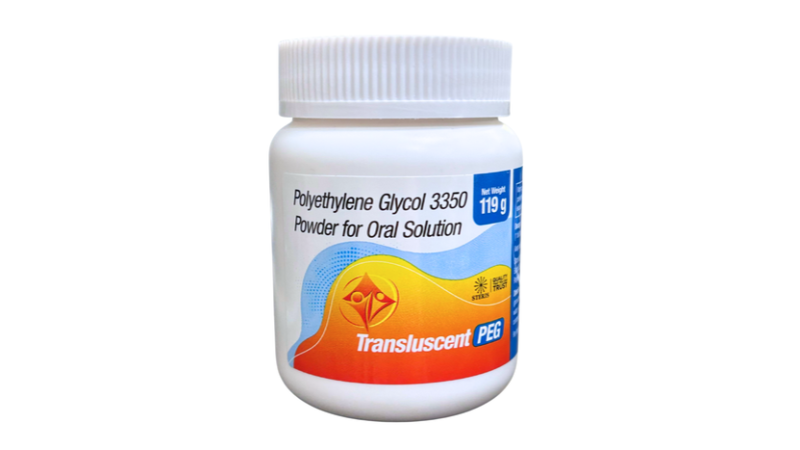


Polyethylene Glycol 3350 Powder: Uses, Dosage, Precautions, and Price
Oct 19, 2026
TRANSLUSCENT PEG POWDER is a polyethylene glycol 3350 powder for oral solution, made by Steris Healthcare. You dissolve the powder in water or another suitable drink and swallow it. It is an osmotic laxative, which means it works with the water already in your intestine instead of stimulating the bowel wall.
Polyethylene glycol is a long-chain, inert polymer. The “3350” refers to its average molecular weight. Because the molecules are large, they are barely absorbed from the gut. They stay in the intestine, hold on to water, and keep stool soft.
Doctors commonly use polyethylene glycol 3350 for:
- Occasional constipation in adults, such as after travel, a change in diet or a period of low activity.
- Chronic constipation, including chronic idiopathic constipation, where long-term, gentle treatment is needed.
- Constipation linked to medicines, such as opioid painkillers, certain antidepressants, iron supplements and some blood pressure drugs, when a doctor judges a laxative appropriate.
- Bowel preparation, where higher doses are used under medical supervision before colonoscopy, surgery or imaging. The dose and protocol for this are always set by the treating doctor.
- Faecal impaction and stool softening, as advised by a physician.
If you buy it for home use, check the label and your doctor’s advice. Bowel preparation protocols are very different from the dosing used for everyday constipation.
Why Is Polyethylene Glycol 3350 Important?
Constipation is easy to dismiss, but it affects comfort, sleep, appetite and daily routine. In clinical practice it is one of the most common digestive complaints. Long-term straining is linked to haemorrhoids, anal fissures and, in older adults, faecal impaction.
Polyethylene glycol 3350 matters for these reasons:
- It is well studied. Professional guidelines on chronic constipation recognise PEG as a first-line option.
- It suits long-term use. Many stimulant laxatives are meant for short courses. PEG 3350 is generally used for longer periods under medical advice because it does not irritate the bowel lining.
- It is largely non-absorbed. Very little enters the bloodstream, so it has few systemic interactions.
- It is predictable. The effect is gradual, usually one to three days at standard doses, with fewer cramps than stimulant products.
- It fits many patients. Prescribers use it across adult age groups, and under medical supervision in children, in people on opioids, and in older adults.
Steris Healthcare is a WHO-GMP and ISO 9001-certified pharmaceutical manufacturer based in Jaipur. Quality-controlled manufacturing matters for a powder you dissolve and drink, because consistent composition and clean handling affect how reliably it works.
Key Benefits
What Are the Benefits of Polyethylene Glycol 3350?
- Softens stool gently. The retained water makes stool softer and easier to pass without forcing the bowel to contract.
- Reduces straining. Easier passage lowers pressure on the anal area, which can help people with haemorrhoids or fissures.
- Non-habit-forming profile. Osmotic laxatives like PEG 3350 are not known to cause the dependence associated with overuse of stimulant laxatives, when used as directed.
- Largely free of electrolyte disturbance at standard doses. PEG 3350 is not significantly absorbed or broken down by gut bacteria, so it produces little gas or bloating compared with some sugar-based laxatives.
- Odourless, tasteless dissolving powder. It mixes into water, tea or juice, which helps adherence for people who dislike taking pills.
- Flexible dosing. A doctor can adjust the amount to the stool response.
- Useful in bowel preparation. At higher supervised doses it supports effective bowel cleansing before procedures.
- Few drug interactions. Because little enters the bloodstream, interactions are limited. Taking other oral medicines at a separate time is still sensible (see Precautions).
Mechanism of Action
Polyethylene glycol 3350 works by osmosis. After you drink the solution, the PEG molecules travel through the stomach and small intestine and reach the colon almost unchanged. Because they are large and not absorbed, they stay in the bowel.
Water follows the PEG molecules by osmotic pull. The result:
- More water stays in the stool. Stool becomes softer and bulkier in volume of liquid, not in dry fibre.
- Stool is easier to pass. Softer stool moves through the colon more readily.
- Colonic transit improves. The extra fluid stretches the bowel gently and encourages normal movement.
PEG 3350 does not stimulate the nerve endings in the bowel wall and is not fermented by gut bacteria. This is why it tends to cause less cramping and gas than stimulant or sugar-based laxatives.
Indications, Efficacy and Clinical Evidence
Indications
Polyethylene glycol 3350 powder for oral solution is indicated for the treatment of occasional constipation and, under medical direction, chronic constipation. Higher-dose PEG regimens are used for bowel cleansing before colonoscopy and similar procedures. Use in children, in faecal impaction, and in other conditions should be decided by a doctor.
Efficacy and Clinical Evidence
Polyethylene glycol is among the most extensively studied laxatives. The general picture from published randomised trials, systematic reviews and guidelines is consistent:
- Chronic constipation in adults: Randomised controlled trials show that PEG 3350 increases the number of spontaneous bowel movements per week and improves stool consistency compared with placebo. Gastroenterology guideline bodies have recommended PEG as a strong first-line option for chronic idiopathic constipation.
- Comparison with other laxatives: Several trials and meta-analyses report that PEG performs as well as or better than lactulose in stool frequency and consistency, with less flatulence and abdominal pain.
- Long-term use: Studies of extended use, up to six months, report maintained effect without evidence of tolerance when used as directed.
- Opioid-induced constipation: PEG is commonly used alongside opioid therapy. Evidence here is more limited than in idiopathic constipation, and doctors often combine it with other measures.
- Paediatric use: Paediatric gastroenterology guidance supports PEG 3350 as a first-line maintenance treatment for functional constipation and for disimpaction, under a doctor’s supervision.
- Bowel preparation: High-volume and split-dose PEG-based regimens are long-established standards for bowel cleansing before colonoscopy.
Dosage Guidelines
The strength per sachet or per scoop of TRANSLUSCENT PEG POWDER is:
| Use | Typical approach |
|---|---|
| Adults – occasional or chronic constipation | A commonly used dose is about 17 g of polyethylene glycol 3350 dissolved in about 120–240 mL (4–8 oz) of water or another beverage, once daily. |
| Duration | Many labels advise short-term use for occasional constipation. Chronic use should be under a doctor’s supervision. |
| Children | Dose depends on age and weight, and must be set by a doctor. |
| Bowel preparation | Higher volumes and split dosing are used. Follow the exact protocol from your doctor or hospital. |
How to take it:
- Measure the dose with the provided cap or sachet.
- Stir the powder into the recommended amount of liquid until it dissolves fully.
- Drink the whole solution.
- Expect a bowel movement in roughly 24 to 72 hours with regular use. It is not an instant-relief laxative.
- Drink enough fluids through the day.
- If you miss a dose, take it when you remember, unless it is nearly time for the next one. Do not double up.
Side Effects
Most people tolerate polyethylene glycol 3350 well. When side effects occur, they are usually mild and related to the laxative effect.
Common side effects:
- Bloating or a feeling of fullness
- Abdominal cramps or discomfort
- Nausea
- Gas (flatulence)
- Loose stools or diarrhoea, especially if the dose is too high
Available Substitutes
Substitutes for polyethylene glycol 3350 include other laxatives from the same osmotic class and from other classes. Lactulose is another osmotic laxative with a longer history in India, though it may cause more gas and bloating. Bulk-forming agents such as ispaghula (psyllium) husk add fibre. Stimulant laxatives such as bisacodyl or senna act on the bowel wall and are generally used short-term. Stool softeners and glycerine suppositories are also used. Other polyethylene glycol 3350 powders are available from different manufacturers. The right alternative depends on your condition, age and other medicines, so do not switch without asking your doctor or pharmacist.
Precautions & Warnings
- Do not use if you have a known or suspected bowel obstruction, perforation, toxic megacolon, or severe inflammatory bowel disease flare, unless a doctor specifically directs it.
- Do not use if you are allergic to polyethylene glycol or any other ingredient in the product.
- See a doctor first if you have unexplained abdominal pain, nausea or vomiting, sudden change in bowel habits lasting more than two weeks, or rectal bleeding.
- Long-term use: Do not use beyond the advised duration without medical supervision. Persistent constipation may signal an underlying condition that needs evaluation.
- Kidney disease, heart disease or electrolyte problems: Use only under medical supervision, particularly with bowel-prep doses.
- Pregnancy and breastfeeding: Ask your doctor before use. PEG is minimally absorbed, but individual advice is essential.
- Children and older adults: Use only under medical advice, with doses based on age, weight and condition.
- Other medicines: Because PEG moves fluid through the bowel, take other oral medicines at a separate time as your doctor advises, particularly medicines where timing or absorption matters.
- Hydration: Keep drinking fluids while you use it.
- Storage: Store in a cool, dry place, away from direct sunlight, and out of reach of children. Use the reconstituted solution within the time stated on the label.
Frequently Asked Questions
1. What is polyethylene glycol 3350 powder for oral solution?
It is an osmotic laxative powder that you dissolve in liquid and drink. It draws water into the bowel to soften stool and ease constipation.
2. What is TRANSLUSCENT PEG POWDER used for?
It is used for occasional and chronic constipation and, under medical supervision, for bowel cleansing before certain procedures.
3. Who manufactures TRANSLUSCENT PEG POWDER?
It is made by Steris Healthcare Private Limited, a WHO-GMP and ISO 9001-certified pharmaceutical manufacturer in Jaipur, India.
4. How does polyethylene glycol 3350 work?
Its large molecules stay in the intestine and hold water by osmosis, so stool becomes softer and passes more easily.
5. How long does polyethylene glycol take to work?
Most people see a bowel movement within 1 to 3 days of regular use. It is not designed for instant relief.
6. Is polyethylene glycol 3350 safe for long-term use?
Studies have supported extended use under medical supervision. You should not use it long-term without a doctor’s advice.
7. What is the usual dose of polyethylene glycol 3350?
A commonly used adult dose is about 17 g dissolved in 120–240 mL of liquid once daily, but you must follow the label and your doctor’s instructions.
8. Can I mix polyethylene glycol 3350 powder with tea, juice or coffee?
Yes. It dissolves in water and most clear beverages. Stir until fully dissolved and drink the whole amount.
9. What are the common side effects of polyethylene glycol?
Bloating, gas, nausea, abdominal cramps and loose stools are the most common effects.
10. What are the serious side effects of polyethylene glycol 3350?
Severe diarrhoea, dehydration, allergic reactions, rectal bleeding, severe abdominal pain, and signs of electrolyte imbalance need urgent medical attention.
Conclusion
TRANSLUSCENT PEG POWDER from Steris Healthcare contains polyethylene glycol 3350, a well-studied osmotic laxative that softens stool by retaining water in the bowel. Its gentle, predictable action, minimal absorption and suitability for supervised long-term use have made polyethylene glycol 3350 powder for oral solution a standard choice for constipation and bowel preparation. Used correctly, with enough fluids and the right dose, it can bring steady relief without the cramping typical of stimulant laxatives. Always follow your doctor’s advice, and seek medical help if constipation persists or warning symptoms appear.
For Further Information:
Mail Us: contact@sterispharma.com or info@sterispharma.com
Call Now: +91 8824175417, +91 9982524671
Recent Post
Probiotic Sachet with FOS, L-Glutamine & Colostrum – Uses and Benefits
How Telmisartan and Nebivolol Work to Manage High Blood Pressure
Pimavanserin 34 mg Capsules – Uses & Benefits
Voglibose, Glimepiride and Metformin: Uses, Benefits and Side Effects
What Is Minocycline Hydrochloride Used For? A Complete Guide
Voglibose and Repaglinide Tablets – Uses, Price & Buy Online in India
Amorphous Hydrogel with Colloidal Silver: Uses & Benefits
Donepezil Hydrochloride with Memantine Hydrochloride Uses, Benefits & Price in India
Amino Acid with Vitamin and Mineral Tablets Nutritional Support Explained
Fluticasone Furoate, Umeclidinium Bromide & Vilanterol Inhalation Powder

