


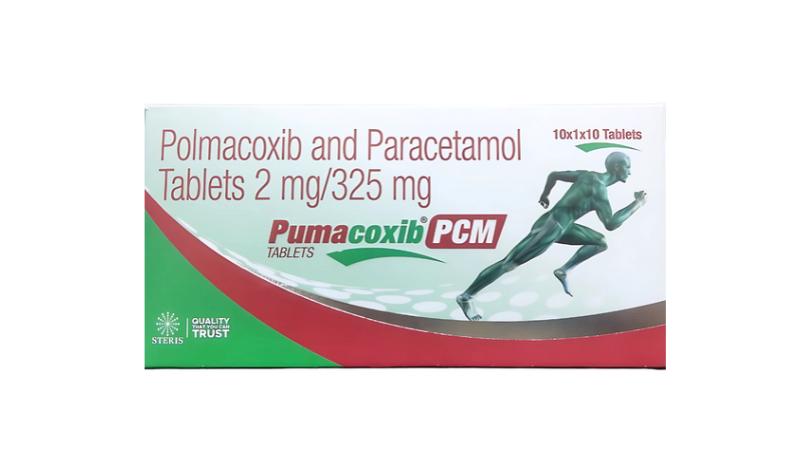


Polmacoxib 2 mg + Paracetamol 325 mg for Pain and Inflammation
Nov 28, 2026
What Is Polmacoxib 2 mg + Paracetamol 325 mg?
Polmacoxib 2 mg + Paracetamol 325 mg is a combination pain-relief medicine containing two active ingredients that work through different mechanisms to help manage acute painful inflammatory conditions.
It combines Polmacoxib, a selective cyclooxygenase-2 (COX-2) inhibitor belonging to the non-steroidal anti-inflammatory drug (NSAID) category, with Paracetamol, an analgesic and antipyretic medicine commonly used to relieve pain and reduce fever.
This combination is intended for short-term management of mild to moderate acute somatic painful inflammatory conditions, according to the product prescribing information.
Polmacoxib helps reduce inflammation and associated pain, while Paracetamol acts primarily through the central nervous system to provide additional pain relief.
The combination may be prescribed by healthcare professionals for selected acute inflammatory pain conditions, depending on the patient's medical history, symptoms, and clinical requirements.
Composition of Polmacoxib 2 mg + Paracetamol 325 mg
Each tablet contains:
- Polmacoxib – 2 mg: A selective COX-2 inhibitor that helps control inflammatory processes and associated pain.
- Paracetamol IP – 325 mg: An analgesic that helps reduce pain and fever.
Therapeutic category: NSAID, analgesic, and antipyretic.
Dosage form: Oral tablet.
What Is Polmacoxib 2 mg + Paracetamol 325 mg Used For?
Polmacoxib 2 mg + Paracetamol 325 mg is prescribed for short-term management of acute mild to moderate painful inflammatory conditions.
Depending on the diagnosis and the treating doctor's assessment, its potential clinical applications may include:
- Acute inflammatory pain: Helps manage pain associated with inflammation.
- Dental pain: May be prescribed for selected acute dental pain conditions, including pain associated with dental extraction.
- Musculoskeletal pain: May be considered for certain short-term inflammatory muscle and soft-tissue pain conditions.
- Post-procedural pain: May be considered for suitable acute painful inflammatory conditions following medical or dental procedures.
- Pain associated with swelling: Polmacoxib helps reduce inflammatory processes that contribute to swelling and discomfort.
The Government of India's CDSCO issued permission in October 2023 for a Phase III clinical trial of this specific fixed-dose combination, with acute pain due to dental extraction as the trial indication.
Importantly, the clinical-trial permission itself is not a marketing approval or proof of effectiveness for every type of pain. Always follow the indication and instructions in the applicable marketed product's prescribing information.
How Does Polmacoxib 2 mg + Paracetamol 325 mg Work?
The combination works through two complementary pain-relief mechanisms.
1. Mechanism of Action of Polmacoxib
Polmacoxib is a selective COX-2 inhibitor. The cyclooxygenase-2 enzyme participates in the production of prostaglandins, chemical mediators involved in inflammation, pain, and swelling.
By inhibiting COX-2 activity, Polmacoxib helps reduce prostaglandin production and inflammatory pain signalling.
It also demonstrates carbonic anhydrase inhibition in pharmacological studies. Its complete clinical significance is not fully established.
2. Mechanism of Action of Paracetamol
Paracetamol works mainly through central pain-processing pathways. It helps reduce the perception of pain and also acts on temperature-regulating pathways to reduce fever.
Unlike conventional anti-inflammatory NSAIDs, Paracetamol has relatively weak peripheral anti-inflammatory activity.
3. Combined Pain-Relief Action
When prescribed together, Polmacoxib and Paracetamol provide complementary analgesic effects.
- Polmacoxib targets inflammatory pain pathways.
- Paracetamol provides additional pain-relieving and fever-reducing action.
This combination is designed to help manage selected acute painful inflammatory conditions under medical supervision.
Key Benefits of Polmacoxib 2 mg + Paracetamol 325 mg
The combination may offer several potential benefits when prescribed to an appropriate patient.
1. Helps Manage Inflammatory Pain
Polmacoxib works by inhibiting COX-2 activity, helping reduce inflammatory mediators associated with pain and swelling.
2. Provides Complementary Pain Relief
Paracetamol supports pain management through central analgesic activity, complementing the anti-inflammatory action of Polmacoxib.
3. Helps Manage Acute Dental Pain
The combination has been investigated in the context of acute pain following dental extraction. A doctor or dentist may consider it when clinically appropriate.
4. Supports Short-Term Pain Management
The product prescribing information describes its use for short-term management of acute mild to moderate painful inflammatory conditions.
5. Convenient Fixed-Dose Combination
The tablet combines two active ingredients in a single dosage form, simplifying administration compared with taking the two ingredients separately.
Important: These potential benefits do not mean the medicine is suitable for every patient or that it is free from cardiovascular, kidney, liver, or gastrointestinal risks.
Polmacoxib 2 mg + Paracetamol 325 mg Dosage and Administration
The dosage should be determined by a qualified healthcare professional according to the patient's condition and the specific product's prescribing information.
The prescribing information for Polfalix-P, containing the same strengths, lists one tablet once daily as its recommended dose.
Important precautions:
- Take the medicine exactly as prescribed.
- Follow the product-specific instructions regarding food and administration.
- Do not exceed the recommended dose or treatment duration.
- Do not combine it with other Paracetamol-containing medicines without medical advice.
- Avoid taking additional NSAIDs or painkillers unless approved by your doctor.
- Inform your doctor about all medicines and supplements you use.
The product information advises against using Paracetamol for more than three days without consulting a doctor.
Do not independently increase the dose if pain continues. Persistent or worsening pain requires medical reassessment.
Possible Side Effects of Polmacoxib 2 mg + Paracetamol 325 mg
Like other pain-relief medicines, this combination can cause side effects. Their occurrence and severity vary between individuals.
Reported adverse reactions associated with Polmacoxib include:
- Nausea.
- Diarrhoea.
- Indigestion.
- Epigastric pain (upper abdominal pain).
- Abdominal discomfort.
- Headache.
- Nasopharyngitis.
- Peripheral swelling or oedema.
- Facial swelling.
- Chest discomfort.
- Anaemia.
- Coughing or difficulty breathing.
Paracetamol may also cause hypersensitivity reactions, including skin rashes.
Serious Safety Risks
Although uncommon, important risks associated with this medicine include:
Cardiovascular risks: COX-2 inhibitors and other NSAIDs may increase the risk of heart attack, stroke, and other serious cardiovascular events.
Gastrointestinal risks: Stomach or intestinal ulcers, bleeding, and perforation may occur, sometimes without warning symptoms.
Kidney-related risks: NSAIDs can affect kidney function, particularly in older adults, dehydrated patients, and people with existing kidney problems.
Liver-related risks: Excessive Paracetamol intake can cause serious liver damage, particularly when combined with other Paracetamol-containing products or excessive alcohol consumption.
Seek immediate medical attention for chest pain, breathing difficulty, facial swelling, black stools, vomiting blood, or suspected Paracetamol overdose.
Precautions and Contraindications
Polmacoxib 2 mg + Paracetamol 325 mg is not suitable for everyone.
According to the product prescribing information, it should be avoided or is contraindicated in certain patients, including those with:
- Known allergy to Polmacoxib or Paracetamol.
- Sulfonamide hypersensitivity.
- Previous allergic reactions to aspirin, NSAIDs, or COX-2 inhibitors.
- Uncontrolled hypertension.
- Significant liver or kidney disorders.
- Active peptic ulcers or gastrointestinal bleeding.
- Certain cardiovascular conditions, including established ischemic heart disease.
- Congestive heart failure.
- Certain bleeding disorders or anticoagulant treatment.
- Pregnancy or breastfeeding.
People with asthma, a history of ulcers, diabetes, dehydration, hypertension, or cardiovascular risk factors should discuss their medical history with their doctor before taking this medicine.
The medicine may interact with anticoagulants, corticosteroids, diuretics, ACE inhibitors, certain antifungal medicines, and other NSAIDs.
Polmacoxib 2 mg + Paracetamol 325 mg: Buying and Product Information in India
People searching online for Polmacoxib 2 mg + Paracetamol 325 mg tablets may encounter different brand names containing the same active ingredients and strengths.
Examples available in Indian medicine listings include:
- Polfalix-P
- Palocap P
- Polmakem-P
- Poliexar P
- Hisaka-P
Brand availability, manufacturer or marketer details, pack sizes, and prices may differ.
Before purchasing, check the following:
- Confirm that the composition is Polmacoxib 2 mg + Paracetamol 325 mg.
- Verify the manufacturer or marketer and product details on the packaging.
- Check the batch number, manufacturing date, expiry date, and MRP.
- Purchase from a licensed pharmacy.
- Use the medicine only against a valid prescription where required.
Conclusion
Polmacoxib 2 mg + Paracetamol 325 mg is a fixed-dose combination designed for short-term management of selected acute mild to moderate painful inflammatory conditions.
Polmacoxib helps control inflammation through selective COX-2 inhibition, while Paracetamol provides additional analgesic and antipyretic effects. Together, the ingredients offer complementary pain-relief activity.
For individuals researching Polmacoxib 2 mg, Paracetamol 325 mg uses, benefits, dosage, and side effects, it is important to understand both the potential therapeutic benefits and the associated safety risks.
The medicine may be considered for suitable acute inflammatory pain conditions, including selected dental pain situations, when prescribed by a qualified healthcare professional.
However, it is not appropriate for everyone. Cardiovascular risks, gastrointestinal bleeding, kidney problems, liver damage from Paracetamol overdose, and potential drug interactions must be considered before treatment.
Always follow the prescribed dosage, verify the exact product formulation, and consult your doctor or dentist before starting or continuing treatment.
Frequently Asked Questions
1. What is Polmacoxib 2 mg + Paracetamol 325 mg used for?
Polmacoxib 2 mg + Paracetamol 325 mg is used for the short-term management of acute mild to moderate painful inflammatory conditions. It combines an anti-inflammatory medicine with an analgesic to provide complementary pain relief.
2. Does Polmacoxib 2 mg + Paracetamol 325 mg help with dental pain?
It may help manage selected cases of acute dental pain, including pain associated with dental extraction. Its use should be determined by a dentist or doctor.
3. How does Polmacoxib 2 mg + Paracetamol 325 mg work?
Polmacoxib selectively inhibits the COX-2 enzyme, helping reduce inflammation and pain. Paracetamol acts primarily through central nervous system pathways to reduce pain and fever.
4. What are the side effects of Polmacoxib 2 mg + Paracetamol 325 mg?
Possible side effects include nausea, diarrhoea, indigestion, abdominal pain, headache, swelling, and skin rash. Serious risks can include gastrointestinal bleeding, cardiovascular complications, kidney problems, and liver damage from Paracetamol overdose.
5. Can Polmacoxib 2 mg + Paracetamol 325 mg be taken daily?
The prescribing information for certain products containing this combination recommends one tablet once daily. However, it is intended for short-term use, and the exact dosage and duration must be determined by a healthcare professional.
6. Is Polmacoxib 2 mg + Paracetamol 325 mg an antibiotic?
No. It is not an antibiotic. It is a combination of an anti-inflammatory medicine and an analgesic used for pain management.
7. Can Polmacoxib 2 mg + Paracetamol 325 mg be used for joint pain?
A doctor may consider it for certain acute inflammatory musculoskeletal pain conditions. However, it should not automatically be considered a treatment for chronic arthritis or long-term joint pain.
8. Is Polmacoxib 2 mg + Paracetamol 325 mg safe for the stomach?
It is not free from gastrointestinal risks. Although Polmacoxib selectively inhibits COX-2, serious stomach or intestinal ulcers and bleeding can still occur. Patients with a history of gastrointestinal problems should consult their doctor.
9. Can I take other Paracetamol tablets with this combination?
Do not take additional Paracetamol-containing medicines without medical advice. Taking multiple products containing Paracetamol can increase the risk of accidental overdose and serious liver damage.
10. Who should avoid Polmacoxib 2 mg + Paracetamol 325 mg?
People with certain cardiovascular diseases, uncontrolled hypertension, significant kidney or liver disorders, active gastrointestinal bleeding, relevant drug allergies, pregnancy, or breastfeeding may need to avoid this medicine. A doctor should assess suitability before use.
11. Is Polmacoxib 2 mg + Paracetamol 325 mg available in India?
Yes, medicine listings in India include several brands containing this combination. Availability, pricing, and pack sizes vary by pharmacy and location. Verify the exact composition and purchase through a licensed pharmacy with a valid prescription.
12. How long can Polmacoxib 2 mg + Paracetamol 325 mg be taken?
It is intended for short-term treatment. Follow your doctor's instructions and the specific product information. Do not continue treatment beyond the recommended period without medical consultation.
Recent Post
Dapagliflozin 10 mg Combinations: Uses, Benefits & Side Effects | GLIDAPA PIO & GLIDAPA BISO
Acotiamide 300 mg: Uses, Benefits, Dosage, Side Effects & Precautions
Dapagliflozin + Metformin SR Tablets: Uses, Benefits & 4 Strengths | GLIDAPAFLOZIN MET
Dapagliflozin 5 mg & 10 mg Tablets – Uses, Benefits | GLIDAPAFLOZIN
Obeticholic Acid 10mg: Liver-Related Uses, Risks and Safety Information

Multi-Ingredient Face Wash: Benefits of Niacinamide, Glycolic Acid and Salicylic Acid
Venlafaxine 37.5 mg: Uses, Benefits, Side Effects & Precautions
Glimepiride 0.5mg: Uses, Blood Sugar Control and Possible Side Effects
Linagliptin 5mg and Metformin Hydrochloride SR 500mg for Type 2 Diabetes
Eperisone Hydrochloride and Paracetamol Tablets: Uses, Benefits, Dosage