




Neomycin, Polymyxin B and Bacitracin Zinc: Uses, Benefits and Side Effects
Nov 12, 2026
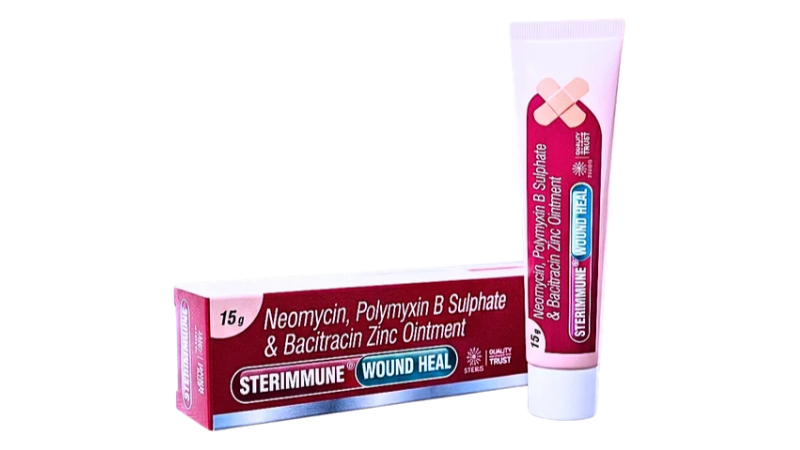
STERIMMUNE WOUND HEAL is a topical antibacterial combination, the same family of products sold internationally as "triple antibiotic" preparations (neomycin and polymyxin b sulfates and bacitracin zinc). Each unit of the product, as labelled, contains:
- Polymyxin B Sulphate USP: 5000 units
- Bacitracin: 400 units
- Neomycin: 3400 units
- Benzyl Alcohol: 0.1%
Neomycin and polymyxin b sulfates and bacitracin zinc uses
This type of combination is used on the skin to help prevent or treat superficial bacterial infection in:
- Minor cuts, scrapes and abrasions
- Minor burns (first degree and small superficial areas)
- Small superficial wounds and minor skin injuries
- Skin around minor surgical or dressing sites, as directed by a doctor
It is intended for small, superficial wounds only. It is not for deep or puncture wounds, animal bites, serious burns or large areas of skin unless a doctor says so.
Why Polymyxin B Sulphate, Bacitracin and Neomycin Matter in Wound Care
The skin is your body's barrier. When it breaks, bacteria such as Staphylococcus aureus, Streptococcus species and gram-negative organisms such as Pseudomonas and E. coli can enter. A small infection can delay healing, cause pain and pus, and occasionally spread.
The triple combination matters because no single antibiotic covers all common wound bacteria:
- Some are mostly gram-positive (like staphylococci).
- Others are mostly gram-negative (like Pseudomonas).
- A combination covers a broader range and may lower the chance of resistance developing to any single agent.
And because these products are applied directly to the skin, relatively little drug enters the bloodstream when used correctly on small areas, which keeps whole-body exposure low.
Mechanism of Action: How the Ingredients Work
Each ingredient attacks bacteria in a different way:
- Polymyxin B sulphate is a polypeptide antibiotic that binds to the outer membrane of gram-negative bacteria, disrupting it and causing the cell contents to leak. It is bactericidal, especially against Pseudomonas aeruginosa and many other gram-negative organisms.
- Bacitracin blocks an early step in the building of the bacterial cell wall, which makes it mainly effective against gram-positive bacteria such as staphylococci and streptococci.
- Neomycin is an aminoglycoside that binds the 30S subunit of the bacterial ribosome, interfering with protein production and killing susceptible bacteria. It covers many gram-negative and some gram-positive species.
- Benzyl alcohol 0.1% is used mainly as a preservative that keeps the preparation free from microbial growth. At this low level it may also provide mild local soothing, but it is not the main therapeutic ingredient.
The result is complementary coverage: cell wall disruption, membrane disruption and protein synthesis blockade, all at the wound surface.
Key Benefits
What Are the Benefits of This Combination?
- Broad-spectrum local protection against common skin bacteria, both gram-positive and gram-negative.
- Three mechanisms in one product, which complements each ingredient's gaps in coverage.
- Low systemic absorption on small, intact-margin surface wounds when used as directed.
- Easy to apply in a thin layer and convenient for home first aid.
- Helps keep the wound moist and covered, a condition that supports healing for minor injuries.
- Preserved formulation, with benzyl alcohol helping to maintain product quality.
Indications, Efficacy and Clinical Evidence
Here is a balanced look at what research and guidelines show:
- Individual ingredients have long-established antibacterial activity. Neomycin, polymyxin B and bacitracin are among the oldest topical antibiotics in use.
- Clinical studies from the 1970s onward found that topical antibiotic ointments reduced infection rates in minor wounds compared with no treatment in some settings, and helped faster healing of superficial wounds in some trials.
- Newer evidence is more cautious. Studies of clean surgical and dermatological wounds have found that routine topical antibiotics add little benefit over good wound cleaning and a plain petrolatum-based dressing. Dermatology guidance in some countries advises against routine use on clean, minor surgical wounds.
- Resistance and allergy are the main concerns. Neomycin is one of the more common causes of allergic contact dermatitis, and overuse of topical antibiotics can drive resistant bacteria.
What this means for you: These products are most reasonable for short-term use on minor wounds that are dirty, prone to infection, or where a doctor recommends it. They are not a substitute for washing the wound, tetanus protection where needed, or medical care for infected or deep wounds.
Side Effects
Most people use this type of product without problems. Side effects, when they happen, are mostly local.
Common side effects
- Mild skin irritation, burning or stinging at the site
- Redness, itching or a rash around the wound
- Dryness or peeling
- Delayed healing if overused or if the wound is not cleaned
Available Substitutes
A substitute should be chosen with a doctor or pharmacist based on the wound and your allergy history:
- Other brands with the same composition (neomycin, polymyxin B and bacitracin). Compare the strength per unit on the pack.
- Bacitracin with polymyxin B (no neomycin), which may suit people allergic or sensitive to neomycin.
- Mupirocin or fusidic acid ointment, often used for localised bacterial skin infection, particularly staphylococcal.
- Silver sulfadiazine, commonly prescribed for burns under medical supervision.
- Povidone-iodine or chlorhexidine antiseptics for wound cleaning.
- Plain petrolatum jelly and a clean dressing, which is often all that a clean minor wound needs.
Dosage Guidelines
Always follow your doctor's advice and the instructions printed on the pack. General guidance for topical triple-antibiotic products:
- Wash your hands, then clean the wound gently with clean water and mild soap. Pat dry.
- Apply a thin layer to the affected area, one to three times a day, or as directed. More does not work faster.
- Cover with a sterile dressing if needed and change it when it is dirty or wet.
- Limit duration. Do not use for longer than about one week unless a doctor advises, as longer use increases the risk of allergy and resistance.
- Do not apply to large areas or to deep or puncture wounds, serious burns or animal bites.
- Keep away from eyes, mouth and inside the ears, and do not swallow.
- Children: Use only on small areas and with medical advice, especially in infants and young children.
- Missed application: Apply when you remember, then continue as normal. Do not double up.
See a doctor if the wound has not improved in a few days or if it looks worse.
Precautions and Warnings When Using
- Allergy history: Do not use if you are allergic to neomycin, polymyxin B, bacitracin or any ingredient, or other aminoglycosides such as gentamicin, kanamycin or framycetin (cross-sensitivity can occur).
- Patch-test caution: If you have sensitive skin or a history of contact dermatitis, apply to a tiny area first and watch for 24 hours.
- Do not use on large, deep or severely infected wounds, or for long periods. These can increase absorption and toxicity.
- Kidney or hearing problems: Ask your doctor before use, especially if the area treated is large or the skin is broken extensively.
- Pregnancy and breastfeeding: Discuss with your doctor, particularly for large areas or prolonged use. Avoid applying on the nipple area if breastfeeding unless advised.
- Infants and neonates: Benzyl alcohol has been linked to a serious condition (gasping syndrome) in premature and newborn babies when large amounts are given into the bloodstream. Topical use on small areas is much lower exposure, but infants should be treated only under medical advice.
- Benzyl alcohol sensitivity: Rarely, benzyl alcohol can cause skin irritation or allergy.
- Antibiotic stewardship: Do not use for viral or fungal rashes, acne or unexplained skin conditions. It will not help and may cause harm.
- Medical follow-up: Get care for diabetes-related foot wounds, wounds with signs of spreading infection, or if tetanus vaccination is out of date.
- Storage: Store in a cool, dry place, away from light and out of reach of children. Check the pack for the exact temperature and discard after the expiry or opening date.
Frequently Asked Question
1. What is polymyxin b sulphate?
It is a polypeptide antibiotic that damages the outer membrane of gram-negative bacteria, used topically in wound and skin preparations.
2. What is STERIMMUNE WOUND HEAL?
It is a Steris Healthcare topical antibacterial combination containing polymyxin B sulphate, bacitracin, neomycin and benzyl alcohol for minor wounds.
3. What are neomycin and polymyxin b sulfates and bacitracin zinc used for?
They are used to help prevent or treat superficial bacterial infection in minor cuts, scrapes and small burns.
4. What is bacitracin used for?
Bacitracin is an antibiotic that stops bacterial cell wall formation and is used on the skin against gram-positive bacteria.
5. What is neomycin?
Neomycin is an aminoglycoside antibiotic that stops bacteria from making proteins and is used on the skin for superficial infections.
6. What is benzyl alcohol used for?
In topical products, benzyl alcohol is mainly a preservative and may add mild local soothing.
7. How do I use STERIMMUNE WOUND HEAL?
Clean and dry the wound, apply a thin layer one to three times daily, and cover if needed, as directed on the pack or by your doctor.
8. How long can I use a triple antibiotic product?
Generally no longer than about one week unless a doctor advises otherwise.
9. Does it boost immunity?
No. It acts on bacteria at the wound surface and does not strengthen your immune system.
10. What are the side effects of neomycin, polymyxin B and bacitracin?
Common ones are local irritation, redness and itching. Allergic contact dermatitis is the main concern.
11. Can I use it on deep wounds or animal bites?
No. Deep, puncture and bite wounds, and serious burns, need medical care.
12. Can I use it on a baby?
Only under a doctor's advice, and on very small areas, because infants absorb more and benzyl alcohol needs caution in newborns.
13. Who should not use this combination?
Anyone allergic to neomycin, polymyxin B, bacitracin or related aminoglycosides, or to any ingredient.
14. Is it safe in pregnancy or breastfeeding?
Small-area short-term use is often considered low risk, but ask your doctor first.
15. Can neomycin cause hearing or kidney problems?
Only if significant amounts are absorbed, for example from large wounds or long use. Occasional small-area use carries a much lower risk.
Conclusion
STERIMMUNE WOUND HEAL from Steris Healthcare combines polymyxin b sulphate (5000 units), bacitracin (400 units) and neomycin (3400 units) with benzyl alcohol 0.1% as a preservative. Together these ingredients cover a broad range of skin bacteria through three different mechanisms, which makes the combination a familiar choice for minor cuts, scrapes and small burns. Evidence supports its role for short-term use on suitable minor wounds, but it is not necessary for every clean wound, and allergy to neomycin and bacitracin is a real risk. Use a thin layer, for a short time, on small areas only, and see a doctor if the wound is deep, spreading, or not improving.
For Further Information:
Mail Us: contact@sterispharma.com or info@sterispharma.com
Call Now: +91 8824175417, +91 9982524671
Recent Post
What Is Linagliptin 2.5 mg Used For? A Complete Guide
Dextromethorphan Hydrobromide: Uses, Benefits, Dosage and Side Effects
Amantadine Hydrochloride: Uses, Benefits, Dosage and Side Effects
Potassium Chloride Oral Solution: Uses, Benefits, Dosage and Side Effects
Ketoconazole and Cetrimide Soap: Uses, Benefits, Side Effects and Precautions
Baclofen 25 mg: Uses, Benefits, Dosage, Side Effects and Precautions
What Is Sodium Bicarbonate 650 mg Used For? Uses and Safety Information
Lamotrigine 25 mg: Uses, Benefits, Side Effects and Precautions
Clomiphene 50 mg: Uses, Benefits, Side Effects and Precautions
Teneligliptin and Pioglitazone: Uses, Benefits and Side Effects

