


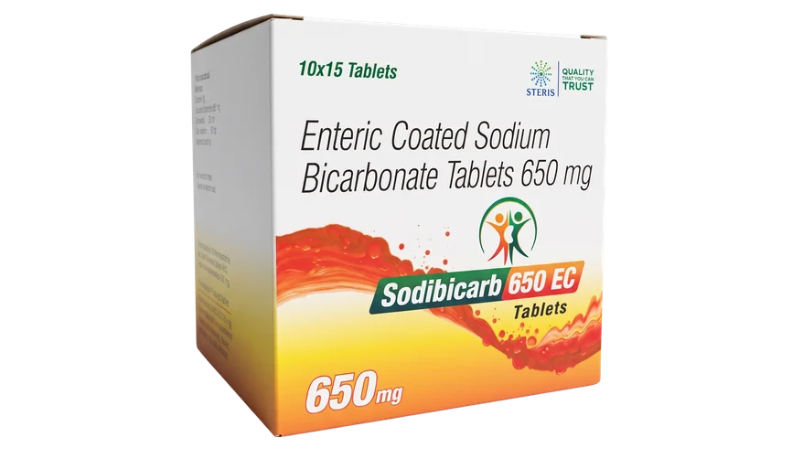


What Is Sodium Bicarbonate 650 mg Used For? Uses and Safety Information
Nov 05, 2026
Sodium Bicarbonate 650 mg is an alkalinising medicine used to reduce excess acid in the body and manage certain conditions associated with increased acidity, as prescribed by a healthcare professional. It works by neutralising excess stomach acid and helping maintain the body's acid-base balance. Sodium Bicarbonate may also be prescribed in selected cases of metabolic acidosis and certain kidney-related conditions. The dosage and duration depend on the patient's medical condition and response to treatment. Use Sodium Bicarbonate 650 mg only as directed by your doctor, especially if you have kidney or heart problems or need to follow a sodium-restricted diet.
Most people know sodium bicarbonate as baking soda. In medicine, the same compound, in a pure pharmaceutical grade and a carefully measured dose, is one of the oldest and most useful alkalinising agents. SODIBICARB 650 EC from Steris Healthcare is a tablet that delivers Sodium Bicarbonate 650 mg in a measured, convenient form.
The main sodium bicarbonate uses that doctors rely on are:
- Metabolic acidosis: a condition in which the body’s blood becomes too acidic, which is especially common in people with chronic kidney disease (CKD), where the kidneys can no longer remove acid efficiently.
- Acid indigestion and heartburn: as an antacid, it neutralises excess stomach acid and gives quick relief.
- Urinary alkalinisation: to raise urine pH, which helps prevent uric acid and cystine stones and helps the body excrete certain acidic drugs.
- Supportive care in some situations: such as certain drug overdoses or hyperkalaemia, usually under hospital supervision.
Why Is Sodium Bicarbonate 650 mg Important?
The human body tightly controls the acidity of the blood. Even a small drift outside the normal range affects bones, muscles, the heart and the kidneys themselves.
In chronic kidney disease, the kidneys gradually lose their ability to excrete acid. Over time, persistent low bicarbonate levels can contribute to:
- Faster decline in kidney function
- Loss of bone mineral and weaker bones
- Muscle wasting and weakness
- Worsening of high potassium levels
- Fatigue and poor appetite
Clinical guidance for kidney disease generally supports treating metabolic acidosis, commonly when serum bicarbonate stays below about 22 mmol/L, and oral sodium bicarbonate is the most widely used and affordable treatment. This is why sodium bicarbonate 650 mg tablets remain important in nephrology practice, particularly in India, where CKD is a growing public-health problem and cost matters.
For acid indigestion, sodium bicarbonate matters because of its speed. It reacts with stomach acid within minutes, which is why it appears in so many household antacid preparations. For long-term acid problems, however, other medicines are usually better, and recurring heartburn should be evaluated by a doctor.
Key Benefits
What Are the Benefits of SODIBICARB 650 EC?
- Helps correct low blood bicarbonate (metabolic acidosis), particularly in chronic kidney disease
- May help slow the progression of kidney function decline in people with CKD and acidosis, as suggested by clinical studies
- Helps protect bone health and muscle mass in people with long-standing acidosis
- Provides fast relief from heartburn and acid indigestion (as an antacid)
- Helps make urine less acidic, reducing the risk of uric acid kidney stones in suitable patients
- Offers a measured 650 mg tablet for simple dose adjustment (for example, one tablet two to three times daily as prescribed)
- Is an affordable, long-established alkalinising treatment
- Is manufactured by Steris Healthcare, a WHO-GMP and ISO-certified pharmaceutical manufacturer in Jaipur
Mechanism of Action
Sodium bicarbonate dissociates into sodium ions (Na⁺) and bicarbonate ions (HCO₃⁻). The bicarbonate is the active part.
In the blood: Bicarbonate is the body’s main buffer. It binds to excess hydrogen ions (H⁺) to form carbonic acid, which then breaks down into water and carbon dioxide. The carbon dioxide is breathed out through the lungs. In this way, extra bicarbonate raises blood pH and brings an acidic state back toward normal.
In the stomach: Bicarbonate neutralises hydrochloric acid in the stomach, producing sodium chloride, water and carbon dioxide. This quickly raises stomach pH and relieves heartburn. The gas formed can cause belching or bloating.
In the urine: Bicarbonate is filtered by the kidneys, so urine becomes more alkaline. In alkaline urine, uric acid stays dissolved rather than forming crystals, and acidic drugs (such as salicylates) are excreted faster.
Each 650 mg tablet contains roughly 7.7 mmol of sodium, which is about 178 mg of sodium. This is an important figure for anyone on a low-salt diet, with high blood pressure, heart failure or kidney disease.
Indications, Efficacy and Clinical Evidence
Metabolic acidosis in CKD. Several clinical trials have examined oral sodium bicarbonate in people with CKD. A well-known randomised open-label trial found that patients given bicarbonate had slower decline in kidney function and fewer cases of rapid progression to end-stage kidney disease than those not treated. Other studies, including later multicentre work, have supported benefits in nutritional status and kidney outcomes. However, not all trials agree. A large UK trial in older adults with CKD found that bicarbonate corrected acidosis but did not improve physical function. This is why current practice individualises treatment, and why a nephrologist should guide therapy.
Antacid use. Sodium bicarbonate has a rapid onset of action for acid relief, but its effect is short-lived, and the gas and sodium load make it unsuitable for regular long-term use as an antacid.
Urinary alkalinisation. It is used with fluids to help prevent uric acid stones, and clinicians use it in specific clinical situations to increase urinary excretion of certain drugs.
Practical takeaway: the strongest evidence for daily oral sodium bicarbonate tablets is in people with CKD and low serum bicarbonate. For occasional heartburn, short-term use is reasonable, but frequent symptoms need medical evaluation.
Side Effects
Most people tolerate sodium bicarbonate tablets well at prescribed doses. The most common side effects are:
- Belching, burping and a bloated stomach (from carbon dioxide)
- Stomach cramps or mild abdominal discomfort
- Nausea
- Flatulence
- Thirst
- Mild loose stools in some people
- A salty taste
Available Substitutes
Other brands that contain sodium bicarbonate in tablet form, which a doctor may consider, include products such as Sodamint and various generic sodium bicarbonate 650 mg tablets, along with other alkalinising agents such as sodium citrate or potassium citrate preparations when a doctor feels they suit the situation better. SODIBICARB 650 EC from Steris Healthcare is another choice in this category. Strengths and tablet types (plain, effervescent or enteric-coated) differ between products, so do not substitute one for another without asking your doctor or pharmacist.
Dosage Guidelines
| Use | General Adult Dose Range | Notes |
|---|---|---|
| Metabolic acidosis in CKD | Commonly 1–2 tablets (650–1300 mg) two to three times daily, adjusted to blood bicarbonate levels | Needs regular blood tests |
| Heartburn or acid indigestion | Commonly 1–2 tablets as needed | Short-term use only; do not exceed the doctor’s or label’s limit |
| Urinary alkalinisation | Dose set individually by the doctor | Requires urine pH monitoring and adequate fluids |
How to take it:
- Swallow the tablet whole with a glass of water. Do not crush or chew an enteric-coated tablet, as this defeats the coating.
- Take it as directed, usually after meals unless your doctor advises otherwise.
- Keep a gap of about one to two hours between sodium bicarbonate and other medicines, because it can change how they are absorbed.
- Do not take it with large amounts of milk or calcium products unless your doctor says so.
- If you miss a dose, take it when you remember unless it is almost time for the next one. Do not double the dose.
- Do not use it as a daily “home remedy” for acidity for more than the advised period without medical advice.
Precautions and Warnings When Using
- High sodium content: Each tablet contains about 178 mg of sodium. Take extra care if you have high blood pressure, heart failure, oedema, or kidney disease with fluid retention, and follow your doctor’s advice.
- Do not use in metabolic alkalosis: It should not be taken by people whose blood is already too alkaline, or who have low blood chloride or low blood calcium, unless a doctor directs it.
- Regular monitoring: If you take it long-term, regular blood tests (bicarbonate, potassium, calcium, sodium and kidney function) are essential.
- Drug interactions: Sodium bicarbonate can reduce the absorption of drugs such as iron, tetracyclines, fluoroquinolone antibiotics, ketoconazole and some others. It can also change the excretion of drugs such as aspirin, lithium, quinidine and amphetamines. Always tell your doctor about all the medicines you take.
- Enteric-coated tablets: Taking them with strong antacids, acid-suppressing medicines or a lot of milk may affect how the coating behaves. Follow your doctor’s advice on timing. [CONFIRM WITH FORMULATION TEAM]
- Pregnancy and breastfeeding: Use only if the doctor considers the benefit greater than the risk. The sodium load and the risk of fluid retention need to be considered.
- Children: Use only under a paediatrician’s direction, with a dose based on weight.
- Older adults: Be more cautious, because sodium and fluid balance may be more fragile.
- Gastrointestinal conditions: Do not use if you have severe abdominal pain, nausea or vomiting of unknown cause.
- Avoid prolonged self-medication: Heartburn that returns often, weight loss, difficulty swallowing or black stools need medical evaluation, not repeated antacids.
- Allergy: Do not use it if you are allergic to any ingredient in the tablet.
- Storage: Keep in a cool, dry place below 30°C, protected from moisture and out of reach of children.
Conclusion
Sodium bicarbonate 650 mg is a simple molecule with a wide range of important uses. For people with chronic kidney disease, it can help correct acid build-up in the blood and may support kidney, bone and muscle health. For occasional heartburn, it offers fast relief. SODIBICARB 650 EC from Steris Healthcare, a WHO-GMP and ISO-certified manufacturer in Jaipur, provides this trusted alkalinising agent in a convenient, measured tablet.
The key safety message is that sodium bicarbonate works best, and most safely, with medical guidance and regular monitoring, particularly because of its sodium content and its effect on acid-base balance.
For Further Information:
Mail Us: contact@sterispharma.com or info@sterispharma.com
Call Now: +91 8824175417, +91 9982524671
Recent Post

Lamotrigine 25 mg: Uses, Benefits, Side Effects and Precautions

Clomiphene 50 mg: Uses, Benefits, Side Effects and Precautions

Teneligliptin and Pioglitazone: Uses, Benefits and Side Effects
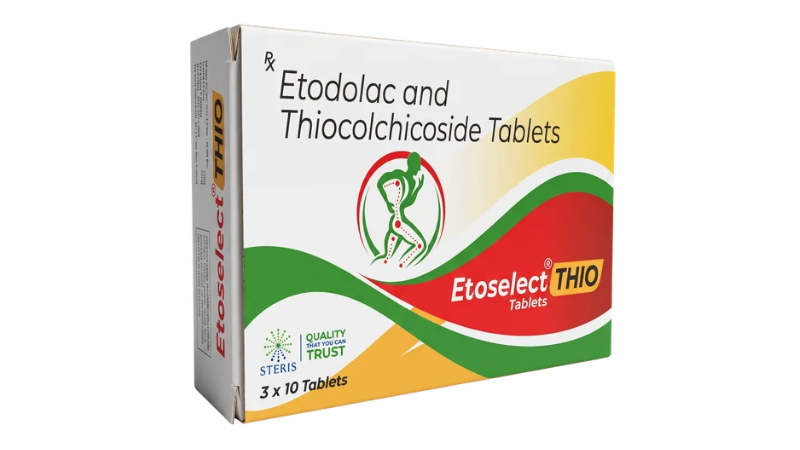
How Do Etodolac and Thiocolchicoside Work Together?
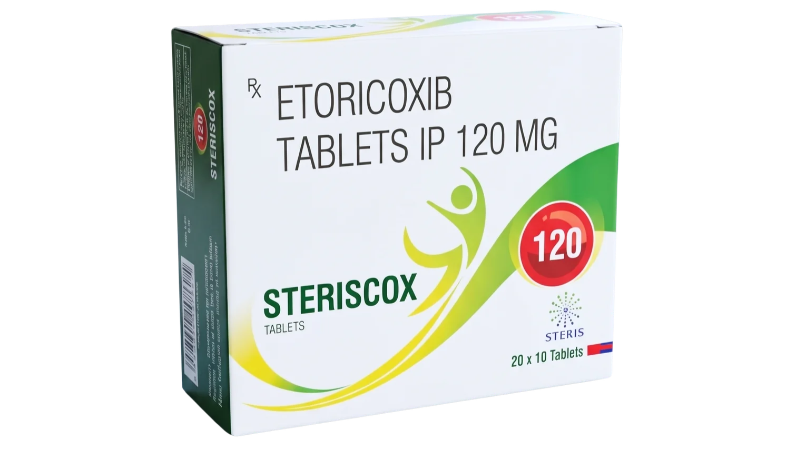
What Is Etoricoxib 120 mg Used For? A Complete Medicine Guide
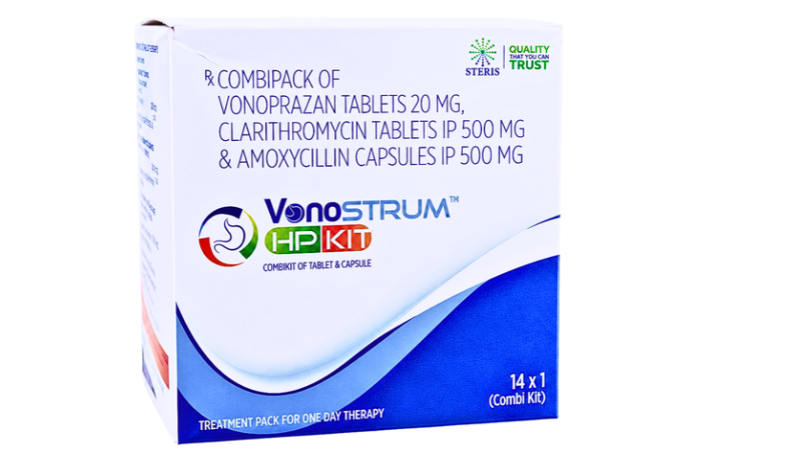
Vonoprazan Triple Therapy Kit for H. pylori Infection – Uses & Benefits

First Time Launch in India by Steris healthcare : VONOSTRUM HP KIT – Combipack of Vonoprazan Tablets 20 mg, Clarithromycin Tablets IP 500 mg & Amoxycillin Capsules IP 500 mg
Dapagliflozin 10 mg: Uses in Diabetes, Heart Failure, and Kidney Disease
How Dapagliflozin, Sitagliptin and Metformin Help Manage Type 2 Diabetes
How Linagliptin, Dapagliflozin and Metformin Help Manage Type 2 Diabetes

