


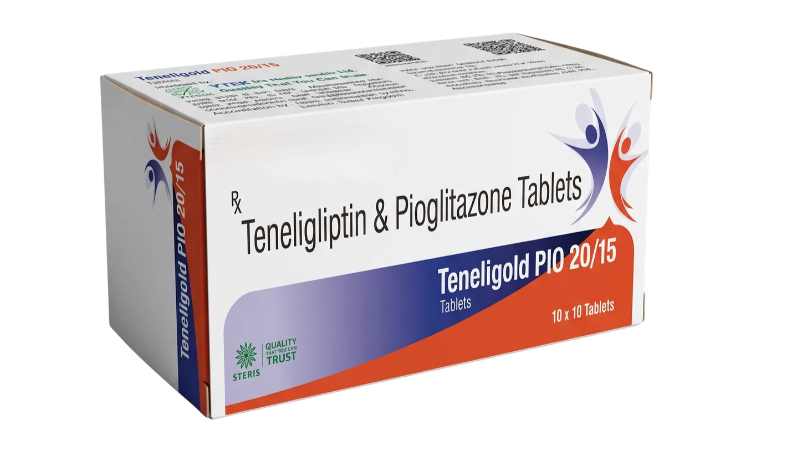


Teneligliptin and Pioglitazone: Uses, Benefits and Side Effects
Nov 05, 2026
TENELIGOLD PIO 20/15 is a prescription-only fixed-dose combination tablet from Steris Healthcare. It is used, along with diet and exercise, to improve blood sugar control in adults with type 2 diabetes mellitus. Doctors usually prescribe it when one medicine alone, often metformin, has not brought blood sugar into the target range. Type 2 diabetes involves two problems at once. The pancreas does not release enough insulin at the right time, and the body’s cells do not respond well to the insulin that is available (insulin resistance). Each ingredient targets one of these problems.
TENELIGOLD PIO 20/15 helps manage the condition. It does not cure diabetes, and it is not for type 1 diabetes or diabetic ketoacidosis.
Why It’s Important
Type 2 diabetes is a long-term condition, and India has one of the largest diabetic populations in the world. Persistently high blood sugar slowly damages the eyes, kidneys, nerves and blood vessels, and raises the risk of heart disease. Keeping HbA1c in the range your doctor sets lowers the chance of these complications over the years.
Diabetes also tends to progress. Many people start on one tablet and later need a second to maintain control. Combining two medicines with different mechanisms often works better than increasing the dose of one, because each addresses a separate defect. A fixed-dose tablet reduces the number of pills, which matters for a lifelong condition where missed doses are a common reason for poor control.
The combination is also notable for what it usually does not do. Neither teneligliptin nor pioglitazone typically causes low blood sugar on its own, which is a worry with some older diabetes medicines. That makes the pairing useful for people who need good control but want to avoid frequent hypoglycaemia. The trade-offs, mainly fluid retention, weight gain and heart failure risk with pioglitazone, are why the tablet must be prescribed and monitored by a doctor.
Key Benefits
What Are the Benefits of Teneligliptin and Pioglitazone Tablets?
- Complementary action: improves insulin release (teneligliptin) and insulin sensitivity (pioglitazone) together
- Lowers fasting and after-meal glucose: and helps reduce HbA1c over weeks of regular use
- Low hypoglycaemia risk: when not combined with insulin or sulfonylureas
- Once-daily convenience: one tablet in place of two supports adherence
- Weight-neutral tendency of teneligliptin: it generally does not add weight on its own, which partly balances pioglitazone’s effect
- Kidney-friendly profile of teneligliptin: it is eliminated by more than one route, and dose adjustment is generally not needed in mild to severe kidney impairment, though your doctor should decide
- Quality manufacturing: made by Steris Healthcare, a WHO-GMP and ISO-certified pharmaceutical manufacturer based in Jaipur
Mechanism of Action
Teneligliptin (DPP-4 inhibitor). After a meal, the gut releases incretin hormones (GLP-1 and GIP) that signal the pancreas to release insulin and tell the liver to reduce glucose output. The enzyme DPP-4 breaks these hormones down quickly. Teneligliptin inhibits DPP-4, so incretins last longer. The result is more insulin released when blood sugar is high, and less glucagon, so less sugar is released from the liver. Because the effect depends on glucose levels, the risk of low blood sugar is small.
Pioglitazone (thiazolidinedione). Pioglitazone activates PPAR-gamma receptors, mainly in fat tissue, and to a lesser extent in muscle and liver. This improves how cells respond to insulin, so more glucose moves from blood into tissues and the liver produces less glucose. It works gradually, and the full effect may take several weeks.
Together: teneligliptin supports insulin release, and pioglitazone makes the body’s cells better able to use insulin, so the two cover both main defects in type 2 diabetes.
Indications, Efficacy and Clinical Evidence
Indications. The combination is indicated as an adjunct to diet and exercise in adults with type 2 diabetes whose blood sugar is not adequately controlled on one agent, or who are already taking both agents separately and may switch to a single tablet.
Evidence for teneligliptin. Clinical studies, including trials in Japanese and Indian patients, have reported meaningful reductions in HbA1c and in fasting and post-meal glucose with teneligliptin, both alone and as an add-on to metformin, sulfonylureas or pioglitazone. Its tolerability has generally been good, with low rates of hypoglycaemia.
Evidence for pioglitazone. Pioglitazone has been studied for many years. Trials show it lowers HbA1c, improves insulin sensitivity and has durable glucose-lowering effects. The PROactive trial in people with type 2 diabetes and established vascular disease reported a reduction in a secondary composite of death, heart attack and stroke, but also an increase in heart failure, which shapes how the drug is used today.
Evidence for the combination. Studies of DPP-4 inhibitors added to pioglitazone, and of teneligliptin with pioglitazone, have reported additional HbA1c reduction compared with pioglitazone alone, with no major new safety signals beyond those of each component. As with all fixed-dose combinations, the strength of evidence varies between studies and treatment is tailored to the individual.
Evidence summaries inform prescribing and do not replace individual medical advice.
Side Effects
Many people tolerate the combination well. Possible side effects include:
- Headache or dizziness
- Swelling of feet, ankles or hands (fluid retention)
- Weight gain
- Upper respiratory tract infection, such as a cold or sore throat
- Muscle pain or joint pain
- Nausea, constipation or mild stomach discomfort
- Mild anaemia or tiredness (uncommon)
Most of these are mild. Contact your doctor if swelling or weight gain is noticeable or any effect persists.
Available Substitutes
Other brands of teneligliptin with pioglitazone are marketed in India, and each may come in different strengths. Alternatives from related groups include other DPP-4 inhibitor combinations (such as sitagliptin or vildagliptin with metformin), pioglitazone with metformin, SGLT2 inhibitor combinations, and sulfonylurea-based options. These differ in how they work, their effect on weight, heart and kidneys, cost and suitability. Do not switch or substitute on your own. Your doctor will decide based on your blood sugar, HbA1c, heart, kidney and liver health and other medicines.
Dosage Guidelines
Always take TENELIGOLD PIO 20/15 exactly as your doctor prescribes. General guidance for adults:
- Usual dose: one tablet once daily, as directed by your doctor.
- Timing: take at the same time each day, with or without food. Many people find a consistent routine easiest.
- Maximum doses: teneligliptin is generally not taken above 40 mg per day and pioglitazone is generally not taken above 45 mg per day. Your doctor will decide whether a different strength is more suitable.
- Swallowing: swallow whole with water.
- Missed dose: take it when you remember, but skip it if the next dose is near. Never double up.
- Special groups: people with liver impairment generally should not start pioglitazone-containing medicines. Older adults and those with kidney issues need medical supervision.
- Children: not recommended.
- Monitoring: blood sugar, HbA1c, weight and liver function tests are usually checked at intervals.
Continue diet and exercise alongside the tablet. Do not stop or change the dose without speaking to your doctor.
Precautions and Warnings When Using Teneligliptin and Pioglitazone
Do not use TENELIGOLD PIO 20/15 if you:
- Are allergic to teneligliptin, pioglitazone or any ingredient in the tablet
- Have heart failure or a history of heart failure
- Have type 1 diabetes or diabetic ketoacidosis
- Have active liver disease or significantly raised liver enzymes
- Have active bladder cancer or unexplained blood in the urine
- Are pregnant or breastfeeding, unless your doctor advises otherwise
Take special care and inform your doctor if you:
- Have heart disease, high blood pressure or fluid retention
- Have kidney problems
- Have a history of pancreatitis, gallstones or heavy alcohol use
- Have bone problems or a history of fractures, especially women after menopause
- Have vision problems, including diabetic macular oedema
- Are a premenopausal woman who is not ovulating; pioglitazone may restore ovulation, so contraception advice may be needed
General advice:
- Learn the signs of low blood sugar (sweating, shaking, hunger, confusion) and keep a quick sugar source handy if you also take insulin or a sulfonylurea.
- Weigh yourself regularly and report sudden gain or new swelling.
- Limit alcohol.
- Keep regular follow-ups for HbA1c, liver tests and eye and foot checks.
- Store in a cool, dry place away from light and out of reach of children.
Frequently Asked Questions
1. What is teneligliptin and pioglitazone used for?
Teneligliptin and pioglitazone tablets are used along with diet and exercise to improve blood sugar control in adults with type 2 diabetes mellitus. Doctors usually prescribe the combination when a single medicine, such as metformin or either ingredient alone, has not controlled blood sugar adequately.
2. How does teneligliptin and pioglitazone work?
The two ingredients act on different parts of the problem. Teneligliptin is a DPP-4 inhibitor. It slows the breakdown of incretin hormones, which helps the body release more insulin after meals and reduces the sugar released by the liver. Pioglitazone is a thiazolidinedione that improves insulin sensitivity, so muscle, fat and liver cells respond better to the insulin the body already makes. Together they address both reduced insulin release and insulin resistance.
3. What are the benefits of teneligliptin and pioglitazone tablets?
- Complementary action: improves insulin release and insulin sensitivity at the same time
- Helps lower fasting and after-meal blood sugar and HbA1c
- Low risk of hypoglycaemia when not combined with insulin or sulfonylureas
- One combined tablet instead of two, which can simplify the daily schedule and support adherence
- Teneligliptin can generally be used with relatively little dose adjustment in kidney impairment, though your doctor should decide
4. What are the side effects of teneligliptin and pioglitazone?
Possible side effects include headache, upper respiratory tract infection, swelling of the feet or ankles (fluid retention), weight gain, muscle pain, dizziness, constipation, nausea and mild stomach discomfort. Serious effects are less common but need urgent attention: signs of heart failure (breathlessness, rapid weight gain, marked swelling), severe persistent stomach pain (possible pancreatitis), severe joint pain, blistering skin reactions, yellowing of skin or eyes, blood in urine, and bone fractures.
5. Can teneligliptin and pioglitazone help manage type 2 diabetes?
Yes. It is prescribed specifically for adults with type 2 diabetes as an add-on to diet, exercise and, where advised, other antidiabetic medicines. It is not a cure, and it is not used for type 1 diabetes or diabetic ketoacidosis. Regular blood sugar and HbA1c monitoring remain important.
6. What is the composition of teneligliptin and pioglitazone tablets?
Each tablet contains teneligliptin and pioglitazone in a fixed-dose combination. [PLACEHOLDER: exact strengths (for example teneligliptin 20 mg + pioglitazone 15 mg or 30 mg) and brand name not supplied; confirm before publishing.]
7. What precautions should I take before using this combination?
Tell your doctor if you have heart disease or heart failure, liver disease, kidney problems, a history of bladder cancer, bone problems or fractures, macular oedema or vision issues, or a history of pancreatitis. Women who are pregnant, planning pregnancy or breastfeeding should consult their doctor first. Liver function tests are generally advised before and during treatment. Take the tablet as prescribed, follow the diet and exercise plan, and never stop or change the dose on your own.
8. Is teneligliptin and pioglitazone a prescription medicine?
Yes. It should be used only on the advice of a registered medical practitioner, with regular follow-up and blood tests.
9. Who manufactures teneligliptin and pioglitazone tablets in India?
Several Indian pharmaceutical companies market this combination. [PLACEHOLDER: Steris Healthcare brand name and details not supplied; add the manufacturer and brand before publishing.]
10. What should I know before taking teneligliptin and pioglitazone?
- Take it exactly as prescribed, at the same time each day, with or without food
- Do not use it for type 1 diabetes or diabetic ketoacidosis
- Report any breathlessness, swelling, rapid weight gain or unusual tiredness promptly
- Tell your doctor about all other medicines, especially insulin, sulfonylureas, gemfibrozil and rifampicin
- Keep regular appointments for blood sugar, HbA1c and liver tests
- Do not skip meals or stop treatment without medical advice
11. Can teneligliptin and pioglitazone cause weight gain?
Yes, it can. Pioglitazone may cause fluid retention and an increase in body fat, so modest weight gain is possible. Sudden weight gain with swelling or breathlessness may signal heart failure and needs urgent medical attention. A balanced diet, regular exercise and weight monitoring can help, and your doctor can review the treatment if weight gain becomes a concern.
12. What are the important safety warnings for pioglitazone combinations?
- Heart failure: pioglitazone can cause or worsen heart failure and should not be used in people with heart failure
- Liver: liver function should be checked; stop and seek help if jaundice or dark urine appears
- Bladder cancer: a possible increased risk has been reported with long-term use, so tell your doctor about blood in urine or a history of bladder cancer
- Bone fractures: an increased risk has been reported, particularly in women
- Fluid retention and macular oedema: report swelling or any change in vision
- Pancreatitis: severe, persistent stomach pain needs urgent evaluation
- Pregnancy: generally not recommended unless your doctor advises otherwise
Conclusion
TENELIGOLD PIO 20/15 (teneligliptin 20 mg + pioglitazone 15 mg) from Steris Healthcare is a fixed-dose combination that targets the two main defects of type 2 diabetes: inadequate insulin release and insulin resistance. It can help lower fasting and post-meal glucose and HbA1c with a low risk of hypoglycaemia, using the convenience of one tablet. Its benefits must be balanced against pioglitazone-related cautions, including fluid retention, weight gain, heart failure, liver and bone considerations. Use it only on prescription, with regular monitoring, alongside diet and exercise, and under your doctor’s guidance.
For Further Information:
Mail Us: contact@sterispharma.com or info@sterispharma.com
Call Now: +91 8824175417, +91 9982524671
Recent Post

Clomiphene 50 mg: Uses, Benefits, Side Effects and Precautions
How Do Etodolac and Thiocolchicoside Work Together?
What Is Etoricoxib 120 mg Used For? A Complete Medicine Guide
Vonoprazan Triple Therapy Kit for H. pylori Infection – Uses & Benefits

First Time Launch in India by Steris healthcare : VONOSTRUM HP KIT – Combipack of Vonoprazan Tablets 20 mg, Clarithromycin Tablets IP 500 mg & Amoxycillin Capsules IP 500 mg
Dapagliflozin 10 mg: Uses in Diabetes, Heart Failure, and Kidney Disease
How Dapagliflozin, Sitagliptin and Metformin Help Manage Type 2 Diabetes
How Linagliptin, Dapagliflozin and Metformin Help Manage Type 2 Diabetes
Dapagliflozin and Vildagliptin: A Complete Guide to Diabetes Management
Dapagliflozin, Vildagliptin and Metformin: Dosage, Side Effects and Precautions

