




Dextromethorphan Hydrobromide: Uses, Benefits, Dosage and Side Effects
Nov 06, 2026
Anyone who has had a cold knows the pattern: a scratchy, dry cough that keeps you awake, a nose that is either streaming or blocked, and sneezing that will not stop. A single symptom medicine rarely covers all of this, which is why combination products are popular for short-term cold relief.
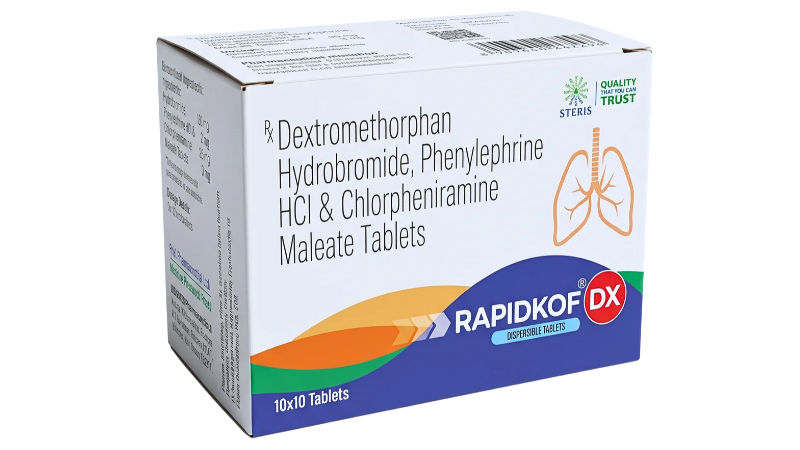
RAPIDKOF DX brings three active ingredients together:
- Dextromethorphan hydrobromide (10 mg): an antitussive that calms the cough reflex in the brain.
- Chlorpheniramine maleate (2 mg): a first-generation antihistamine that dries a runny nose and reduces sneezing, watery eyes and itching.
- Phenylephrine hydrochloride (5 mg): a decongestant intended to shrink swollen blood vessels in the nasal lining and ease a blocked nose.
The uses that doctors commonly discuss for this type of combination include:
- Dry, non-productive (irritating) cough associated with the common cold
- Runny nose, sneezing and watery eyes from colds or allergic rhinitis
- Nasal congestion associated with colds, hay fever or other upper respiratory allergies
- Short-term symptom relief during seasonal changes, when colds and allergies are common in India
It is important to know what this medicine does not do. It relieves symptoms but does not treat the cause of a viral infection, and it is not suitable for a productive, wet cough with phlegm, where suppressing the cough may not be helpful.
To help with common searches on each ingredient:
- Dextromethorphan hydrobromide tablet uses: to suppress dry cough.
- Chlorpheniramine maleate uses (and chlorpheniramine maleate tablet uses): allergic rhinitis, hay fever, sneezing, runny nose, itchy eyes and itching from allergic skin reactions.
- Phenylephrine hydrochloride uses: relief of nasal congestion due to colds and allergies.
Why Is Dextromethorphan Hydrobromide Phenylephrine Hydrochloride Combination Important?
Cold and cough illnesses are among the most common reasons people visit a doctor or a chemist in India. A typical cold lasts about a week, but the symptoms can be quite disruptive. A dry cough interrupts sleep, a blocked nose makes breathing and eating uncomfortable, and constant sneezing affects work and study.
A well-matched combination is practical for several reasons.
It targets overlapping symptoms. Cold symptoms rarely appear alone. A cough, a runny nose and congestion usually arrive together, and treating them with one product can make the routine simpler.
It supports rest. Sleep is one of the best ways to recover from a cold. Reducing cough and nasal symptoms can help people rest, and the mild sedating effect of chlorpheniramine can be useful at night, though it also means caution during the day.
It can improve adherence. Fewer products mean fewer chances of mistakes or missed doses.
There is also a responsible-use message that matters just as much. Fixed-dose combinations should be used for a short time, and only when the symptoms match all the ingredients. Doctors and pharmacists play an important role in ensuring that the right patients receive these medicines. Regulators in several countries have also tightened guidance on cough and cold products, especially for children, which makes clear labelling and appropriate use essential. For physicians, pharmacies and distributors, a clearly labelled, quality-manufactured cold and cough product from Steris Healthcare supports responsible practice.
Key Benefits
What Are the Benefits of RAPIDKOF DX?
- Calms dry, irritating cough: Dextromethorphan reduces the urge to cough, which helps with throat irritation and night-time coughing.
- Relieves runny nose and sneezing: Chlorpheniramine reduces histamine effects, easing sneezing, watery eyes and nasal discharge.
- Eases nasal blockage: Phenylephrine is included to reduce nasal congestion, although its oral effectiveness is debated (see the evidence section below).
- Multi-symptom relief: One product addresses cough, running nose and congestion together.
- Helps sleep during illness: The sedating property of chlorpheniramine may help some people rest, but it can also cause drowsiness.
- Useful in allergic symptoms: Chlorpheniramine also helps with allergic itching and hay fever symptoms.
- Non-opioid cough suppressant: Dextromethorphan is not a narcotic and does not cause the constipation or respiratory depression linked to opioid-type cough medicines at normal doses.
- Convenient dosing: Combination dosing can be simpler than managing several separate medicines.
- Short-term relief: Intended to make a cold more bearable while the body recovers.
Mechanism of Action
Each ingredient acts at a different site, which is why the combination covers different symptoms.
Dextromethorphan hydrobromide: Acts centrally on the cough centre in the brainstem (medulla) to raise the threshold for the cough reflex. It is an NMDA receptor antagonist and a sigma-1 receptor agonist, and unlike codeine it has little or no pain-relieving or addictive effect at recommended doses.
Chlorpheniramine maleate: A first-generation H1-antihistamine. It blocks histamine at H1 receptors, which reduces the sneezing, itching, watery eyes and nasal secretions that histamine causes. It also has anticholinergic activity, which helps dry nasal secretions but also explains side effects such as dry mouth. It crosses into the brain and can cause drowsiness.
Phenylephrine hydrochloride: An alpha-1 adrenergic agonist. By stimulating alpha receptors on blood vessels in the nasal lining, it causes vasoconstriction, which is meant to reduce swelling and congestion. Taken by mouth, however, much of the drug is broken down in the gut and liver before it reaches the nose, which is why its oral effectiveness has been questioned.
Indications, Efficacy and Clinical Evidence
Indications: This type of combination is generally indicated for the short-term, symptomatic relief of dry cough with nasal congestion and running nose associated with the common cold and allergic rhinitis, as directed by a doctor.
Efficacy and evidence, ingredient by ingredient:
- Chlorpheniramine maleate is a long-established antihistamine with good evidence for relieving sneezing, runny nose and itching in allergic rhinitis, and some benefit in colds. Its main drawback is sedation.
- Dextromethorphan is widely used as a cough suppressant. Evidence for its effect on cough from the common cold is modest. Some studies show a small reduction in cough frequency and intensity, while others show little difference from placebo, so benefits are best described as modest and variable.
- Oral phenylephrine deserves special attention. In November 2024 the US FDA proposed removing oral phenylephrine from the OTC monograph for nasal decongestion after concluding it is not effective for this use. The agency stated that the proposal rests on effectiveness concerns, not safety concerns. It also said that, for now, companies may continue to market OTC monograph products containing oral phenylephrine, because only a final order would change what can be sold. Reports from 2026 indicate that the rulemaking was still ongoing. This is a US regulatory matter and does not directly apply in India, but it is relevant to how the ingredient is discussed and to the evidence behind it. Publishers should verify the latest position before final publication, as it may have changed.
Practical expectations: Cold symptoms usually settle on their own within a week to ten days. These medicines may make the symptoms more bearable but do not shorten the illness. If symptoms last more than a week, worsen or come with high fever, chest pain or breathing difficulty, see a doctor.
Side Effects
Side effects mostly come from chlorpheniramine (sedation and dryness) and phenylephrine (stimulant effects). Possible effects include:
- Drowsiness, sleepiness or reduced alertness
- Dizziness
- Dry mouth, nose and throat
- Nausea or stomach upset
- Headache
- Nervousness, restlessness or difficulty sleeping
- Blurred vision
- Constipation
- Difficulty passing urine
- Increased heart rate or a feeling of palpitations
Drowsiness is the most common complaint, so avoid driving or operating machinery until you know how the medicine affects you.
Available Substitutes
Other cough and cold combinations containing dextromethorphan, antihistamines and decongestants are available in India in tablet and liquid forms. Single-ingredient alternatives are also used according to the symptom: antihistamines such as cetirizine or levocetirizine for allergy symptoms, saline nasal sprays or steam inhalation for congestion, and, where appropriate, other cough remedies for specific types of cough. The best choice depends on whether the cough is dry or productive, your age, your other medical conditions and your current medicines. Do not substitute or combine products on your own, because many cold medicines contain the same ingredients and doubling up can lead to an accidental overdose. Ask your doctor or pharmacist.
Dosage Guidelines
The dose depends on the dosage form, your age and your doctor’s advice. The information below is general, and you must follow the prescription and the product label.
- Adults and adolescents (as directed): The usual practice is one dose of the product at intervals of about 6 to 8 hours as needed. Do not exceed the maximum daily dose stated on the label.
- Timing: Because of drowsiness, many people prefer to take it in the evening or at bedtime.
- With or without food: Can be taken with food or milk if it upsets the stomach.
- Duration: For short-term use only, usually not more than 5 to 7 days unless a doctor advises otherwise. If symptoms continue, review with your doctor.
- Children: Use of this combination in young children is not recommended. In India, regulators have advised that chlorpheniramine and phenylephrine combinations should not be used in children under 4 years of age. Follow the label and a doctor’s instruction for older children.
- Older adults: More sensitive to drowsiness, confusion and urinary difficulty, so a doctor should guide use.
- Missed dose: Skip it if it is nearly time for the next dose. Do not double up.
Precautions and Warnings
- MAO inhibitors: Do not use during or within 14 days of taking MAOI antidepressants or similar medicines, because this combination can cause a dangerous reaction.
- Serotonergic medicines: Take care with SSRIs, SNRIs, tricyclic antidepressants, tramadol and similar drugs due to the risk of serotonin syndrome. Tell your doctor about all medicines you take.
- CYP2D6 inhibitors: Some medicines (for example fluoxetine, paroxetine, bupropion and quinidine) raise dextromethorphan levels. Ask your doctor about this.
- Heart disease and high blood pressure: Phenylephrine can raise blood pressure and heart rate. Use only under medical advice.
- Other conditions: Use caution in thyroid disease, diabetes, glaucoma, enlarged prostate or difficulty passing urine, asthma, and liver or kidney disease.
- Productive cough and chronic cough: Do not use for cough with a lot of phlegm, or for chronic cough from smoking, asthma or emphysema, unless a doctor advises it.
- Drowsiness and alcohol: Avoid alcohol and other sedatives, since they add to drowsiness. Do not drive or use machinery if you feel sleepy.
- Pregnancy and breastfeeding: Use only if clearly needed and advised by a doctor.
- Allergy: Do not use if you are allergic to any ingredient.
- Children and the elderly: Follow the age restrictions and medical advice described above.
- Avoid duplicate products: Check labels for other medicines that contain dextromethorphan, antihistamines, decongestants or paracetamol.
- See a doctor if cough lasts beyond a week, or comes with fever, rash, persistent headache, chest pain or breathing difficulty.
- Storage: Store in a cool, dry place away from sunlight and out of the reach of children.
Frequently Asked Questions
1. What is dextromethorphan hydrobromide phenylephrine hydrochloride combination used for?
With chlorpheniramine, it is used for short-term relief of dry cough, runny nose and nasal congestion due to colds and allergies.
2. What is RAPIDKOF DX?
RAPIDKOF DX is a combination of dextromethorphan hydrobromide 10 mg, chlorpheniramine maleate 2 mg and phenylephrine hydrochloride 5 mg from Steris Healthcare.
3. What are dextromethorphan hydrobromide tablet uses?
Dextromethorphan is used to suppress a dry, irritating cough that is not producing phlegm.
4. What is dextromethorphan hydrobromide?
It is a non-opioid cough suppressant that acts on the cough centre in the brain to reduce the urge to cough.
5. What are chlorpheniramine maleate uses?
It is used for allergic rhinitis, hay fever, sneezing, runny nose, watery eyes and itching from allergic reactions.
6. What are chlorpheniramine maleate tablet uses?
Chlorpheniramine maleate tablets are used to relieve allergy and cold symptoms such as sneezing, runny nose and itchy eyes.
7. What are phenylephrine hydrochloride uses?
It is used as a nasal decongestant for blocked nose due to colds and allergies, although its oral effectiveness is debated.
8. Does oral phenylephrine really work?
Evidence suggests oral phenylephrine may be much less effective than expected. The US FDA proposed in 2024 to remove it from its OTC monograph on effectiveness grounds, so ask your doctor about alternatives.
9. Can I take phenylephrine hydrochloride and chlorpheniramine maleate together?
They are commonly combined in cold medicines, but only on a doctor’s or pharmacist’s advice. In India they should not be used in children under 4 years.
10. Will this medicine make me sleepy?
Yes, chlorpheniramine can cause drowsiness. Avoid driving or operating machinery until you know how it affects you.
11. Can I take it for a cough with phlegm?
It is meant for dry cough. For a productive cough, ask your doctor before using a cough suppressant.
12. How long can I take RAPIDKOF DX?
Usually for a few days, not more than 5 to 7 days unless your doctor advises otherwise.
13. Can children take this medicine?
Not young children. Combination cold medicines are generally not recommended for them, so consult a doctor.
14. Can I drink alcohol with it?
Avoid alcohol, because it increases drowsiness and dizziness.
15. Who should avoid this combination?
People taking MAO inhibitors, and those with uncontrolled high blood pressure, serious heart disease, glaucoma or urinary retention should avoid it unless a doctor says otherwise.
Conclusion
Dextromethorphan hydrobromide, chlorpheniramine maleate and phenylephrine hydrochloride together form a familiar short-term combination for the dry cough, runny nose and congestion that come with colds and allergies. Each ingredient plays a distinct role: dextromethorphan calms the cough reflex, chlorpheniramine reduces sneezing and nasal discharge, and phenylephrine is included for congestion, although the effectiveness of oral phenylephrine is the subject of ongoing regulatory debate.
For Further Information:
Mail Us: contact@sterispharma.com or info@sterispharma.com
Call Now: +91 8824175417, +91 9982524671
Recent Post
Amantadine Hydrochloride: Uses, Benefits, Dosage and Side Effects

Potassium Chloride Oral Solution: Uses, Benefits, Dosage and Side Effects

Ketoconazole and Cetrimide Soap: Uses, Benefits, Side Effects and Precautions

Baclofen 25 mg: Uses, Benefits, Dosage, Side Effects and Precautions

What Is Sodium Bicarbonate 650 mg Used For? Uses and Safety Information

Lamotrigine 25 mg: Uses, Benefits, Side Effects and Precautions

Clomiphene 50 mg: Uses, Benefits, Side Effects and Precautions

Teneligliptin and Pioglitazone: Uses, Benefits and Side Effects
How Do Etodolac and Thiocolchicoside Work Together?

What Is Etoricoxib 120 mg Used For? A Complete Medicine Guide

