


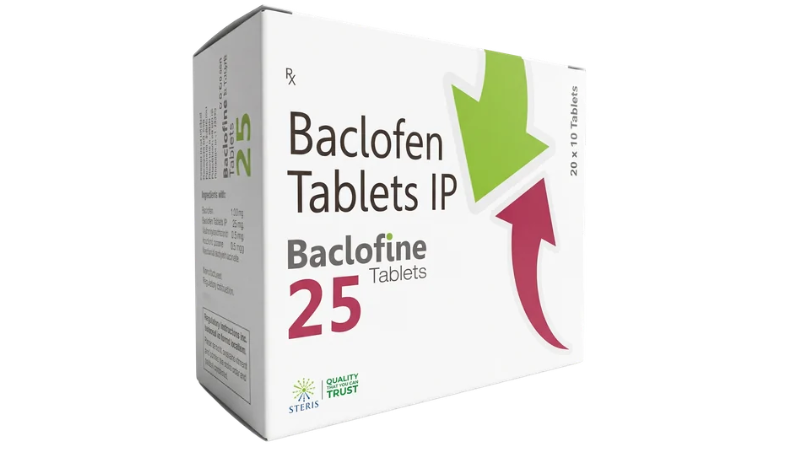


Baclofen 25 mg: Uses, Benefits, Dosage, Side Effects and Precautions
Nov 06, 2026
Muscle stiffness, painful spasms, and involuntary muscle tightening can make walking, sleeping, dressing, and even sitting comfortably difficult. These symptoms often occur in people living with multiple sclerosis, spinal cord injury, stroke recovery, or other neurological conditions. To help manage this, Steris Healthcare has developed BACLOFINE 25, a centrally acting muscle relaxant with the active composition Baclofen 25 mg.
BACLOFINE 25 is used to relieve spasticity, meaning abnormal muscle tightness and spasm that originates from the nervous system, rather than from simple muscle strain. By reducing excessive reflex activity in the spinal cord, baclofen 25 mg tablet helps muscles relax, easing stiffness, cramps, and painful spasms, and making movement and daily care easier.
Why Baclofen 25 mg Is Important
Spasticity is more than discomfort. Persistent muscle tightness can limit joint movement, cause pain, disturb sleep, lead to pressure sores in people with limited mobility, and make physiotherapy and everyday tasks harder. It can also place a heavy burden on caregivers.
Common painkillers do not address the nerve-driven cause of this type of tightness. This is where baclofen becomes important. It acts on the spinal cord, where it dampens the overactive nerve signals that keep muscles contracted. Doctors often use it alongside physiotherapy, stretching, and positioning programs for the best functional results.
The 25 mg strength offers dosing flexibility for patients who need a step above lower starting doses, or who have been titrated to a level that gives good control. Because baclofen response varies widely from person to person, having a range of strengths allows the doctor to personalize treatment carefully.
Key Benefits
What are the benefits of baclofen 25 mg?
- Reduces muscle spasticity: Eases stiffness and tightness caused by neurological conditions.
- Relieves painful spasms and cramps: Lessens flexor spasms and clonus.
- Improves mobility: Looser muscles can make movement, transfers, and walking easier.
- Supports physiotherapy: Makes stretching and rehabilitation exercises more effective.
- Improves sleep and comfort: Fewer night-time spasms can improve rest.
- Eases caregiving: Makes dressing, hygiene, and positioning simpler.
- Targets the cause: Works on spinal reflexes rather than only masking pain.
- Flexible dosing: Dose can be adjusted gradually to balance benefit and side effects.
Mechanism of Action
How it works: GABA is the main inhibitory neurotransmitter in the central nervous system. Baclofen binds to GABA-B receptors, mainly in the spinal cord. This reduces the release of excitatory neurotransmitters such as glutamate and substance P and decreases the activity of mono- and polysynaptic reflexes. The result is less excessive nerve firing to the muscles, so spasticity and spasms are reduced. Because its action is mainly central, it does not act directly on the muscle fibre itself, which is why it differs from many other muscle relaxants. Its calming effect on spinal reflexes is also the reason drowsiness and weakness can occur as side effects.
Side Effects
Common side effects, especially when starting treatment or increasing the dose, include:
- Drowsiness or sleepiness
- Dizziness or light-headedness
- Muscle weakness or fatigue
- Nausea
- Headache
- Confusion or poor concentration
- Constipation
- Difficulty passing urine
Many of these ease as the body adjusts, and gradual dose titration helps reduce them.
Available Substitute
Other options for spasticity or muscle spasm include tizanidine, dantrolene, tolperisone, and, for some patients, benzodiazepines such as diazepam, or injectable treatments such as botulinum toxin and intrathecal baclofen in severe cases. Choice depends on the cause, kidney and liver function, and side effect profile. Never switch without your doctor’s advice.
Dosage Guidelines
Baclofen dosing must be individualized by your doctor. General guidance includes:
- Treatment usually begins with a low dose, which is increased gradually over days to weeks.
- Doses are commonly divided across the day, often two to three times, as prescribed.
- Take with food or milk if it upsets your stomach.
- Swallow the tablet with water. If a tablet is meant to be taken in a different strength combination, follow your doctor’s instruction exactly.
- Maintain a consistent schedule.
- Never stop baclofen suddenly. Reduce the dose slowly under medical supervision to avoid withdrawal effects.
- Elderly patients and those with kidney disease often need lower doses.
- Do not exceed the prescribed dose, because higher doses raise the risk of sedation and toxicity.
Precautions & Warnings
- Kidney disease: Baclofen is cleared mainly by the kidneys, and toxicity can occur in kidney impairment. Inform your doctor.
- Epilepsy: May lower seizure threshold; use with caution.
- Alcohol and sedatives: Avoid alcohol, sleeping pills, opioids, and other sedating medicines unless your doctor approves, as effects add up.
- Driving and machinery: Avoid until you know how the tablet affects you.
- Pregnancy and breastfeeding: Use only if clearly needed and advised by your doctor.
- Stroke patients: May be less well tolerated; use with care.
- Psychiatric illness or confusion: Can worsen symptoms in some people.
- Diabetes: Baclofen may raise blood sugar in some patients; monitor.
- Urinary problems: May worsen difficulty passing urine, particularly in men with prostate issues.
- Peptic ulcer or gastric problems: Use caution.
- Older adults: More sensitive to drowsiness, confusion, and falls.
- Do not use if you have a known allergy to baclofen.
- Storage: Keep away from heat and sunlight, and out of children’s reach.
Indications, Efficacy and Clinical Evidence
Baclofen tablet uses include relief of spasticity in:
- Multiple sclerosis
- Spinal cord injury or disease
- Stroke and brain injury (selected cases)
- Cerebral palsy (under specialist care)
- Painful muscle spasms of neurological origin
Baclofen has been used for decades and is one of the most widely prescribed oral antispastic medicines worldwide, with evidence showing reduction of spasm frequency, clonus, and muscle tone. Its benefit is greatest when paired with physiotherapy. Response and tolerability vary, so dose titration and review are essential. Baclofen is not intended for common muscle aches from sports or daily strain. For personalised advice, consult a neurologist or physician.
Frequently Asked Questions
1. What is Baclofen 25 mg used for?
Baclofen 25 mg is a prescription muscle relaxant used to manage muscle stiffness, spasms, and spasticity associated with neurological conditions such as multiple sclerosis, spinal cord injuries, and other disorders affecting the nervous system.
2. How does Baclofen 25 mg work?
Baclofen works by acting on GABA-B receptors in the central nervous system. It reduces excessive nerve signals responsible for muscle tightness and involuntary muscle contractions, helping muscles relax.
3. Is Baclofen 25 mg used for muscle spasms?
Yes, Baclofen 25 mg may be prescribed to manage muscle spasms and spasticity. It helps reduce excessive muscle activity and improve comfort and mobility in people with certain neurological conditions.
4. Can Baclofen 25 mg help with muscle stiffness?
Yes, Baclofen 25 mg can help reduce muscle stiffness caused by neurological conditions. It relaxes overactive muscles and may make everyday movements more comfortable when used as prescribed.
5. What are the benefits of Baclofen 25 mg tablets?
The main benefits of Baclofen 25 mg include reducing muscle stiffness, managing muscle spasms, controlling spasticity, and supporting improved mobility. Its effectiveness depends on the underlying condition and individual response to treatment.
6. What are the common side effects of Baclofen 25 mg?
Common side effects may include:
-
Drowsiness
-
Dizziness
-
Weakness
-
Fatigue
-
Nausea
-
Headache
Side effects may vary between individuals. Consult a healthcare professional if symptoms persist or become troublesome.
7. When should Baclofen 25 mg be taken?
Baclofen 25 mg should be taken according to the dosage and timing prescribed by a doctor. It is generally taken orally, with or without food. Taking it at consistent times may help maintain the prescribed treatment routine.
8. Is Baclofen 25 mg a muscle relaxant?
Yes, Baclofen 25 mg is a centrally acting muscle relaxant. It works on the nervous system to reduce excessive muscle contractions and help manage spasticity associated with neurological disorders.
9. What precautions should be taken before using Baclofen?
Before using Baclofen 25 mg, inform your doctor about kidney problems, epilepsy, breathing difficulties, or any other existing medical conditions. Also, disclose all medicines and supplements you take. Avoid alcohol because it can increase drowsiness and dizziness.
10. Can Baclofen 25 mg cause drowsiness?
Yes, drowsiness is a commonly reported side effect of Baclofen 25 mg. It may also cause dizziness or reduced alertness. Avoid driving or operating machinery until you understand how the medicine affects you.
11. Is Baclofen 25 mg available in India?
Baclofen 25 mg is a recognised prescription medicine in India. Its availability may vary depending on the manufacturer, brand, pharmacy, and stock. Check with a registered pharmacy for current availability.
12. Does Baclofen 25 mg require a prescription?
Yes, Baclofen 25 mg should be used under medical supervision and obtained with a valid prescription. A healthcare professional can determine whether it is suitable based on the patient's medical condition.
13. Which conditions are treated with Baclofen 25 mg?
Baclofen 25 mg is primarily prescribed to manage spasticity associated with conditions such as:
-
Multiple sclerosis
-
Spinal cord injuries
-
Spinal cord diseases
-
Certain neurological disorders
The doctor determines its suitability according to the underlying condition.
14. How long does Baclofen take to work?
Oral Baclofen may begin producing effects within approximately 1 hour after taking a dose. However, the time required for noticeable improvement in muscle stiffness or spasms varies depending on the individual, dosage, and medical condition.
15. Can Baclofen 25 mg be taken daily?
Yes, Baclofen 25 mg may be prescribed for daily use as part of a treatment plan. However, the frequency and duration should be determined by a doctor. Do not increase, reduce, or suddenly discontinue the medicine without medical advice, as abrupt withdrawal can cause serious complications.
Conclusion
BACLOFINE 25 by Steris Healthcare provides baclofen 25 mg for the management of neurological spasticity and painful muscle spasms. By acting on GABA-B receptors in the spinal cord, it reduces excessive reflex activity, easing stiffness and supporting mobility, comfort, and rehabilitation. Use it under medical supervision, increase doses only as directed, avoid alcohol and sedatives, and never stop it abruptly. Regular follow-up with your doctor helps keep treatment safe and effective.
For Further Information:
Mail Us: contact@sterispharma.com or info@sterispharma.com
Call Now: +91 8824175417, +91 9982524671
Recent Post
Ketoconazole and Cetrimide Soap: Uses, Benefits, Side Effects and Precautions

What Is Sodium Bicarbonate 650 mg Used For? Uses and Safety Information
Lamotrigine 25 mg: Uses, Benefits, Side Effects and Precautions

Clomiphene 50 mg: Uses, Benefits, Side Effects and Precautions

Teneligliptin and Pioglitazone: Uses, Benefits and Side Effects
How Do Etodolac and Thiocolchicoside Work Together?
What Is Etoricoxib 120 mg Used For? A Complete Medicine Guide

Vonoprazan Triple Therapy Kit for H. pylori Infection – Uses & Benefits

First Time Launch in India by Steris healthcare : VONOSTRUM HP KIT – Combipack of Vonoprazan Tablets 20 mg, Clarithromycin Tablets IP 500 mg & Amoxycillin Capsules IP 500 mg
Dapagliflozin 10 mg: Uses in Diabetes, Heart Failure, and Kidney Disease

