


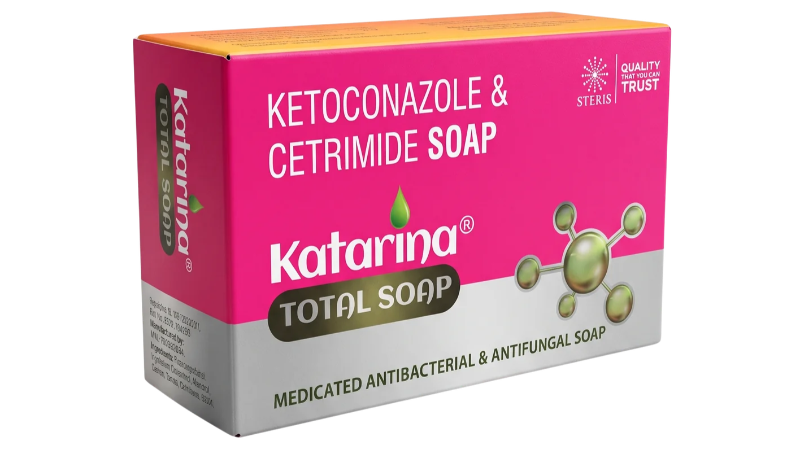


Ketoconazole and Cetrimide Soap: Uses, Benefits, Side Effects and Precautions
Nov 06, 2026
Ketoconazole and cetrimide soap is a medicated cleansing bar designed for people who need more than ordinary bathing soap. Ordinary soap cleans oil and dirt. A medicated soap does that and also delivers active ingredients that act against the microorganisms involved in common skin problems.
In KATARINA TOTAL SOAP, two active components work together. Ketoconazole is a broad-spectrum imidazole antifungal. Cetrimide is a quaternary ammonium compound that works as an antiseptic and a surfactant. Together they help cleanse the skin, reduce fungal load and lower the number of surface bacteria.
The ketoconazole and cetrimide soap uses that doctors and pharmacists commonly discuss include:
- Fungal infections of the skin, such as ringworm (tinea corporis), tinea cruris (jock itch) and tinea pedis (athlete’s foot)
- Tinea versicolor (pityriasis versicolor), which causes light or dark patches on the chest, back and shoulders
- Seborrheic dermatitis and dandruff-related skin involvement on the scalp margins, face and upper body
- Fungal folliculitis or recurring itchy, flaky patches in sweaty body folds
- General skin hygiene in people prone to repeated fungal or bacterial skin problems, when advised by a doctor
People in hot and humid regions, including much of India during the monsoon and summer months, are more prone to fungal skin infections because moisture and sweat let fungi grow. A medicated soap is a convenient, easy-to-use option for these conditions. It is generally used alongside, or as an add-on to, a doctor-prescribed cream or lotion when the infection is more than mild.
Why Is Ketoconazole and Cetrimide Soap Important?
Skin infections can look minor at the beginning. A small itchy circle on the groin or a few light patches on the back are easy to ignore. Left untreated, though, fungal infections tend to spread, return and affect comfort, sleep and confidence. Repeated scratching can also break the skin and invite secondary bacterial infection.
This is where a combination soap matters. Many fungal conditions are made worse by daily sweating, tight clothing, shared towels and incomplete drying. A product that fits into a daily bathing routine is easier to follow than a multi-step regimen, and consistency is a major factor in treating fungal skin disease successfully.
The pairing of ketoconazole and cetrimide is also useful because skin problems are rarely caused by one organism. Fungal overgrowth and surface bacteria often coexist on irritated skin. Ketoconazole addresses the fungal side. Cetrimide supports the antiseptic and cleansing side. The result is a soap that is more purposeful than a plain beauty bar.
In clinical practice, dermatologists often recommend medicated soaps and washes for the following reasons:
- They cover large areas such as the back, chest and thighs far more easily than creams.
- They give a short contact therapy that fits an ordinary bath.
- They help reduce reinfection risk from the skin surface.
- They are easy for children above the age advised by a doctor, and for elderly patients, to use with supervision.
For pharmacies, clinics and distributors, KATARINA TOTAL SOAP from Steris Healthcare is a relevant, in-demand product because fungal and seborrheic skin complaints are among the most frequent reasons for dermatology visits in India.
Key Benefits
What Are the Benefits of Ketoconazole and Cetrimide Soap?
The key benefits of KATARINA TOTAL SOAP (ketoconazole and cetrimide soap) include:
- Antifungal action: Ketoconazole helps stop the growth of fungi and yeasts that cause ringworm, tinea versicolor and dandruff-related conditions.
- Antiseptic cleansing: Cetrimide helps lower surface bacteria and cleans away oil, sweat and debris.
- Relief from itching and flaking: By reducing the organisms responsible for irritation, the soap can ease itching, scaling and redness over time.
- Helps reduce recurrence: Regular use as advised can reduce the chance of fungal infection returning, especially in sweaty areas.
- Easy daily use: It fits into a normal bath routine, with no extra application steps.
- Wide body coverage: It is practical for the back, chest, underarms, groin, feet and other areas that are hard to treat with creams.
- Supports hygiene in high-risk situations: Useful in humid weather, for people who sweat heavily, and for athletes or workers who wear closed footwear for long hours.
- Cost-effective: A soap-based approach is generally economical compared with long courses of other topical products.
- Complements prescribed therapy: It can be used alongside antifungal creams or tablets when a doctor recommends it.
Mechanism of Action
Understanding how ketoconazole and cetrimide soap works helps explain why the combination is chosen.
Ketoconazole belongs to the azole class of antifungals. Fungal cell membranes need a molecule called ergosterol to stay intact. Ketoconazole blocks an enzyme (lanosterol 14-alpha-demethylase, a cytochrome P450 enzyme) that fungi use to make ergosterol. When ergosterol production falls, the fungal membrane becomes leaky and weak, and the fungus cannot grow or multiply properly. Ketoconazole is active against dermatophytes and Malassezia yeasts, which are the organisms linked to tinea versicolor and seborrheic dermatitis.
Cetrimide is a cationic surfactant and antiseptic. Its positively charged molecules bind to the negatively charged surfaces of bacterial cell membranes, disrupt them and cause the cell contents to leak. It is also a detergent, so it helps lift oil, dirt and dead skin from the surface, which lets the antifungal contact the skin more effectively.
Together, the two ingredients provide a dual effect: antifungal action plus antiseptic cleansing. Because the soap is washed off after a short contact time, systemic absorption of ketoconazole through the skin is minimal compared with oral forms.
Indications, Efficacy and Clinical Evidence
Indications: Ketoconazole and cetrimide soap is generally indicated for superficial fungal skin infections and seborrheic skin conditions, with an antiseptic benefit for the skin surface. It is intended for external use.
Efficacy: Ketoconazole is one of the most widely studied topical antifungals. Clinical studies of topical ketoconazole preparations have shown meaningful improvement in tinea versicolor, seborrheic dermatitis and dandruff, and good activity against dermatophyte infections of the skin. Ketoconazole 2% shampoo and cream are established treatments for seborrheic dermatitis and tinea versicolor in dermatology guidelines. Soap formulations rely on the same active principle, although contact time is shorter, so use as directed and for the advised duration is important. Cetrimide has a long record of use as an antiseptic and cleansing agent in medicated washes and skin-cleansing products.
Clinical context: Medicated soaps are most useful as supportive or maintenance therapy. For moderate or extensive infection, doctors may prescribe antifungal creams, lotions or oral antifungals, and the soap is added to improve hygiene and lower relapse. Results vary between people, and improvement often takes a few weeks of regular use. If there is no improvement in the time your doctor advised, a review is needed.
Side Effects
Most people tolerate medicated soap well because it is rinsed off. Still, some may notice mild local reactions, especially with sensitive skin. Possible side effects include:
- Mild burning or stinging at the application site
- Skin dryness or tightness
- Itching or redness
- Peeling or flaking in the first days of use
- Skin irritation or contact dermatitis
- Change in hair texture if used on the scalp area (oiliness or dryness)
- Eye irritation if the lather enters the eyes
These effects are usually mild and settle on their own or after reducing how often the soap is used. If they persist, stop use and speak to your doctor.
Available Substitutes
Other medicated soaps, washes and creams containing ketoconazole, or combinations of antifungal and antiseptic agents, are available in the Indian market and may be considered as substitutes. These include other ketoconazole-based soaps and shampoos, and antifungal creams containing ketoconazole, clotrimazole, miconazole or terbinafine. Substitution should only be done after consulting a doctor or pharmacist, because the strength, form and suitability of the product depend on the type and site of the infection. Never switch products on your own if you are being treated for a persistent or widespread infection.
Dosage Guidelines
Always follow the directions given by your doctor and the instructions on the label. A commonly followed method for a medicated soap of this type is:
- Wet the affected area and your hands with water.
- Lather the soap and apply it gently to the affected skin and a small margin of surrounding healthy skin.
- Leave the lather on for about 3 to 5 minutes, or as your doctor advises, so the active ingredients have contact time.
- Rinse thoroughly with clean water.
- Dry the area completely with a clean towel, especially skin folds, groin and between the toes.
Frequency: Typically once or twice daily, or on alternate days, depending on the condition and the doctor’s advice. The duration may range from a couple of weeks to longer for maintenance. Do not exceed the advised frequency, as over-washing may dry or irritate the skin.
Precautions and Warnings
- For external use only. Do not swallow the soap.
- Avoid contact with the eyes, mouth and inside of the nose. If it enters the eyes, rinse well with plenty of clean water.
- Do not use on open wounds, deep cuts or severely broken skin unless your doctor advises it.
- Allergy: Do not use it if you are allergic to ketoconazole, cetrimide or any other ingredient. Do a patch test on a small area if you have sensitive skin.
- Pregnancy and breastfeeding: Talk to your doctor before use, even though absorption through the skin is low.
- Children: Use only under the guidance of a doctor.
- Other skin products: Tell your doctor about any creams, steroids or other medicines you use on your skin.
- Complete the course: Fungal infections can return if treatment is stopped too early, even when the skin looks better.
- Maintain hygiene: Keep the skin dry, wear loose cotton clothing, do not share towels and change socks and innerwear daily.
- Do not self-treat persistent conditions: If the problem does not improve, spreads or recurs, consult a dermatologist, as other conditions can look like fungal infection.
- Storage: Keep in a cool, dry place away from direct sunlight, and out of reach of children.
Frequently Asked Questions
1. What is Ketoconazole and Cetrimide Soap used for?
Ketoconazole and Cetrimide Soap is a medicated cleansing product used to help manage certain fungal skin infections and maintain skin hygiene. Ketoconazole is an antifungal ingredient, while Cetrimide acts as an antiseptic that helps reduce certain microorganisms on the skin.
2. How does Ketoconazole and Cetrimide Soap work?
Ketoconazole works by interfering with the production of ergosterol, an essential component of fungal cell membranes. This weakens the fungal cell membrane and helps control fungal growth. Cetrimide provides antiseptic action and supports skin cleansing.
3. Is Ketoconazole and Cetrimide Soap used for fungal infections?
Yes, it may be prescribed or recommended for certain fungal skin infections. Ketoconazole helps control fungal growth, while Cetrimide provides additional antiseptic cleansing. Its suitability depends on the type and severity of the skin condition.
4. How should I use Ketoconazole and Cetrimide Soap?
Wet the affected skin with clean water and gently apply the soap as directed by your healthcare professional. Follow the recommended contact time and rinse thoroughly. Avoid contact with the eyes, mouth and other sensitive areas. Follow the product label for specific instructions.
5. Can Ketoconazole soap help with fungal skin infections?
Yes, Ketoconazole-containing soap may help manage certain fungal skin conditions by controlling fungal growth. However, the effectiveness depends on the infection type, formulation and treatment duration. Consult a healthcare professional for an appropriate treatment recommendation.
6. What are the benefits of Ketoconazole and Cetrimide Soap?
Potential benefits include:
-
Helps control the growth of certain fungi.
-
Supports cleansing of the affected skin.
-
Provides additional antiseptic action through Cetrimide.
-
Helps maintain skin hygiene.
-
May support the management of certain fungal skin conditions when used as directed.
7. Does Ketoconazole and Cetrimide Soap have side effects?
Some people may experience mild skin-related side effects, such as:
-
Skin irritation
-
Redness
-
Dryness
-
Itching
-
Burning or stinging sensation
Stop using the product and seek medical advice if severe irritation, swelling or an allergic reaction occurs.
8. Can Ketoconazole and Cetrimide Soap be used daily?
Daily use depends on the product formulation, skin condition and healthcare professional's recommendation. Follow the directions mentioned on the product packaging or prescribed by your doctor. Avoid excessive use, as it may cause dryness or irritation.
9. What precautions should I take before using Ketoconazole Soap?
Consider the following precautions:
-
Check the ingredients if you have a history of allergies.
-
Avoid contact with the eyes and mouth.
-
Do not apply to severely damaged or irritated skin unless advised by a doctor.
-
Avoid using other medicated skin products without professional advice.
-
Inform your healthcare professional if you are pregnant or breastfeeding.
-
Discontinue use if significant irritation develops.
10. Is Ketoconazole and Cetrimide Soap suitable for sensitive skin?
People with sensitive skin should use this soap cautiously because Ketoconazole and Cetrimide may cause irritation in some individuals. Seek medical advice before use, and discontinue if redness, itching or discomfort develops.
11. Can Ketoconazole Soap be used on the body?
Ketoconazole-containing soap may be used on specific body areas affected by fungal skin conditions, depending on the product formulation and instructions. Avoid sensitive areas and follow the directions provided by your healthcare professional.
12. Where can I buy Ketoconazole and Cetrimide Soap in India?
You can explore Ketoconazole and Cetrimide Soap through Steris Healthcare Pvt. Ltd. and its online pharmacy, SterisOnline. Check product availability, composition, packaging and usage instructions before placing an order. Use medicated products under appropriate healthcare guidance.
Conclusion
Ketoconazole and cetrimide soap is a practical and accessible option for supporting the management of fungal skin infections, tinea versicolor, seborrheic skin conditions and everyday skin hygiene in people prone to infections. The antifungal action of ketoconazole and the antiseptic, cleansing action of cetrimide work together, and the soap fits easily into a daily bath routine
For Further Information:
Mail Us: contact@sterispharma.com or info@sterispharma.com
Call Now: +91 8824175417, +91 9982524671
Recent Post
Baclofen 25 mg: Uses, Benefits, Dosage, Side Effects and Precautions
What Is Sodium Bicarbonate 650 mg Used For? Uses and Safety Information
Lamotrigine 25 mg: Uses, Benefits, Side Effects and Precautions
Clomiphene 50 mg: Uses, Benefits, Side Effects and Precautions
Teneligliptin and Pioglitazone: Uses, Benefits and Side Effects
How Do Etodolac and Thiocolchicoside Work Together?
What Is Etoricoxib 120 mg Used For? A Complete Medicine Guide
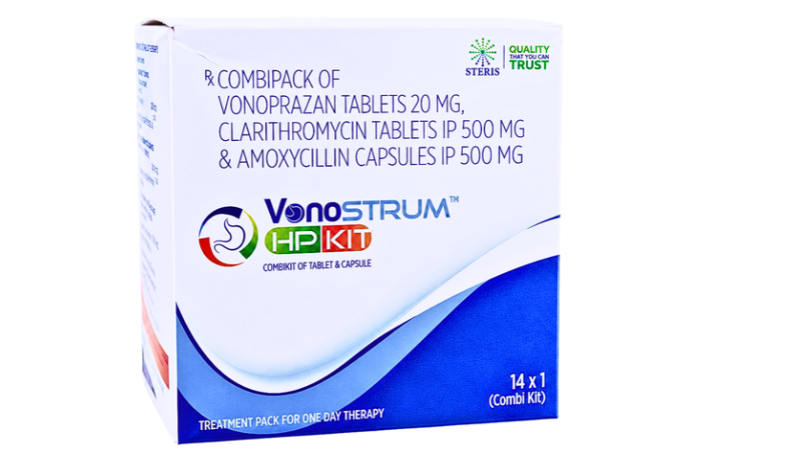
Vonoprazan Triple Therapy Kit for H. pylori Infection – Uses & Benefits

First Time Launch in India by Steris healthcare : VONOSTRUM HP KIT – Combipack of Vonoprazan Tablets 20 mg, Clarithromycin Tablets IP 500 mg & Amoxycillin Capsules IP 500 mg
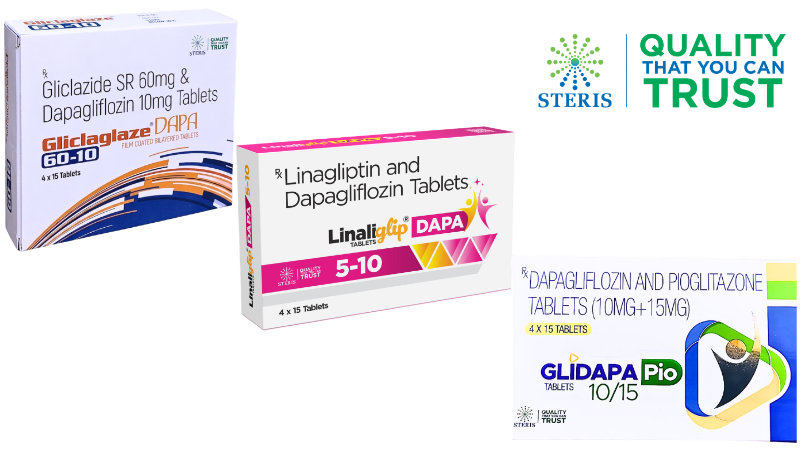
Dapagliflozin 10 mg: Uses in Diabetes, Heart Failure, and Kidney Disease

