


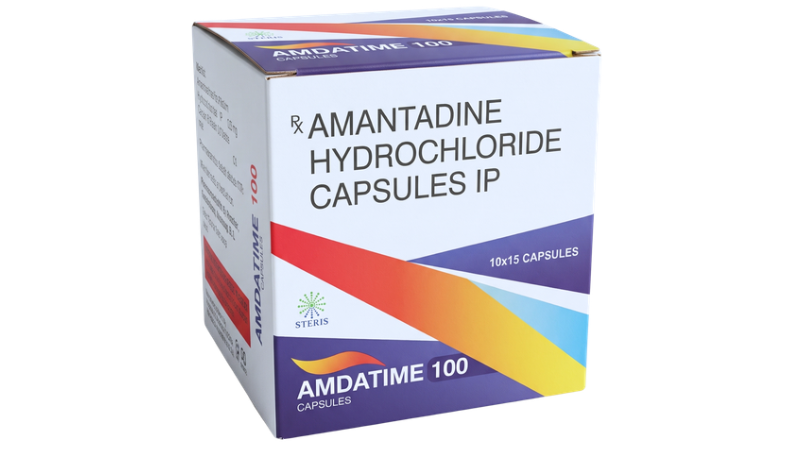


Amantadine Hydrochloride: Uses, Benefits, Dosage and Side Effects
Nov 06, 2026
Amantadine Hydrochloride is a prescription medicine used to manage certain neurological conditions, including symptoms associated with Parkinson’s disease. It works by influencing specific chemical signals in the brain, particularly dopamine-related activity, which may help improve movement and reduce symptoms such as stiffness and difficulty moving. The medicine should be taken strictly as prescribed by a qualified healthcare professional. Follow the recommended dosage and precautions to ensure its appropriate use.
AMDATIME 100 contains amantadine hydrochloride 100 mg in each capsule. The amantadine uses that doctors commonly discuss include:
- Parkinson’s disease: to help reduce tremor, stiffness (rigidity) and slowness of movement (bradykinesia), either alone in early disease or alongside levodopa in later stages.
- Drug-induced extrapyramidal symptoms: movement problems such as tremor, rigidity and restlessness that can occur with antipsychotic medicines.
- Levodopa-induced dyskinesia: involuntary, writhing movements that can develop after long-term levodopa therapy. Amantadine is one of the few medicines used to help with this problem.
- Influenza A: historically used for prevention and treatment. Because many circulating influenza A strains are now resistant, current guidance generally does not recommend amantadine for flu, and doctors decide its use based on local resistance data.
Because amantadine acts on more than one brain pathway, it is often described as a flexible medicine in neurology. It can be used on its own in mild early symptoms or added to other medicines when symptoms are more difficult to control.
Why Is Amantadine Hydrochloride Important?
Parkinson’s disease affects millions of people worldwide, and in India the number is rising with an ageing population. The condition develops when the brain cells that make dopamine slowly die. Dopamine is a chemical messenger that helps coordinate smooth, controlled movement. When it falls, movement becomes slow, stiff and shaky, and daily tasks like buttoning a shirt, writing or walking can become hard.
Amantadine matters for several reasons.
It offers an early, simple option. In early or mild Parkinson’s disease, amantadine can help improve symptoms, sometimes for months, without the need to start stronger therapy right away.
It helps in advanced disease. After years of levodopa therapy, many people develop dyskinesias and “wearing-off” periods. Amantadine is one of the better-evidenced options for reducing dyskinesia, which can improve quality of life and independence.
It treats a distinct problem. People who need antipsychotic medicines for mental health conditions may develop movement side effects. Amantadine can help ease these, allowing continued treatment of the underlying illness.
It is cost-effective and widely available. Amantadine is an established, affordable medicine, which makes it accessible in everyday clinical practice across India.
For neurologists, physicians, pharmacies and distributors, a dependable amantadine hydrochloride 100 mg product is a staple in the neuro range.
Key Benefits
What Are the Benefits of Amantadine Hydrochloride?
The main benefits of AMDATIME 100 (amantadine hydrochloride 100 mg) include:
- Eases Parkinson’s symptoms: Can reduce tremor, muscle stiffness and slowness of movement.
- Reduces dyskinesia: Helps lessen involuntary movements caused by long-term levodopa treatment.
- Treats drug-induced movement disorders: Helps relieve extrapyramidal symptoms linked to antipsychotics.
- Can be used alone or as an add-on: Flexible use in early disease, or alongside levodopa and other Parkinson’s medicines.
- Works through multiple pathways: Acts on the dopamine system and the glutamate (NMDA) system, giving a broader effect.
- Relatively quick onset: Benefits are often noticed within days to a couple of weeks.
- Supports daily function: Improved movement can make walking, dressing and eating easier.
- Simple dosing: A 100 mg strength allows gentle starting and flexible adjustment under medical supervision.
- Long clinical experience: Decades of use give doctors a good understanding of how it behaves in practice.
Mechanism of Action
Amantadine’s effect on the brain is not fully explained by a single mechanism, which is part of what makes it interesting. The main actions are:
Dopaminergic effects: Amantadine appears to increase the release of dopamine from nerve endings and to reduce its reuptake, which raises the amount of dopamine available in the brain’s movement circuits. This helps compensate for the dopamine shortage in Parkinson’s disease.
NMDA receptor antagonism: Amantadine is a weak, non-competitive antagonist of the NMDA-type glutamate receptor. Overactivity of glutamate signalling is thought to contribute to levodopa-induced dyskinesia, and blocking these receptors is believed to be the reason amantadine can reduce dyskinesia.
Mild anticholinergic effects: Amantadine has a modest anticholinergic action, which may add to the relief of tremor and rigidity and explains some side effects such as dry mouth.
Antiviral action: Against influenza A, amantadine blocks the viral M2 ion channel, which stops the virus from uncoating and releasing its genetic material inside the host cell. Resistance to this mechanism is now widespread.
Indications, Efficacy and Clinical Evidence
Indications: Amantadine hydrochloride is generally indicated for Parkinson’s disease, drug-induced extrapyramidal reactions, and (where appropriate) influenza A prophylaxis and treatment, as directed by a doctor.
Efficacy and evidence:
- In Parkinson’s disease, clinical trials and reviews support amantadine as an effective symptomatic therapy, particularly for mild symptoms in early disease and as an add-on in later disease. Its effect on the core motor symptoms is generally modest compared with levodopa.
- For levodopa-induced dyskinesia, randomised controlled trials have shown that amantadine can reduce dyskinesia severity. This is one of the strongest evidence-based reasons for its use, and an extended-release formulation has been approved for this purpose in some countries. Some people lose the benefit over time, so doctors review it regularly.
- For drug-induced extrapyramidal symptoms, amantadine is a recognised option, often considered when anticholinergic medicines are poorly tolerated, particularly in older adults.
- For influenza A, early studies showed benefit, but widespread resistance among circulating strains means that current public health guidance does not generally recommend it for flu.
Practical expectations: Response varies from person to person. Some notice benefit within days, while others need dose adjustments. Doctors reassess the benefit and side effects regularly, particularly in older patients.
Side Effects
Many people tolerate amantadine well, especially when started at a low dose. Possible side effects include:
- Nausea or reduced appetite
- Dizziness or light-headedness
- Dry mouth
- Constipation
- Trouble sleeping (insomnia), vivid dreams or nightmares
- Anxiety, irritability or nervousness
- Headache
- Swelling of the ankles or feet (peripheral edema)
- Livedo reticularis: a harmless but visible mottled, lace-like purplish skin discoloration, usually on the legs, which tends to appear after long-term use
- Blurred vision
- Difficulty concentrating
Taking the capsule in the morning or earlier in the day may help with sleep problems, but follow your doctor’s advice.
Available Substitutes
Other brands of amantadine hydrochloride 100 mg are available in the Indian market and contain the same active ingredient. Depending on the condition, doctors may also use different classes of medicines in place of, or alongside, amantadine. For Parkinson’s disease, these include levodopa-carbidopa combinations, dopamine agonists such as pramipexole and ropinirole, MAO-B inhibitors such as rasagiline, and anticholinergics such as trihexyphenidyl. Which is best depends on your age, symptoms, other illnesses and current medicines. Never change or stop the medicine on your own. Any substitution should be decided by your neurologist or treating doctor.
Dosage Guidelines
Dosing must be set by your doctor and adjusted for age, condition and kidney function. The information below is a general guide only. Follow the prescription and the product label.
Commonly followed approach for Parkinson’s disease in adults:
- Treatment often starts at 100 mg once daily for the first week or so.
- It may then be increased to 100 mg twice daily, depending on response and tolerance.
- Some patients may need higher doses under specialist supervision, but the total daily dose is generally kept within the limit recommended on the label.
Other guidance:
- Timing: Take capsules with water, with or without food. If insomnia occurs, avoid taking the last dose late in the evening.
- Kidney function: Amantadine is removed by the kidneys. People with reduced kidney function need a lower dose or longer interval between doses. Elderly patients often need extra care.
- Do not stop suddenly. Abrupt discontinuation, especially in people with Parkinson’s disease, can cause a sharp worsening of symptoms or, rarely, a serious reaction. Your doctor will guide a gradual reduction.
- Missed dose: Take it when you remember, unless it is nearly time for the next dose. Do not double the dose.
- Children: Use only under specialist medical supervision, as per the label.
Precautions and Warnings
- Kidney disease: Dose adjustment is important because the drug builds up when kidney function is reduced.
- Epilepsy or history of seizures: Amantadine may increase seizure risk. Use with caution and medical supervision.
- Heart conditions: Use carefully in congestive heart failure, peripheral edema, orthostatic hypotension or rhythm disorders.
- Psychiatric conditions: Tell your doctor about psychosis, depression, confusion or a history of substance misuse. Amantadine can worsen hallucinations or mood symptoms.
- Eye conditions: Use with caution in people with narrow-angle glaucoma or a history of eye disease.
- Elderly patients: More sensitive to confusion, dizziness and falls.
- Pregnancy and breastfeeding: Use only if clearly needed and advised by a doctor, as amantadine passes into breast milk and safety data in pregnancy are limited.
- Driving and machinery: Dizziness, blurred vision and drowsiness can occur. Avoid driving until you know how the medicine affects you.
- Alcohol: Avoid or limit alcohol, as it can increase dizziness and confusion.
- Drug interactions: Tell your doctor about all medicines you take. Interactions can occur with anticholinergic drugs (increased confusion, dry mouth and constipation), memantine and other NMDA antagonists, medicines that affect heart rhythm (QT prolongation), some diuretics (such as triamterene-hydrochlorothiazide) and trimethoprim-sulfamethoxazole, which can raise amantadine levels, and drugs that stimulate the central nervous system. Live attenuated influenza vaccine may be affected, so check with your doctor.
- Do not stop suddenly, as described above.
- Storage: Store in a cool, dry place away from direct sunlight, in the original pack and out of the reach of children.
Frequently Asked Questions
1. What is Amantadine Hydrochloride used for?
Amantadine Hydrochloride is a medicine used for certain neurological conditions. It may be prescribed to help manage symptoms of Parkinson's disease, including movement difficulties. Its use depends on the patient's condition and the doctor's assessment.
2. How does Amantadine Hydrochloride work?
Amantadine Hydrochloride affects certain chemical signals in the brain, particularly dopamine-related activity. This action may help improve movement and reduce some symptoms associated with Parkinson's disease.
3. What are the benefits of Amantadine Hydrochloride?
When prescribed for an appropriate condition, Amantadine Hydrochloride may help improve certain movement-related symptoms, reduce stiffness and support better motor function. The benefits can vary from person to person.
4. Is Amantadine Hydrochloride used for Parkinson's disease?
Yes. Amantadine Hydrochloride may be prescribed to manage certain symptoms of Parkinson's disease. A healthcare professional determines whether it is suitable based on the patient's symptoms, medical history and other medicines.
5. Can Amantadine Hydrochloride help with movement-related symptoms?
Yes. In some patients, Amantadine Hydrochloride may help manage movement-related symptoms such as stiffness and difficulty with movement. Its effectiveness depends on the individual's condition and treatment plan.
6. How should Amantadine Hydrochloride tablets be taken?
Take Amantadine Hydrochloride tablets exactly as prescribed by your doctor. Follow the recommended dose and timing, and swallow the tablet according to the product instructions. Do not increase, reduce or stop the medicine without medical advice.
7. What are the common side effects of Amantadine Hydrochloride?
Some possible side effects include:
-
Nausea
-
Dizziness
-
Dry mouth
-
Constipation
-
Difficulty sleeping
-
Headache
-
Nervousness
Side effects may vary between individuals. Contact a healthcare professional if symptoms persist or become troublesome.
8. What precautions should be taken before using Amantadine Hydrochloride?
Inform your doctor about your medical history, especially kidney problems, heart conditions or any history of seizures. Also disclose all medicines and supplements you take. Follow the prescribed dose and avoid driving if the medicine causes dizziness or affects alertness.
9. Can Amantadine Hydrochloride cause dizziness?
Yes. Dizziness can occur in some people taking Amantadine Hydrochloride. Be careful when standing up from a sitting or lying position. Avoid activities requiring alertness if you feel dizzy, and consult your doctor if the symptom continues.
10. Can Amantadine Hydrochloride interact with other medicines?
Yes. Amantadine Hydrochloride may interact with certain medicines, including some drugs that affect the nervous system. Tell your doctor about all prescription medicines, over-the-counter products and supplements you use before starting treatment.
11. Who should avoid taking Amantadine Hydrochloride?
People with a known allergy to Amantadine Hydrochloride or any tablet ingredient should avoid it. Patients with kidney disease, heart conditions, seizures or other significant medical problems should consult their doctor before use. The medicine may not be suitable for everyone.
12. Can Amantadine Hydrochloride be taken daily?
Amantadine Hydrochloride may be prescribed for regular daily use, depending on the medical condition. Take it only according to your doctor's instructions. Do not change the dose or duration of treatment independently.
13. What happens if a dose of Amantadine Hydrochloride is missed?
If you miss a dose, take it when you remember unless it is almost time for your next scheduled dose. In that case, skip the missed dose and continue with your regular schedule. Do not take a double dose to compensate.
14. How should Amantadine Hydrochloride tablets be stored?
Store Amantadine Hydrochloride tablets in their original packaging, in a cool and dry place, away from direct sunlight and moisture. Keep the medicine out of the reach of children and follow the storage instructions printed on the product packaging.
Conclusion
Amantadine hydrochloride remains a valuable medicine in neurology. Its dual action on the dopamine and glutamate pathways makes it useful for Parkinson’s disease symptoms, for levodopa-induced dyskinesia and for drug-induced movement disorders, and it is an established, affordable and widely available option in India. Its antiviral use against influenza A has become limited because of resistance.
For Further Information:
Mail Us: contact@sterispharma.com or info@sterispharma.com
Call Now: +91 8824175417, +91 9982524671
Recent Post
Dextromethorphan Hydrobromide: Uses, Benefits, Dosage and Side Effects

Potassium Chloride Oral Solution: Uses, Benefits, Dosage and Side Effects

Ketoconazole and Cetrimide Soap: Uses, Benefits, Side Effects and Precautions

Baclofen 25 mg: Uses, Benefits, Dosage, Side Effects and Precautions

What Is Sodium Bicarbonate 650 mg Used For? Uses and Safety Information

Lamotrigine 25 mg: Uses, Benefits, Side Effects and Precautions

Clomiphene 50 mg: Uses, Benefits, Side Effects and Precautions

Teneligliptin and Pioglitazone: Uses, Benefits and Side Effects

How Do Etodolac and Thiocolchicoside Work Together?

What Is Etoricoxib 120 mg Used For? A Complete Medicine Guide

