


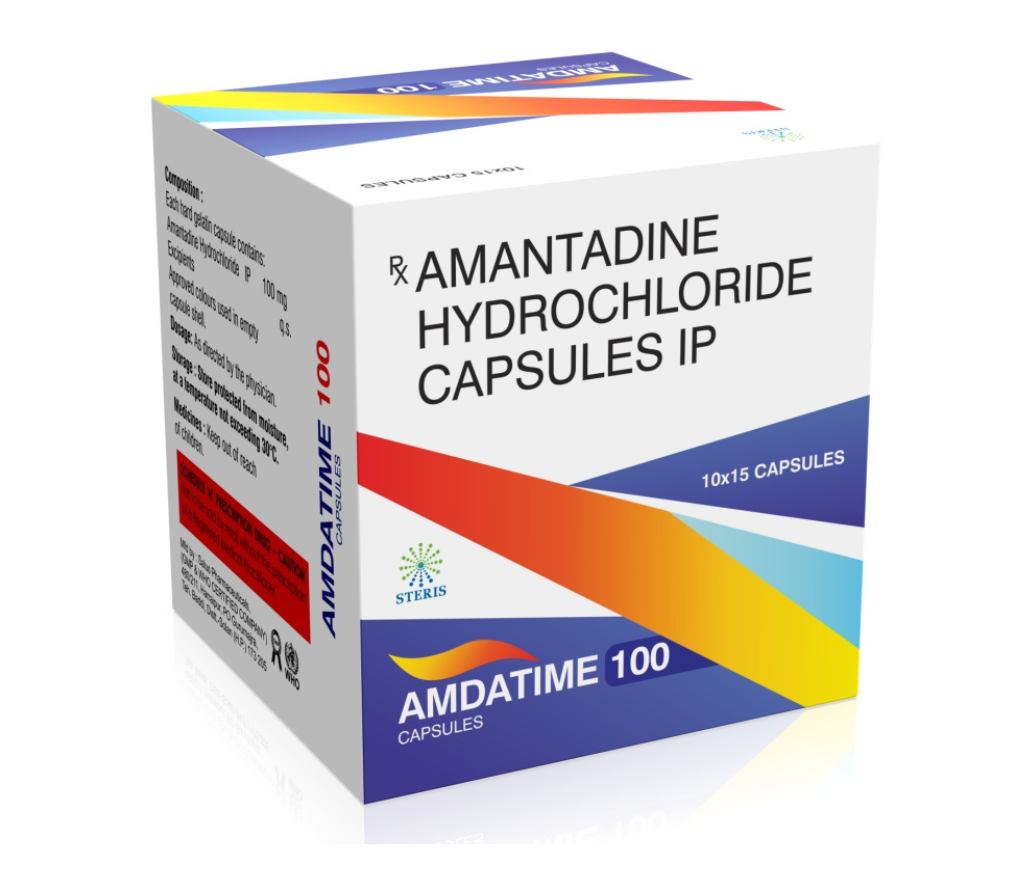
AMDATIME 100
 Item requires a valid prescription
Manufactured By STERIS HEALTHCARE PVT LTD
Composition Amantadine HCI Capsule(100mg)
Rs 186.42
MRP Rs 192.19
(3% OFF)
Includes all taxes
Package SIZE
( For 15 Capsules )

100% Authentic
Products

Free
Shipping*

Products
Return Policy
Description:
What Are Amantadine Hydrochloride Capsules?
Amantadine hydrochloride capsules are prescription oral medicines containing amantadine hydrochloride, an active ingredient with antiviral and neurological effects. Immediate-release amantadine capsules have historically been used for Parkinsonism, drug-induced extrapyramidal reactions, and certain influenza A infections. Current medical guidance is particularly important for influenza because widespread resistance means amantadine and rimantadine are not recommended for treating currently circulating seasonal influenza viruses in the United States.
For Parkinsonism, amantadine may help improve certain movement symptoms. Its exact mechanism in Parkinson's disease is not completely established, although pharmacological evidence suggests effects on dopamine pathways and NMDA receptors.
Because different amantadine products have different formulations and approved uses, buyers should verify whether they are purchasing immediate-release amantadine hydrochloride capsules or an extended-release product. These formulations should not automatically be considered interchangeable.
What is Amantadine 100 mg Used For
1. Parkinsonism and Parkinson's disease symptoms
Immediate-release amantadine capsules are labeled for the treatment of Parkinsonism, including idiopathic Parkinson's disease and certain forms of symptomatic or post-encephalitic Parkinsonism. The medicine may be used alone or alongside other Parkinson's medicines when clinically appropriate.
Amantadine can provide symptomatic improvement in some patients, although it is not generally considered a replacement for every other Parkinson's treatment. The appropriate treatment depends on the individual's symptoms, other medicines, age, kidney function, and overall health.
2. Drug-induced extrapyramidal reactions
Amantadine hydrochloride capsules are also labeled for drug-induced extrapyramidal reactions—movement-related adverse effects that can occur with certain medicines. The prescribing information notes that amantadine may sometimes be useful when anticholinergic antiparkinsonian medicines are ineffective or insufficient.
3. Influenza A: an important current-use distinction
Some product labels still list amantadine capsules for prevention and treatment of influenza A. However, this is an area where current clinical guidance matters more than relying on an old product description alone.
The FDA explains that amantadine and rimantadine were historically approved for influenza A, but many influenza strains have developed resistance. The FDA states that CDC does not recommend these drugs for recently circulating influenza viruses.
The CDC's June 2026 antiviral-resistance information similarly states that adamantane antivirals such as amantadine have not been recommended for influenza treatment in the United States for many years because of widespread resistance among circulating seasonal influenza A viruses.
Buyer takeaway: Do not purchase or use amantadine hydrochloride capsules as a self-directed flu treatment simply because an online product page lists influenza as an indication. Ask a healthcare professional which currently recommended antiviral is appropriate.
Key Benefits of Amantadine Hydrochloride Capsules
The potential benefits depend on why the medicine has been prescribed.
Potential benefits include:
- Helping reduce certain Parkinsonism-related movement symptoms.
- Providing an additional treatment option when used with other antiparkinsonian medicines.
- Helping manage certain drug-induced extrapyramidal movement reactions.
- Offering an oral immediate-release formulation for patients whose clinician determines that amantadine is appropriate.
- In selected historical influenza A indications, providing antiviral activity against susceptible influenza A strains—but widespread resistance limits its usefulness for currently circulating influenza viruses.
An important E-E-A-T principle for medical content is to distinguish potential therapeutic benefit from guaranteed results. Amantadine does not work identically for every patient, and dosage or treatment selection should be individualized.
How Do Amantadine Hydrochloride Capsules Work?
Amantadine has more than one pharmacological action.
For influenza A, amantadine historically acted as an M2 ion-channel blocker, interfering with an early stage of viral replication. Resistance, however, has substantially reduced its usefulness against circulating influenza viruses.
For Parkinsonism, its precise mechanism is not fully understood. Available pharmacological information describes weak noncompetitive NMDA receptor antagonism and effects involving dopamine pathways. Clinically, these actions can contribute to improvement in movement symptoms in some patients.
Amantadine Hydrochloride Capsules Dosage: What Buyers Should Know
Dosage should not be selected solely from an online product description.
For example, the prescribing information for immediate-release capsules describes a usual adult Parkinsonism dose of 100 mg twice daily when used alone, while some patients may initially receive 100 mg once daily before an increase. Certain situations can require different dosing.
Kidney function is especially important because amantadine is substantially cleared through the kidneys. The prescribing information provides lower or less frequent dosing for people with reduced creatinine clearance and for patients receiving hemodialysis.
This is why a prescription for amantadine hydrochloride 100 mg capsules should be followed exactly rather than adjusted according to symptoms or another person's prescription.
Common Amantadine Hydrochloride Capsules Side Effects
Like other prescription medicines, amantadine can cause adverse effects.
Reported or clinically important effects include:
- Nausea
- Dizziness or lightheadedness
- Dry mouth
- Constipation
- Difficulty sleeping
- Nervousness or agitation
- Confusion
- Hallucinations
- Swelling of the legs or feet
- Orthostatic hypotension, meaning blood pressure drops when standing
- Blurred vision or other anticholinergic-like effects
Amantadine's labeling specifically describes anticholinergic-like effects such as dry mouth, urinary retention, and constipation.
More serious mental or behavioral changes can occur. The prescribing information also warns about suicidal behavior and new or increased intense urges, including gambling or sexual urges, and recommends medical assessment if such changes develop.
Who Should Be Especially Careful With Amantadine?
People with kidney impairment require particular attention because reduced clearance can cause amantadine to accumulate, increasing toxicity risk. Serious toxicity and deaths have been reported following overdose or accumulation in people with impaired renal function.
A healthcare professional should also know about:
- Existing kidney disease
- Heart failure or significant swelling
- Low blood pressure or fainting
- Seizure history
- Mental-health or behavioral symptoms
- All prescription medicines, OTC medicines, and supplements currently being used
Amantadine is contraindicated in people with known hypersensitivity to amantadine hydrochloride or its ingredients.
Amantadine Drug Interactions
Amantadine can interact with other medicines. Its prescribing information advises careful observation when it is combined with central nervous system stimulants. Medicines with anticholinergic properties can also increase anticholinergic-type adverse effects. Quinine or quinidine may reduce renal clearance of amantadine, while an interaction has also been reported with triamterene/hydrochlorothiazide.
Therefore, before buying or starting amantadine hydrochloride capsules, provide your pharmacist or physician with a complete list of medicines you take.
Amantadine Hydrochloride Capsules vs. Extended-Release Amantadine
A frequent purchasing mistake is assuming every amantadine capsule is the same.
Immediate-release amantadine hydrochloride capsules and extended-release products have different dosing schedules, strengths, release characteristics, and approved indications. For example, Gocovri is an extended-release amantadine capsule specifically indicated for dyskinesia associated with Parkinson's disease and as adjunctive therapy for certain “off” episodes. Its prescribing information states that it is not substitutable with other immediate- or extended-release amantadine products.
Always match the exact product, strength, formulation, and prescription instructions before purchasing.
What to Check Before Buying Amantadine Hydrochloride Capsules
Check:
- Active ingredient: amantadine hydrochloride.
- Strength: commonly 100 mg for immediate-release capsules, but verify your prescription.
- Dosage form: immediate-release versus extended-release.
- Prescription requirement: this is a prescription medicine in relevant markets.
- Manufacturer and packaging: confirm the product matches the prescribed medicine.
- Expiry date and storage: follow the manufacturer's instructions.
- Pharmacy legitimacy: purchase from a licensed pharmacy rather than an unknown seller.
- Prescription instructions: never substitute another amantadine formulation without professional advice.
One current U.S. DailyMed listing for immediate-release amantadine hydrochloride capsules was revised in June 2025 and lists 100 mg hard-gelatin capsules, illustrating why buyers should check the actual product labeling rather than relying only on generic marketplace descriptions.
Conclusion: Is Amantadine Hydrochloride Capsules Right for You?
Amantadine hydrochloride capsules are prescription medicines primarily relevant to Parkinsonism and certain drug-induced extrapyramidal reactions. They have also historically been used against influenza A, but current U.S. guidance does not recommend amantadine for circulating seasonal influenza because of widespread resistance.
For someone considering a purchase, the most important factors are not simply price or availability. Confirm the exact formulation, strength, prescription indication, kidney function considerations, potential interactions, and source of the medicine. Do not self-medicate or change the dose based on online information.
The safest approach is to use amantadine exactly as prescribed and ask a physician or pharmacist before starting, stopping, switching formulations, or combining it with other medicines.
Frequently Asked Questions About Amantadine Hydrochloride Capsules
1. What are amantadine hydrochloride capsules used for?
Amantadine hydrochloride capsules are used primarily to treat Parkinsonism and certain drug-induced extrapyramidal movement reactions. Some older labels also include influenza A, but current CDC guidance does not recommend amantadine for circulating seasonal influenza because of widespread resistance.
2. What are the main benefits of amantadine hydrochloride capsules?
The main potential benefit is improvement of certain movement symptoms associated with Parkinsonism. Amantadine may also be used as an additional treatment in selected patients and for some drug-induced extrapyramidal reactions. Individual response varies.
3. What are the most common side effects of amantadine hydrochloride capsules?
Possible side effects include dizziness, nausea, dry mouth, constipation, sleep problems, swelling, confusion, and other nervous-system or anticholinergic-like effects. More serious behavioral or psychiatric symptoms require prompt medical attention.
4. Can amantadine hydrochloride capsules be used for the flu?
Although some prescribing labels still list influenza A treatment and prevention, current CDC guidance says adamantane drugs such as amantadine are not recommended for treating seasonal influenza in the United States because of widespread resistance.
5. Is amantadine hydrochloride 100 mg a common strength?
Yes. Immediate-release amantadine hydrochloride capsules are commonly supplied as 100 mg capsules. However, the correct dose depends on the indication and patient factors, particularly kidney function, so the prescribed dose should always be followed.
6. Can people with kidney problems take amantadine?
People with impaired kidney function may need substantially reduced or less frequent dosing because amantadine can accumulate when renal clearance is reduced. A healthcare professional should determine the appropriate regimen.
7. Can I stop amantadine suddenly?
Do not stop amantadine without medical advice. Sudden discontinuation can cause significant symptoms in some patients, including confusion, fever, mental-status changes, or severe muscle stiffness. A clinician may recommend gradual dose reduction.
8. Are immediate-release and extended-release amantadine capsules interchangeable?
No. Different amantadine formulations can have different dosing schedules and approved uses. Gocovri's prescribing information specifically states that it is not substitutable with other immediate- or extended-release amantadine products.
9. What should I check before buying amantadine hydrochloride capsules online?
Verify the prescription, active ingredient, strength, dosage form, manufacturer, packaging, expiry date, and pharmacy credentials. Avoid purchasing prescription medicines from sellers that cannot demonstrate legitimate pharmacy authorization.
10. Is amantadine hydrochloride safe for everyone?
No medicine is universally safe. Amantadine is contraindicated in people with known hypersensitivity, and extra caution is needed with kidney impairment, certain cardiovascular conditions, interacting medicines, and new psychiatric or behavioral symptoms. A physician or pharmacist should assess individual suitability.

