


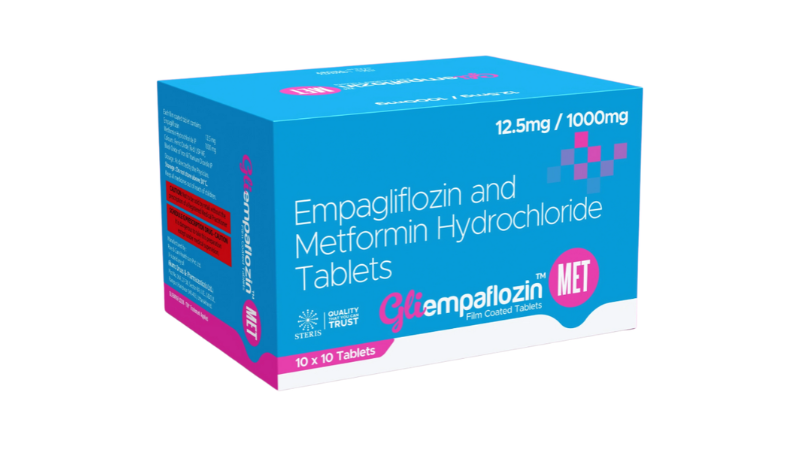


What Is Empagliflozin and Metformin? Uses, Benefits, and Side Effects
Oct 22, 2026
GLIEMPAFLOZIN MET 12.5mg/1000mg, from Steris Healthcare, is a fixed-dose combination tablet containing empagliflozin 12.5 mg and metformin hydrochloride 1000 mg. It combines a sodium-glucose co-transporter 2 (SGLT2) inhibitor with the long-established biguanide metformin, so two complementary medicines are taken in one tablet.
The empagliflozin metformin uses that doctors commonly consider include:
- Improving blood sugar control in adults with type 2 diabetes, alongside diet and exercise
- Treating patients whose diabetes is not adequately controlled on metformin alone
- Treating patients whose diabetes is not adequately controlled on empagliflozin alone
- Replacing separate empagliflozin and metformin tablets in patients already stable on both, to reduce pill burden
- Supporting patients with type 2 diabetes who also have established cardiovascular disease, heart failure or chronic kidney disease, where the empagliflozin component offers additional protective benefit, as judged by the doctor
This medicine is not for type 1 diabetes or diabetic ketoacidosis, and it is not a weight-loss drug. It is a prescription medicine, and your doctor will decide whether this strength suits you.
Why Is Empagliflozin Metformin Important?
Type 2 diabetes is a long-term condition, and the danger lies in the years of silent damage that uncontrolled sugar can cause to the eyes, nerves, kidneys, heart and blood vessels. Modern treatment aims not only at lowering HbA1c but also at protecting the heart and kidneys.
Here is why this pairing is valued:
- It works through two separate routes. Metformin reduces how much sugar the liver releases and improves insulin sensitivity. Empagliflozin helps the kidneys remove excess glucose through urine. Because they act independently of each other, the combined effect is usually greater than either alone.
- It works largely independently of insulin. Empagliflozin’s action does not rely on how much insulin the pancreas still makes, so it remains useful even as the disease advances.
- It offers benefits beyond sugar. Empagliflozin has been shown in large trials to lower the risk of cardiovascular death and heart-failure hospitalisation in suitable patients, and to slow kidney function decline.
- It is convenient. Fewer tablets mean better adherence, which strongly influences real-world results.
- Hypoglycaemia risk is low when used without insulin or a sulfonylurea.
For the patient, this translates into steadier glucose readings, often modest weight and blood pressure reduction, and a treatment plan that looks after the heart and kidneys as well as the sugar.
Mechanism of Action
Empagliflozin 12.5 mg
Empagliflozin is an SGLT2 inhibitor. Your kidneys filter large amounts of glucose every day and normally reabsorb nearly all of it back into the blood through a transporter called SGLT2. Empagliflozin blocks this transporter, so the extra glucose leaves the body in the urine instead. This lowers blood sugar without needing extra insulin. Because calories are lost as glucose, many people see a small reduction in weight, and the mild water and salt loss can lower blood pressure slightly.
Metformin Hydrochloride 1000 mg
Metformin is a biguanide and the most widely prescribed first-line medicine for type 2 diabetes. It works by:
- Reducing glucose production by the liver
- Improving insulin sensitivity in muscle and fat tissue
- Slightly slowing glucose absorption from the gut
It does not stimulate insulin release, so it seldom causes hypoglycaemia by itself.
Why the Combination Makes Sense
Metformin deals with the liver and insulin resistance, while empagliflozin deals with the kidneys’ handling of glucose. Their mechanisms complement each other, and the combination also pairs metformin’s long safety record with empagliflozin’s cardiovascular and kidney evidence.
Key Benefits
What Are the Benefits of GLIEMPAFLOZIN MET 12.5mg/1000mg?
- Effective glucose control: Lowers HbA1c, fasting glucose and post-meal glucose.
- Two complementary mechanisms in a single tablet.
- Possible weight reduction: Many patients lose a small amount of weight, unlike some diabetes medicines that cause gain.
- Mild blood pressure reduction in many patients.
- Heart and kidney benefits: Empagliflozin has demonstrated outcome benefits in selected high-risk patients.
- Low risk of hypoglycaemia when used without insulin or sulfonylureas.
- Reduced pill burden, which supports consistent use.
- Long-established metformin component with decades of safety data.
Indications, Efficacy and Clinical Evidence
Here is a balanced summary of what the research shows:
- EMPA-REG OUTCOME: In more than 7,000 adults with type 2 diabetes and established cardiovascular disease, empagliflozin reduced the risk of cardiovascular death and hospitalisation for heart failure compared with placebo. Most participants were also taking metformin.
- Glucose lowering: Trials of empagliflozin added to metformin showed meaningful reductions in HbA1c, body weight and systolic blood pressure compared with placebo. The effect on HbA1c is typically moderate and depends on baseline levels and kidney function.
- Initial combination therapy: Studies of starting empagliflozin and metformin together showed greater HbA1c lowering than either drug alone.
- Heart failure: Trials such as EMPEROR-Reduced and EMPEROR-Preserved showed that empagliflozin reduced heart-failure hospitalisation and cardiovascular death in people with heart failure, with or without diabetes. These findings explain why doctors increasingly value this drug class beyond glucose control.
- Kidney protection: The EMPA-KIDNEY trial found that empagliflozin slowed kidney disease progression in people with chronic kidney disease, including many without diabetes.
- Metformin’s track record: Long-term studies such as the UKPDS suggested that metformin reduces diabetes-related complications in overweight patients.
- Limits of the evidence: Glucose-lowering effect becomes weaker as kidney function declines. Benefits are strongest in people with established cardiovascular or kidney disease, and individual results vary. The medicine works best with healthy eating and physical activity.
Dosage Guidelines
Dosage must always follow your doctor’s prescription and the leaflet in your pack. General information follows.
- Check the tablet type. Fixed-dose combinations come as immediate-release tablets, usually taken twice daily with meals, and as extended-release versions, usually taken once daily. Your label tells you which one you have.
- Typical strength logic: The 12.5 mg empagliflozin component is often intended for twice-daily use in immediate-release products, giving a total of 25 mg per day, which is the usual maximum. Confirm the schedule with your doctor so you do not exceed the recommended daily total.
- Take with food: This reduces stomach upset from metformin.
- Swallow whole with water. Do not crush or chew prolonged-release or sustained-release forms.
- Starting the medicine: Doctors often begin with a lower metformin dose and increase gradually to improve tolerance. A strength of 1000 mg per tablet is usually for patients already stable on that amount.
- Kidney function: Your doctor will check eGFR before starting and at regular intervals. Metformin must be stopped or reduced if kidney function declines, and the glucose-lowering effect of empagliflozin weakens as eGFR falls.
- Missed dose: Take it with food when you remember. If the next dose is near, skip the missed one. Never double up.
- Do not stop on your own because your sugar readings look normal. That usually means the treatment is working.
- Monitoring: Regular HbA1c, kidney function, blood pressure and, with long-term metformin use, vitamin B12 checks are part of safe care.
Side Effects
Many people tolerate this combination well. Possible side effects include:
- Genital yeast infections (thrush), such as itching, redness or discharge, more common in women but also seen in men
- Urinary tract infections
- Increased urination and thirst
- Nausea, diarrhoea, stomach pain, gas or bloating
- A metallic taste
- Loss of appetite
- Dizziness or lightheadedness when standing up, due to fluid loss
- Mild low blood pressure
- Headache
- Mild low blood sugar, mainly if taken with insulin or a sulfonylurea
Maintaining good genital hygiene, drinking enough water and taking tablets with food can reduce many of these effects. Stomach symptoms from metformin often settle after the first few weeks.
Available Substitutes
Several pharmaceutical companies market empagliflozin and metformin combinations in India and elsewhere, including well-known brands such as Synjardy and Jardiance Met. Other medicine combinations used in type 2 diabetes include dapagliflozin with metformin, canagliflozin with metformin, and DPP-4 inhibitor combinations such as sitagliptin with metformin. These work differently and are not direct replacements. Even among empagliflozin and metformin products, strengths and release types differ, so they are not automatically interchangeable. Never switch on your own. Ask your doctor or pharmacist to confirm the ingredients, strengths, release type and dosing schedule.
Precautions and Warnings
Do not use if you:
- Are allergic to empagliflozin, metformin or any ingredient in the tablet
- Have type 1 diabetes or diabetic ketoacidosis
- Have severe kidney impairment or are on dialysis
- Have severe liver disease
- Have acute conditions that affect the kidneys, such as severe dehydration, serious infection or shock
- Have a history of lactic acidosis
- Have uncontrolled heart failure or recent heart attack with poor oxygen delivery to tissues
Tell your doctor before starting if you:
- Have a history of urinary tract or genital infections
- Have low blood pressure, or take diuretics or blood pressure medicines
- Have mild to moderate kidney or liver problems
- Have a history of pancreatitis, heavy alcohol use or an eating pattern with very low carbohydrate intake (such as a ketogenic diet)
- Take insulin or a sulfonylurea, as doses may need to be reduced to avoid hypoglycaemia
- Are due for surgery, a prolonged fast, or an X-ray or scan using iodinated contrast dye. Metformin is usually paused before contrast, and empagliflozin is often paused a few days before surgery.
- Are pregnant, planning pregnancy or breastfeeding. This medicine is generally not recommended in pregnancy, and your doctor may suggest insulin instead.
- Are elderly, as they are more prone to dehydration and reduced kidney function
- Have foot problems, ulcers or poor circulation, particularly with diabetes
Interactions to discuss with your doctor:
- Diuretics, which can add to fluid loss
- Insulin and sulfonylureas, which raise hypoglycaemia risk
- Alcohol, which raises the risk of lactic acidosis and hypoglycaemia
- Certain medicines that affect metformin clearance, such as cimetidine and dolutegravir
- Corticosteroids and other drugs that raise blood sugar
Practical advice:
- Drink enough water, especially in hot weather, during exercise or illness.
- On sick days with vomiting, diarrhoea or poor intake, ask your doctor whether to pause the medicine temporarily.
- Maintain good genital hygiene and report early signs of infection.
- Check your feet daily and see a doctor for any wound that does not heal.
- Limit alcohol.
- Learn the symptoms of low and high blood sugar.
- Keep follow-up appointments for HbA1c, kidney function, blood pressure and eye and foot checks.
- Store the tablets in a cool, dry place, away from children and moisture.
Frequently Asked Questions (FAQs)
1. What are empagliflozin and metformin tablets used for?
They are used alongside diet and exercise to improve blood sugar control in adults with type 2 diabetes.
2. What is GLIEMPAFLOZIN MET 12.5mg/1000mg?
It is a fixed-dose combination tablet from Steris Healthcare containing empagliflozin 12.5 mg and metformin hydrochloride 1000 mg.
3. What are the main empagliflozin tablet uses?
Empagliflozin lowers blood sugar in type 2 diabetes, and in suitable patients it also reduces cardiovascular and heart-failure risk and slows kidney disease progression.
4. How does empagliflozin work?
It blocks the SGLT2 transporter in the kidneys, so excess glucose is removed in the urine.
5. How does metformin hydrochloride work?
It reduces glucose production by the liver and improves the body’s response to insulin.
6. What are metformin hydrochloride tablets uses?
Metformin is the first-line medicine for type 2 diabetes and is sometimes used in other conditions, such as polycystic ovary syndrome, under medical direction.
7. What is metformin hydrochloride prolonged release?
It is a formulation that releases metformin slowly over many hours, usually allowing once-daily dosing and often causing less stomach upset.
8. What is the difference between metformin sustained release and immediate release?
Sustained-release tablets act over a longer period and are taken less often, while immediate-release tablets act faster and are usually taken two or three times a day.
9. When should I take this tablet?
With meals, as directed by your doctor, to reduce stomach upset. Check whether your tablet is once-daily or twice-daily.
10. Does empagliflozin and metformin cause low blood sugar?
The risk is low on its own but increases when combined with insulin or a sulfonylurea.
Conclusion
GLIEMPAFLOZIN MET 12.5mg/1000mg by Steris Healthcare, containing empagliflozin and metformin hydrochloride, offers a modern, evidence-based approach to type 2 diabetes. Metformin reduces the liver’s sugar output and improves insulin sensitivity, while empagliflozin removes excess glucose through the kidneys and brings added heart and kidney benefits in suitable patients. Together, they provide solid glucose control, often with modest weight and blood pressure reduction and a low risk of hypoglycaemia. Safe use depends on correct dosing, regular kidney monitoring, good hydration, genital and foot care, and healthy lifestyle habits. Report symptoms of ketoacidosis, lactic acidosis, genital pain or swelling, or allergic reactions immediately.
For Further Information:
Mail Us: contact@sterispharma.com or info@sterispharma.com
Call Now: +91 8824175417, +91 9982524671
Recent Post
Sirolimus 1 mg: Uses, Dosage, Side Effects, and Precautions
What Is Cefpodoxime Proxetil? Uses and Benefits Explained
Mirtazapine 7.5 mg: Uses, Benefits, Dosage & Side Effects

Clotrimazole Dusting Powder: Uses, Benefits, and Side Effects
Hydrochlorothiazide 12.5 mg: Uses, Benefits & Side Effects
Betahistine 16 mg Tablets: Uses, Benefits and Precautions
What Is Colchicine 0.5 mg Used For? A Complete Guide
Sitagliptin and Metformin Tablets for Type 2 Diabetes: Uses and Benefits

Fluticasone Furoate Nasal Spray: Uses, Benefits and Precautions
Atomoxetine 10 mg Tablet Price in India

