




What Is Cefpodoxime Proxetil? Uses and Benefits Explained
Oct 22, 2026
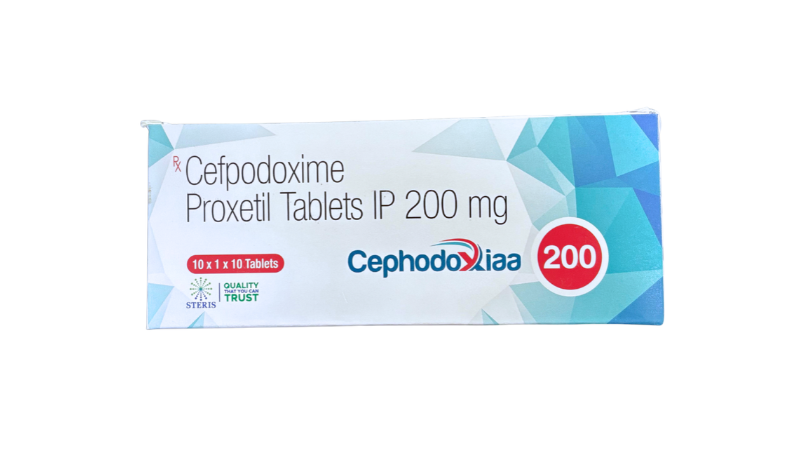
CEPHODOXIAA 200, from Steris Healthcare, is a tablet containing cefpodoxime proxetil equivalent to cefpodoxime 200 mg. Cefpodoxime belongs to the third-generation cephalosporin group of antibiotics. It is a “prodrug”: the proxetil part helps the body absorb it from the gut, and it is then converted into active cefpodoxime in the intestinal wall and blood.
The cefpodoxime proxetil tablet uses that doctors commonly consider include:
- Upper respiratory tract infections, such as acute tonsillitis and pharyngitis
- Acute bacterial sinusitis
- Acute otitis media (middle ear infection), in suitable patients
- Lower respiratory tract infections, including community-acquired pneumonia and acute bacterial worsening of chronic bronchitis
- Uncomplicated urinary tract infections (UTIs), including cystitis
- Skin and soft-tissue infections of mild to moderate severity
- Uncomplicated gonorrhoea (urethral and cervical) and rectal infections in women, in some regimens
- Step-down (oral) therapy after initial injectable antibiotics, as decided by the doctor
Approved indications differ between countries and brands. This is a prescription-only antibiotic, and your doctor will choose it based on your symptoms, the likely bacteria and local resistance patterns.
Why Is Cefpodoxime Proxetil Important?
Antibiotic choice matters more than ever. Bacterial resistance is rising, and misusing antibiotics fuels it. A good oral antibiotic should be effective against the common bacteria, easy to take and reasonably gentle on the gut. Cefpodoxime has earned a place for several reasons:
- Broad activity against common community bacteria. It covers many Gram-positive and Gram-negative organisms responsible for respiratory, urinary and skin infections.
- Stability against many beta-lactamase enzymes. Some bacteria destroy simpler penicillins using these enzymes. Cefpodoxime resists many of them, so it can work where amoxicillin alone may fail.
- Convenient dosing. The usual schedule is twice daily, which supports adherence.
- Oral option for step-down therapy. Patients who start on injections can often finish treatment at home with tablets.
- Useful in penicillin-sensitive patients, with caution. Many people with a past penicillin reaction tolerate cephalosporins, but cross-reactivity can occur, so this must be assessed by a doctor.
For patients, the practical gain is relief from infection symptoms, fewer complications and the ability to recover at home.
Mechanism of Action
What Is in CEPHODOXIAA 200?
Each tablet contains cefpodoxime proxetil equivalent to 200 mg of cefpodoxime, along with inactive ingredients that form the tablet. Check the carton for the full list.
How Does Cefpodoxime Work?
Cefpodoxime is a bactericidal antibiotic, which means it kills bacteria rather than merely slowing them down. Its action can be explained in simple steps:
- Absorption and activation: After you swallow the tablet, cefpodoxime proxetil is absorbed from the gut and converted by esterase enzymes into the active drug, cefpodoxime.
- Binding to penicillin-binding proteins (PBPs): Bacteria build their protective cell wall using these proteins.
- Blocking cell wall construction: Cefpodoxime attaches to the PBPs and stops the final cross-linking step of cell wall synthesis.
- Bacterial cell death: Without a sturdy wall, the bacterium cannot withstand its internal pressure, and it bursts.
Key Benefits
What Are the Benefits of CEPHODOXIAA 200?
- Broad-spectrum coverage of the bacteria that cause common community infections.
- Bactericidal action: It kills susceptible bacteria rather than only inhibiting them.
- Resistance to many beta-lactamases, extending its usefulness beyond simple penicillins.
- Twice-daily dosing that fits into most routines.
- Good tissue penetration into the tonsils, lungs, sinuses and urinary tract.
- Generally well tolerated, with mild gut effects being the most common complaint.
- Short courses are often sufficient, depending on the infection, which reduces overall antibiotic exposure.
- Useful for oral follow-on treatment, helping some patients leave hospital earlier.
Indications, Efficacy and Clinical Evidence
A balanced summary of what the research shows:
- Respiratory infections: Clinical trials in adults and children with pharyngitis, tonsillitis, sinusitis and acute exacerbations of chronic bronchitis reported clinical cure rates generally comparable to other oral beta-lactam antibiotics such as cefaclor, amoxicillin-clavulanate and cefuroxime axetil.
- Community-acquired pneumonia: Studies of cefpodoxime in mild to moderate community-acquired pneumonia reported clinical success rates similar to comparator antibiotics. Severe pneumonia needs hospital care and often injectable treatment.
- Urinary tract infections: In uncomplicated UTIs, cefpodoxime has shown high clinical and bacteriological cure rates in trials, similar to other commonly used agents. Because E. coli resistance varies widely by region, local resistance data and urine culture results should guide the choice.
- Skin and soft-tissue infections: Trials in mild to moderate infections showed efficacy comparable to cefadroxil and similar agents.
- Gonorrhoea: A single-dose regimen has been used for uncomplicated infection in some guidelines, though rising resistance means many current guidelines favour injectable ceftriaxone. Local guidance must be followed.
- Resistance and stewardship: Rising rates of extended-spectrum beta-lactamase (ESBL)-producing bacteria, which resist cephalosporins, mean that cefpodoxime will not work in every case. Your doctor may request cultures and sensitivity tests, especially for recurrent or complicated infections.
- Limits of the evidence: Many trials are older and were designed to show equivalence rather than superiority. Antibiotics work best when matched to the infection, so a laboratory test and a doctor’s assessment are better than self-treatment.
Dosage Guidelines
Dosing depends on the infection, its severity, your age, weight and kidney function. Always follow your doctor’s prescription and the leaflet in your pack. The following is general information only.
- Adults and adolescents (commonly 12 years and above):
- Pharyngitis or tonsillitis: usually 100 mg twice daily for about 5 to 10 days
- Acute sinusitis: often 200 mg twice daily for about 10 days
- Community-acquired pneumonia: commonly 200 mg twice daily for around 14 days, as directed
- Acute exacerbation of chronic bronchitis: commonly 200 mg twice daily for about 10 days
- Uncomplicated UTI: often 100 mg twice daily for about 3 to 7 days
- Skin and soft-tissue infections: commonly 200 mg twice daily for about 7 to 14 days
- Uncomplicated gonorrhoea: a single dose has been used in some regimens, subject to local guidance
- Children: Dosing is weight-based and usually given as a liquid formulation. The 200 mg tablet is generally for older children or adults, as directed by a paediatrician.
- How to take it: Take the tablet with food to improve absorption. Swallow with water.
- Timing: Space the doses roughly 12 hours apart.
- Kidney impairment: The dosing interval is lengthened when creatinine clearance is low, so tell your doctor about any kidney problems.
- Antacids: If you need an antacid or acid-reducing medicine, ask your doctor how to space the doses.
- Complete the course: Take the full prescribed duration, even if you feel better early, unless your doctor tells you to stop. Stopping early can allow surviving bacteria to rebound.
- Missed dose: Take it when you remember. If it is nearly time for the next dose, skip the missed one. Never double up.
Side Effects
Most people tolerate cefpodoxime well. Possible common side effects include:
- Diarrhoea or loose stools
- Nausea or vomiting
- Abdominal pain or discomfort
- Headache
- Mild skin rash or itching
- Vaginal yeast infection (thrush) or oral thrush, since antibiotics can disturb normal flora
- Dizziness
- Loss of appetite
- Altered taste
Taking the tablet with food often reduces stomach upset. Mild diarrhoea usually settles after the course ends.
Available Substitutes
Several pharmaceutical companies market cefpodoxime proxetil tablets in India and elsewhere in strengths such as 100 mg, 200 mg, and in dispersible or suspension forms. Other oral antibiotics used for similar infections include cefixime, cefuroxime axetil, amoxicillin-clavulanate, azithromycin and, in specific cases, nitrofurantoin or fosfomycin for urinary infections. They differ in spectrum, side effects and suitability, so they are not automatically interchangeable. Never switch antibiotics on your own. Ask your doctor or pharmacist to confirm the active ingredient, strength and suitability for your infection.
Precautions and Warnings
Do not use if you:
- Are allergic to cefpodoxime, other cephalosporins or any ingredient in the tablet
- Have had a severe, immediate allergic reaction (such as anaphylaxis) to penicillins or other beta-lactam antibiotics, unless your doctor has specifically assessed and advised otherwise
Tell your doctor before starting if you:
- Have a history of penicillin allergy, since cross-reactivity, though uncommon, can occur
- Have kidney disease, as doses may need adjustment
- Have a history of bowel disease, particularly colitis
- Have a history of seizures
- Take blood-thinning medicines, because antibiotics may alter clotting in some patients
- Are pregnant, planning pregnancy or breastfeeding. Cefpodoxime has been used in pregnancy when needed, but the decision must be individual. Small amounts may pass into breast milk, so observe the baby for diarrhoea or thrush and inform the doctor.
- Are elderly or have poor nutrition, as the risk of some side effects can be higher
Practical advice:
- Antibiotics do not treat viral infections such as colds and flu. Do not demand or use them for these.
- Do not use leftover antibiotics or share them with others.
- Complete the prescribed course unless told otherwise.
- Drink plenty of fluids, particularly with urinary infections.
- Do not take anti-diarrhoeal medicines for severe diarrhoea without medical advice.
- Tell your doctor if you have had no improvement within two to three days, or if symptoms worsen, as the bacteria may be resistant or the diagnosis may be different.
- Be aware that antibiotics may affect certain urine glucose tests and the direct Coombs test.
- Store the tablets in a cool, dry place, protected from moisture and out of reach of children.
Frequently Asked Questions (FAQs)
1. What is cefpodoxime proxetil 200 mg used for?
It is used to treat bacterial infections of the throat, sinuses, ears, lungs, urinary tract and skin, as prescribed by a doctor.
2. What are the cefpodoxime proxetil tablet uses?
Common uses include tonsillitis, pharyngitis, sinusitis, bronchitis flare-ups, mild to moderate pneumonia, uncomplicated UTIs and skin infections.
3. What is CEPHODOXIAA 200?
CEPHODOXIAA 200 is a cefpodoxime proxetil 200 mg tablet marketed by Steris Healthcare.
4. What type of antibiotic is cefpodoxime?
It is a third-generation cephalosporin, a bactericidal beta-lactam antibiotic.
5. How does cefpodoxime work?
It binds to penicillin-binding proteins and blocks bacterial cell wall synthesis, which causes the bacteria to die.
6. Does cefpodoxime treat viral infections like cold or flu?
No. Antibiotics do not work on viruses, so cefpodoxime will not help with colds, flu or most sore throats caused by viruses.
7. Should I take cefpodoxime with food?
Yes. Taking it with food improves absorption.
8. How many times a day should I take it?
Usually twice daily, about 12 hours apart, but follow your doctor’s prescription.
9. How long should I take cefpodoxime?
The course commonly runs from 3 to 14 days depending on the infection. Complete the full course as prescribed.
10. How quickly does it work?
Many people notice improvement within two to three days. See your doctor if there is no improvement or if symptoms worsen.
Conclusion
CEPHODOXIAA 200 by Steris Healthcare, containing cefpodoxime proxetil 200 mg, is a third-generation oral cephalosporin antibiotic used for infections of the throat, sinuses, ears, chest, urinary tract and skin. It kills susceptible bacteria by blocking cell wall construction, resists many common bacterial enzymes, and is conveniently dosed twice daily with food. Its benefits depend on correct selection: it is ineffective against viruses and certain resistant bacteria, so it must be prescribed with a proper diagnosis, ideally guided by local resistance patterns and culture results where needed. Take it exactly as directed, complete the full course, and report severe diarrhoea, allergic symptoms or skin reactions immediately.
For Further Information:
Mail Us: contact@sterispharma.com or info@sterispharma.com
Call Now: +91 8824175417, +91 9982524671
Recent Post
Olmesartan and Metoprolol: Uses, Benefits, Dosage & Side Effects | Steris Healthcare
Tofacitinib 11 mg Tablets: A Complete Guide to Uses and Side Effects
Olmesartan Medoxomil + Metoprolol Succinate: Uses, Dosage
Torsemide 100 mg: Uses, Dosage, Side Effects, and Precautions
How Streptococcus Thermophilus Supports Digestive Health
Olmesartan Medoxomil + Metoprolol Succinate: Uses, Benefits & Side Effects
Sirolimus 1 mg: Uses, Dosage, Side Effects, and Precautions
Mirtazapine 7.5 mg: Uses, Benefits, Dosage & Side Effects

Clotrimazole Dusting Powder: Uses, Benefits, and Side Effects
What Is Empagliflozin and Metformin? Uses, Benefits, and Side Effects

