


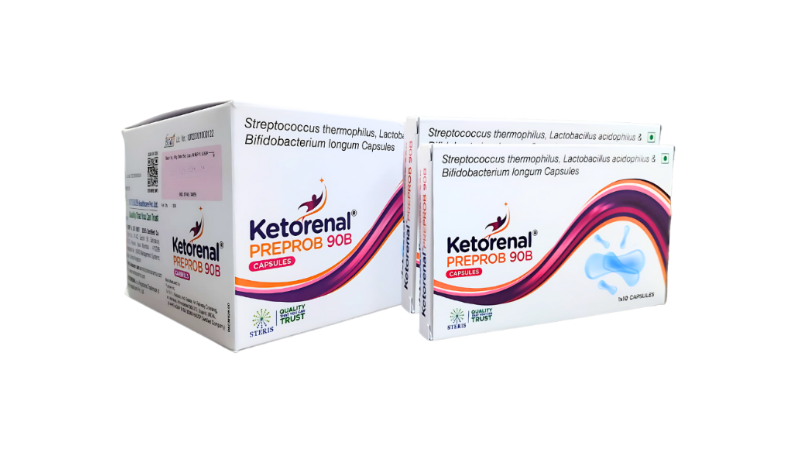


How Streptococcus Thermophilus Supports Digestive Health
Oct 22, 2026
KETORENAL PREPROB 90B, from Steris Healthcare, is a probiotic capsule containing three well-known friendly bacteria: Streptococcus thermophilus, Lactobacillus acidophilus and Bifidobacterium longum. The “PREPROB” part of the name suggests that the product may also contain a prebiotic (a food source for the bacteria), but check the carton for the exact ingredients.
The streptococcus thermophilus uses and the uses of the combination that doctors commonly consider include:
- Prevention of antibiotic-associated diarrhoea
- Supportive management of acute infectious diarrhoea, particularly in children, as advised by a doctor
- Irritable bowel syndrome (IBS) symptoms such as bloating, gas and irregular stools
- Lactose intolerance, where S. thermophilus and L. acidophilus help digest lactose
- Restoring gut flora after illness, a stomach infection or a course of antibiotics
- General digestive wellness and regularity
- Supportive use in people with chronic conditions in whom gut health is a concern, always under medical supervision
Why Are Streptococcus Thermophilus, Lactobacillus Acidophilus and Bifidobacterium Longum Important?
Your intestine hosts trillions of microorganisms, collectively called the gut microbiota. When the balance is healthy, these organisms help digest food, produce vitamins and short-chain fatty acids, train the immune system and crowd out harmful bacteria. When the balance tips, a state called dysbiosis, people may experience diarrhoea, constipation, bloating, cramps and a lower tolerance for certain foods.
Here is why this particular trio matters:
- They are different bacteria with different jobs. Lactobacillus tends to live in the small intestine, Bifidobacterium mainly in the large intestine, and Streptococcus thermophilus is a transient, yoghurt-type organism. Together they cover more of the digestive tract than a single strain would.
- They are among the most studied probiotic organisms. Species such as L. acidophilus and B. longum appear in a large body of research, and S. thermophilus has a long history in fermented dairy foods.
- They help after antibiotics. Antibiotics do not distinguish between harmful and helpful bacteria. A probiotic can help reduce the chance of diarrhoea during and after treatment.
- They support lactose digestion. Many adults, especially in South Asia, have some degree of lactose intolerance. S. thermophilus and L. acidophilus produce lactase-like activity that can ease symptoms.
- They are generally well tolerated by healthy people when used as directed.
For patients, the practical gain is a calmer stomach, more regular bowel habits and, in the case of antibiotic courses, a lower chance of having to stop treatment because of diarrhoea.
Mechanism of Action
What Is in KETORENAL PREPROB 90B?
Each capsule contains live, freeze-dried bacteria of the three species named above, together with excipients and possibly a prebiotic such as fructo-oligosaccharides (FOS) or inulin. Probiotic potency is measured in colony-forming units (CFU). Because strengths vary between batches and products, rely on the figure on your pack.
Streptococcus Thermophilus: This is a lactic-acid-producing bacterium used for centuries to make yoghurt. It produces lactase, an enzyme that breaks down lactose, and lactic acid, which lowers the gut’s acidity and makes it less hospitable to harmful organisms. It generally does not colonise the gut permanently, so it must be taken regularly to maintain the effect. Do not confuse it with disease-causing streptococci. S. thermophilus is a food-grade organism with a long record of safe use.
Lactobacillus Acidophilus: L. acidophilus is a classic probiotic found in the human small intestine. It ferments sugars to lactic acid, adheres to the gut lining and competes with harmful bacteria for attachment sites and nutrients. Some strains produce natural antimicrobial substances called bacteriocins. It also interacts with immune cells in the gut wall. People often look for it in the form of lactobacillus acidophilus tablets or capsules.
Bifidobacterium Longum: B. longum is one of the dominant bacteria in a healthy human colon, particularly in infants and breastfed babies. It ferments dietary fibre into short-chain fatty acids such as acetate, which feed the cells lining the colon, helps maintain the gut barrier and supports immune regulation. Some strains have been studied for effects on stool frequency and abdominal discomfort in IBS.
How the Combination Works
The mechanisms of probiotics are best described as a set of overlapping actions rather than one pathway:
- Competitive exclusion: Friendly bacteria occupy space and use nutrients that harmful bacteria need.
- Acid and antimicrobial production: Lactic acid and other compounds lower the intestinal pH and inhibit the growth of pathogens.
- Strengthening the gut barrier: Probiotics can support the tight junctions between gut cells and stimulate mucus production.
- Immune modulation: They interact with immune cells in the gut and may influence inflammatory signalling.
- Enzyme activity: Lactase production helps with lactose digestion.
- Short-chain fatty acid production: Fermentation of fibre, helped by prebiotics, produces compounds that nourish the colon lining.
A scientific caution worth stating clearly: probiotic effects are strain-specific. A benefit shown for one strain cannot automatically be assumed for another strain of the same species. Strain designations on the label help you compare products with the research.
Key Benefits
What Are the Benefits of KETORENAL PREPROB 90B?
- Helps prevent antibiotic-associated diarrhoea, which is one of the best-supported uses of probiotics.
- Eases bloating, gas and irregular bowel habits in some people with IBS.
- Supports lactose digestion, helping people with mild lactose intolerance tolerate dairy better.
- Restores gut flora after infections, stomach bugs or antibiotic courses.
- Supports the gut barrier and local immunity.
- Multi-strain approach, covering both the small and large intestine.
- Convenient capsule form, easy to take once daily.
- May contain a prebiotic, which can help the bacteria survive and multiply (check the label).
- Non-habit-forming, with no dependence or withdrawal.
Indications, Efficacy and Clinical Evidence
An honest summary of the evidence helps set realistic expectations.
- Antibiotic-associated diarrhoea: Meta-analyses of randomised trials, including large Cochrane reviews, have concluded that probiotics reduce the risk of antibiotic-associated diarrhoea in both adults and children, with a moderate benefit. Effects depend on the strain and dose, and the best results come when the probiotic is started early in the antibiotic course.
- Acute infectious diarrhoea: Systematic reviews suggest certain probiotics can shorten the duration of acute diarrhoea by roughly a day, mainly in children. Oral rehydration remains the cornerstone of treatment, and a probiotic is an add-on.
- Irritable bowel syndrome: Several meta-analyses report modest improvements in overall symptoms, bloating and pain with some multi-strain probiotics, while noting variable quality of studies. Guidelines are cautious and generally suggest that a trial of a single product for several weeks may be reasonable, stopping it if there is no benefit.
- Lactose intolerance: S. thermophilus and L. bulgaricus in yoghurt have an accepted role in improving lactose digestion. Evidence for capsule forms is smaller and less consistent.
- Chronic kidney disease: Some small trials and reviews have examined whether probiotics lower uraemic toxins such as indoxyl sulfate and p-cresyl sulfate, or modestly improve inflammatory markers, in CKD patients. Results are mixed, trials are small and the evidence does not justify strong claims. Decisions must be individual and made with the treating nephrologist.
- Other claims: Benefits for immunity, mood, cholesterol, weight or skin are not firmly established for this combination. Be sceptical of any product that promises broad cures.
- Overall quality of evidence: Probiotic research is heterogeneous, with different strains, doses and outcomes. Benefits are real for some conditions but modest, and they typically last only while the probiotic is being taken.
Dosage Guidelines
Follow your doctor’s advice and the leaflet in your pack. The following is general information only.
- Adults and older children (as advised): Commonly one capsule once or twice a day, depending on the product’s strength. Always check the label for the dose that matches your pack.
- Timing: Many probiotics survive better when taken with or shortly before a meal, because food buffers stomach acid. Follow the instructions on your pack.
- With antibiotics: Take the probiotic at least two to three hours apart from each antibiotic dose, so the antibiotic does not kill the bacteria before they reach the gut. Continue the probiotic for the duration of the antibiotic course and often for a week or so afterwards, if your doctor advises.
- Duration: For general gut health, many courses run for two to four weeks, and sometimes longer, with review. If there is no improvement after a trial period, stop and consult your doctor.
- How to take it: Swallow the capsule with cool or room-temperature water. Avoid very hot drinks, which can kill live bacteria.
- Opening the capsule: If swallowing is difficult, ask your doctor or pharmacist whether the capsule may be opened and mixed with a small amount of cool food or drink, and take it immediately.
- Missed dose: Take it when you remember, and continue as normal. Do not take a double dose.
- Infants and young children: Use only on a paediatrician’s advice, with a product and dose designed for that age.
- Consistency: Probiotics generally do not colonise permanently, so regular daily use is what matters.
Side Effects
Probiotics are generally well tolerated by healthy people. When side effects occur, they are usually mild and short-lived, and they often settle after the first few days:
- Gas (flatulence)
- Bloating or a feeling of fullness
- Mild abdominal discomfort or cramps
- Loose stools or, occasionally, constipation
- Mild nausea
- Temporary changes in bowel habits when starting
Starting with a lower dose, if your doctor agrees, and taking the capsule with food can reduce these effects.
Available Substitutes
Many pharmaceutical and nutraceutical companies market probiotics. Some contain the same trio of S. thermophilus, L. acidophilus and B. longum, while others use Lactobacillus rhamnosus GG, Bacillus coagulans, Saccharomyces boulardii, Lactobacillus plantarum or other mixes. Because strains, CFU counts, prebiotics and approved uses differ, they are not automatically interchangeable. Do not assume that “probiotic” means the same thing across brands. Ask your doctor or pharmacist to compare the strains, count and your specific health need before switching. Fermented foods such as curd (dahi), yoghurt and buttermilk can complement a probiotic, but they do not deliver standardised doses.
Precautions and Warnings
Do not use, or use only on specialist advice, if you:
- Are allergic to any ingredient in the capsule, including milk-derived components, where relevant, or excipients listed on the pack
- Have a severely weakened immune system, for example from chemotherapy, organ transplantation with strong immunosuppression, advanced HIV or neutropenia
- Have a central venous catheter or are critically ill, because of a small risk of bloodstream infection
- Have severe acute pancreatitis, where some trials of probiotics raised safety concerns
- Have short bowel syndrome, or recent gut surgery or a damaged gut lining
Tell your doctor before starting if you:
- Have kidney disease, especially advanced CKD or if you are on dialysis. Some probiotic products contain prebiotics, potassium or other additives, and dietary rules for kidney patients can be strict. The brand name of this product suggests it may be used in renal care, but that should be decided by your nephrologist.
- Have inflammatory bowel disease, such as Crohn’s disease or ulcerative colitis
- Have heart valve disease or a history of endocarditis
- Are on immunosuppressants or steroids
- Are pregnant or breastfeeding. Many probiotics are considered low risk, but you should still check with your doctor first.
- Are giving the product to a premature baby or a very young infant. Use only under paediatric supervision.
- Have persistent diarrhoea, blood in stool, unexplained weight loss or fever, since these need proper medical evaluation instead of self-treatment with probiotics
Practical advice:
- Check storage instructions. Many probiotics need to be kept in a cool, dry place and some need refrigeration. Follow the pack, and do not leave it in a hot car or a humid bathroom.
- Keep the capsule in its original strip or bottle with the desiccant, if provided.
- Check the expiry date. The live count falls over time, so an expired product may not deliver the stated dose.
- Give it time. Gut changes can take a week or two. If there is no benefit after the advised trial, stop and ask your doctor.
- Support the product with lifestyle: eat a fibre-rich diet with plenty of fruit, vegetables, pulses and whole grains, stay hydrated, limit ultra-processed food, manage stress and sleep well.
- Do not use a probiotic as a substitute for oral rehydration in diarrhoea, or for medical care in severe or prolonged illness.
- Keep out of reach of children.
Frequently Asked Questions (FAQs)
1. What is Streptococcus thermophilus used for?
Streptococcus thermophilus is a friendly, yoghurt-type bacterium used in probiotics to support digestion, help break down lactose and help restore gut balance.
2. What are the Streptococcus thermophilus uses?
Common uses include helping with lactose digestion, supporting recovery after diarrhoea or antibiotics, and contributing to general digestive health as part of a multi-strain probiotic.
3. What is KETORENAL PREPROB 90B?
It is a probiotic capsule from Steris Healthcare containing Streptococcus thermophilus, Lactobacillus acidophilus and Bifidobacterium longum.
4. What are lactobacillus acidophilus and bifidobacterium capsules used for?
They are used to help prevent antibiotic-associated diarrhoea, ease bloating and irregular bowel habits, and restore gut flora after illness.
5. What are the lactobacillus acidophilus and bifidobacterium capsules uses in IBS?
Some multi-strain probiotics modestly improve bloating and overall symptoms in irritable bowel syndrome, but results vary and a trial period under medical guidance is advised.
6. What is Bifidobacterium longum?
It is a beneficial bacterium that lives mainly in the large intestine, ferments fibre into short-chain fatty acids and supports the gut barrier and immune balance.
7. Are lactobacillus acidophilus tablets the same as capsules?
They contain the same type of bacteria, but the formulation, strain, CFU count and survival through stomach acid can differ, so compare the labels.
8. When should I take a probiotic capsule?
Often with or just before a meal, as the food helps buffer stomach acid. Follow the instructions on your pack.
9. Can I take probiotics with antibiotics?
Yes, but take the probiotic at least two to three hours apart from each antibiotic dose, so the antibiotic does not kill the live bacteria.
10. How long should I take it?
Often two to four weeks for general gut support, or for the duration of an antibiotic course and about a week after. Follow your doctor’s advice.
Conclusion
KETORENAL PREPROB 90B by Steris Healthcare combines Streptococcus thermophilus, Lactobacillus acidophilus and Bifidobacterium longum in a single capsule to help restore and maintain a healthy balance of gut bacteria. The best-supported uses are the prevention of antibiotic-associated diarrhoea and symptom relief in some people with IBS or lactose intolerance, with additional use as supportive care after gut infections. Benefits are real but modest, they depend on the strain and dose, and they usually continue only while the probiotic is being taken. People with weakened immunity, central lines, severe pancreatitis or kidney disease should use probiotics only under medical supervision. Take the capsule as directed, separate it from antibiotics, store it correctly, and see a doctor if you have severe or persistent symptoms, fever or blood in the stool.
For Further Information:
Mail Us: contact@sterispharma.com or info@sterispharma.com
Call Now: +91 8824175417, +91 9982524671
Recent Post
Olmesartan and Metoprolol: Uses, Benefits, Dosage & Side Effects | Steris Healthcare
Tofacitinib 11 mg Tablets: A Complete Guide to Uses and Side Effects
Olmesartan Medoxomil + Metoprolol Succinate: Uses, Dosage
Torsemide 100 mg: Uses, Dosage, Side Effects, and Precautions
Olmesartan Medoxomil + Metoprolol Succinate: Uses, Benefits & Side Effects
Sirolimus 1 mg: Uses, Dosage, Side Effects, and Precautions
What Is Cefpodoxime Proxetil? Uses and Benefits Explained

Mirtazapine 7.5 mg: Uses, Benefits, Dosage & Side Effects

Clotrimazole Dusting Powder: Uses, Benefits, and Side Effects

What Is Empagliflozin and Metformin? Uses, Benefits, and Side Effects

