


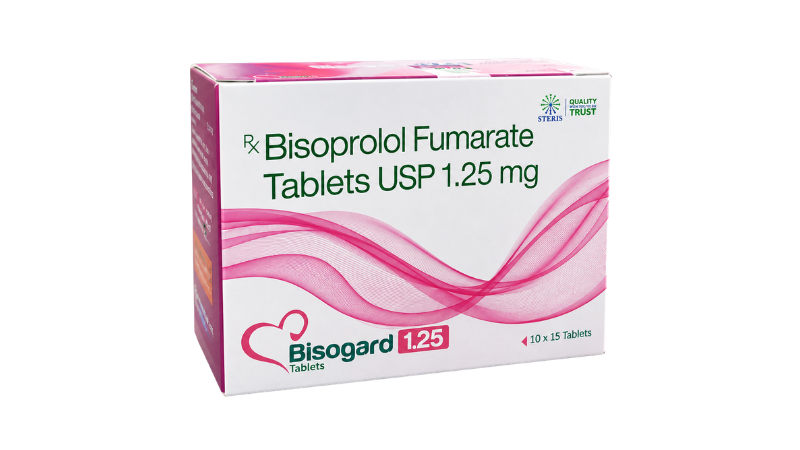



What is Bisogard 1.25? Bisoprolol 1.25mg Uses, Dosage & Side Effects Explained
Sep 24, 2026
Bisoprolol 1.25mg is one of the lowest available oral strengths of bisoprolol fumarate, a selective beta-1 adrenergic receptor blocker belonging to the cardio-selective beta-blocker family. This particular strength is most often the starting dose for patients who are elderly, have compromised heart function, or are being initiated on beta-blocker therapy for the first time — particularly in the context of heart failure with reduced ejection fraction (HFrEF).
Under the brand name Bisogard 1.25, manufactured by Steris Healthcare, this formulation is designed to give physicians a precise, low-dose entry point into beta-blocker therapy, allowing careful up-titration while monitoring the patient's heart rate, blood pressure, and overall tolerance.
Bisoprolol 1.25mg is commonly prescribed for:
- Management of essential hypertension, either alone or in combination with other antihypertensive agents
- Long-term prophylactic treatment of chronic stable angina pectoris
- As a foundational starting dose in stable chronic heart failure (NYHA Class II–III) under close medical supervision
- Post-myocardial infarction cardioprotection in select patients
- Rate control in certain supraventricular arrhythmias, when directed by a cardiologist
Because Bisoprolol 1.25mg represents such a low starting dose, it is rarely used as a standalone long-term treatment for hypertension in otherwise healthy adults — it is more commonly the induction dose in heart failure protocols or for patients who are unusually sensitive to beta-blockers.
Why It's Important
Cardiovascular disease remains one of the leading causes of mortality in India and globally, and beta-blockers like bisoprolol form a cornerstone of modern cardiac pharmacotherapy. The clinical importance of having an ultra-low starting dose such as 1.25mg cannot be overstated, particularly in heart failure management, where landmark clinical trials (including the CIBIS-II trial) demonstrated that initiating bisoprolol at very low doses and gradually titrating upward significantly reduces mortality and hospitalization rates in patients with chronic heart failure.
Starting therapy too aggressively with higher doses in a fragile cardiac patient can trigger bradycardia, hypotension, or acute decompensation. This is precisely why Bisogard 1.25 exists as a distinct, carefully dosed product — it allows physicians to introduce beta-blockade safely, monitor the patient's response over 1–2 weeks, and then decide whether to escalate the dose. This "start low, go slow" philosophy is now considered standard of care in heart failure guidelines issued by major cardiology bodies.
For hypertensive patients who are elderly, have renal impairment, or have a history of adverse reactions to beta-blockers, the 1.25mg strength also offers a gentler introduction that reduces the risk of first-dose hypotension.
Key Benefits
What Are the Benefits of Bisoprolol 1.25mg?
Bisoprolol 1.25mg, as formulated in Bisogard 1.25, offers several clinically meaningful advantages:
- Cardio-selectivity: At low doses, bisoprolol preferentially blocks beta-1 receptors in the heart rather than beta-2 receptors in the lungs and blood vessels, reducing the risk of bronchospasm compared to non-selective beta-blockers — making it a comparatively safer option for patients with mild reactive airway disease when used cautiously.
- Reduced heart rate and myocardial oxygen demand: By blocking the effects of adrenaline on the heart, bisoprolol slows the heart rate, decreases contractility, and lowers the oxygen requirement of cardiac muscle, which is especially beneficial in angina and post-MI patients.
- Mortality benefit in heart failure: Clinical evidence shows that gradual initiation with low-dose bisoprolol, followed by careful uptitration, is associated with a meaningful reduction in all-cause mortality in patients with stable chronic heart failure.
- Improved blood pressure control: Even at low doses, bisoprolol contributes to a measurable reduction in both systolic and diastolic blood pressure, particularly when combined with other antihypertensive classes such as ACE inhibitors or diuretics.
- Once-daily dosing convenience: Bisoprolol has a long elimination half-life (approximately 9–12 hours), allowing once-daily administration, which supports better patient compliance compared to shorter-acting beta-blockers.
- Favorable tolerability profile at low dose: The 1.25mg strength minimizes the incidence of fatigue, dizziness, and cold extremities that are more commonly reported at higher bisoprolol doses.
- Trusted manufacturing standards: Bisogard 1.25 is manufactured by Steris Healthcare, a WHO-GMP and ISO 9001:2018 certified pharmaceutical company, ensuring consistent quality, potency, and stability of every batch.
Side Effects
Like all beta-blockers, Bisoprolol 1.25mg can cause side effects, though at this low dose, the incidence and severity are generally milder than with higher strengths. Common side effects reported include:
- Fatigue or tiredness, especially during the first few weeks of therapy
- Dizziness or lightheadedness, particularly on standing up quickly
- Cold hands and feet due to reduced peripheral circulation
- Slow heart rate (bradycardia)
- Mild gastrointestinal disturbances such as nausea or diarrhea
- Headache
- Sleep disturbances, including vivid dreams in some patients
Most of these effects tend to diminish as the body adjusts to the medication over the first one to two weeks of treatment.
Available Substitutes
Several alternative formulations and combinations exist in the Indian pharmaceutical market for patients who may require a different bisoprolol strength or an alternative beta-blocker altogether. Common substitutes include other bisoprolol fumarate brands available in strengths such as 2.5mg, 5mg, and 10mg for patients requiring dose escalation, as well as bisoprolol combined with amlodipine or hydrochlorothiazide for patients needing multi-drug antihypertensive control. Physicians may also consider alternative cardio-selective beta-blockers such as metoprolol succinate or atenolol, depending on the patient's specific cardiac profile, renal function, and comorbidities. Any substitution should only be made under the supervision of a qualified cardiologist or physician, as beta-blockers are not interchangeable on a milligram-for-milligram basis and require individualized titration.
Dosage Guidelines
Bisoprolol 1.25mg dosing is highly individualized and should always be determined by a qualified physician based on the patient's clinical condition. General guidance typically followed in clinical practice includes:
- Heart Failure Initiation: Treatment is usually started at 1.25mg once daily in the morning, taken with or without food, and continued for at least one week before any dose increase is considered, provided the patient tolerates it well.
- Titration Schedule: If well tolerated, the dose may be gradually increased under medical supervision — commonly progressing from 1.25mg to 2.5mg, then to 3.75mg, 5mg, 7.5mg, and eventually up to a maintenance dose of 10mg once daily, depending on individual response.
- Hypertension/Angina: In some cases, 1.25mg may be used as an initial low dose for elderly or sensitive patients before adjusting upward based on blood pressure and heart rate response.
- Elderly and Renal/Hepatic Impairment: Lower starting doses and slower titration are typically recommended, as clearance of the drug may be reduced.
- Missed Dose: If a dose is missed, it should be taken as soon as remembered unless it is close to the time of the next dose, in which case the missed dose should be skipped — doubling up is not recommended.
- Discontinuation: Bisoprolol should never be stopped abruptly, especially in heart failure or angina patients, as this can trigger rebound tachycardia, hypertension, or acute coronary events. Discontinuation should always be tapered gradually under medical supervision.
Precautions & Warnings
Before starting Bisoprolol 1.25mg, patients and prescribers should consider the following precautions:
- Cardiac Conditions: Should be used with caution in patients with sick sinus syndrome, second- or third-degree AV block, or severe bradycardia unless a pacemaker is in place.
- Asthma/COPD: While cardio-selective at low doses, bisoprolol should still be used cautiously in patients with reactive airway disease, as selectivity can diminish at higher doses.
- Diabetes: Beta-blockers may mask the symptoms of hypoglycemia, such as rapid heartbeat, so diabetic patients should monitor blood glucose closely.
- Peripheral Vascular Disease: May worsen symptoms of peripheral circulatory disorders such as Raynaud's phenomenon.
- Pregnancy and Lactation: Should only be used if clearly necessary and under strict medical supervision, as beta-blockers can affect fetal growth and are excreted in breast milk.
- Surgery: Patients undergoing major surgery should inform their anesthesiologist about ongoing bisoprolol therapy, as it can influence cardiovascular response during anesthesia.
- Thyroid Disorders: Beta-blockers can mask certain signs of hyperthyroidism, so abrupt discontinuation should be avoided in these patients.
- Drug Interactions: Caution is advised when combining bisoprolol with other rate-limiting drugs such as verapamil, diltiazem, or digoxin, as well as with clonidine, due to additive effects on heart rate and blood pressure.
- Alcohol: May enhance the blood-pressure-lowering effect and increase the risk of dizziness.
Mechanism of Action
Bisoprolol 1.25mg works through selective antagonism of beta-1 adrenergic receptors, which are predominantly located in cardiac tissue. By competitively blocking the binding of catecholamines (epinephrine and norepinephrine) to these receptors, bisoprolol produces several downstream physiological effects:
- Reduced heart rate (negative chronotropic effect): Blocking beta-1 receptors in the sinoatrial node slows the rate of spontaneous depolarization, reducing overall heart rate.
- Decreased myocardial contractility (negative inotropic effect): Reduced sympathetic stimulation of cardiac muscle lowers the force of contraction, decreasing the heart's oxygen demand.
- Slowed conduction through the AV node (negative dromotropic effect): This helps control ventricular rate in certain supraventricular arrhythmias.
- Suppression of renin release: By blocking beta-1 receptors in the juxtaglomerular apparatus of the kidney, bisoprolol reduces renin secretion, which in turn lowers angiotensin II and aldosterone levels, contributing to blood pressure reduction.
- Reduced cardiac remodeling in heart failure: Chronic beta-1 blockade is believed to reduce the harmful effects of prolonged sympathetic overactivation on the failing heart, slowing disease progression over time.
At the low 1.25mg dose, bisoprolol's beta-1 selectivity is most pronounced, minimizing unwanted beta-2 mediated effects on the lungs and peripheral vasculature — a key reason this strength is favored for cautious initiation in vulnerable cardiac populations.
Frequently Asked Questions
1. What is Bisoprolol 1.25mg used for?
It is primarily used for hypertension, chronic stable angina, and as a starting dose in chronic heart failure management.
2. What is Bisogard 1.25?
Bisogard 1.25 is the brand name under which Steris Healthcare markets Bisoprolol 1.25mg tablets.
3. Is Bisoprolol 1.25mg safe for elderly patients?
Yes, it is often specifically chosen for elderly or fragile patients because of its low, gentle starting dose.
4. Can Bisoprolol 1.25mg be taken with food?
Yes, it can be taken with or without food, though consistency in timing is recommended.
5. How long does it take for Bisoprolol 1.25mg to work?
Some effects on heart rate may be noticeable within hours, but full therapeutic benefit, especially in heart failure, may take several weeks.
6. Can I stop taking Bisoprolol 1.25mg suddenly?
No, abrupt discontinuation can cause rebound hypertension, angina, or arrhythmias. Always taper under medical supervision.
7. What are the common side effects of Bisoprolol 1.25mg?
Fatigue, dizziness, cold extremities, slow heart rate, and mild gastrointestinal upset are commonly reported.
8. Is Bisoprolol 1.25mg safe during pregnancy?
It should only be used during pregnancy if clearly necessary and under strict medical supervision.
9. What is the difference between Bisoprolol 1.25mg and 2.5mg?
1.25mg is typically used as the starting dose, while 2.5mg and higher strengths are used for dose titration or maintenance therapy.
10. Can diabetics take Bisoprolol 1.25mg?
Yes, but with caution, as beta-blockers can mask symptoms of low blood sugar (hypoglycemia).
11. Does Bisoprolol 1.25mg affect asthma patients?
It should be used cautiously in asthma or COPD patients, as beta-2 blockade can occur at higher doses.
12. What is Tab Bisoprolol 2.5mg used for?
It is a slightly higher-strength formulation used for dose escalation once a patient has tolerated the 1.25mg starting dose.
13. Can Bisoprolol 1.25mg be taken with alcohol?
It is generally advised to limit alcohol, as it may enhance blood-pressure-lowering effects and increase dizziness.
14. What should I do if I miss a dose of Bisoprolol 1.25mg?
Take it as soon as remembered, unless it is near the time for the next dose — do not double the dose.
15. Is a prescription required for Bisoprolol 1.25mg?
Yes, it is a Schedule H prescription drug in India and should only be used under medical supervision.
16. What is the mechanism of action of Bisoprolol 1.25mg?
It selectively blocks beta-1 adrenergic receptors in the heart, reducing heart rate, contractility, and oxygen demand.
17. Are there natural substitutes for Bisoprolol 1.25mg?
No natural substitute has proven clinical efficacy equivalent to bisoprolol for cardiac conditions; any change in therapy should be physician-guided.
Conclusion
Bisoprolol 1.25mg, available as Bisogard 1.25 from Steris Healthcare, plays a critical role in modern cardiovascular pharmacotherapy — particularly as a safe, low-dose entry point for beta-blocker initiation in heart failure, hypertension, and angina management. Its cardio-selective mechanism, favorable tolerability at low doses, and once-daily dosing convenience make it a clinically valuable tool for physicians managing fragile or newly diagnosed cardiac patients. As with any prescription medication, Bisoprolol 1.25mg should only be used under the guidance of a qualified healthcare professional, with careful monitoring during initiation and any dose adjustments.
For Further Information:
Mail Us: contact@sterispharma.com or info@sterispharma.com
Call Now: +91 8824175417, +91 9982524671
Recent Post
Mycophenolate Mofetil 500mg (Mycofortic M 500): Uses, Benefits & Precautions – Complete Guide

Can Semaglutide Injection Be Used Without Diabetes?
What Are Nintedanib Soft Gelatin Capsules Used For? Complete Guide
Where to Buy Semaglutide Injection in India: Price, Pen & Prescription Guide
ERITOCOX BENZ 60/5 Dosage Guide: How to Take Etoricoxib & Cyclobenzaprine Tablets Safely

Gabapentin and Methylcobalamin Tablets Side Effects: What Patients Should Know
Thyroxine sodium tablets IP: उपयोग, फायदे और साइड इफेक्ट्स
Semaglutide 2 mg Injection Dosage Guide: How to Use It Safely
Buy Multivitamin + L-Carnitine + Taurine Protein Powder | Sterimmune
Semaglutide Injection Pen 8 mg: Step-by-Step Dosage & Precautions

