


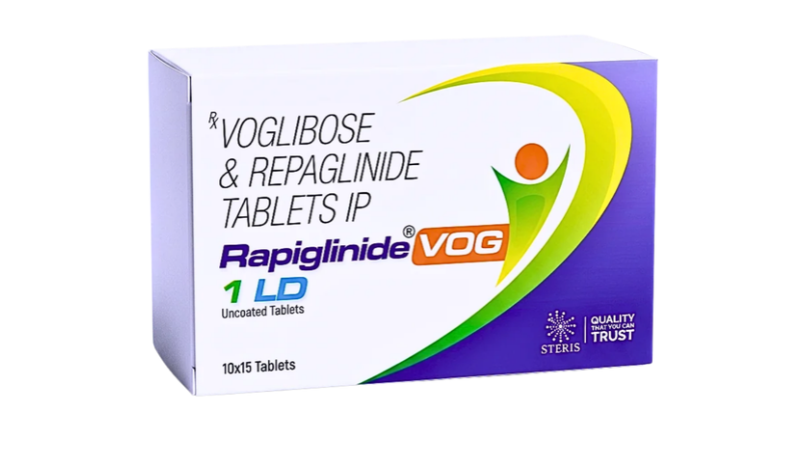


Voglibose 0.2 mg and Repaglinide 1 mg Tablets IP: Uses, Benefits, Dosage and Side Effects
Nov 20, 2026
Product Overview
Voglibose 0.2 mg and Repaglinide 1 mg Tablets IP are a combination prescription medicine used to help manage blood glucose levels in adults with Type 2 Diabetes Mellitus. This formulation combines two antidiabetic medicines that work through different mechanisms to help control blood sugar, particularly the rise in glucose levels after meals (postprandial hyperglycaemia).
Managing Type 2 Diabetes requires a combination of appropriate medication, healthy dietary habits, regular physical activity, and consistent blood glucose monitoring. In some patients, lifestyle modifications or individual antidiabetic medicines may not provide adequate glucose control. A healthcare professional may consider a combination of Voglibose and Repaglinide when additional post-meal glucose management is required.
How Do Voglibose 0.2 mg and Repaglinide 1 mg Tablets Work?
Understanding the mechanism of action helps explain why these two medicines may be prescribed together.
1. Voglibose 0.2 mg – Helps Control Post-Meal Blood Sugar
Voglibose is an oral antidiabetic medicine that inhibits alpha-glucosidase enzymes present in the small intestine.
These enzymes normally break down complex carbohydrates and disaccharides into simpler sugars that can be absorbed into the bloodstream.
Voglibose slows this process, delaying carbohydrate digestion and glucose absorption.
Key actions of Voglibose:
-
Slows the digestion of certain dietary carbohydrates.
-
Delays glucose absorption in the intestine.
-
Helps reduce post-meal blood sugar spikes.
-
Supports improved postprandial glucose management.
-
Works alongside dietary management and other prescribed diabetes medicines.
2. Repaglinide 1 mg – Stimulates Insulin Release
Repaglinide is a short-acting oral insulin secretagogue. It acts on pancreatic beta cells and stimulates the release of insulin.
Insulin is an essential hormone that helps glucose move from the bloodstream into body cells, where it can be used for energy.
Key actions of Repaglinide:
-
Stimulates insulin secretion from pancreatic beta cells.
-
Helps the body manage increased blood glucose after meals.
-
Supports postprandial glucose control.
-
Provides a rapid, relatively short-duration insulin-secretory effect.
-
Complements dietary and lifestyle management in Type 2 Diabetes.
How Does the Combination Work?
Voglibose slows carbohydrate absorption, while Repaglinide stimulates insulin release. Their complementary actions help manage blood glucose levels after meals.
This combination may be considered by doctors for selected adults with Type 2 Diabetes who require additional glucose-lowering support.
Uses of Voglibose 0.2 mg and Repaglinide 1 mg Tablets IP
The primary medical use of this combination is the management of Type 2 Diabetes Mellitus.
Healthcare professionals may prescribe it for:
-
Type 2 Diabetes management: Helps improve blood glucose control in adults with Type 2 Diabetes.
-
Postprandial hyperglycaemia: Helps control the rise in blood glucose following meals.
-
Insufficient glucose control: May be considered when diet, exercise, or other prescribed treatment does not achieve adequate glucose control.
-
Complementary glucose management: Combines delayed carbohydrate absorption with increased insulin secretion.
-
Overall diabetes management: Supports a broader diabetes treatment plan involving dietary changes, exercise, and regular monitoring.
This medicine is not intended for treating Type 1 Diabetes or diabetic ketoacidosis.
Key Benefits of Voglibose 0.2 mg and Repaglinide 1 mg Tablets
The main benefit of this combination is that it targets two different processes involved in post-meal blood glucose regulation.
-
Dual-action glucose management: Combines two antidiabetic mechanisms in one tablet.
-
Post-meal blood sugar control: Voglibose delays carbohydrate absorption, while Repaglinide supports insulin release.
-
Complementary mechanisms: Addresses both intestinal glucose absorption and pancreatic insulin secretion.
-
Convenient combination formulation: Provides two prescribed active ingredients in a single dosage form.
-
Supports diabetes treatment plans: Can be used as part of a doctor-supervised diabetes management programme.
-
Diet and exercise compatibility: Complements appropriate nutrition and regular physical activity.
The actual effectiveness depends on the patient's blood glucose levels, medication adherence, diet, physical activity, and individual response to treatment.
Who May Be Prescribed This Combination?
A doctor may consider Voglibose 0.2 mg and Repaglinide 1 mg Tablets IP for adults with Type 2 Diabetes who require additional control of post-meal blood glucose.
The suitability of this medicine depends on several factors, including:
-
Current fasting and postprandial blood glucose levels.
-
HbA1c results.
-
Existing diabetes medication.
-
Kidney and liver function.
-
Dietary and meal patterns.
-
Risk of hypoglycaemia.
-
Other medical conditions and medicines being taken.
It should only be used when prescribed by a qualified healthcare professional.
Dosage and Directions for Use
The dosage of Voglibose 0.2 mg and Repaglinide 1 mg Tablets IP should be determined by the treating physician according to the patient's blood glucose levels, meal schedule, treatment response, and medical history.
Important administration considerations:
-
Take the medicine according to the prescription and manufacturer's approved product instructions.
-
Repaglinide is generally administered shortly before meals, commonly within 30 minutes before eating.
-
Voglibose is generally taken with the first bite of a meal so that it is present during carbohydrate digestion.
-
Follow the specific timing instructions provided for the fixed-dose combination.
-
Do not take an additional dose to compensate for a missed dose.
-
If a meal is skipped, the scheduled Repaglinide dose should generally also be skipped to reduce the risk of hypoglycaemia, following the prescriber's instructions.
-
Do not change the dose or discontinue treatment without consulting your doctor.
Important: The timing and frequency must be individualized. Do not assume that one tablet schedule is appropriate for every patient.
Possible Side Effects of Voglibose 0.2 mg and Repaglinide 1 mg Tablets
Like other antidiabetic medicines, this combination may cause side effects in some individuals. Their severity and frequency depend on the patient's health condition, dosage, diet, and response to treatment.
Common Side Effects
-
Hypoglycaemia (low blood sugar).
-
Flatulence or excessive gas.
-
Abdominal bloating.
-
Stomach discomfort.
-
Diarrhoea.
-
Nausea.
-
Headache.
-
Dizziness.
Gastrointestinal symptoms are commonly associated with Voglibose, while hypoglycaemia is an important safety concern associated with Repaglinide.
Serious Side Effects Requiring Medical Attention
Seek medical assistance if you experience:
-
Severe or repeated episodes of low blood sugar.
-
Confusion, fainting, seizures, or loss of consciousness.
-
Persistent abdominal pain or vomiting.
-
Yellowing of the skin or eyes.
-
Unusual allergic reactions, swelling, or breathing difficulties.
Understanding Hypoglycaemia
Hypoglycaemia occurs when blood glucose levels become too low.
Possible warning signs include:
-
Sweating.
-
Shaking or trembling.
-
Sudden hunger.
-
Palpitations.
-
Dizziness.
-
Weakness.
-
Confusion.
Repaglinide can increase the risk of hypoglycaemia, particularly when meals are delayed or skipped, food intake is inadequate, or other glucose-lowering medicines are used simultaneously.
Important emergency advice: If a person is conscious and able to swallow, low blood sugar should be treated promptly with glucose or dextrose according to their diabetes care plan. Because Voglibose delays the breakdown of sucrose, glucose or dextrose is preferred over ordinary table sugar for treating hypoglycaemia. Severe hypoglycaemia involving unconsciousness or seizures requires emergency medical assistance.
Precautions and Important Safety Information
Before starting Voglibose 0.2 mg and Repaglinide 1 mg Tablets IP, inform your doctor about your medical history and all medicines you currently take.
Important precautions include:
-
Liver health: Patients with liver disease require careful medical evaluation because Repaglinide is primarily metabolised by the liver.
-
Kidney health: Patients with impaired kidney function may require additional monitoring and individualized treatment.
-
Meal timing: Irregular meals, fasting, or skipping meals can increase the risk of hypoglycaemia.
-
Pregnancy: Use during pregnancy should be determined by a specialist. Do not assume this combination is suitable during pregnancy.
-
Breastfeeding: Discuss alternative treatment options with your healthcare professional.
-
Alcohol consumption: Alcohol may increase the risk of hypoglycaemia and should be discussed with your doctor.
-
Other diabetes medicines: Combining this medicine with insulin or other glucose-lowering drugs may increase the risk of low blood sugar.
Important Drug Interactions
Repaglinide has clinically significant drug interactions. Gemfibrozil is contraindicated with Repaglinide because it can substantially increase Repaglinide exposure and the risk of hypoglycaemia. Certain other medicines, including clopidogrel, can also increase interaction risks.
Always provide your doctor with a complete list of prescription medicines, non-prescription products, and supplements.
Why Is Blood Glucose Monitoring Important?
Regular blood glucose monitoring helps patients and healthcare professionals understand how well the prescribed treatment is working.
Monitoring may include:
-
Fasting blood glucose (FBS).
-
Postprandial blood glucose (PPBS).
-
Glycated haemoglobin (HbA1c).
-
Kidney function tests when clinically indicated.
-
Liver function assessment when appropriate.
HbA1c provides information about average blood glucose over approximately the previous two to three months. Your doctor may use these results to evaluate treatment effectiveness and determine whether any medication adjustments are required.
Lifestyle Recommendations Alongside Treatment
Medicines alone are not sufficient for comprehensive Type 2 Diabetes management. Healthy lifestyle practices remain an important part of treatment.
Consider these general recommendations:
-
Follow a balanced diet with appropriate carbohydrate portions.
-
Include fibre-rich vegetables and whole grains.
-
Avoid excessive consumption of sugary drinks and refined carbohydrates.
-
Maintain regular physical activity as advised by your healthcare professional.
-
Monitor blood glucose according to your treatment plan.
-
Maintain a healthy body weight.
-
Attend regular medical follow-ups.
-
Take prescribed medicines consistently and according to instructions.
Combining appropriate medication with sustainable lifestyle habits can support better long-term diabetes management.
Storage Instructions
-
Store in a cool and dry place.
-
Protect the tablets from direct sunlight and excessive moisture.
-
Keep the medicine in its original packaging.
-
Store away from children's reach.
-
Follow the storage conditions mentioned on the product label.
-
Do not use the medicine after its expiry date.
Why Choose Voglibose 0.2 mg and Repaglinide 1 mg Tablets IP?
This fixed-dose combination brings together two antidiabetic medicines with complementary mechanisms of action.
Voglibose helps delay carbohydrate digestion and glucose absorption, while Repaglinide stimulates insulin release from the pancreas. Together, they provide an approach to managing post-meal blood glucose in appropriately selected adults with Type 2 Diabetes.
When evaluating this product, patients and healthcare professionals should consider the correct ingredient strengths, manufacturing quality, applicable regulatory approvals, product labelling, and medical suitability.
It is important to remember that this is a prescription medicine, not a general wellness supplement. Its use should always be guided by a qualified healthcare professional.
Frequently Asked Questions
1. What are Voglibose 0.2 mg and Repaglinide 1 mg Tablets used for?
Voglibose 0.2 mg and Repaglinide 1 mg Tablets are prescription antidiabetic medicines used to manage blood glucose levels in adults with Type 2 Diabetes Mellitus. They help control post-meal blood sugar through delayed carbohydrate absorption and increased insulin secretion.
2. How does Voglibose 0.2 mg help control blood sugar?
Voglibose inhibits alpha-glucosidase enzymes in the small intestine. This delays carbohydrate digestion and glucose absorption, helping reduce sudden increases in blood sugar after meals.
3. What is the role of Repaglinide 1 mg in diabetes management?
Repaglinide stimulates insulin release from pancreatic beta cells. It helps the body manage increased blood glucose levels after eating and supports postprandial glucose control.
4. Can Voglibose and Repaglinide be taken together?
Yes, this combination may be prescribed for selected adults with Type 2 Diabetes when additional glucose control is required. The two medicines work through different mechanisms. However, the combination should only be taken under medical supervision.
5. What are the common side effects of Voglibose 0.2 mg and Repaglinide 1 mg Tablets?
Common side effects may include flatulence, abdominal bloating, diarrhoea, nausea, dizziness, and hypoglycaemia. Consult your doctor if side effects persist or become severe.
6. Does Voglibose and Repaglinide help control post-meal blood sugar?
Yes. Voglibose delays carbohydrate absorption, while Repaglinide stimulates insulin secretion. Their combined actions help manage postprandial blood glucose levels in adults with Type 2 Diabetes.
7. Should Voglibose and Repaglinide be taken before or after meals?
Repaglinide is generally taken shortly before meals, while Voglibose is generally taken with the first bite of food. Follow the specific instructions provided by your doctor for this fixed-dose combination.
8. What happens if I skip a meal after taking Repaglinide?
Taking Repaglinide without eating can increase the risk of hypoglycaemia. If you skip a meal, the scheduled Repaglinide dose should generally be skipped according to your doctor's instructions.
9. Can Voglibose and Repaglinide cause low blood sugar?
Yes. Repaglinide can cause hypoglycaemia, particularly when meals are skipped, food intake is inadequate, or other glucose-lowering medicines are used. Monitor your blood glucose and follow your prescribed diabetes care plan.
10. Can Voglibose 0.2 mg and Repaglinide 1 mg Tablets cure diabetes?
No. These medicines do not cure Type 2 Diabetes. They help manage blood glucose levels as part of a comprehensive treatment programme involving medication, dietary management, physical activity, and regular medical monitoring.
11. Can this medicine be taken with other diabetes medications?
It may be prescribed alongside certain other diabetes treatments, but combinations require medical assessment. Some medicines can increase hypoglycaemia risk or interact with Repaglinide. Never combine diabetes medicines without consulting your doctor.
12. Is Voglibose 0.2 mg and Repaglinide 1 mg suitable for Type 1 Diabetes?
No. This combination is intended for selected patients with Type 2 Diabetes and is not indicated for treating Type 1 Diabetes or diabetic ketoacidosis.
Conclusion
Voglibose 0.2 mg and Repaglinide 1 mg Tablets IP combine two antidiabetic agents that work through complementary mechanisms to help manage post-meal blood glucose levels in adults with Type 2 Diabetes.
Voglibose delays carbohydrate digestion and glucose absorption, whereas Repaglinide stimulates insulin secretion from the pancreas. This dual-action formulation may be considered when additional postprandial glucose management is required as part of a comprehensive diabetes treatment plan.
Recent Post
L-Methyl Folate,Methylcobalamin,Pyridoxal-5-Phosphate,DHA & Vitamin D3 Soft Gelatin Capsules
Glutathione With Vitamin C Tablets: Complete Guide to Skin Health
L-Glutathione With Vitamin C Effervescent Tablets: Uses, Benefits, Side Effects & Skin Health
Cefpodoxime Proxetil 200 mg And Clavulanate Potassium 125 mg Tablets: Uses, Benefits
Etifoxine Hydrochloride Capsules 50 mg: Uses, Benefits, Side Effects & Precautions
Glutathione with Astaxanthin Tablets: Benefits, Side Effects and Skin Health
Flavoxate 200 mg + Nitrofurantoin 100 mg Tablets: Uses, Benefits and Side Effects
Atomoxetine 10mg के उपयोग, फायदे और नुकसान: पूरी जानकारी।
Apixaban 2.5mg: खून के थक्के बनने से रोकने में कैसे मदद करती है?
Apixaban 2.5mg Uses, Benefits and Side Effects

