


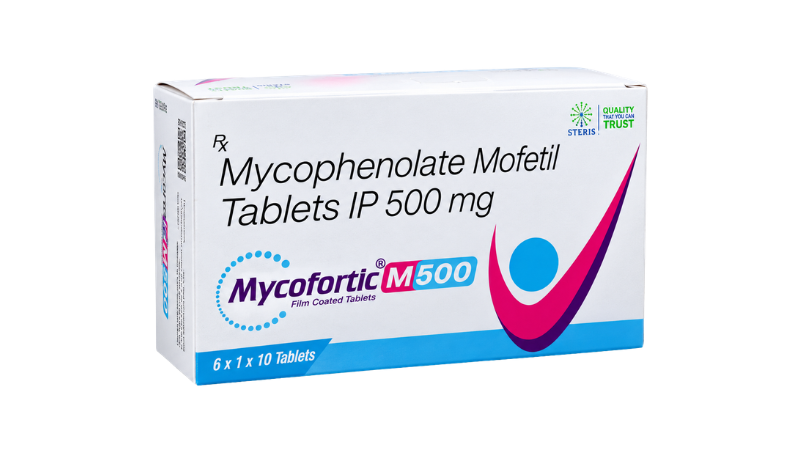



Mycophenolate Mofetil 500mg (Mycofortic M 500): Uses, Benefits & Precautions – Complete Guide
Sep 24, 2026
Mycophenolate Mofetil 500 mg is a prodrug that is rapidly converted in the body to mycophenolic acid (MPA), its pharmacologically active form. It belongs to a class of drugs known as selective immunosuppressants and is one of the cornerstone medications in modern transplant medicine and autoimmune disease management.
Under the brand name Mycofortic M 500, manufactured by Steris Healthcare, this formulation is prescribed to help the body's immune system tolerate a transplanted organ by preventing the immune cells from attacking it as a foreign body. It is also increasingly used off-label and on-label in various autoimmune and inflammatory conditions where controlling an overactive immune response is essential.
Mycophenolate Mofetil 500 mg is commonly prescribed for:
- Prophylaxis of organ rejection in patients receiving allogeneic kidney, heart, or liver transplants, typically used in combination with corticosteroids and calcineurin inhibitors such as cyclosporine or tacrolimus
- Treatment of active lupus nephritis, a serious kidney complication of systemic lupus erythematosus (SLE)
- Management of certain autoimmune and inflammatory skin conditions, such as pemphigus and severe psoriasis, under specialist supervision
- Off-label use in autoimmune conditions like vasculitis, myasthenia gravis, and inflammatory bowel disease, where steroid-sparing immunosuppression is needed
- Adjunct therapy in certain glomerular kidney diseases resistant to first-line treatments
Because of its potency and the need for close monitoring, Mycophenolate Mofetil 500 mg is strictly a prescription-only, specialist-initiated medication, typically managed by nephrologists, transplant physicians, or rheumatologists.
Why It's Important
Organ transplantation has transformed the prognosis for patients with end-stage kidney, liver, and heart failure — but the single biggest threat to a transplanted organ's survival is immune-mediated rejection. Mycophenolate Mofetil plays a critical role in modern triple-immunosuppressive regimens (typically alongside a calcineurin inhibitor and a corticosteroid), and its introduction significantly improved graft survival rates compared to older regimens using azathioprine alone.
Beyond transplantation, lupus nephritis remains one of the most serious complications of systemic lupus erythematosus, with the potential to progress to end-stage renal disease if inadequately controlled. Clinical evidence has established mycophenolate mofetil as an effective induction and maintenance therapy for lupus nephritis, offering an alternative to cyclophosphamide with a generally more favorable long-term safety profile, particularly regarding fertility preservation in younger patients.
The importance of a reliable, consistently manufactured formulation like Mycofortic M 500 cannot be overstated in this therapeutic context — because mycophenolate mofetil has a narrow therapeutic window and requires precise, consistent dosing, even minor variability in drug quality or bioavailability between manufacturing batches can meaningfully affect a patient's rejection risk or disease control. This is why Steris Healthcare's WHO-GMP and ISO 9001:2018 certified manufacturing standards are particularly relevant for a drug in this class.
Key Benefits
What Are the Benefits of Mycophenolate Mofetil 500 mg?
Mycophenolate Mofetil 500 mg, as formulated in Mycofortic M 500, offers several clinically significant advantages:
- Selective immunosuppression: Unlike broader-acting immunosuppressants, mycophenolate mofetil selectively targets lymphocyte proliferation, sparing many other cell types and reducing certain classes of off-target toxicity compared to older agents.
- Proven reduction in acute rejection episodes: Extensive clinical evidence in kidney, heart, and liver transplant recipients has demonstrated that mycophenolate mofetil, used as part of a combination immunosuppressive regimen, significantly reduces the incidence of acute allograft rejection compared to older regimens.
- Effective in lupus nephritis: Clinical trials have shown mycophenolate mofetil to be an effective induction and maintenance agent for lupus nephritis, with response rates comparable to cyclophosphamide-based regimens in many patient populations.
- Steroid-sparing potential: By providing robust background immunosuppression, mycophenolate mofetil can help reduce the cumulative corticosteroid dose needed over time, lowering the risk of steroid-related complications such as osteoporosis, diabetes, and weight gain.
- Reversible, dose-dependent effect: Unlike some immunosuppressants that cause cumulative or irreversible organ toxicity, mycophenolate's effects are largely reversible upon dose reduction or discontinuation, offering flexibility in clinical management.
- Established long-term safety data: Decades of post-marketing surveillance and transplant registry data have generated a well-characterized long-term safety profile, helping physicians make informed risk-benefit decisions.
- Trusted manufacturing standards: Mycofortic M 500 is manufactured by Steris Healthcare, a WHO-GMP and ISO 9001:2018 certified pharmaceutical company, ensuring consistent potency, purity, and batch-to-batch reliability — a critical factor for a narrow-therapeutic-index drug like mycophenolate mofetil.
Side Effects
Because mycophenolate mofetil works by suppressing the immune system, its side effect profile is closely tied to its mechanism of action. Common side effects include:
- Gastrointestinal disturbances such as diarrhea, nausea, vomiting, and abdominal pain (among the most frequently reported effects)
- Headache
- Fatigue or general weakness
- Mild to moderate leukopenia (reduced white blood cell count)
- Increased susceptibility to minor infections, such as colds or urinary tract infections
- Tremor
- Peripheral edema (mild swelling of hands or feet)
- Insomnia
Most mild side effects, particularly gastrointestinal symptoms, tend to improve with dose adjustment, taking the medication with food, or splitting the daily dose, though any such changes must be made only under medical supervision.
Available Substitutes
Several alternative immunosuppressive agents and formulations exist for patients who cannot tolerate mycophenolate mofetil or who require a different treatment approach. Enteric-coated mycophenolate sodium is often used as an alternative formulation designed to reduce upper gastrointestinal side effects in patients sensitive to the standard mofetil form. Azathioprine remains a commonly used alternative antiproliferative immunosuppressant, particularly in transplant recipients where mycophenolate is not tolerated or in pregnancy, where azathioprine is generally considered safer. In lupus nephritis, cyclophosphamide-based regimens continue to serve as an alternative induction therapy in select patients. Depending on the clinical scenario, physicians may also consider mTOR inhibitors such as sirolimus or everolimus as alternative or adjunctive immunosuppressive strategies. Any substitution decision must be made exclusively by the treating nephrologist, transplant physician, or rheumatologist, based on the patient's specific condition, tolerability, and risk profile.
Dosage Guidelines
Mycophenolate Mofetil 500 mg dosing is highly individualized and must always be prescribed and monitored by a specialist physician. General dosing patterns followed in clinical practice include:
- Kidney Transplantation: A common adult dose is 1 gram (two 500mg tablets) taken twice daily, usually starting within 72 hours of transplant surgery, in combination with corticosteroids and a calcineurin inhibitor.
- Heart or Liver Transplantation: Dosing regimens may vary slightly, typically in the range of 1 to 1.5 grams twice daily, based on institutional transplant protocols and patient tolerance.
- Lupus Nephritis: Induction therapy often starts at lower doses, gradually increasing to a target maintenance dose, commonly in the range of 1 to 3 grams per day in divided doses, depending on disease severity and renal function.
- Administration: Tablets should be taken on an empty stomach when possible, as food may reduce peak plasma concentration, though consistent administration relative to meals is more important than strict fasting. Tablets should be swallowed whole and never crushed or chewed, as the drug is potentially teratogenic and hazardous if powder is inhaled or contacts skin.
- Renal Impairment: Dose adjustments may be required in patients with significant renal dysfunction, based on physician assessment.
- Missed Dose: If a dose is missed, it should be taken as soon as remembered unless close to the next scheduled dose, in which case it should be skipped — doses should not be doubled.
- Discontinuation: Mycophenolate mofetil should never be stopped abruptly without medical guidance, as doing so can significantly increase the risk of organ rejection or disease flare.
Precautions & Warnings
Before starting Mycophenolate Mofetil 500 mg, patients and prescribers should carefully consider the following precautions:
- Pregnancy Risk: Mycophenolate mofetil is strongly associated with an increased risk of first-trimester pregnancy loss and congenital malformations. Women of childbearing potential must use effective contraception before, during, and for a specified period after treatment, and pregnancy testing is typically required before initiation.
- Infection Risk: Due to immunosuppression, patients are at increased risk of bacterial, viral, fungal, and opportunistic infections and should avoid close contact with individuals who have active infections, including live vaccines.
- Vaccinations: Live attenuated vaccines should generally be avoided during treatment due to the risk of vaccine-induced infection in an immunosuppressed host.
- Blood Count Monitoring: Regular complete blood count monitoring is essential, particularly during the first several months of therapy, to detect neutropenia or other cytopenias early.
- Gastrointestinal Disease: Should be used cautiously in patients with active peptic ulcer disease or other serious gastrointestinal conditions.
- Hereditary Enzyme Deficiencies: Patients with rare hereditary deficiencies of hypoxanthine-guanine phosphoribosyl-transferase (such as Lesch-Nyhan syndrome) should avoid mycophenolate mofetil.
- Skin Protection: Patients should limit sun exposure and use adequate sun protection, as long-term immunosuppression increases the risk of skin malignancies.
- Drug Interactions: Caution is required when co-administering with antacids containing magnesium or aluminum, cholestyramine, azathioprine, or live vaccines, as these can significantly affect drug absorption or increase toxicity risk.
- Renal and Hepatic Function: Regular monitoring of renal and hepatic function is recommended throughout treatment.
Mechanism of Action
Mycophenolate Mofetil 500 mg is a prodrug that is rapidly hydrolyzed after oral absorption into its active metabolite, mycophenolic acid (MPA). Understanding its mechanism of action helps explain the breadth of mycophenolate mofetil uses across transplant medicine and autoimmune disease:
- Inhibition of Inosine Monophosphate Dehydrogenase (IMPDH): Mycophenolic acid is a potent, selective, reversible inhibitor of IMPDH, a key enzyme in the de novo pathway of guanosine nucleotide synthesis.
- Selective Lymphocyte Targeting: T- and B-lymphocytes are particularly dependent on the de novo purine synthesis pathway for proliferation, unlike most other cell types, which can rely on an alternative salvage pathway. This gives mycophenolic acid a relatively selective antiproliferative effect on activated lymphocytes.
- Suppression of Antibody Production: By limiting B-lymphocyte proliferation, mycophenolate mofetil reduces antibody production, which is particularly relevant in antibody-mediated rejection and autoimmune conditions like lupus nephritis.
- Reduced Glycosylation of Adhesion Molecules: Mycophenolic acid also interferes with the glycosylation of certain lymphocyte and monocyte adhesion molecules, potentially reducing their recruitment to sites of inflammation or graft tissue.
- Combination Synergy: When used alongside calcineurin inhibitors (such as cyclosporine or tacrolimus) and corticosteroids, mycophenolate mofetil provides complementary, non-overlapping immunosuppression, allowing lower doses of each individual agent and potentially reducing cumulative drug-specific toxicity.
This targeted mechanism is what makes mycophenolate mofetil uses so central to both transplant rejection prophylaxis and autoimmune disease control, offering effective immunosuppression with a comparatively selective action on the immune cells driving rejection or autoimmune tissue damage.
Frequently Asked Questions
1. What is Mycophenolate Mofetil 500 mg used for?
It is primarily used to prevent organ transplant rejection (kidney, heart, liver) and to treat autoimmune conditions such as lupus nephritis.
2. What is Mycofortic M 500?
Mycofortic M 500 is the brand name under which Steris Healthcare markets Mycophenolate Mofetil Tablets IP 500mg.
3. What are the main mycophenolate mofetil uses in transplant patients?
It is used to prevent acute and chronic rejection of transplanted organs, usually as part of a combination immunosuppressive regimen.
4. What is Tab Mycophenolate Mofetil prescribed for besides transplants?
It is also prescribed off-label or on-label for autoimmune conditions like lupus nephritis, vasculitis, and certain skin disorders.
5. What are the common side effects of Mycophenolate Mofetil 500 mg?
Common side effects include diarrhea, nausea, headache, fatigue, and mild reduction in white blood cell count.
6. Is Mycophenolate Mofetil 500 mg safe during pregnancy?
No, it carries a significant risk of pregnancy loss and birth defects and should be avoided during pregnancy; effective contraception is required.
7. How should Mycophenolate Mofetil 500 mg tablets be taken?
Tablets should be swallowed whole, ideally on an empty stomach, and never crushed or chewed.
8. Can Mycophenolate Mofetil 500 mg be stopped suddenly?
No, sudden discontinuation can significantly increase the risk of organ rejection or autoimmune disease flare-up.
9. What monitoring is required while taking Mycophenolate Mofetil 500 mg?
Regular complete blood count testing and periodic kidney and liver function monitoring are typically required.
10. Does Mycophenolate Mofetil 500 mg increase infection risk?
Yes, because it suppresses the immune system, it increases susceptibility to bacterial, viral, and opportunistic infections.
11. What is the price of Mycophenolate Mofetil 500 mg?
Pricing varies by brand and pack size; please check with your pharmacist or Steris Healthcare for the current Mycofortic M 500 price.
12. Can Mycophenolate Mofetil 500 mg be taken with other immunosuppressants?
Yes, it is commonly combined with calcineurin inhibitors (like tacrolimus or cyclosporine) and corticosteroids in transplant regimens.
13. What are the serious side effects of Mycophenolate Mofetil 500 mg to watch for?
Serious effects include severe infections, significant bone marrow suppression, and increased long-term cancer risk.
14. Are there substitutes for Mycophenolate Mofetil 500 mg?
Yes, alternatives include enteric-coated mycophenolate sodium, azathioprine, and other immunosuppressants, depending on the clinical scenario.
15. What is the mechanism of action of Mycophenolate Mofetil 500 mg?
It inhibits an enzyme called IMPDH, selectively blocking lymphocyte proliferation and reducing the immune response responsible for rejection or autoimmune damage.
16. Can vaccines be given while taking Mycophenolate Mofetil 500 mg?
Live vaccines should generally be avoided during treatment due to the risk of infection in an immunosuppressed patient.
17. Is Mycophenolate Mofetil 500 mg a steroid?
No, it is not a steroid; it is a selective immunosuppressant that works through a different mechanism and is often used to reduce steroid dependence.
Conclusion
Mycophenolate Mofetil 500 mg, available as Mycofortic M 500 from Steris Healthcare, remains one of the most important immunosuppressive agents in modern medicine — playing a central role in preventing organ transplant rejection and controlling serious autoimmune conditions such as lupus nephritis. Its selective mechanism of action, well-established clinical evidence base, and steroid-sparing potential make it a cornerstone therapy for transplant physicians and rheumatologists alike. Given its potency and the significant risks associated with pregnancy, infection, and bone marrow suppression, Mycophenolate Mofetil 500 mg should only ever be used under close specialist supervision, with regular monitoring throughout the course of treatment.
For Further Information:
Mail Us: contact@sterispharma.com or info@sterispharma.com
Call Now: +91 8824175417, +91 9982524671
Recent Post
What is Bisogard 1.25? Bisoprolol 1.25mg Uses, Dosage & Side Effects Explained

Can Semaglutide Injection Be Used Without Diabetes?
What Are Nintedanib Soft Gelatin Capsules Used For? Complete Guide

Where to Buy Semaglutide Injection in India: Price, Pen & Prescription Guide
ERITOCOX BENZ 60/5 Dosage Guide: How to Take Etoricoxib & Cyclobenzaprine Tablets Safely
Gabapentin and Methylcobalamin Tablets Side Effects: What Patients Should Know
Thyroxine sodium tablets IP: उपयोग, फायदे और साइड इफेक्ट्स
Semaglutide 2 mg Injection Dosage Guide: How to Use It Safely
Buy Multivitamin + L-Carnitine + Taurine Protein Powder | Sterimmune
Semaglutide Injection Pen 8 mg: Step-by-Step Dosage & Precautions