


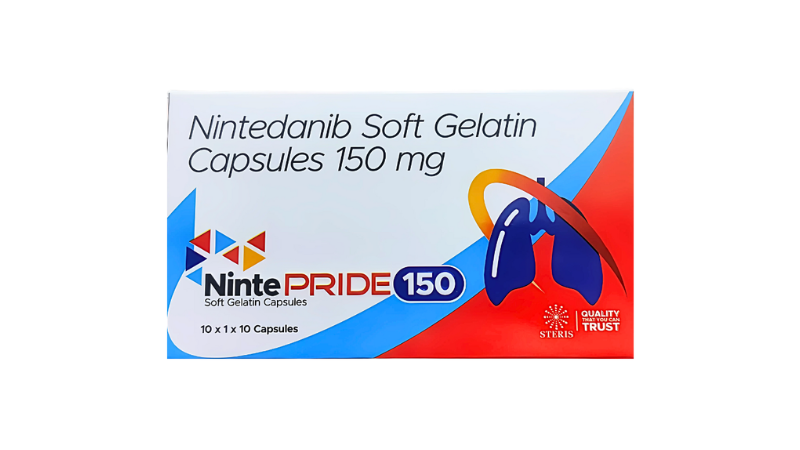



What Are Nintedanib Soft Gelatin Capsules Used For? Complete Guide
Sep 21, 2026
Nintedanib Soft Gelatin Capsules 150mg is a prescription medicine belonging to a class of drugs known as tyrosine kinase inhibitors, though its specific role differs meaningfully from how this drug class is often used in cancer treatment. Marketed by Steris Healthcare under the brand name NINTEPRIDE150, this soft gelatin capsule formulation is specifically designed for patients living with progressive lung scarring conditions, where the goal is to slow disease progression rather than reverse existing damage.
Nintedanib is primarily used for the treatment of idiopathic pulmonary fibrosis (IPF), a chronic, progressive lung disease of unknown cause where healthy lung tissue is gradually replaced by scar tissue, making breathing increasingly difficult over time. It is also approved for use in certain other chronic fibrosing interstitial lung diseases (ILDs) with a progressive phenotype, and in some cases, systemic sclerosis-associated interstitial lung disease (SSc-ILD), where similar progressive lung scarring occurs as part of a broader connective tissue disease.
NINTEPRIDE150 should always be taken exactly as prescribed by a pulmonologist or specialist familiar with interstitial lung disease, since this medicine requires structured, ongoing monitoring throughout treatment.
Why It's Important
Progressive fibrosing lung diseases like idiopathic pulmonary fibrosis are genuinely serious conditions — once lung scarring sets in, the damage is generally irreversible, and without effective treatment, the disease tends to progress relentlessly, steadily reducing lung function and quality of life. This is precisely why a medicine like nintedanib holds such an important place in respiratory medicine:
- IPF and related fibrosing lung diseases have historically had very limited treatment options, with supportive care being the primary approach for many years before targeted antifibrotic therapies became available.
- Nintedanib doesn't reverse existing lung scarring, but clinical evidence has shown it can meaningfully slow the rate of decline in lung function, which translates into more time with preserved breathing capacity and daily function.
- Because progressive lung fibrosis can significantly shorten life expectancy if left unmanaged, slowing disease progression is considered a genuinely meaningful clinical outcome, even without a cure.
- Having an oral, targeted therapy option means patients can manage this condition without necessarily requiring more invasive interventions at every stage of the disease.
For patients diagnosed with IPF or another progressive fibrosing lung condition, starting an effective antifibrotic therapy as early as clinically appropriate is widely regarded as an important step in preserving lung function for as long as possible.
Key Benefits
What Are the Benefits of Nintedanib Soft Gelatin Capsules?
- Slows disease progression – Clinical studies have consistently shown nintedanib reduces the rate of decline in lung function (measured by forced vital capacity, or FVC) compared to placebo in patients with IPF and other progressive fibrosing lung diseases.
- Reduces the frequency of acute exacerbations – Some clinical evidence suggests nintedanib may help reduce the risk of acute worsening episodes, which are a significant concern in progressive lung fibrosis.
- Oral, at-home administration – Unlike some respiratory treatments requiring hospital visits or infusions, nintedanib is taken as an oral capsule, allowing patients to manage treatment at home between specialist follow-ups.
- Approved across multiple fibrosing lung conditions – Its use extends beyond idiopathic pulmonary fibrosis to other chronic fibrosing interstitial lung diseases with a progressive phenotype, broadening its clinical relevance.
- Extensive real-world and clinical trial evidence – Nintedanib has been studied extensively since its approval, giving both doctors and patients a well-established understanding of its effectiveness and safety profile.
- Manufactured under WHO-GMP standards – Produced by Steris Healthcare, a WHO-GMP and ISO 9001:2018 certified pharmaceutical manufacturer, supporting consistent quality and safety compliance.
Nintedanib Soft Gelatin Capsules Uses
Nintedanib 150 mg uses primarily include:
- Treatment of idiopathic pulmonary fibrosis (IPF) to slow disease progression.
- Treatment of chronic fibrosing interstitial lung diseases with a progressive phenotype.
- Treatment of systemic sclerosis-associated interstitial lung disease (SSc-ILD), as determined by the treating specialist.
Side Effects
Common, generally manageable side effects can include:
- Diarrhea (one of the most frequently reported effects, often occurring early in treatment)
- Nausea and vomiting
- Reduced appetite
- Abdominal pain
- Mild liver enzyme elevation, usually identified through routine blood tests
- Headache
Available Substitute
Pirfenidone is the other major antifibrotic medicine approved for idiopathic pulmonary fibrosis, working through a different though related mechanism, and may be considered as an alternative depending on individual patient tolerability and clinical factors. Steris Healthcare also offers other formulations within its broader respiratory and specialty care portfolio. Since the choice between antifibrotic therapies depends on the specific diagnosis, disease stage, and individual tolerability profile, any substitution should be made only under the guidance of a pulmonologist or specialist experienced in managing interstitial lung disease.
Dosage Guidelines
- Typical use: 150mg taken twice daily, approximately 12 hours apart, or as directed by the treating specialist.
- Administration: Taken orally with food, and the capsule should be swallowed whole with water — not chewed or crushed, given its soft gelatin formulation.
- Dose adjustment: Your doctor may adjust the dose (sometimes temporarily reducing it) based on how well you tolerate side effects like diarrhea or liver enzyme changes, particularly during the early months of treatment.
- Duration: This is typically a long-term, ongoing treatment aimed at slowing disease progression; your specialist will periodically reassess whether continued treatment remains appropriate based on lung function trends and tolerability.
- Missed dose: Skip the missed dose and take the next scheduled dose at the usual time — do not double up, and follow your doctor's specific guidance if you miss doses frequently.
This is general information only. Exact dosing, any temporary adjustments, and treatment duration must be determined and closely monitored by the prescribing specialist based on individual liver function, tolerability, and disease response.
Precautions & Warnings
- Regular liver function monitoring is an essential, non-negotiable part of nintedanib therapy — your doctor will typically check liver enzymes periodically throughout treatment, especially during the initial months.
- Report any signs of severe abdominal pain promptly, given the rare but serious risk of gastrointestinal perforation.
- Use with caution in patients with a history of bleeding disorders or those on blood-thinning medications, given nintedanib's effect on vascular signaling pathways.
- Not recommended in patients with significant cardiovascular disease without careful specialist assessment, given the associated arterial thromboembolic risk.
- Not recommended during pregnancy, given documented risk to fetal development; women of childbearing potential should use effective contraception during treatment and for a period after stopping, as advised by the doctor.
- Not recommended during breastfeeding.
- Inform your doctor of all other medications being taken, since nintedanib has notable interactions with certain other drugs, including some antifungal medicines and drugs affecting liver enzyme pathways.
- Stay adequately hydrated, particularly if experiencing diarrhea, and report severe or persistent diarrhea to your doctor promptly rather than managing it independently long-term.
- Never stop or adjust this medicine on your own; dose changes and discontinuation decisions should always be guided by your treating specialist based on ongoing monitoring.
- Store in a cool, dry place, protected from light and moisture, and keep out of reach of children.
Mechanism of Action
Nintedanib works as a triple angiokinase inhibitor, meaning it blocks three distinct receptor tyrosine kinase pathways simultaneously: the vascular endothelial growth factor receptor (VEGFR), the fibroblast growth factor receptor (FGFR), and the platelet-derived growth factor receptor (PDGFR). These three signaling pathways are all involved in the abnormal activation and proliferation of fibroblasts — the cells responsible for producing the excess scar tissue (fibrosis) that progressively replaces healthy lung tissue in conditions like IPF.
By inhibiting these pathways, nintedanib is believed to interfere with the processes that drive fibroblast activation, migration, and the excessive collagen deposition characteristic of progressive lung fibrosis. This targeted, multi-pathway action is what distinguishes nintedanib's approach — rather than broadly suppressing inflammation, it specifically targets the cellular signaling believed to drive the fibrotic process itself, which is central to why it can meaningfully slow disease progression even though it cannot reverse scarring that has already occurred.
Frequently Asked Questions
1. What are nintedanib soft gelatin capsules used for?
They are used to slow the progression of idiopathic pulmonary fibrosis and other chronic fibrosing interstitial lung diseases with a progressive phenotype.
2. What is NINTEPRIDE150?
NINTEPRIDE150 is the brand name under which Steris Healthcare markets its Nintedanib Soft Gelatin Capsules 150mg.
3. What is nintedanib 150 mg used for specifically?
Nintedanib 150 mg is the standard twice-daily dose used to slow disease progression in idiopathic pulmonary fibrosis and related fibrosing lung conditions.
4. Does nintedanib cure pulmonary fibrosis?
No, nintedanib does not reverse existing lung scarring or cure the disease; it works to slow the rate of further lung function decline.
5. How does nintedanib work?
It blocks three cellular signaling pathways (VEGFR, FGFR, and PDGFR) involved in the abnormal activation of fibroblasts, the cells responsible for producing excess scar tissue in the lungs.
6. What are the common side effects of nintedanib?
Diarrhea, nausea, reduced appetite, and mild liver enzyme changes are among the most frequently reported effects.
7. Are there serious side effects of nintedanib soft gelatin capsules?
Yes — liver toxicity, gastrointestinal perforation, increased bleeding risk, and cardiovascular events are serious concerns requiring close monitoring.
8. How should nintedanib capsules be taken?
150mg is typically taken twice daily, about 12 hours apart, with food, and the capsule should be swallowed whole rather than chewed or crushed.
9. Is regular monitoring required while taking nintedanib?
Yes, regular liver function tests are an essential part of treatment, along with periodic assessment of lung function and overall tolerability.
10. Can nintedanib be taken during pregnancy?
No, it is not recommended during pregnancy due to documented risk to fetal development; effective contraception is advised during treatment.
11. What should I do if I experience severe diarrhea on this medicine?
Contact your doctor promptly, as dose adjustment may be needed to manage this common side effect without compromising treatment.
12. Is nintedanib the only treatment for idiopathic pulmonary fibrosis?
No, pirfenidone is another approved antifibrotic medicine for IPF; the choice between the two depends on individual patient factors determined by the specialist.
13. How long does nintedanib treatment typically continue?
It is generally a long-term, ongoing treatment, with the specialist periodically reassessing continued use based on lung function trends and tolerability.
14. Can nintedanib be taken with other lung medicines?
This should only be done under your specialist's guidance, since nintedanib has specific interaction considerations with certain other medicines.
15. Is a prescription required for NINTEPRIDE150 in India?
Yes, it is a prescription medicine and should only be used under the guidance of a pulmonologist or specialist experienced in interstitial lung disease.
16. What is idiopathic pulmonary fibrosis, and why does it need ongoing treatment?
It is a chronic, progressive lung disease where healthy lung tissue is gradually replaced by scar tissue; because this damage is generally irreversible, ongoing treatment aims to slow further progression and preserve lung function for as long as possible.
17. Can nintedanib be stopped once symptoms improve?
No, this medicine should never be stopped without your specialist's guidance, since it is intended for long-term disease management rather than symptom-based short-term use.
Conclusion
Nintedanib Soft Gelatin Capsules, available as NINTEPRIDE150 from Steris Healthcare, offers a genuinely important treatment option for patients living with idiopathic pulmonary fibrosis and other progressive fibrosing lung diseases, where treatment choices have historically been limited. By targeting the specific cellular pathways believed to drive fibroblast activation and excess scar tissue formation, this medicine can meaningfully slow the rate of lung function decline, even though it cannot reverse damage that has already occurred. Given its serious potential side effects — particularly liver toxicity and gastrointestinal risks — this medicine requires close, ongoing collaboration with a pulmonologist or ILD specialist, including regular liver function monitoring and prompt reporting of any concerning symptoms throughout treatment.
For Further Information:
Mail Us: contact@sterispharma.com or info@sterispharma.com
Call Now: +91 8824175417, +91 9982524671
Recent Post
Where to Buy Semaglutide Injection in India: Price, Pen & Prescription Guide
ERITOCOX BENZ 60/5 Dosage Guide: How to Take Etoricoxib & Cyclobenzaprine Tablets Safely
Gabapentin and Methylcobalamin Tablets Side Effects: What Patients Should Know
Thyroxine sodium tablets IP: उपयोग, फायदे और साइड इफेक्ट्स
Semaglutide 2 mg Injection Dosage Guide: How to Use It Safely
Buy Multivitamin + L-Carnitine + Taurine Protein Powder | Sterimmune
Semaglutide Injection Pen 8 mg: Step-by-Step Dosage & Precautions

BEST semaglutide injection price in india
How Semaglutide Injection 4 mg Helps Control Blood Sugar
What Is Telmisartan and Metoprolol Succinate Combination Used For?

