


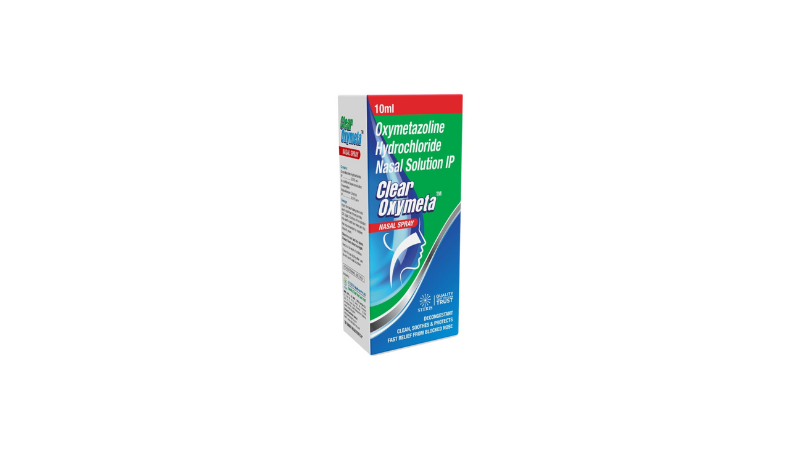



Oxymetazoline Hydrochloride Nasal Solution IP – Uses, Benefits & Side Effects
Sep 02, 2025
Oxymetazoline Hydrochloride Nasal Solution: What Is It?
Oxymetazoline hydrochloride nasal solution is a topical nasal decongestant used for the temporary relief of a blocked or congested nose. Depending on the specific product label, it can be used for congestion associated with the common cold, hay fever, upper-respiratory allergies and, in some formulations, sinus congestion and pressure.
Oxymetazoline works locally by causing blood vessels in the nasal tissues to constrict. This reduces swelling inside the nasal passages, creating more space for airflow.
The medicine is designed for short-term symptom relief. It does not cure the viral infection, eliminate the underlying allergy, or treat every cause of nasal obstruction.
How Does Oxymetazoline Hydrochloride Nasal Solution Work?
Oxymetazoline is an alpha-adrenergic nasal decongestant. When applied inside the nose, it causes constriction of blood vessels in swollen nasal tissues.
When you have a cold or allergy, the lining of the nose can become inflamed and swollen. That swelling narrows the nasal airway and makes breathing through the nose difficult.
Oxymetazoline temporarily reduces this swelling. As the nasal passages open, you may experience:
- Easier nasal breathing
- Less stuffiness
- Reduced sensation of nasal blockage
- Temporary relief from congestion
- Improved airflow through the nose
Because it works locally and can act relatively quickly, nasal decongestants are often attractive to people looking for fast congestion relief. However, faster symptom relief does not mean the medicine should be used more frequently or for longer than directed.
How to Use Oxymetazoline Hydrochloride Nasal Solution
The primary use is temporary relief of nasal congestion.
Depending on the product, approved or labeled uses can include:
1. Common cold congestion
Oxymetazoline can temporarily relieve a stuffy nose associated with the common cold. It does not kill the virus responsible for the cold; it simply helps reduce nasal swelling and improve airflow.
2. Hay fever and allergies
Allergic reactions can cause swollen nasal passages and congestion. Oxymetazoline can provide short-term relief from the blocked-nose component of hay fever or upper-respiratory allergies.
3. Upper respiratory allergies
Some 0.05% oxymetazoline products are labeled for temporary relief of nasal congestion caused by upper respiratory allergies.
4. Sinus congestion and pressure
Some current formulations specifically list temporary relief of sinus congestion and pressure among their uses. Check your particular product's label because indications are not necessarily identical across formulations or markets.
Key Benefits of Oxymetazoline Hydrochloride Nasal Solution
Fast, targeted congestion relief
Oxymetazoline hydrochloride nasal solution for blocked nose is the potential for direct, local relief. Rather than taking an oral medicine, the solution is administered directly into the nasal passages.
Helps reduce swollen nasal membranes
The medicine's decongestant action reduces swelling in the nasal lining. Official labeling describes this as shrinking swollen nasal membranes so that breathing becomes easier.
May improve nasal airflow
When nasal tissue swelling decreases, the airway becomes less restricted. This can make it easier to breathe through the nose temporarily.
Useful for short-term cold or allergy symptoms
For someone experiencing significant nasal blockage from a cold or seasonal allergy, short-term oxymetazoline use can provide symptomatic relief while the underlying condition resolves or is managed separately.
Convenient administration
Many oxymetazoline products are supplied as nasal sprays or solutions. A current 0.05% product label, for example, provides directions for administration directly into each nostril.
Oxymetazoline Hydrochloride Nasal Solution 0.05%
However, consumers should not assume that every bottle containing oxymetazoline has identical instructions. The concentration, delivery system, inactive ingredients, age restrictions and dosing instructions should be checked on the individual package.
This is particularly important when comparing products online. A search result may show the same active ingredient but a different formulation or strength.
How to Use Oxymetazoline Hydrochloride Nasal Solution
Use the product exactly according to its package directions or your healthcare professional's instructions.
For many 0.05% products, labeling for adults and children 6 to under 12 years with adult supervision specifies administration at intervals of approximately 10–12 hours, with no more than two doses in 24 hours. The exact number of sprays or drops depends on the specific formulation.
General administration principles include:
- Read the product label before the first use.
- Use only the recommended amount.
- Administer the solution into the nostril as directed.
- Avoid sharing the bottle or spray dispenser with another person.
- Clean the nozzle according to the product instructions.
- Do not use more frequently than directed.
- Do not use for longer than the recommended period.
MedlinePlus specifically advises not to use oxymetazoline nasal spray for more than 3 days. If congestion has not improved after that period, stop using it and contact a healthcare professional.
The Biggest Risk: Rebound Congestion
The most important point for anyone considering an oxymetazoline nasal solution is the risk of rebound congestion, also called rhinitis medicamentosa.
Using a topical nasal decongestant too often or for too long can cause nasal congestion to return or become worse. This can create a cycle in which a person feels they need more spray to breathe comfortably.
Official labeling explicitly warns that frequent or prolonged use can cause congestion to recur or worsen.
That is why oxymetazoline should be treated as a short-term congestion-relief medicine, not as a daily long-term nasal treatment.
If you regularly experience nasal congestion, the better approach is to identify the cause rather than repeatedly using a topical decongestant.
Oxymetazoline Hydrochloride Nasal Solution Side Effects
Most people use oxymetazoline without serious problems when it is used according to directions, but side effects can occur.
Possible side effects include:
- Burning or stinging in the nose
- Nasal dryness
- Sneezing
- Increased nasal discharge
- Headache
- Dizziness
- Nausea
- Nervousness
- Difficulty sleeping
These effects are listed in MedlinePlus drug information for oxymetazoline nasal spray.
Product labeling similarly warns about temporary burning, stinging, sneezing and increased nasal discharge.
Serious side effects
Although less common, oxymetazoline can produce more serious cardiovascular effects. MedlinePlus identifies fast or slow heartbeat as symptoms requiring prompt medical attention.
Seek medical advice promptly if you experience unusual or severe symptoms while using the medicine.
If the product is swallowed, particularly by a child, seek urgent medical assistance or contact an appropriate poison-control service. Current labeling specifically warns that accidental ingestion can be dangerous.
Who Should Ask a Doctor Before Using Oxymetazoline?
Oxymetazoline is not appropriate for everyone without medical advice.
- Heart disease
- High blood pressure
- Thyroid disease
- Diabetes
- Difficulty urinating caused by an enlarged prostate
You should also tell your doctor or pharmacist about other medicines you take. MedlinePlus specifically advises discussing prescription medicines, nonprescription products, vitamins, supplements and herbal products before using oxymetazoline.
Particular caution may be necessary with certain medicines affecting the cardiovascular or nervous systems, including some monoamine oxidase inhibitors.
Oxymetazoline During Pregnancy and Breastfeeding
If you are pregnant, planning to become pregnant or breastfeeding, ask a healthcare professional before using oxymetazoline.
Current product labeling advises pregnant or breastfeeding individuals to consult a healthcare professional before use.
Do not assume that an over-the-counter nasal spray is automatically appropriate during pregnancy simply because it is locally administered.
Oxymetazoline for Children
Age restrictions vary according to the formulation.
MedlinePlus states that oxymetazoline nasal spray should not be used in children younger than 6 unless recommended by a doctor. Children aged 6 to 12 should use it carefully under adult supervision.
Some current 0.05% labels similarly instruct that children under 6 should consult a doctor, while providing specific supervised directions for children 6 to under 12.
Always check the exact product label before giving a nasal decongestant to a child.
Oxymetazoline Nasal Solution vs. Other Congestion Treatments
Choosing a congestion treatment depends on the underlying cause.
Oxymetazoline primarily provides temporary relief by reducing swelling in the nasal passages.
Saline nasal products can help moisturize and rinse the nasal passages and do not carry the same topical decongestant rebound-congestion concern.
Intranasal corticosteroids are commonly used for allergic rhinitis and work by reducing inflammation rather than producing the rapid vasoconstrictor effect of oxymetazoline.
Oral decongestants are another category but can have systemic effects and may require caution in people with conditions such as hypertension or heart disease.
The best option depends on whether your congestion is caused by a cold, allergy, sinus disease, medication overuse or another condition.
Buying Oxymetazoline Hydrochloride Nasal Solution Online
Before purchasing, verify:
- Active ingredient
- Concentration, such as 0.05%
- Dosage form
- Intended age group
- Manufacturer or responsible supplier
- Expiry date
- Packaging integrity
- Storage requirements
- Regulatory status in your country
- Whether the seller is a legitimate pharmacy or authorized retailer
Prices and availability can vary by country, brand, pack size, pharmacy and formulation. Avoid sellers making claims such as “permanent congestion cure,” “no side effects” or recommending continuous daily use.
When Should You Stop Using Oxymetazoline?
Stop and seek medical advice if:
- Congestion persists despite the recommended short course.
- Symptoms become worse.
- You develop significant side effects.
- You experience an abnormal or very fast/slow heartbeat.
- You accidentally swallow the medicine.
- You are needing the product repeatedly to breathe normally.
Most importantly, do not extend the treatment period simply because the congestion returns. That recurrence can be a sign of rebound congestion rather than evidence that you need more oxymetazoline.
Frequently Asked Questions About Oxymetazoline Hydrochloride Nasal Solution
1. What is oxymetazoline hydrochloride nasal solution used for?
Oxymetazoline hydrochloride nasal solution is used for temporary relief of nasal congestion caused by conditions such as the common cold, hay fever and upper-respiratory allergies. Some formulations also list sinus congestion and pressure. It works by reducing swelling in the nasal passages.
2. How does oxymetazoline nasal solution work?
Oxymetazoline constricts blood vessels in the nasal tissues, which reduces swelling and temporarily opens the nasal passages. This can make breathing through the nose easier.
3. Is oxymetazoline hydrochloride 0.05% safe?
When used according to the product's directions for the appropriate person, it can be used safely for short-term congestion relief. However, it should not be overused, and people with conditions such as high blood pressure, heart disease, thyroid disease or diabetes should ask a healthcare professional before use.
4. How long can I use oxymetazoline nasal spray?
Many U.S. consumer labels and MedlinePlus recommend no more than 3 days of use. Longer or frequent use can cause rebound congestion, in which nasal blockage returns or becomes worse.
5. What are the common side effects of oxymetazoline hydrochloride nasal solution?
Common or temporary effects can include nasal burning, stinging, dryness, sneezing, increased nasal discharge, headache, dizziness, nausea and nervousness. Difficulty sleeping may also occur.
6. Can oxymetazoline cause rebound congestion?
Yes. Frequent or prolonged use can cause congestion to recur or worsen. This is one of the main reasons oxymetazoline should only be used for the period stated on the product label.
7. Can I use oxymetazoline nasal solution every day?
It should not be used continuously every day beyond the product's recommended treatment period. If you repeatedly need a decongestant to breathe through your nose, speak with a healthcare professional to determine the underlying cause of the congestion.
8. Can children use oxymetazoline nasal solution?
Age recommendations depend on the specific formulation. MedlinePlus advises that children younger than 6 should not use oxymetazoline nasal spray unless a doctor recommends it, while children 6–12 should use it carefully under adult supervision.
9. Can I use oxymetazoline if I have high blood pressure?
Ask a doctor before using it. Current product labeling specifically advises people with high blood pressure, heart disease, thyroid disease or diabetes to seek medical advice before use.
10. Can I buy oxymetazoline hydrochloride nasal solution online?
Availability and prescription/OTC status depend on the country and product. If purchasing online, use a reputable, legally authorized pharmacy or retailer and verify the active ingredient, strength, expiry date, packaging and product labeling before use.
11. How does oxymetazoline hydrochloride work?
Oxymetazoline hydrochloride works by constricting blood vessels in the nasal lining, reducing swelling and opening blocked nasal passages for easier breathing.
Conclusion: Is Oxymetazoline Hydrochloride Nasal Solution Right for You?
Oxymetazoline hydrochloride nasal solution is a fast-acting, short-term nasal decongestant designed to temporarily relieve a blocked nose. It can be useful for congestion associated with colds, hay fever and upper-respiratory allergies, while some formulations also provide relief from sinus congestion and pressure.
Recent Post
Olmesartan and Metoprolol: Uses, Benefits, Dosage & Side Effects | Steris Healthcare
Tofacitinib 11 mg Tablets: A Complete Guide to Uses and Side Effects
Olmesartan Medoxomil + Metoprolol Succinate: Uses, Dosage
Torsemide 100 mg: Uses, Dosage, Side Effects, and Precautions
How Streptococcus Thermophilus Supports Digestive Health
Olmesartan Medoxomil + Metoprolol Succinate: Uses, Benefits & Side Effects
Sirolimus 1 mg: Uses, Dosage, Side Effects, and Precautions
What Is Cefpodoxime Proxetil? Uses and Benefits Explained
Mirtazapine 7.5 mg: Uses, Benefits, Dosage & Side Effects
Clotrimazole Dusting Powder: Uses, Benefits, and Side Effects

