


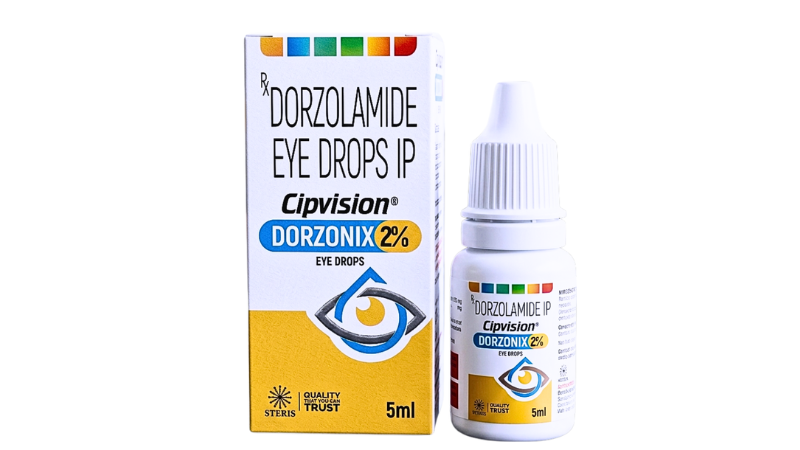



Dorzolamide Eye Drops: Uses, Benefits, Dosage & Side Effects – CIPVISION DORZONIX
Jul 29, 2026
What is CIPVISION DORZONIX (Dorzolamide Eye Drops) used for?
CIPVISION DORZONIX, manufactured by Steris Healthcare, is a prescription ophthalmic solution formulated with dorzolamide eye drops (dorzolamide hydrochloride 2% w/v) — a topical carbonic anhydrase inhibitor used to lower elevated pressure inside the eye. It is prescribed for patients diagnosed with ocular hypertension and various forms of glaucoma, particularly open-angle glaucoma, where intraocular pressure (IOP) needs to be controlled to protect the optic nerve and preserve long-term vision.
Quick Answer
CIPVISION DORZONIX is a dorzolamide eye drops formulation from Steris Healthcare used to reduce raised intraocular pressure in glaucoma and ocular hypertension. It works by inhibiting the carbonic anhydrase enzyme in the eye, reducing aqueous humor production. It is available as a standalone dorzolamide drop or in combination with timolol, and is a Schedule H prescription medicine — it should only be used under a qualified ophthalmologist's guidance.
Unlike oral medications, dorzolamide eye drops act locally at the site of fluid production inside the eye, making them a preferred first-line or add-on therapy when beta-blockers or prostaglandin analogues alone are insufficient to control pressure.
Clinical Indications Overview
| Indication | Details |
|---|---|
| Primary Open-Angle Glaucoma | Reduces elevated IOP to slow optic nerve damage |
| Ocular Hypertension | Controls pressure before glaucomatous changes occur |
| Secondary Glaucoma (adjunct use) | Used alongside other IOP-lowering agents |
| Combination Therapy | Often co-prescribed with timolol for additive effect |
| Post-surgical IOP Management | Used in select cases under specialist supervision |
Why Dorzolamide Eye Drops Are Important
Glaucoma is often called the "silent thief of sight" because vision loss from uncontrolled intraocular pressure is typically gradual, painless, and irreversible. This is exactly why dorzolamide eye drops hold clinical importance — they target the underlying mechanism of pressure buildup rather than just masking symptoms.
CIPVISION DORZONIX matters for patients because:
- Elevated IOP is the single most modifiable risk factor in glaucoma progression.
- Early and consistent use of a carbonic anhydrase inhibitor like dorzolamide can meaningfully slow disease progression.
- It offers an alternative or complementary mechanism to prostaglandins and beta-blockers, useful when those classes alone don't achieve target pressure or aren't tolerated.
- Because it is applied directly to the eye, systemic absorption and related side effects are typically lower than oral carbonic anhydrase inhibitors like acetazolamide.
For patients newly diagnosed with glaucoma or ocular hypertension, an ophthalmologist may prescribe CIPVISION DORZONIX as part of a broader IOP-management plan that includes regular eye pressure checks, visual field testing, and optic nerve imaging.
Key Benefits of CIPVISION DORZONIX (Dorzolamide Eye Drops)
What Are the Benefits of Using Dorzolamide Eye Drops?
- Effective IOP reduction: Dorzolamide lowers intraocular pressure by decreasing the rate of aqueous humor formation inside the eye.
- Targeted local action: Because it's a topical drop, it acts directly at the ciliary body without needing to circulate through the entire body first.
- Complements other glaucoma medications: It's commonly added to prostaglandin analogues or beta-blockers like timolol for enhanced pressure control when monotherapy isn't enough.
- Suitable for long-term maintenance therapy: Glaucoma is a chronic condition, and dorzolamide is designed for sustained daily use under medical supervision.
- Fewer systemic effects than oral CAIs: Compared to tablets like acetazolamide, the eye-drop route generally results in a lower systemic side-effect burden.
- Manufactured under WHO-GMP standards: CIPVISION DORZONIX is produced by Steris Healthcare, a WHO-GMP and ISO-certified pharmaceutical manufacturer, ensuring consistent quality and formulation stability.
Mechanism of Action of Dorzolamide Eye Drops
Composition: Dorzolamide Hydrochloride (equivalent to Dorzolamide 2% w/v)
Dorzolamide belongs to the carbonic anhydrase inhibitor (CAI) class of drugs. Inside the eye, the ciliary body continuously produces aqueous humor, the clear fluid that maintains the eye's shape and nourishes internal structures. This fluid production depends on the enzyme carbonic anhydrase II, which catalyzes the conversion of carbon dioxide and water into bicarbonate and hydrogen ions — a reaction essential for generating the ionic gradient that drives fluid secretion.
When dorzolamide eye drops are instilled, dorzolamide penetrates the cornea and reaches the ciliary epithelium, where it selectively inhibits carbonic anhydrase II. This inhibition slows bicarbonate formation, which in turn reduces sodium and fluid transport into the posterior chamber. The net effect is a decrease in aqueous humor production, which lowers intraocular pressure without affecting outflow pathways.
This mechanism is distinct from:
- Prostaglandin analogues, which increase aqueous outflow.
- Beta-blockers (like timolol), which also reduce aqueous production but via a different receptor pathway (beta-adrenergic blockade).
Because dorzolamide and timolol act through different mechanisms, they are frequently combined — either as separate drops or in a fixed-dose combination — to achieve a more comprehensive reduction in IOP than either agent alone.
Side Effects of Dorzolamide Eye Drops
Like all medications, dorzolamide eye drops may cause side effects. Most are mild and localized to the eye, though some patients report systemic symptoms.
Common side effects may include:
- Transient burning, stinging, or discomfort upon instillation
- Blurred vision immediately after application
- Bitter or unusual taste in the mouth
- Eye redness or itching
- Dryness of the eyes
Serious Side Effects of Dorzolamide Eye Drops
While uncommon, patients should seek prompt medical attention if they experience:
- Signs of an allergic reaction — swelling of the eyelids, face, lips, or throat; severe itching or rash
- Severe or persistent eye pain, significant vision changes, or eye discharge
- Symptoms suggestive of a sulfonamide-related reaction (since dorzolamide is chemically related to sulfonamide compounds), such as widespread skin rash, difficulty breathing, or unexplained bruising
- Signs of corneal problems, including persistent blurred vision or unusual sensitivity to light
Available Substitutes for Dorzolamide Eye Drops
| Substitute Option | Active Ingredient | Typical Use Case |
|---|---|---|
| Timolol Eye Drops | Timolol Maleate | Beta-blocker alternative/add-on for IOP control |
| Brimonidine Eye Drops | Brimonidine Tartrate | Alpha-2 agonist, alternative adjunct therapy |
| Latanoprost Eye Drops | Latanoprost | Prostaglandin analogue, first-line option in many cases |
| Dorzolamide + Timolol Combination Drops | Dorzolamide + Timolol | Fixed-dose combination for enhanced IOP reduction |
| Brinzolamide Eye Drops | Brinzolamide | Alternative carbonic anhydrase inhibitor |
Dosage Guidelines for CIPVISION DORZONIX (Dorzolamide Eye Drops)
- Typical adult dose: One drop in the affected eye(s), usually three times a day, unless the prescribing ophthalmologist advises otherwise.
- When combined with another topical glaucoma medication: Your doctor may adjust the frequency, and drops should generally be administered at least 10 minutes apart if multiple eye medications are used.
- Administration technique: Wash hands before use, tilt the head back, gently pull down the lower eyelid, instill the prescribed number of drops, and close the eye gently for 1–2 minutes without blinking excessively. Applying gentle pressure at the inner corner of the eye (nasolacrimal occlusion) can help reduce systemic absorption.
- Contact lenses: Remove contact lenses before instillation and wait at least 15 minutes before reinserting, if advised by the prescribing doctor.
- Missed dose: Apply as soon as remembered; if close to the next scheduled dose, skip the missed one — do not double up.
- Duration of use: Glaucoma management is typically long-term/lifelong, and dosage should never be self-adjusted or discontinued without medical advice, even if symptoms appear controlled.
Precautions & Warnings While Using Dorzolamide Eye Drops
- Prescription-only medicine: CIPVISION DORZONIX is a Schedule H drug and must be used strictly under medical supervision.
- Sulfonamide sensitivity: Patients with a known allergy to sulfonamide drugs should inform their doctor before starting therapy, as cross-sensitivity is possible.
- Kidney or liver impairment: Use with caution and under close monitoring in patients with significant renal or hepatic dysfunction.
- Corneal health: Patients with corneal endothelial cell compromise should be monitored closely, as CAIs can affect corneal fluid balance.
- Pregnancy and breastfeeding: Use only if clearly advised by a physician, after weighing potential risks and benefits.
- Driving and operating machinery: Temporary blurred vision after application may affect the ability to drive or operate machinery safely; wait until vision clears.
- Concurrent eye medications: Inform your doctor about all other eye drops or systemic medications being used to avoid interactions.
- Storage: Store as per label instructions, protect from light, and keep out of reach of children.
- Regular monitoring: Periodic IOP checks and eye examinations are essential to assess treatment response and detect any complications early.
Target Buyer Intent Keywords Addressed
This content on dorzolamide eye drops has been optimized to address high-intent search queries including: dorzolamide eye drops, dorzolamide, dorzolamide eye drops uses, dorzolamide eye drops uses in Hindi, dorzolamide eye drops price, and dorzolamide and timolol eye drops uses in hindi — covering informational, transactional, and voice-search intent across both English and Hindi-speaking search audiences.
Conclusion
CIPVISION DORZONIX (Dorzolamide Eye Drops) by Steris Healthcare offers a clinically established, targeted approach to managing intraocular pressure in glaucoma and ocular hypertension. By inhibiting carbonic anhydrase in the ciliary body, it reduces aqueous humor production and helps protect the optic nerve from pressure-related damage. While generally well tolerated, it should always be used under the supervision of a qualified ophthalmologist, with attention to correct dosage, administration technique, and regular monitoring. Patients considering dorzolamide-based therapy, alone or in combination with timolol, should consult their eye specialist to determine the most appropriate treatment plan for their specific condition.
Frequently Asked Questions
1. What is dorzolamide eye drops used for?
Dorzolamide eye drops are used to lower elevated intraocular pressure in patients with open-angle glaucoma or ocular hypertension.
2. What is a common side effect of dorzolamide?
A common side effect is a transient burning or stinging sensation in the eye after application, along with a bitter taste in the mouth.
3. How does dorzolamide work for glaucoma?
Dorzolamide inhibits the carbonic anhydrase enzyme in the ciliary body, reducing the production of aqueous humor and thereby lowering intraocular pressure.
4. Is dorzolamide a steroid?
No, dorzolamide is not a steroid. It is a carbonic anhydrase inhibitor, a class of medication distinct from corticosteroids.
5. दोर्जोलामाइड आई ड्रॉप्स किस लिए उपयोग होता है? (Dorzolamide eye drops uses in Hindi)
दोर्जोलामाइड आई ड्रॉप्स का उपयोग आंखों में बढ़े हुए दबाव (इंट्राओकुलर प्रेशर) को कम करने के लिए किया जाता है, विशेष रूप से ग्लूकोमा और ओकुलर हाइपरटेंशन में।
6. दोर्जोलामाइड और टिमोलोल आई ड्रॉप्स का उपयोग किस लिए किया जाता है? (Dorzolamide and timolol eye drops uses in Hindi)
दोर्जोलामाइड और टिमोलोल का संयोजन ग्लूकोमा में आंखों के दबाव को अधिक प्रभावी ढंग से नियंत्रित करने के लिए उपयोग किया जाता है, जब अकेली दवा पर्याप्त न हो।
7. What is the price of dorzolamide eye drops?
The price of dorzolamide eye drops varies by pack size and formulation; for current pricing on CIPVISION DORZONIX, please contact Steris Healthcare directly.
8. Can dorzolamide eye drops be used with other glaucoma medications?
Yes, dorzolamide is frequently combined with timolol, prostaglandin analogues, or other agents, but drops should be spaced at least 10 minutes apart and only combined under medical advice.
9. How often should dorzolamide eye drops be applied?
Typically, one drop is applied to the affected eye three times daily, though this may vary based on your doctor's specific prescription.
10. Are dorzolamide eye drops safe for long-term use?
Yes, they are designed for long-term glaucoma management, but regular monitoring by an ophthalmologist is required throughout the treatment period.
11. What should I do if I miss a dose of dorzolamide eye drops? Apply the missed dose as soon as you remember, unless it is almost time for the next dose, in which case skip the missed one and continue as scheduled.
12. Can dorzolamide eye drops cause blurred vision?
Yes, temporary blurred vision can occur immediately after application; avoid driving or operating machinery until vision clears.
13. Is dorzolamide available in combination with timolol?
Yes, dorzolamide is available both as a standalone formulation and as a fixed-dose combination with timolol for enhanced intraocular pressure control.
14. Who should avoid using dorzolamide eye drops?
Patients with known hypersensitivity to sulfonamide-related compounds, or those with certain kidney or corneal conditions, should use dorzolamide only under close medical supervision.
15. Can contact lens wearers use dorzolamide eye drops?
Contact lenses should generally be removed before applying the drops and reinserted only after the interval advised by your doctor.
16. What makes dorzolamide different from other glaucoma eye drops?
Unlike prostaglandins that increase fluid outflow, dorzolamide works by reducing fluid production in the eye through carbonic anhydrase inhibition.
17. Does CIPVISION DORZONIX require a prescription?
Yes, CIPVISION DORZONIX is a Schedule H prescription medicine and must be used strictly as advised by a qualified ophthalmologist.
For Further Information:
Mail Us: contact@sterispharma.com or info@sterispharma.com
Call Now: +918824175417, +919982524671
Recent Post
What Are Nintedanib Soft Gelatin Capsules Used For? Complete Guide
Where to Buy Semaglutide Injection in India: Price, Pen & Prescription Guide
ERITOCOX BENZ 60/5 Dosage Guide: How to Take Etoricoxib & Cyclobenzaprine Tablets Safely
Gabapentin and Methylcobalamin Tablets Side Effects: What Patients Should Know
Thyroxine sodium tablets IP: उपयोग, फायदे और साइड इफेक्ट्स
Semaglutide 2 mg Injection Dosage Guide: How to Use It Safely
Buy Multivitamin + L-Carnitine + Taurine Protein Powder | Sterimmune

Semaglutide Injection Pen 8 mg: Step-by-Step Dosage & Precautions

BEST semaglutide injection price in india
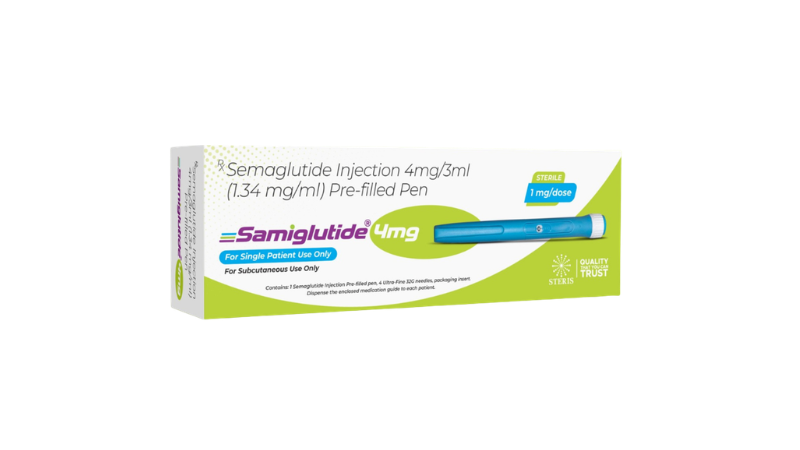
How Semaglutide Injection 4 mg Helps Control Blood Sugar

