


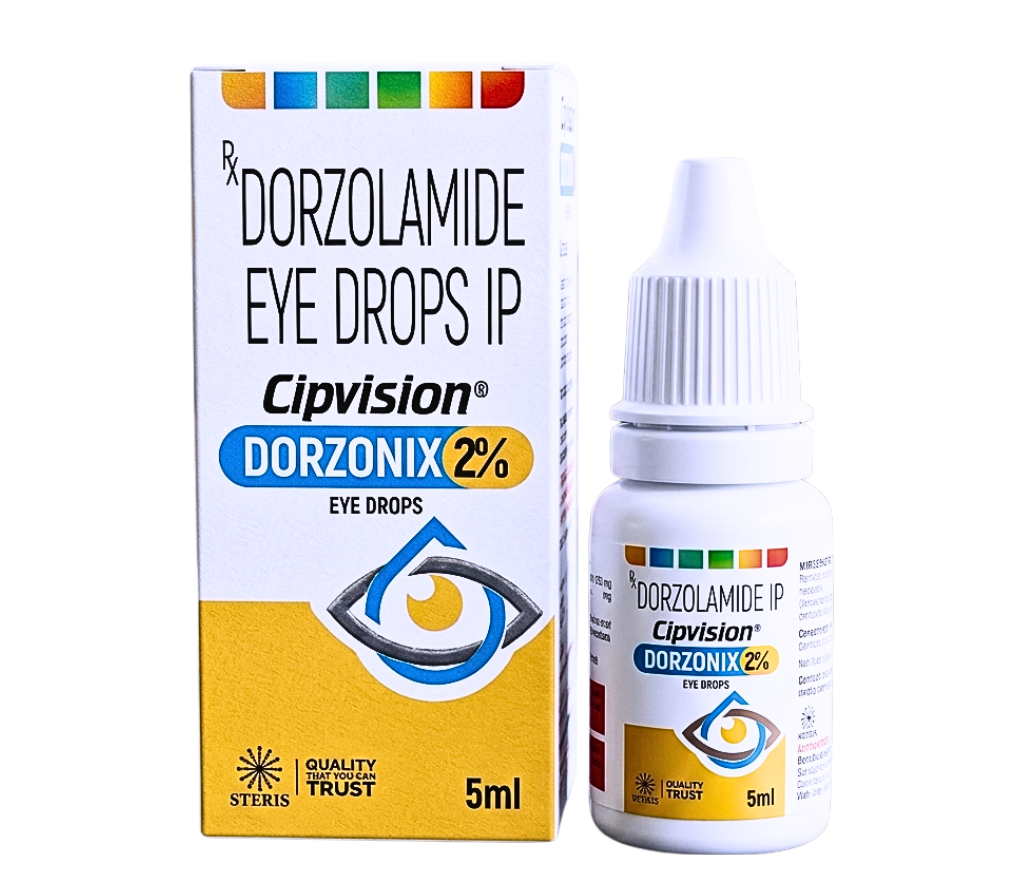
CIPVISION DORZONIX 2%
 Item requires a valid prescription
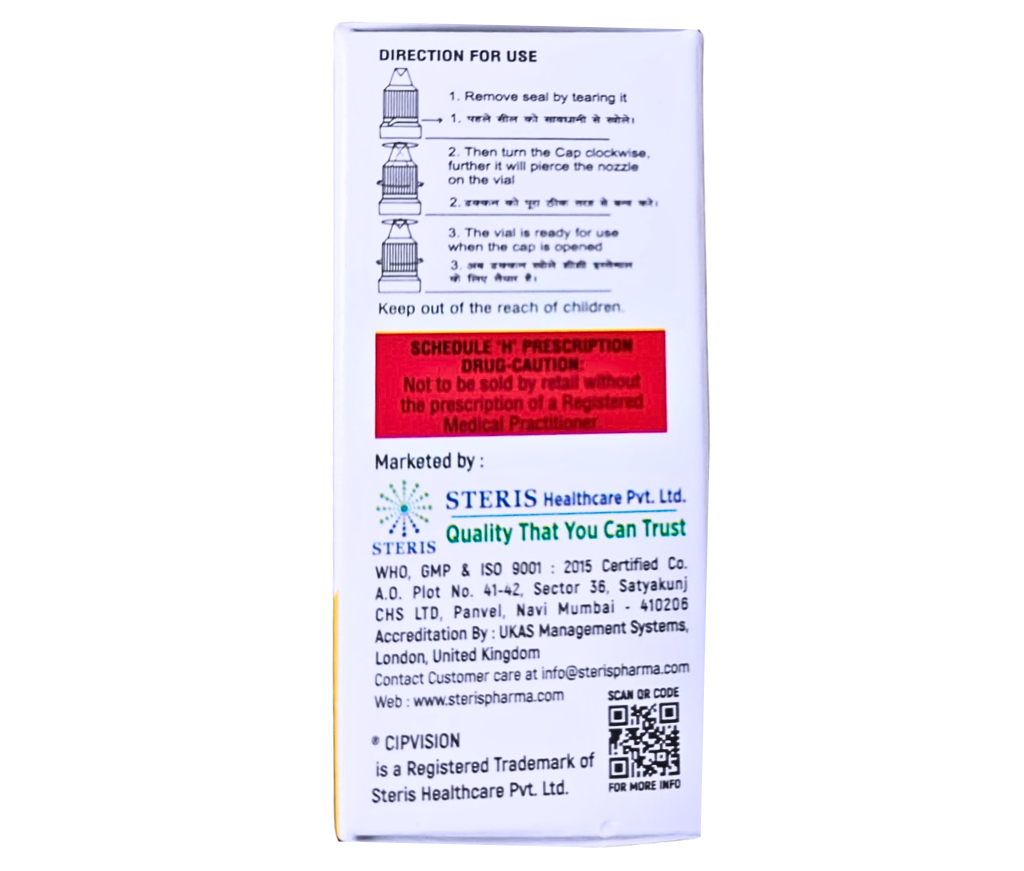
Manufactured By Steris Healthcare Pvt Ltd
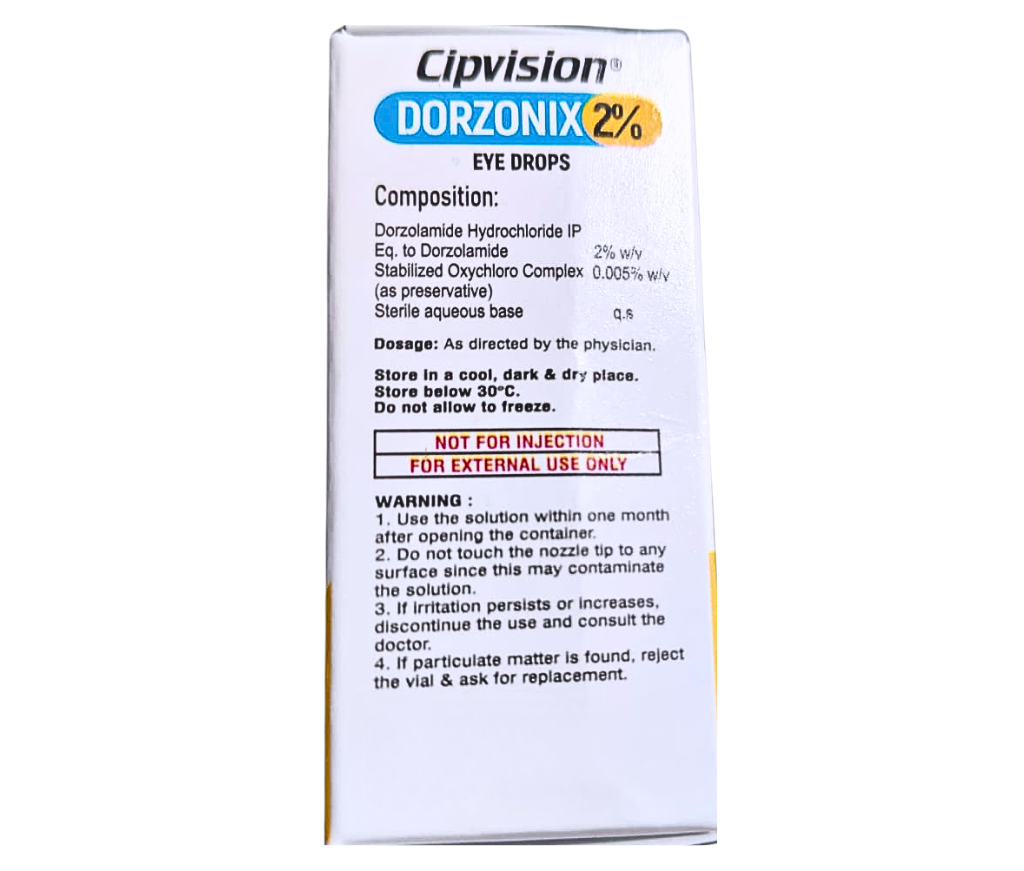
Composition Dorzolamide Eye Drops IP
Rs 245.00
MRP Rs 350.00
(30% OFF)
Includes all taxes
Package SIZE
( For 5 ml )

100% Authentic
Products

Free
Shipping*

Products
Return Policy
Description:
Dorzolamide Eye Drops IP are prescription ophthalmic medicines primarily used to lower increased pressure inside the eye (intraocular pressure, or IOP). They are commonly prescribed for conditions such as open-angle glaucoma and ocular hypertension, where controlling eye pressure is important for protecting the optic nerve and reducing the risk of progressive vision damage.
Dorzolamide is a carbonic anhydrase inhibitor. By reducing the production of aqueous humor—the fluid inside the front part of the eye—it helps lower intraocular pressure. The current prescribing information for dorzolamide hydrochloride ophthalmic solution 2% lists elevated IOP associated with ocular hypertension and open-angle glaucoma as its indications.
What Are Dorzolamide Eye Drops IP?
Dorzolamide eye drops contain dorzolamide hydrochloride, a topical carbonic anhydrase inhibitor.
A commonly marketed formulation is dorzolamide hydrochloride 2% w/v, equivalent to 20 mg/mL. The medicine is applied directly to the affected eye to reduce the formation of aqueous humor and consequently lower intraocular pressure.
The term “IP” refers to the Indian Pharmacopoeia, the official standards for medicines and pharmaceutical substances in India. When a product is described as dorzolamide eye drops IP, the designation indicates compliance with applicable Indian Pharmacopoeia standards where specified by the product/manufacturer.
Dorzolamide is not an antibiotic and is not primarily intended to treat eye redness, infection, allergy, or ordinary dry eye.
Dorzolamide Eye Drops Uses
The main use of dorzolamide eye drops relates to controlling elevated intraocular pressure.
1. Open-angle glaucoma
Dorzolamide is indicated for reducing elevated IOP in patients with open-angle glaucoma. The medicine lowers fluid production inside the eye, helping reduce pressure that can damage the optic nerve over time.
Glaucoma is often called a “silent” eye disease because significant damage can occur before a person notices obvious symptoms. For this reason, prescribed pressure-lowering treatment should generally be used consistently even when the eyes feel normal.
2. Ocular hypertension
Dorzolamide can also be prescribed for ocular hypertension, a condition in which eye pressure is higher than normal without necessarily having established glaucoma damage.
Reducing pressure may be part of a doctor's strategy for lowering the patient's future risk of optic-nerve damage.
3. Combination glaucoma therapy
Some patients require more than one medicine to achieve their target IOP. Dorzolamide may therefore be prescribed alongside other pressure-lowering ophthalmic medicines.
The official labeling allows dorzolamide ophthalmic solution to be used with other topical ophthalmic medicines that lower IOP. When multiple eye drops are used, they should generally be separated by at least five minutes according to the product labeling.
How Does Dorzolamide Work?
Dorzolamide inhibits the enzyme carbonic anhydrase II in the ciliary processes of the eye.
Carbonic anhydrase participates in the production of aqueous humor. By inhibiting this enzyme, dorzolamide reduces aqueous-humor formation. Less fluid production can result in a reduction in intraocular pressure.
In simple terms:
Dorzolamide → reduces aqueous humor production → lowers eye pressure → helps control pressure associated with glaucoma or ocular hypertension.
It is important to understand that dorzolamide controls eye pressure but does not reverse established optic-nerve damage caused by glaucoma. Consistent pressure control and regular ophthalmic examinations remain important.
Key Benefits of Dorzolamide Eye Drops IP
Helps lower intraocular pressure
The primary therapeutic benefit of dorzolamide is reducing elevated IOP in appropriate patients.
Supports glaucoma management
By lowering eye pressure, dorzolamide can form part of a glaucoma-management plan designed to reduce the risk of further optic-nerve damage.
Useful in ocular hypertension
Dorzolamide may be prescribed when IOP is elevated and the ophthalmologist believes pressure reduction is appropriate.
Can be combined with other glaucoma medicines
Patients who need additional pressure reduction may receive dorzolamide together with other ophthalmic treatments. The exact combination should be selected by an ophthalmologist.
Available in multiple Indian brands
The Indian market currently contains several dorzolamide 2% products, giving patients and healthcare providers multiple branded and generic purchasing options. Current listings include products such as Dorzina, Dorz, Dorfort, Dorzox, and other formulations.
Dorzolamide Eye Drops IP Dosage
For the commonly labeled dorzolamide hydrochloride ophthalmic solution 2%, the standard adult dosage is one drop in the affected eye(s) three times daily when used as monotherapy. The official labeling also describes its use with other topical IOP-lowering medicines.
However, patients should not change the dosage themselves.
Your ophthalmologist may adjust the treatment schedule based on:
- Eye-pressure readings
- Type and severity of glaucoma
- Other glaucoma medicines being used
- Kidney function and medical history
- Tolerability
- Response to treatment
If you miss a dose, follow your doctor's or product-label instructions rather than doubling the next dose.
How to Use Dorzolamide Eye Drops Correctly
Proper administration helps reduce contamination and improves the reliability of treatment.
- Wash your hands thoroughly.
- Check the bottle and make sure the seal is intact when first opened.
- Remove contact lenses if instructed by the product labeling.
- Tilt your head back and gently pull down the lower eyelid.
- Place the prescribed drop into the eye.
- Do not allow the bottle tip to touch your eye, eyelashes, or skin.
- Close your eye gently after applying the drop.
- Replace the cap securely.
- If you use another ophthalmic medicine, follow the prescribed interval between drops.
Some current Indian product information advises removing contact lenses and waiting at least 15 minutes before replacing them. Always follow the instructions for your specific formulation.
Dorzolamide Eye Drops Side Effects
Like other medicines, dorzolamide can cause side effects.
The most frequently reported effects with dorzolamide ophthalmic solution include:
- Burning or stinging after application
- Eye discomfort
- Bitter taste in the mouth
- Eye irritation
- Temporary blurred vision
- Headache
- Nausea
- Tiredness
The official prescribing information reports ocular burning, stinging, or discomfort immediately after administration in approximately one-third of patients and a bitter taste in approximately one-quarter of patients in clinical studies. Superficial punctate keratitis and ocular allergic reactions were also reported.
When should you contact an ophthalmologist?
Contact your eye doctor if you experience persistent or severe:
- Eye pain
- Vision changes
- Significant eye redness
- Swelling
- Severe irritation
- Allergic symptoms
- Corneal discomfort
Urgent medical attention is appropriate for severe allergic reactions or significant sudden changes in vision.
Dorzolamide and Sulfonamide Allergy
Patients with a history of serious allergy to sulfonamide medicines should tell their doctor before using dorzolamide.
Dorzolamide is a sulfonamide-related carbonic anhydrase inhibitor, and the official labeling contains a warning concerning sulfonamide hypersensitivity.
This does not mean that every person who has ever experienced a reaction to a sulfonamide-containing medicine will automatically be unable to use dorzolamide. The doctor should assess the type and severity of the previous reaction before prescribing it.
Dorzolamide and Kidney Problems
Patients with severe renal impairment should inform their ophthalmologist before using dorzolamide.
Although the medicine is administered to the eye, dorzolamide can be systemically absorbed. Medical history is therefore important when deciding whether the medicine is appropriate.
Do not start or stop glaucoma treatment based solely on information found online.
What should buyers check before purchasing?
Before purchasing dorzolamide eye drops, verify:
- Active ingredient: dorzolamide/dorzolamide hydrochloride
- Strength, such as 2% w/v
- Pack size
- Preservative-free or preserved formulation
- Manufacturer
- Batch number
- Expiry date
- Storage conditions
- Prescription requirements
- MRP and current selling price
- Seller/pharmacy authenticity
Do not substitute a different concentration or combination product without medical advice.
Dorzolamide Eye Drops vs. Dorzolamide + Timolol
Dorzolamide is also available in combination products containing timolol, another medicine used to reduce intraocular pressure.
Dorzolamide alone may be appropriate for some patients, while a dorzolamide-timolol combination may be selected when additional IOP lowering is required.
These products are not interchangeable. Timolol can have important systemic effects and may not be suitable for people with certain respiratory or cardiovascular conditions.
The correct choice should therefore be based on the ophthalmologist's assessment and target eye pressure.
Buyer-Intent Guide: How to Choose Dorzolamide Eye Drops IP
If you are searching for dorzolamide eye drops IP online or from a pharmacy, the best product is not necessarily the cheapest one.
Match the medicine to the prescription first.
If your prescription says dorzolamide 2%, verify the concentration and formulation before purchasing.
If your prescription says dorzolamide + timolol, do not buy dorzolamide alone.
If your doctor prescribed a specific preservative-free formulation, do not automatically replace it with a preserved formulation.
For hospitals, pharmacies, and pharmaceutical distributors, additional purchasing checks can include:
- Manufacturer credentials
- Product documentation
- Batch traceability
- Sterility information
- Regulatory compliance
- Minimum order quantity
- Current wholesale quotation
- Storage requirements
- Delivery conditions
Why Regular Glaucoma Treatment Matters
Glaucoma treatment is generally about preventing or slowing further damage, not simply making the eyes feel better.
A person with glaucoma may have no noticeable symptoms while elevated pressure or other risk factors continue to threaten the optic nerve. Therefore, stopping dorzolamide because your eyes “feel fine” can be risky.
Regular eye-pressure checks and follow-up examinations allow the ophthalmologist to determine whether the treatment is achieving the desired target IOP.
Conclusion
Dorzolamide Eye Drops IP are prescription medicines primarily used to lower elevated intraocular pressure in open-angle glaucoma and ocular hypertension. Dorzolamide belongs to the carbonic anhydrase inhibitor class and works by reducing aqueous-humor production inside the eye.
The key benefits are effective IOP reduction, support for long-term glaucoma management, and the ability to use dorzolamide as part of combination treatment when additional pressure control is required.
The most common side effects include temporary burning or stinging, eye discomfort, and a bitter taste, while more significant ocular allergic reactions and corneal effects can occur.
For Indian buyers, current market prices vary considerably between brands. Recent online listings for 5 mL dorzolamide 2% products range from around ₹164 to ₹546, depending on the brand and seller.
The most important buyer-intent point is to purchase the exact strength and formulation prescribed by your ophthalmologist rather than selecting a product solely because it is cheaper. Dorzolamide is a prescription glaucoma medicine and should be used consistently according to professional medical advice.
Frequently Asked Questions
1. What are Dorzolamide Eye Drops IP used for?
Dorzolamide eye drops are primarily used to reduce increased eye pressure in open-angle glaucoma and ocular hypertension. They reduce the production of aqueous humor, which helps lower intraocular pressure.
2. How does dorzolamide eye drop work?
Dorzolamide is a carbonic anhydrase inhibitor. It reduces aqueous-humor production in the eye, which lowers intraocular pressure and helps manage pressure-related risk in glaucoma.
3. What are the common side effects of dorzolamide eye drops?
The most common side effects include burning, stinging, or discomfort after application and a bitter taste. Eye irritation, blurred vision, headache, nausea, and ocular allergic reactions may also occur.
4. How many times a day should dorzolamide eye drops be used?
For the commonly labeled 2% dorzolamide ophthalmic solution, the standard monotherapy dosage is one drop in the affected eye three times daily. Your own prescription takes priority because dosing may differ according to the treatment plan.
5. Can dorzolamide eye drops cure glaucoma?
Dorzolamide helps control elevated eye pressure; it does not reverse established optic-nerve damage. Consistent treatment and regular ophthalmologist follow-up are important for long-term glaucoma management.
6. What is the price of dorzolamide eye drops in India?
The price depends on the brand, formulation, and pharmacy. Recent online listings show examples from approximately ₹164 to ₹546 for some 5 mL dorzolamide 2% products. Actual prices can change, so buyers should verify the current price before ordering. 1
7. Can I use dorzolamide with other glaucoma eye drops?
Yes, dorzolamide may be prescribed with other IOP-lowering eye medicines when additional pressure reduction is needed. Different ophthalmic medicines should generally be separated by at least five minutes, according to the product labeling.
8. Can I wear contact lenses while using dorzolamide eye drops?
Contact-lens instructions depend on the formulation. Some current product information advises removing lenses before administration and waiting at least 15 minutes before putting them back in. Check the label of your specific product.
9. Is dorzolamide the same as dorzolamide plus timolol?
No. Dorzolamide alone contains one active ingredient. Dorzolamide-timolol products contain an additional beta-blocker, timolol, and are used when combined pressure-lowering treatment is appropriate.
10. Can I stop dorzolamide eye drops when my eye pressure becomes normal?
Do not stop glaucoma medication without speaking with your ophthalmologist. A normal pressure reading may be the result of the medicine working. Stopping treatment without medical guidance can allow eye pressure to rise again.