


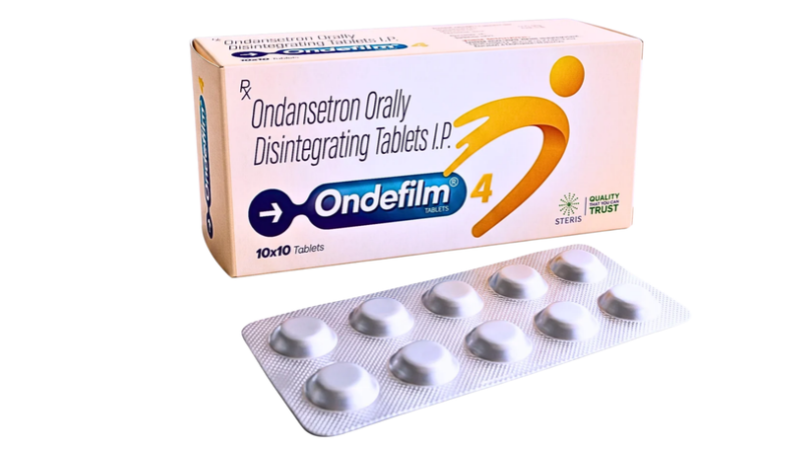


Ondansetron 4 mg Orally Disintegrating Tablets IP – Uses, Benefits & Precautions
Nov 14, 2026
What Is Ondansetron 4 mg Orally Disintegrating Tablets IP Used For?
ONDEFILM 4 by Steris Healthcare is an antiemetic medicine containing Ondansetron 4 mg in an orally disintegrating tablet formulation. It is used to help prevent nausea and vomiting associated with certain medical treatments and clinical conditions when prescribed by a qualified healthcare professional.
Ondansetron belongs to a group of medicines known as selective serotonin 5-HT3 receptor antagonists. It works by blocking serotonin receptors involved in transmitting signals that trigger nausea and vomiting.
Nausea and vomiting can occur during chemotherapy, radiotherapy, and after surgical procedures. These symptoms may affect appetite, hydration, nutritional intake, and overall patient comfort. Appropriate antiemetic treatment plays an important role in supportive patient care.
The orally disintegrating tablet (ODT) formulation is designed to dissolve on the tongue without requiring the patient to swallow a conventional tablet whole. This makes ONDEFILM 4 a convenient dosage form for patients who experience difficulty swallowing tablets or feel nauseated when taking oral medicines.
Ondansetron is an established medicine for preventing chemotherapy-induced nausea and vomiting, radiotherapy-induced nausea and vomiting, and postoperative nausea and vomiting, depending on the clinical situation and approved product information.
Why Is Ondansetron 4 mg Orally Disintegrating Tablets IP Important?
Nausea and vomiting are common symptoms associated with several medical conditions and treatments. When persistent, these symptoms can interfere with daily activities, hydration, nutritional intake, and treatment adherence.
Patients receiving chemotherapy or radiotherapy may experience treatment-related nausea and vomiting. Similarly, postoperative nausea and vomiting can occur following anaesthesia and surgery.
Ondansetron helps control these symptoms by blocking serotonin-mediated signalling involved in activating the vomiting reflex.
The importance of ONDEFILM 4 includes:
- Helping prevent nausea and vomiting associated with selected cancer treatments.
- Supporting postoperative nausea and vomiting prevention.
- Providing an orally disintegrating dosage form.
- Offering a convenient administration option for patients who have difficulty swallowing conventional tablets.
- Providing an established antiemetic ingredient supported by clinical evidence.
- Supporting patient comfort as part of an appropriate treatment plan.
The choice of Ondansetron strength and dosage schedule depends on the patient's age, diagnosis, treatment protocol, medical history, and healthcare professional's assessment.
Key Benefits of ONDEFILM 4 – Ondansetron 4 mg Orally Disintegrating Tablets IP
ONDEFILM 4 combines the established antiemetic activity of Ondansetron with the convenience of an orally disintegrating tablet formulation.
What Are the Benefits of Ondansetron 4 mg Orally Disintegrating Tablets IP?
1. Helps Prevent Nausea and Vomiting
Ondansetron blocks serotonin 5-HT3 receptors involved in the vomiting reflex. It is used to prevent nausea and vomiting associated with specific medical treatments.
2. Supports Chemotherapy-Related Symptom Management
Ondansetron is an established antiemetic used in chemotherapy-induced nausea and vomiting prevention regimens. Depending on the chemotherapy protocol, it may be prescribed alone or with other antiemetic medicines.
3. Supports Postoperative Nausea Management
Ondansetron may be prescribed to prevent or manage nausea and vomiting associated with surgical procedures and anaesthesia.
4. Convenient Mouth-Dissolving Formulation
The orally disintegrating tablet dissolves on the tongue, making it a practical option for patients who have difficulty swallowing conventional tablets.
5. Established Antiemetic Mechanism
Ondansetron has a well-characterised mechanism involving selective serotonin 5-HT3 receptor blockade.
6. Supports Patient Comfort
By helping control nausea and vomiting, appropriate Ondansetron treatment may improve patient comfort and support normal hydration and nutritional intake.
7. Useful in Supportive Healthcare
Ondansetron is commonly included in supportive care protocols for patients undergoing chemotherapy and selected surgical procedures.
Mechanism of Action of Ondansetron 4 mg Orally Disintegrating Tablets IP
Ondansetron is a selective serotonin 5-HT3 receptor antagonist.
Serotonin, also known as 5-hydroxytryptamine (5-HT), is a neurotransmitter involved in several physiological processes, including the regulation of nausea and vomiting.
During certain medical treatments, particularly chemotherapy, serotonin may be released from the gastrointestinal tract. This serotonin stimulates 5-HT3 receptors on vagal nerve endings and in areas of the central nervous system involved in the vomiting reflex.
Ondansetron selectively blocks these receptors, helping reduce the transmission of signals responsible for triggering nausea and vomiting.
Its mechanism of action includes:
- Blocking serotonin-mediated stimulation of peripheral 5-HT3 receptors.
- Reducing signalling through vagal afferent pathways.
- Inhibiting serotonin-mediated activation of central vomiting pathways.
- Helping prevent the triggering of nausea and vomiting.
The ODT formulation dissolves on the tongue, after which the medicine is swallowed with saliva and absorbed through the gastrointestinal tract. It should not be described as necessarily being absorbed directly through the oral mucosa.
Indications, Efficacy and Clinical Evidence of ONDEFILM 4
Indications
Depending on the approved product labelling and clinical assessment, Ondansetron may be prescribed for:
- Prevention of chemotherapy-induced nausea and vomiting.
- Prevention of radiotherapy-induced nausea and vomiting.
- Prevention of postoperative nausea and vomiting.
- Other selected clinical situations where a healthcare professional considers Ondansetron appropriate.
The exact approved indications for ONDEFILM 4 should be confirmed against its authorised product documentation.
Efficacy
Ondansetron has established antiemetic efficacy in preventing nausea and vomiting associated with chemotherapy, radiotherapy, and surgery.
Its effectiveness depends on several factors, including:
- The cause and severity of nausea and vomiting.
- The type of chemotherapy or radiotherapy.
- The patient's medical history.
- The timing of administration.
- Other medicines included in the treatment protocol.
- Adherence to the prescribed treatment schedule.
For highly emetogenic chemotherapy, Ondansetron may be included as part of a combination antiemetic regimen rather than being used as the only preventive medicine.
Clinical Evidence
Ondansetron has been evaluated in clinical trials and is included in established antiemetic treatment guidelines.
Clinical evidence supports the use of Ondansetron as a 5-HT3 receptor antagonist for preventing nausea and vomiting associated with selected chemotherapy regimens, radiotherapy, and postoperative care.
Its clinical role is supported by established prescribing information and professional antiemetic guidelines.
These findings relate to the active ingredient Ondansetron and should not be interpreted as proof of brand-specific clinical superiority for ONDEFILM 4.
Side Effects
Like other prescription medicines, ONDEFILM 4 may cause side effects in some individuals.
The likelihood of side effects depends on the prescribed dose, treatment duration, underlying medical condition, and individual response.
Common Side Effects
Possible side effects of Ondansetron include:
- Headache.
- Constipation.
- Diarrhoea.
- Dizziness.
- Fatigue.
- Flushing or a feeling of warmth.
- Mild gastrointestinal discomfort.
Patients should inform their healthcare professional if these symptoms persist or become troublesome.
Serious Side Effects of ONDEFILM 4
Although uncommon, certain adverse reactions require immediate medical attention.
1. QT Interval Prolongation
Ondansetron can prolong the QT interval on an electrocardiogram. In susceptible individuals, this may increase the risk of serious abnormal heart rhythms, including torsades de pointes.
2. Serious Allergic Reactions
Symptoms may include facial swelling, throat swelling, difficulty breathing, severe rash, or hives. Emergency medical attention is necessary.
3. Serotonin Syndrome
Rarely, serotonin syndrome may occur, particularly when Ondansetron is used with other serotonergic medicines. Symptoms can include agitation, confusion, sweating, tremors, muscle stiffness, and fever.
4. Cardiac Arrhythmias
Patients with underlying heart rhythm problems or electrolyte abnormalities may have an increased risk of cardiac complications.
5. Severe Constipation or Bowel Obstruction
Severe abdominal pain, swelling, or persistent constipation should be medically evaluated, particularly in patients with underlying gastrointestinal conditions.
Available Substitutes for Ondansetron 4 mg Orally Disintegrating Tablets IP
Alternative antiemetic medicines may be considered according to the cause of nausea and vomiting, patient history, treatment protocol, and contraindications.
Possible alternatives include:
- Granisetron – another selective 5-HT3 receptor antagonist.
- Palonosetron – a longer-acting 5-HT3 receptor antagonist.
- Metoclopramide – a dopamine receptor antagonist and prokinetic medicine.
- Domperidone – a dopamine receptor antagonist.
- Aprepitant – a neurokinin-1 receptor antagonist.
These medicines have different mechanisms, indications, precautions, and dosing schedules. They are not automatically interchangeable with Ondansetron.
The most appropriate substitute for ONDEFILM 4 should be selected by a qualified healthcare professional.
Dosage Guidelines for ONDEFILM 4
ONDEFILM 4 contains Ondansetron 4 mg and should be taken strictly according to the prescribing doctor's instructions.
The appropriate dose depends on the clinical indication, patient age, treatment protocol, liver function, and other individual factors.
Different medical situations require different Ondansetron dosing schedules. For example, prevention of chemotherapy-induced nausea and vomiting may involve a different regimen from postoperative nausea and vomiting prevention.
General Administration Instructions
- Follow the prescribed dose and administration schedule.
- Check the packaging instructions before removing the tablet.
- Ensure your hands are dry when handling the tablet.
- Remove the tablet carefully from its packaging.
- Place the tablet on the tongue and allow it to dissolve.
- Swallow the dissolved medicine with saliva.
- Do not exceed the prescribed dose.
- Consult your doctor if vomiting occurs after taking the medicine.
Do not independently repeat a dose or change the treatment schedule.
Important: Ondansetron 4 mg represents the strength of the tablet. It is not a universal recommended dose for every patient or indication.
Precautions & Warnings for Ondansetron 4 mg Orally Disintegrating Tablets IP
1. Heart Rhythm Conditions: Patients with congenital long QT syndrome should generally avoid Ondansetron. Patients with other cardiac rhythm conditions may require additional monitoring.
2. Electrolyte Imbalance: Low potassium or magnesium levels can increase the risk of QT prolongation. These abnormalities should be corrected when necessary.
3. Liver Disease: Patients with severe hepatic impairment may require dose limitations. Follow the prescribing information and medical advice.
4. Drug Interactions: Inform your doctor about antidepressants, serotonergic medicines, antiarrhythmics, and other medicines that may affect cardiac rhythm or interact with Ondansetron.
5. Pregnancy and Breastfeeding: Consult a qualified healthcare professional before using Ondansetron during pregnancy or breastfeeding.
6. Bowel Conditions: Ondansetron may slow intestinal transit. Patients with signs of bowel obstruction or severe constipation require careful medical assessment.
7. Allergies: Avoid the medicine if you have a known allergy to Ondansetron or any formulation ingredient.
8. Children and Older Adults: Dosing and safety considerations may differ according to age, body weight, medical condition, and treatment indication.
9. Correct ODT Administration: Follow the package instructions for removing and administering the orally disintegrating tablet.
Why Consider ONDEFILM 4 by Steris Healthcare?
ONDEFILM 4 is the brand name provided for the Ondansetron 4 mg orally disintegrating tablet formulation under Steris Healthcare.
For hospitals, pharmacists, doctors, pharmaceutical distributors, and healthcare buyers researching Ondansetron 4 mg ODT, product evaluation should include:
- Verified active ingredient and strength.
- Orally disintegrating tablet formulation.
- Manufacturing and quality documentation.
- Product registration and regulatory compliance.
- Batch number and expiry date.
- Packaging integrity and storage instructions.
- Availability through authorised pharmaceutical distribution channels.
For product availability, distribution information, and commercial enquiries, contact Steris Healthcare through its verified business channels.
Conclusion
ONDEFILM 4 by Steris Healthcare contains Ondansetron 4 mg in an orally disintegrating tablet formulation. Ondansetron is an established antiemetic medicine used to prevent nausea and vomiting associated with selected chemotherapy, radiotherapy, and surgical procedures.
Its mechanism of action involves selectively blocking serotonin 5-HT3 receptors, helping reduce the signalling pathways responsible for triggering the vomiting reflex.
The orally disintegrating formulation offers a convenient administration option for patients who have difficulty swallowing conventional tablets. However, correct dosing, awareness of possible drug interactions, and appropriate patient selection remain essential for safe use.
Patients with heart rhythm disorders, electrolyte abnormalities, liver disease, or a history of allergic reactions should inform their healthcare professional before taking this medicine.
ONDEFILM 4 should only be used according to a qualified healthcare professional's prescription and approved product instructions. For verified composition, product details, and commercial enquiries, consult Steris Healthcare's authorised product documentation and distribution channels.
Frequently Asked Questions
1. What is ONDEFILM 4 used for?
ONDEFILM 4 contains Ondansetron 4 mg and is an antiemetic medicine used to prevent nausea and vomiting associated with selected chemotherapy, radiotherapy, and surgical procedures.
2. What is the composition of ONDEFILM 4?
The stated active ingredient in ONDEFILM 4 is Ondansetron 4 mg in an orally disintegrating tablet formulation. Refer to the approved product packaging for complete formulation details.
3. What are the benefits of Ondansetron 4 mg ODT?
Ondansetron helps prevent nausea and vomiting by blocking serotonin 5-HT3 receptors. Its orally disintegrating formulation also provides a convenient administration option for people who have difficulty swallowing conventional tablets.
4. How does Ondansetron 4 mg work?
Ondansetron selectively blocks serotonin 5-HT3 receptors in peripheral and central pathways involved in the vomiting reflex, helping reduce nausea and vomiting.
5. What are the common side effects of ONDEFILM 4?
Common side effects include headache, constipation, diarrhoea, dizziness, fatigue, and flushing. Consult a healthcare professional if symptoms persist or worsen.
6. Can ONDEFILM 4 be used for vomiting?
Ondansetron is used to prevent and manage nausea and vomiting associated with specific medical treatments and clinical situations. The underlying cause of vomiting should be assessed before using the medicine.
7. How should Ondansetron 4 mg orally disintegrating tablets be taken?
Place the ODT on the tongue and allow it to dissolve. Follow the product packaging and doctor's instructions for administration and dosing.
8. Is ONDEFILM 4 useful for chemotherapy-induced nausea?
Yes. Ondansetron is an established medicine for preventing chemotherapy-induced nausea and vomiting. It may be prescribed alone or as part of a combination antiemetic regimen depending on the chemotherapy protocol.
9. Can Ondansetron 4 mg cause heart-related side effects?
Yes. Ondansetron can prolong the QT interval and may increase the risk of serious abnormal heart rhythms in susceptible individuals. Patients with cardiac conditions should discuss their medical history with their doctor.
10. Are there substitutes for ONDEFILM 4?
Possible alternatives include Granisetron, Palonosetron, Metoclopramide, Domperidone, and Aprepitant. The appropriate alternative depends on the underlying condition and medical assessment.
11. Can ONDEFILM 4 be taken during pregnancy?
Pregnant women should consult their doctor before taking Ondansetron. The potential benefits and risks should be evaluated individually.
12. Who manufactures or markets ONDEFILM 4?
ONDEFILM 4 is the brand name provided for this product under Steris Healthcare. Check the actual packaging and official company documentation to verify the manufacturer and marketer details.
13. Where can I find ONDEFILM 4 by Steris Healthcare?
For product availability, composition details, and commercial enquiries, contact Steris Healthcare through its verified business channels or authorised pharmaceutical distributors.
Recent Post
Ondansetron 8 mg Orally Disintegrating Tablets IP : Uses, Benefits, Dosage & Side Effects

Tropicamide and Phenylephrine Hydrochloride Ophthalmic Solution: Uses, Benefits & Precautions
Levofloxacin Ophthalmic Solution 1.5% w/v – Uses, Benefits & Side Effects

Myo-inositol, Vitamin D3 & Folic Acid Sachets: Uses, Benefits & Side Effects
Warfarin Sodium IP 1mg Uses, Benefits, Side Effects & Precautions
Warfarin Sodium IP 2mg Helps Prevent Blood Clots

Warfarin Sodium IP 3mg Uses, Benefits, Side Effects & Dosage Guide
Warfarin Sodium IP 5mg Uses, Benefits, Dosage, Side Effects

Mecobalamin Injection 1500 mcg/ml Uses, Benefits, Dosage & Side Effects
Methylcobalmine 1500mcg+Ala+Etc Capsules Uses, Benefits, Dosage, Side Effects

