


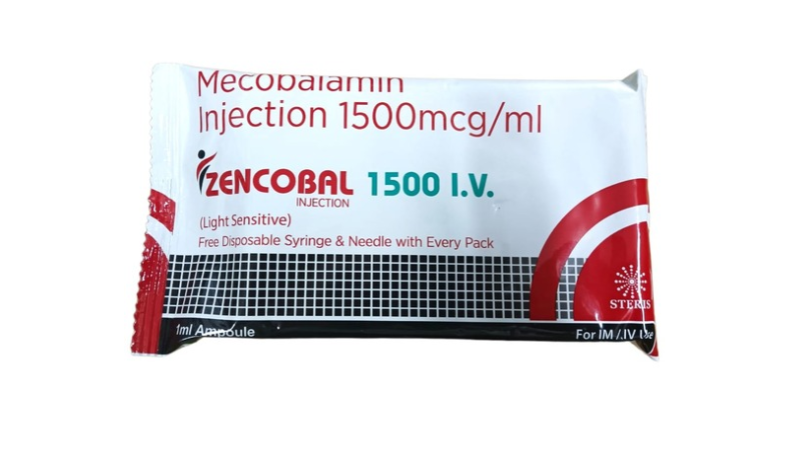


Mecobalamin Injection 1500 mcg/ml Uses, Benefits, Dosage & Side Effects
Nov 13, 2026
What Is Mecobalamin Injection 1500 mcg/ml Used For?
Mecobalamin Injection 1500 mcg/ml, marketed under the brand name ZENCOBAL 1500 I.V., is a vitamin B12-based injectable formulation associated with Steris Healthcare. Mecobalamin, also known as methylcobalamin, is an active coenzyme form of vitamin B12 that plays an essential role in maintaining normal neurological function, red blood cell production and cellular metabolism.
Vitamin B12 is an essential water-soluble vitamin required for several important physiological activities. A deficiency may affect the nervous system, blood-forming tissues and normal metabolic processes. Inadequate vitamin B12 levels can occur because of poor dietary intake, impaired gastrointestinal absorption, certain medical conditions or long-term use of particular medications.
Mecobalamin injection may be prescribed by healthcare professionals for patients requiring vitamin B12 replacement, particularly when injectable treatment is considered clinically appropriate.
ZENCOBAL 1500 I.V. contains 1500 mcg of mecobalamin per ml. Its concentration makes it important to follow the prescribed volume and administration instructions carefully.
The injection should be administered only through the route specified in its approved product information by an appropriately trained healthcare professional.
Why Is Mecobalamin Injection 1500 mcg/ml Important?
Vitamin B12 plays a significant role in maintaining the normal functioning of the nervous system and blood-forming tissues.
Its importance becomes particularly evident when the body develops a vitamin B12 deficiency. Low vitamin B12 levels can interfere with the formation of healthy red blood cells and normal neurological functioning.
Mecobalamin is particularly relevant because it participates in important biochemical reactions involving vitamin B12-dependent enzymes.
The major physiological functions include:
- Supporting normal nerve cell metabolism.
- Contributing to myelin maintenance.
- Supporting DNA synthesis.
- Helping maintain normal red blood cell formation.
- Participating in homocysteine metabolism.
- Supporting healthy neurological function.
Injectable vitamin B12 replacement may be considered when oral supplementation is unsuitable, absorption is impaired or the patient's clinical condition requires an injectable treatment approach.
According to NICE Guideline NG239, vitamin B12 replacement is effective for most people with confirmed deficiency. The appropriate route and treatment duration depend on the underlying cause, symptoms and clinical circumstances.
Key Benefits of Mecobalamin Injection 1500 mcg/ml
ZENCOBAL 1500 I.V. provides mecobalamin, which contributes to several essential biological functions.
Its potential clinical benefits are primarily related to correcting or preventing inadequate vitamin B12 levels when supplementation is indicated.
What Are the Benefits of Mecobalamin Injection?
1. Supports Neurological Health
Mecobalamin contributes to normal neurological function and the maintenance of healthy nerve tissue. Vitamin B12 deficiency can affect peripheral nerves and the spinal cord.
Appropriate replacement may help improve neurological manifestations associated with vitamin B12 deficiency.
2. Supports Myelin Formation and Maintenance
Myelin is the protective covering surrounding nerve fibres. It helps nerve signals travel efficiently throughout the nervous system.
Vitamin B12-dependent metabolic pathways are important for maintaining normal myelin function.
3. Helps Correct Vitamin B12 Deficiency
Mecobalamin provides vitamin B12 in a biologically active form. Injectable replacement can be useful when a healthcare professional determines that an injectable route is appropriate.
4. Supports Red Blood Cell Production
Vitamin B12 is essential for normal red blood cell development. Deficiency may cause megaloblastic anaemia, which can result in fatigue, weakness and reduced physical capacity.
5. Supports DNA Synthesis
Mecobalamin participates in vitamin B12-dependent metabolic reactions necessary for normal DNA synthesis and cellular division.
6. Helps Maintain Homocysteine Metabolism
Mecobalamin acts as a cofactor for methionine synthase, an enzyme involved in converting homocysteine into methionine.
This biochemical reaction supports normal methylation and metabolic processes.
7. Supports Overall Cellular Metabolism
Adequate vitamin B12 levels are important for several metabolic activities. Correcting a deficiency helps restore normal vitamin B12-dependent biochemical functions.
These benefits should not be interpreted as guaranteed results or as evidence that mecobalamin treats every type of nerve disorder.
Indications of Mecobalamin Injection 1500 mcg/ml
Mecobalamin injection is primarily associated with vitamin B12 replacement and the management of deficiency when injectable treatment is appropriate.
Potential clinical indications include:
- Confirmed vitamin B12 deficiency.
- Vitamin B12 deficiency associated with inadequate dietary intake.
- Vitamin B12 deficiency caused by gastrointestinal malabsorption.
- Deficiency associated with certain gastrointestinal surgeries.
- Vitamin B12 deficiency associated with autoimmune gastritis.
- Neurological manifestations associated with vitamin B12 deficiency.
- Vitamin B12 deficiency associated with megaloblastic anaemia.
The decision to use injectable mecobalamin depends on clinical evaluation and the approved indications of the particular product.
Important: Diabetic neuropathy, peripheral neuropathy and other neurological disorders have multiple possible causes. Mecobalamin should not automatically be considered a standalone treatment for these conditions without establishing whether vitamin B12 deficiency is present.
Mechanism of Action of Mecobalamin Injection 1500 mcg/ml
Mecobalamin is a coenzyme form of vitamin B12. It participates in important biochemical reactions that support normal neurological and cellular functions.
Its mechanism of action involves several important pathways.
1. Methionine Synthase Activation
Mecobalamin functions as a cofactor for methionine synthase, an enzyme responsible for converting homocysteine into methionine.
This reaction is essential for normal methylation processes and the maintenance of cellular metabolism.
2. Supports Myelin Metabolism
Vitamin B12 contributes to metabolic processes involved in maintaining the myelin sheath surrounding nerve fibres.
When vitamin B12 levels are inadequate, neurological abnormalities may develop. Correcting deficiency supports normal neurological metabolism.
3. Supports DNA Synthesis
Mecobalamin participates in the folate-dependent metabolic pathway required for normal DNA synthesis.
This process is important for the formation and maturation of red blood cells.
4. Supports Neurological Function
Vitamin B12-dependent biochemical reactions are essential for healthy nervous system activity.
Adequate vitamin B12 levels contribute to normal nerve metabolism and neurological functioning.
5. Supports Homocysteine Regulation
By participating in the methionine synthase reaction, mecobalamin helps convert homocysteine into methionine.
This pathway is important for normal amino acid and methylation metabolism.
Efficacy and Clinical Evidence of Mecobalamin Injection 1500 mcg/ml
The clinical efficacy of mecobalamin is primarily supported by its established physiological role in vitamin B12 metabolism and the recognised effectiveness of vitamin B12 replacement in people with deficiency.
Vitamin B12 deficiency is a clinically important condition because it can affect both the haematological and neurological systems.
Clinical guidelines recommend identifying the underlying cause of deficiency and selecting an appropriate replacement strategy.
According to NICE Guideline NG239, published in March 2024:
- Vitamin B12 replacement is effective for most people with confirmed deficiency.
- Injectable treatment may be appropriate for certain malabsorption-related conditions.
- People with autoimmune gastritis or certain gastrointestinal surgeries may require lifelong intramuscular replacement.
- Treatment response should be reviewed according to symptoms and clinical progress.
The evidence for mecobalamin in peripheral neuropathy has also been investigated in clinical studies. However, results vary according to the cause of neuropathy, treatment duration, dosage and study design.
It is important to distinguish between evidence supporting vitamin B12 deficiency correction and evidence supporting treatment of neuropathy in people without deficiency.
Clinical investigations may include:
- Serum vitamin B12.
- Complete blood count (CBC).
- Mean corpuscular volume (MCV).
- Methylmalonic acid (MMA), when indicated.
- Homocysteine testing, when indicated.
- Additional investigations to identify the cause of deficiency.
Treatment should be monitored by a qualified healthcare professional.
Side Effects of Mecobalamin Injection 1500 mcg/ml
Mecobalamin is generally well tolerated when used appropriately. However, like other injectable vitamin preparations, it may cause unwanted effects in some individuals.
Possible adverse effects include:
- Pain at the injection site.
- Redness or swelling at the injection site.
- Nausea.
- Vomiting.
- Diarrhoea.
- Headache.
- Skin rash.
- Itching.
- Hypersensitivity reactions.
The frequency and severity of adverse effects may vary depending on individual sensitivity, the formulation and the administration route.
Patients should inform their healthcare professional about any unusual symptoms following administration.
Serious Side Effects of Mecobalamin Injection
Serious allergic reactions are uncommon but require immediate medical attention.
Warning signs may include:
- Difficulty breathing.
- Swelling of the face, lips, tongue or throat.
- Severe skin rash.
- Widespread itching with swelling.
- Sudden dizziness or fainting.
- Symptoms suggesting anaphylaxis.
If these symptoms occur, seek emergency medical assistance.
Do not receive another dose until the suspected reaction has been medically evaluated.
Available Substitutes for Mecobalamin Injection 1500 mcg/ml
Several vitamin B12 injectable formulations are available in the pharmaceutical market.
Potential alternatives include:
1. Mecobalamin Injection
Other brands containing mecobalamin may be considered when the concentration, formulation and approved administration route are equivalent.
2. Methylcobalamin Injection
Methylcobalamin is another commonly used name for mecobalamin. Products should be compared by their actual strength and approved formulation.
3. Hydroxocobalamin Injection
Hydroxocobalamin is another form of vitamin B12 used for deficiency replacement in several healthcare systems.
4. Cyanocobalamin Injection
Cyanocobalamin is a different vitamin B12 form that may be available as an injectable replacement option in some markets.
5. Oral Vitamin B12 Formulations
Oral mecobalamin, cyanocobalamin or other suitable vitamin B12 preparations may be considered in selected patients.
A substitute should not be selected solely because it contains vitamin B12. Differences in concentration, chemical form, route and dosing schedule can affect treatment suitability.
Always consult a doctor or pharmacist before changing from ZENCOBAL 1500 I.V. to another formulation.
Dosage Guidelines for Mecobalamin Injection 1500 mcg/ml
The dosage of ZENCOBAL 1500 I.V. must be determined by a qualified healthcare professional according to the patient's condition, vitamin B12 status and approved product instructions.
The stated concentration is:
1500 mcg/ml = 1.5 mg/ml.
The prescribed volume must be calculated from the actual concentration and administered only through the approved route.
There is no universal injection schedule suitable for every patient with vitamin B12 deficiency.
Dosage considerations include:
- Severity of vitamin B12 deficiency.
- Presence of neurological symptoms.
- Underlying cause of deficiency.
- Ability to absorb oral vitamin B12.
- Patient's medical history.
- Response to previous treatment.
- Approved prescribing information for the specific injection.
Administration precautions:
- Use only under medical supervision.
- Follow the prescribed route and dose.
- Do not self-administer unless specifically trained and authorised.
- Do not inject more than the prescribed amount.
- Inspect the solution and packaging before administration.
- Follow appropriate sterile injection practices.
- Never use a damaged, expired or compromised ampoule.
The brand suffix I.V. should not be used as the sole basis for choosing an intravenous route. Confirm the approved route on the actual product label.
Precautions & Warnings for ZENCOBAL 1500 I.V.
Before receiving Mecobalamin Injection 1500 mcg/ml, patients should inform their healthcare professional about their medical history and current medicines.
1. Known Allergies
Inform your doctor about any previous allergic reaction to vitamin B12 preparations or formulation ingredients.
2. Pregnancy and Breastfeeding
Use during pregnancy and breastfeeding should be guided by a healthcare professional after evaluating the need for supplementation and the complete formulation.
3. Existing Medical Conditions
Patients with kidney disorders, liver disorders, anaemia or neurological conditions should disclose their medical history before treatment.
4. Medication History
Inform your doctor about prescription medicines, non-prescription products and vitamin supplements being used.
5. Correct Diagnosis
Numbness, tingling, weakness and fatigue may occur because of several different conditions. Proper investigations are important before starting treatment.
6. Long-Term Treatment
Some causes of vitamin B12 deficiency require ongoing or lifelong replacement. Treatment duration should be decided according to the underlying cause and clinical response.
7. Blood Testing
Where clinically appropriate, collect diagnostic blood samples before starting vitamin B12 replacement, because supplementation can affect subsequent test interpretation. However, treatment should not be delayed in patients with suspected megaloblastic anaemia and neurological symptoms when urgent replacement is indicated.
How Is ZENCOBAL 1500 I.V. Administered?
ZENCOBAL 1500 I.V. should be administered by a trained healthcare professional using the route specified in the approved product information.
The general administration process includes:
- Confirming the patient's prescription.
- Checking the product name, strength and expiry date.
- Inspecting the ampoule for damage or visible abnormalities.
- Maintaining appropriate aseptic precautions.
- Using the approved administration technique.
- Monitoring the patient for possible adverse reactions.
Patients should not attempt to administer the injection independently without appropriate medical training and authorisation.
Storage Guidelines for Mecobalamin Injection 1500 mcg/ml
Proper storage helps maintain the quality of injectable preparations.
General recommendations include:
- Store according to the temperature instructions printed on the packaging.
- Protect the product from direct sunlight when instructed.
- Avoid excessive heat.
- Keep the ampoule in its original packaging until use.
- Keep medicines away from children.
- Do not use expired or damaged ampoules.
- Follow the package insert regarding handling and disposal.
Always follow the manufacturer's approved storage instructions rather than assuming that all mecobalamin injections require identical conditions.
Conclusion
Mecobalamin Injection 1500 mcg/ml is a vitamin B12-based injectable formulation associated with the brand ZENCOBAL 1500 I.V. by Steris Healthcare.
Mecobalamin plays an essential role in normal neurological metabolism, myelin maintenance, DNA synthesis, red blood cell formation and homocysteine metabolism.
Injectable vitamin B12 replacement can be an important treatment option for individuals with confirmed deficiency, particularly when oral supplementation is unsuitable or malabsorption is present.
The clinical indications, efficacy, dosage, safety and administration route of ZENCOBAL 1500 I.V. should always be assessed according to the approved product documentation and individual patient requirements.
For healthcare professionals, correct diagnosis, appropriate patient selection, accurate administration and clinical follow-up are essential to achieving effective vitamin B12 replacement.
ZENCOBAL 1500 I.V. – Mecobalamin Injection 1500 mcg/ml should be used only under appropriate medical supervision and according to its approved prescribing information.
Frequently Asked Questions
1. What is ZENCOBAL 1500 I.V. used for?
ZENCOBAL 1500 I.V. is a mecobalamin-based injectable formulation intended for vitamin B12 replacement when prescribed by a healthcare professional.
2. What is the composition of ZENCOBAL 1500 I.V.?
The stated composition is Mecobalamin 1500 mcg/ml, equivalent to 1.5 mg per ml.
3. What is mecobalamin injection 1500 mcg/ml?
It is an injectable preparation containing 1500 micrograms of mecobalamin in each millilitre of solution.
4. What are the main benefits of mecobalamin injection?
Mecobalamin supports vitamin B12-dependent metabolic functions, including normal nerve function, myelin maintenance, DNA synthesis and red blood cell production.
5. Is mecobalamin injection used for vitamin B12 deficiency?
Yes. Injectable vitamin B12 replacement may be prescribed for confirmed vitamin B12 deficiency when an injectable treatment approach is appropriate.
6. Can mecobalamin injection help with nerve damage?
It may help improve neurological manifestations associated with vitamin B12 deficiency. It is not a guaranteed treatment for nerve damage caused by other conditions.
7. Is ZENCOBAL 1500 I.V. used for peripheral neuropathy?
Mecobalamin has been studied in peripheral neuropathy, particularly in relation to vitamin B12 deficiency. Treatment depends on identifying the underlying cause.
8. What is the mechanism of action of mecobalamin?
Mecobalamin acts as a cofactor for methionine synthase, supporting homocysteine metabolism, methylation reactions and normal cellular metabolism.
9. What is the recommended dosage of ZENCOBAL 1500 I.V.?
The dose and administration frequency must be determined by a doctor according to the patient's condition and approved product instructions.
10. Is mecobalamin injection administered intravenously or intramuscularly?
The approved administration route varies by product. Check the specific product insert and packaging. The brand suffix alone does not establish the approved route.
11. What are the side effects of mecobalamin injection?
Possible side effects include injection-site discomfort, redness, nausea, vomiting, diarrhoea, headache, itching and skin rash.
12. Is mecobalamin injection safe for long-term use?
It can be used for ongoing vitamin B12 replacement when medically indicated. Duration depends on the cause of deficiency and the patient's response to treatment.
13. Can mecobalamin injection help treat vitamin B12 deficiency anaemia?
Vitamin B12 replacement can help treat anaemia caused by vitamin B12 deficiency. The underlying cause should also be investigated and managed.
14. How long does mecobalamin injection take to work?
The response varies according to the severity of deficiency, the underlying cause and individual health. Blood-related and neurological improvements may occur over different time periods.
15. Can diabetic patients receive mecobalamin injection?
Diabetic patients may receive vitamin B12 replacement when clinically indicated. A doctor should evaluate the patient's medical history and other medicines before treatment.
16. Can mecobalamin injection be given during pregnancy?
It may be prescribed when vitamin B12 replacement is necessary during pregnancy. The decision and dosage should be determined by a healthcare professional.
17. What is the difference between mecobalamin and methylcobalamin?
Mecobalamin and methylcobalamin are two names for the same active coenzyme form of vitamin B12.
18. What are the substitutes for ZENCOBAL 1500 I.V.?
Potential alternatives include other mecobalamin injections, methylcobalamin formulations, hydroxocobalamin injections and cyanocobalamin injections. Their strengths and administration routes must be checked before substitution.
19. Can mecobalamin injection improve numbness and tingling?
It may help when these symptoms are caused by vitamin B12 deficiency. Other neurological causes require separate diagnosis and treatment.
20. Is mecobalamin injection better than oral vitamin B12?
Neither route is universally better. Injectable treatment may be preferred in certain cases of malabsorption, severe deficiency or neurological involvement, while oral treatment may be appropriate for other patients.
21. What tests are used to diagnose vitamin B12 deficiency?
Common investigations include serum vitamin B12, complete blood count and, when indicated, methylmalonic acid and homocysteine testing.
22. Can mecobalamin injection be taken with other medicines?
Potential interactions and treatment considerations depend on the patient's medicines and health conditions. Always disclose all medicines and supplements to the prescribing doctor.
23. Does mecobalamin help maintain myelin?
Vitamin B12 is important for normal myelin-related metabolic processes and neurological health. Correcting deficiency can support the recovery of deficiency-related neurological abnormalities.
24. Who manufactures ZENCOBAL 1500 I.V.?
ZENCOBAL 1500 I.V. has been supplied with the company association Steris Healthcare. Confirm the actual manufacturer and marketer from the current product packaging.
25. Where can I find the composition and dosage details of ZENCOBAL 1500 I.V.?
Refer to the approved product carton, ampoule label and package insert. These documents provide the authoritative information about composition, strength, administration route, storage and dosage instructions.
Recent Post
Methylcobalmine 1500mcg+Ala+Etc Capsules Uses, Benefits, Dosage, Side Effects
ZENCOBAL D3 Uses, Benefits & Price in India | Steris Healthcare
Zinc Acetate 50mg: Uses, Benefits, Dosage, Side Effects
Ziprasidone Capsules 40mg Uses, Benefits, Dosage, Side Effects
Zoledronic Acid 5 mg: Uses, Benefits & Dosage – Steris Healthcare
Paracetamol Diclofenac Sodium and Chlorzoxazone Tablets: Uses, Benefits, Dosage, Side Effects
Cefuroxime Axetil 500mg + Potassium Clavulanate 125mg Uses, Benefits & Side Effects
Cefuroxime Axetil 500mg Uses, Benefits, Side Effects
Cefuroxime Axetil 250mg Uses, Benefits, Side Effects
Clindamycin 300mg Uses, Benefits, Side Effects

