


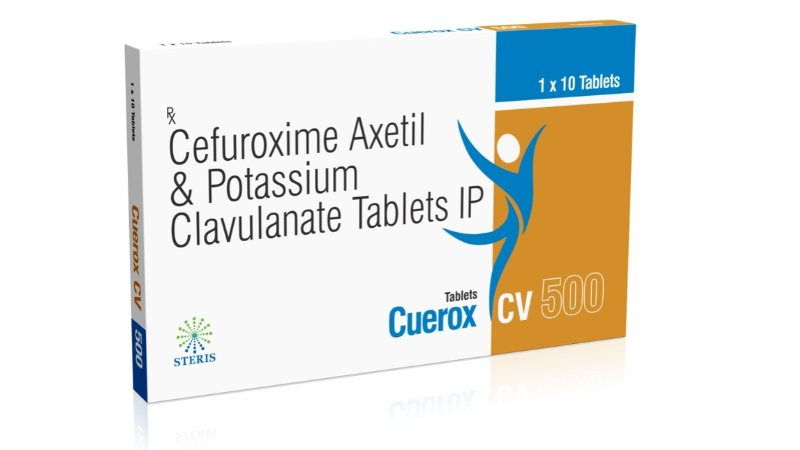


Cefuroxime Axetil 500mg + Potassium Clavulanate 125mg Uses, Benefits & Side Effects
Nov 12, 2026
What Is Cefuroxime Axetil 500mg + Potassium Clavulanate 125mg Used For?
CUEROX CV 500 by Steris Healthcare is a combination antibiotic containing Cefuroxime Axetil 500mg and Potassium Clavulanate 125mg. It combines a second-generation cephalosporin antibiotic with a beta-lactamase inhibitor to help manage selected bacterial infections caused by susceptible microorganisms.
Cefuroxime is the primary antibacterial component. It works by interfering with bacterial cell-wall formation, which weakens susceptible bacteria and ultimately causes their death.
Potassium clavulanate provides additional antibacterial support by inhibiting certain beta-lactamase enzymes produced by bacteria. These enzymes can break down some beta-lactam antibiotics and contribute to antibiotic resistance. By inhibiting susceptible beta-lactamases, clavulanic acid can help protect cefuroxime from enzymatic degradation.
The combination may be considered by healthcare professionals for selected respiratory tract, ear, nose and throat, urinary tract, and skin and soft-tissue bacterial infections, depending on the approved product information and bacterial susceptibility.
For patients, pharmacists, doctors and pharmaceutical distributors researching CUEROX CV 500 in India, understanding the composition, indications, mechanism of action and safety profile is essential.
Importantly, this is a prescription antibiotic combination. It should only be used when a qualified healthcare professional determines that the combination is appropriate. It does not treat viral infections such as common colds, influenza or viral fever.
Why Is Cefuroxime Axetil 500mg + Potassium Clavulanate 125mg Important?
The combination of cefuroxime and clavulanic acid brings together two ingredients with complementary pharmacological roles.
Cefuroxime acts directly against susceptible bacteria, while clavulanic acid inhibits certain beta-lactamase enzymes that can otherwise reduce the activity of beta-lactam antibiotics.
Some bacteria produce beta-lactamase enzymes as a defence mechanism. These enzymes can break down susceptible antibiotics before they effectively interfere with bacterial cell-wall synthesis.
Clavulanic acid helps address this particular resistance mechanism by binding to and inhibiting susceptible beta-lactamases.
Key characteristics of this combination
- Combines a second-generation cephalosporin antibiotic with a beta-lactamase inhibitor.
- Cefuroxime interferes with bacterial cell-wall synthesis.
- Clavulanic acid inhibits certain beta-lactamase enzymes.
- May provide activity against selected susceptible beta-lactamase-producing bacteria.
- Has established pharmaceutical applications in selected bacterial infections.
- Offers an oral treatment option for patients for whom this combination is clinically appropriate.
However, clavulanate does not overcome every type of bacterial resistance. Altered penicillin-binding proteins, reduced drug penetration, efflux mechanisms and other resistance pathways may still make bacteria resistant.
Therefore, the combination should be selected based on clinical diagnosis, local susceptibility patterns and professional prescribing guidance.
Key Benefits of CUEROX CV 500 – Cefuroxime Axetil 500mg + Potassium Clavulanate 125mg
CUEROX CV 500 combines two active pharmaceutical ingredients that perform different but complementary functions.
Its potential clinical usefulness comes from the antibacterial activity of cefuroxime and the beta-lactamase-inhibiting action of clavulanic acid.
What Are the Benefits of Cefuroxime Axetil 500mg + Potassium Clavulanate 125mg?
1. Complementary antibacterial action
Cefuroxime directly interferes with bacterial cell-wall formation, while clavulanic acid helps inhibit certain bacterial enzymes responsible for antibiotic degradation.
2. Activity against selected beta-lactamase-producing bacteria
Clavulanic acid can protect cefuroxime from certain beta-lactamase enzymes, potentially improving activity against susceptible organisms that produce these enzymes.
3. Applications in selected respiratory infections
The combination has prescribing applications for certain bacterial respiratory infections, depending on the product's approved indications and the susceptibility of the causative bacteria.
4. Applications in ENT infections
Selected bacterial infections involving the ears, nose and throat may be considered for treatment when the combination is clinically appropriate.
5. Potential use in selected urinary tract infections
Cefuroxime-clavulanate formulations have established product-specific applications in certain urinary tract infections caused by susceptible organisms.
6. Selected skin and soft-tissue infections
The combination may be considered for certain bacterial skin infections when the causative organisms are susceptible.
7. Oral administration
The tablet formulation provides an oral treatment option for appropriate patients who do not require injectable antibiotic therapy.
These benefits describe the pharmacological and clinical potential of the ingredients. They should not be interpreted as a guarantee of treatment success or as evidence that the combination is suitable for every bacterial infection.
Indications of CUEROX CV 500
Cefuroxime Axetil 500mg + Potassium Clavulanate 125mg may be prescribed for selected bacterial infections when supported by the product's approved prescribing information and clinical assessment.
Potential clinical applications of cefuroxime-clavulanate formulations include:
- Selected upper respiratory tract infections.
- Certain bacterial sinus infections.
- Selected cases of bacterial tonsillitis and pharyngitis.
- Acute bacterial ear infections.
- Selected lower respiratory tract infections.
- Certain bacterial skin and soft-tissue infections.
- Selected urinary tract infections.
The exact indications depend on the approved product information, the organism involved and local treatment guidelines.
INDICATIONS, EFFICACY AND CLINICAL EVIDENCE
The clinical usefulness of CUEROX CV 500 depends on the antibacterial susceptibility of the causative microorganism and the appropriateness of the combination for the infection being treated.
The evidence for cefuroxime and clavulanic acid comes from pharmacological research, microbiological studies, clinical evaluations and prescribing information for specific formulations.
The following factors influence treatment efficacy.
1. Bacterial susceptibility
The combination may be useful against selected susceptible organisms, including some bacteria that produce beta-lactamase enzymes.
However, not every beta-lactamase-producing organism will respond. Some resistance mechanisms are not overcome by clavulanic acid.
2. Infection site
Successful treatment depends on achieving appropriate concentrations of the active ingredients at the infection site.
3. Appropriate diagnosis
A cough, sore throat, fever or sinus discomfort does not automatically indicate a bacterial infection. Viral infections do not benefit from antibiotic treatment.
4. Correct prescribing
The appropriate strength, frequency and treatment duration depend on the infection, patient characteristics and product-specific prescribing information.
5. Local antimicrobial resistance
Bacterial resistance patterns vary across India and internationally. Culture and susceptibility testing may help guide treatment, particularly in severe, recurrent or non-responsive infections.
What does clinical evidence tell us?
Cefuroxime axetil has established clinical evidence for certain bacterial infections, including selected respiratory and ENT infections.
Clavulanic acid has a recognised role in inhibiting susceptible beta-lactamase enzymes.
However, evidence for cefuroxime alone should not automatically be treated as proof of superior efficacy for the cefuroxime-clavulanate combination. The combination requires evidence appropriate to its formulation and indication.
Healthcare professionals should refer to approved prescribing information and relevant clinical guidelines when evaluating its use.
Mechanism of Action of Cefuroxime Axetil 500mg + Potassium Clavulanate 125mg
Understanding the mechanism of action of CUEROX CV 500 helps explain how its two ingredients work together.
1. Mechanism of action of Cefuroxime Axetil
Cefuroxime axetil is an oral prodrug that is converted into active cefuroxime following absorption.
Active cefuroxime:
- Reaches susceptible bacterial cells.
- Binds to penicillin-binding proteins (PBPs).
- Interferes with peptidoglycan cross-linking.
- Inhibits bacterial cell-wall synthesis.
- Weakens the structural integrity of the bacterial cell wall.
- Causes susceptible bacteria to undergo cell death.
Cefuroxime is therefore classified as a bactericidal antibiotic.
2. Mechanism of action of Potassium Clavulanate
Potassium clavulanate provides clavulanic acid, a beta-lactamase inhibitor.
Certain bacteria produce beta-lactamase enzymes that can destroy beta-lactam antibiotics.
Clavulanic acid works by binding to and inhibiting susceptible beta-lactamase enzymes, helping prevent them from breaking down cefuroxime.
3. How do both ingredients work together?
The two ingredients have complementary functions:
- Cefuroxime attacks susceptible bacteria by interfering with cell-wall synthesis.
- Clavulanic acid inhibits certain beta-lactamase enzymes.
- This can preserve cefuroxime activity against selected beta-lactamase-producing organisms.
The combination does not eliminate all forms of antibiotic resistance. Bacterial susceptibility remains essential for successful treatment.
Side Effects
Like other prescription antibiotics, CUEROX CV 500 may cause side effects. Their occurrence and severity vary between individuals.
Commonly reported or possible adverse effects include:
- Nausea.
- Vomiting.
- Diarrhoea or loose stools.
- Abdominal discomfort.
- Indigestion.
- Headache.
- Dizziness.
- Skin rash.
- Itching.
- Fungal overgrowth, including oral or vaginal candidiasis.
Gastrointestinal symptoms may occur because antibiotics can affect the normal balance of microorganisms in the digestive tract.
Patients should contact their healthcare professional if symptoms are persistent, severe or concerning.
Serious Side Effects
1. Severe allergic reactions
Patients with a history of allergy to cephalosporins, penicillins or other beta-lactam antibiotics may be at risk of hypersensitivity reactions.
Warning signs include facial swelling, throat tightness, widespread hives and difficulty breathing.
Emergency medical attention is necessary if these symptoms occur.
2. Severe antibiotic-associated diarrhoea
Antibiotic use can occasionally lead to Clostridioides difficile-associated diarrhoea.
Persistent, severe or bloody diarrhoea requires prompt medical assessment.
3. Severe skin reactions
Rarely, serious skin reactions such as Stevens-Johnson syndrome may occur.
Blistering, skin peeling or painful sores involving the mouth and eyes require urgent medical attention.
4. Liver-related reactions
Changes in liver function tests have been reported with beta-lactam antibiotics. Symptoms such as jaundice, dark urine or unusual fatigue require medical evaluation.
5. Blood-related abnormalities
Changes in blood cell counts, including reduced white blood cells or platelets, have been reported with cephalosporin antibiotics.
6. Neurological reactions
Seizures and other neurological reactions are uncommon but may occur, particularly when cefuroxime accumulates in patients with impaired kidney function.
7. Kidney-related complications
Patients with reduced kidney function may require dosage adjustment to prevent excessive drug exposure.
Seek immediate medical attention if a severe allergic reaction or other serious adverse effect is suspected.
Available Substitutes for CUEROX CV 500
Patients and pharmaceutical buyers searching for substitutes for CUEROX CV 500 should distinguish between an equivalent generic product and a different antibiotic.
1. Equivalent cefuroxime-clavulanate brands
Other quality-assured products containing the same active ingredients and equivalent strengths may be considered when prescribed by a healthcare professional.
The product label should be checked to confirm the actual cefuroxime and clavulanic-acid equivalents.
2. Other cephalosporin antibiotics
Depending on the infection and bacterial susceptibility, doctors may consider alternative cephalosporins.
3. Penicillin-class antibiotic combinations
Certain penicillin-class antibiotics combined with beta-lactamase inhibitors may be appropriate alternatives for particular infections.
4. Other antibiotic classes
Macrolides, tetracyclines or other antibiotics may be considered when clinically indicated and supported by susceptibility findings or treatment guidelines.
Important substitute guidance
Different antibiotic combinations are not automatically interchangeable.
Before choosing an alternative, the healthcare professional should consider:
- Infection type and severity.
- Culture and sensitivity reports.
- Previous antibiotic allergies.
- Kidney and liver function.
- Pregnancy and breastfeeding status.
- Patient age.
- Existing medical conditions.
- Potential drug interactions.
- Local antibiotic resistance patterns.
Patients should never replace CUEROX CV 500 with another antibiotic without medical advice.
Dosage Guidelines for CUEROX CV 500
The appropriate dosage of Cefuroxime Axetil 500mg + Potassium Clavulanate 125mg depends on the infection being treated, its severity, patient age, kidney function and the approved prescribing information.
The stated composition does not establish a universal dosage schedule for every patient.
A qualified doctor should determine the dose, frequency and treatment duration.
General administration guidelines
- Use the medicine only with a valid medical prescription.
- Follow the exact schedule provided by the doctor.
- Oral cefuroxime axetil tablets are generally taken after food to improve absorption.
- Swallow the tablet according to its product instructions.
- Do not crush or alter the formulation unless a pharmacist confirms that it is appropriate.
- Do not double a dose after missing one.
- Do not share prescription antibiotics.
- Do not use leftover antibiotics for another infection.
- Follow the prescribed treatment plan unless the doctor advises otherwise.
What happens if a dose is missed?
Follow the missed-dose instructions given by the doctor or pharmacist. If it is nearly time for the next dose, ask a healthcare professional rather than taking an extra dose.
Can the medicine be stopped when symptoms improve?
Do not independently change the prescribed treatment duration. Contact the doctor if symptoms improve, worsen, persist or adverse reactions develop.
Precautions and Warnings
Before using CUEROX CV 500, patients should disclose their medical history and current medicines to their healthcare professional.
1. Previous antibiotic allergies
Inform the doctor about previous allergic reactions to cefuroxime, cephalosporins, penicillins or other beta-lactam antibiotics.
2. Kidney impairment
Cefuroxime is eliminated primarily through the kidneys. Patients with reduced kidney function may require dosage adjustment.
3. Liver-related conditions
Patients with a history of liver disease should inform their doctor before starting treatment.
4. Pregnancy
Use during pregnancy should be based on an individual assessment of clinical need and potential risks by a qualified healthcare professional.
5. Breastfeeding
Small amounts of cefuroxime may enter breast milk. Medical advice is recommended before using the combination while breastfeeding.
6. Gastrointestinal conditions
Patients with a history of colitis or antibiotic-associated diarrhoea should inform their doctor.
7. Drug interactions
Probenecid can increase cefuroxime exposure. Medicines that reduce stomach acidity may affect cefuroxime axetil absorption.
Patients should disclose prescription medicines, antacids, supplements and other antibiotics.
8. Antibiotic resistance
Unnecessary antibiotic use may encourage bacterial resistance. The combination should only be used when clinically appropriate.
9. Severe diarrhoea
Persistent or bloody diarrhoea requires medical assessment, including consideration of C. difficile infection.
10. Repeated antibiotic exposure
Repeated or unnecessary courses may increase the risk of adverse effects and antimicrobial resistance.
Storage and Handling Instructions
For maintaining product quality, patients and pharmacists should follow the storage instructions printed on the original CUEROX CV 500 packaging.
General storage recommendations include:
- Keep the medicine protected from excessive heat and moisture.
- Store tablets in their original packaging.
- Follow the manufacturer's specified temperature conditions.
- Keep medicines away from children.
- Check the expiry date before use.
- Avoid using damaged or improperly stored products.
- Dispose of expired medicines through appropriate pharmaceutical disposal channels.
CUEROX CV 500 by Steris Healthcare – Pharmaceutical Product Information
CUEROX CV 500 is listed by Steris Healthcare Pvt. Ltd. with the composition Cefuroxime Axetil 500mg + Potassium Clavulanate 125mg. The product listing identifies it as a tablet and provides product and packaging information.
For pharmacists, doctors, distributors and pharmaceutical buyers in India, accurate product information is essential when researching antibiotic formulations.
Product information to verify before purchasing or distributing
- Brand name: CUEROX CV 500.
- Composition: Cefuroxime Axetil 500mg + Potassium Clavulanate 125mg.
- Dosage form: Tablet.
- Company attribution: Steris Healthcare Pvt. Ltd.
- Packaging details: Verify against the current product pack.
- Manufacturing and marketing details: Confirm from approved documentation.
- Regulatory and licensing information: Verify with the relevant documentation.
Why choose accurate pharmaceutical product communication?
A reliable pharmaceutical product page should explain the active ingredients, therapeutic class, mechanism of action, clinical indications, possible side effects, precautions and appropriate prescription requirements.
For Steris Healthcare-related pharmaceutical communication, accurate product details and evidence-based educational content help build trust among healthcare professionals, distributors and pharmaceutical buyers.
Commercial descriptions should avoid unsupported claims about guaranteed efficacy, superiority over other antibiotics or effectiveness against all resistant bacteria.
Frequently Asked Questions
1. What is CUEROX CV 500 used for?
CUEROX CV 500 is a combination antibiotic containing cefuroxime axetil 500mg and potassium clavulanate 125mg. It may be prescribed for selected bacterial infections caused by susceptible organisms.
2. What is the composition of CUEROX CV 500?
Each stated tablet contains Cefuroxime Axetil 500mg and Potassium Clavulanate 125mg. The exact clavulanic-acid equivalent should be checked on the approved product label.
3. Is CUEROX CV 500 an antibiotic?
Yes. It combines a second-generation cephalosporin antibiotic with a beta-lactamase inhibitor.
4. What is the role of potassium clavulanate in CUEROX CV 500?
Potassium clavulanate provides clavulanic acid, which inhibits certain beta-lactamase enzymes and can help protect cefuroxime from enzymatic degradation.
5. What is the mechanism of action of Cefuroxime Axetil?
Cefuroxime inhibits bacterial cell-wall synthesis by binding to penicillin-binding proteins, ultimately causing susceptible bacteria to die.
6. What is the mechanism of action of clavulanic acid?
Clavulanic acid inhibits certain beta-lactamase enzymes produced by bacteria, helping preserve the activity of susceptible beta-lactam antibiotics.
7. Is CUEROX CV 500 used for respiratory infections?
Cefuroxime-clavulanate formulations may be prescribed for selected bacterial respiratory infections when the combination is appropriate and the bacteria are susceptible.
8. Can CUEROX CV 500 be used for throat infections?
It may be considered for selected bacterial throat infections according to the approved product information and clinical assessment.
9. Is CUEROX CV 500 used for sinus infections?
Certain cefuroxime-clavulanate formulations have applications in bacterial sinus infections. The treating doctor must determine whether this particular product is appropriate.
10. Can CUEROX CV 500 treat urinary tract infections?
It may be considered for selected urinary tract infections caused by susceptible bacteria when supported by clinical assessment and prescribing information.
11. What are the common side effects of CUEROX CV 500?
Possible side effects include nausea, vomiting, diarrhoea, abdominal discomfort, headache, dizziness and skin rash.
12. Can CUEROX CV 500 cause loose motions?
Yes. Diarrhoea or loose stools may occur. Severe, persistent or bloody diarrhoea requires prompt medical assessment.
13. Is CUEROX CV 500 safe during pregnancy?
Use during pregnancy should be decided by a qualified healthcare professional after evaluating the clinical need and potential risks.
14. Can breastfeeding mothers use CUEROX CV 500?
A doctor should assess its suitability during breastfeeding because cefuroxime may enter breast milk in small amounts.
15. Can children take CUEROX CV 500?
The suitability of this strength and combination for children depends on age, weight, infection and approved prescribing information. It should not be given to children without medical advice.
16. Should CUEROX CV 500 be taken after food?
Oral cefuroxime axetil tablets are generally recommended after food to improve absorption. Follow the specific product instructions.
17. What are the substitutes for CUEROX CV 500?
Equivalent quality-assured cefuroxime-clavulanate products may be considered if their ingredients and strengths match. Other antibiotics require a separate clinical decision.
18. Is CUEROX CV 500 effective against resistant bacteria?
Clavulanic acid can inhibit certain beta-lactamase enzymes, but it does not overcome every bacterial resistance mechanism. Effectiveness depends on susceptibility testing and the organism involved.
19. Can CUEROX CV 500 treat viral fever?
No. Antibiotics do not treat viral fever, influenza or the common cold.
20. What precautions should be taken before using CUEROX CV 500?
Inform the doctor about antibiotic allergies, kidney or liver disease, pregnancy, breastfeeding, gastrointestinal conditions and all other medicines being used.
21. Can CUEROX CV 500 be taken with other medicines?
Some medicines may interact with its ingredients. Patients should disclose all prescription medicines, antacids and supplements to their doctor or pharmacist.
22. Does CUEROX CV 500 require dosage adjustment in kidney disease?
Patients with impaired kidney function may require dosage adjustment because cefuroxime is primarily eliminated through the kidneys.
23. How long does CUEROX CV 500 take to work?
The response depends on the infection, bacterial susceptibility and individual patient factors. Seek medical advice if symptoms worsen or do not improve as expected.
24. What happens if a dose of CUEROX CV 500 is missed?
Follow the instructions provided by the doctor or pharmacist. Do not take a double dose to compensate for a missed dose.
25. Why is antibiotic resistance important when using CUEROX CV 500?
Antibiotic resistance can make bacterial infections harder to treat. Using antibiotics only when medically indicated helps reduce unnecessary exposure and supports responsible antimicrobial use.
Conclusion
CUEROX CV 500 by Steris Healthcare combines Cefuroxime Axetil 500mg and Potassium Clavulanate 125mg in an oral antibiotic formulation.
Cefuroxime works by inhibiting bacterial cell-wall synthesis, while clavulanic acid helps inhibit certain beta-lactamase enzymes that can break down susceptible beta-lactam antibiotics.
Together, these ingredients provide complementary antibacterial activity against selected susceptible microorganisms.
The combination has potential clinical applications in certain respiratory, ENT, urinary tract and skin and soft-tissue bacterial infections, subject to approved product indications and professional assessment.
However, the combination is not effective against every bacterial infection, and clavulanic acid does not overcome all mechanisms of antibiotic resistance.
For patients, pharmacists, distributors and pharmaceutical buyers in India, understanding the composition, clinical indications, efficacy, precautions and safety profile is important when researching CUEROX CV 500.
Recent Post
Cefuroxime Axetil 500mg Uses, Benefits, Side Effects
Cefuroxime Axetil 250mg Uses, Benefits, Side Effects
Clindamycin 300mg Uses, Benefits, Side Effects
Cefixime 200mg + Ofloxacin 200mg Uses, Benefits, Side Effects

Neomycin, Polymyxin B and Bacitracin Zinc: Uses, Benefits and Side Effects
What Is Linagliptin 2.5 mg Used For? A Complete Guide
Dextromethorphan Hydrobromide: Uses, Benefits, Dosage and Side Effects
Amantadine Hydrochloride: Uses, Benefits, Dosage and Side Effects
Potassium Chloride Oral Solution: Uses, Benefits, Dosage and Side Effects
Ketoconazole and Cetrimide Soap: Uses, Benefits, Side Effects and Precautions

