


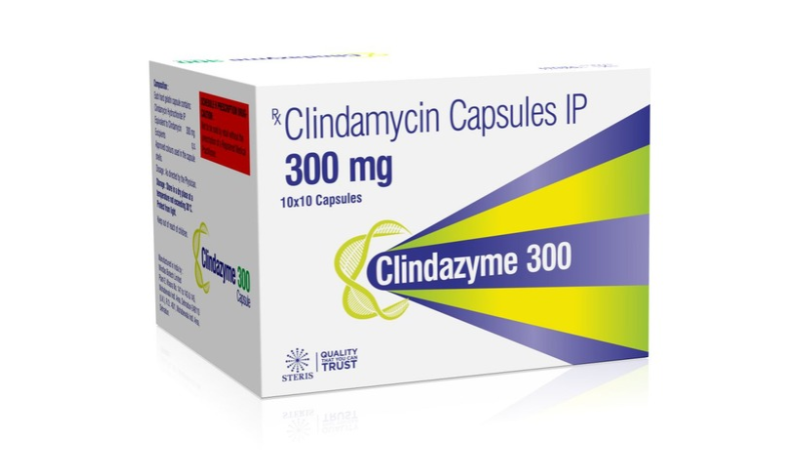


Clindamycin 300mg Uses, Benefits, Side Effects
Nov 12, 2026
What Is Clindamycin 300mg Used For?
CLINDAZYME 300 is the brand name supplied for a pharmaceutical formulation containingClindamycin 300mg , an antibiotic belonging to the lincosamide class. Clindamycin is used to manage selected bacterial infections caused by susceptible microorganisms. It works by interfering with bacterial protein synthesis, which prevents susceptible bacteria from producing proteins required for their growth and survival.
Clindamycin has established clinical applications in selected infections involving the skin, soft tissues, bones, joints and certain internal organs. It may also be used in particular dental and anaerobic bacterial infections when supported by clinical assessment and current treatment guidelines.
For patients, doctors, pharmacists and pharmaceutical distributors researching CLINDAZYME 300 by Steris Healthcare, understanding its composition, indications, mechanism of action and safety profile is important.
Clindamycin is not suitable for every bacterial infection. It does not treat viral illnesses such as common colds, influenza or most viral fevers. Its use should be based on a confirmed or strongly suspected bacterial infection and the likelihood that the causative organism is susceptible.
Why Is Clindamycin 300mg Important?
Clindamycin is an important antibacterial medicine because of its activity against selected Gram-positive bacteria and anaerobic microorganisms.
Anaerobic bacteria are microorganisms that can grow in environments with little or no oxygen. They can contribute to infections involving the oral cavity, abdominal region, skin, soft tissues and other body sites.
Clindamycin has particular relevance in selected clinical situations where susceptible Gram-positive or anaerobic bacteria are involved.
Its importance can be understood through several characteristics:
- It belongs to the lincosamide antibiotic class.
- It interferes with bacterial protein synthesis.
- It has activity against selected Gram-positive organisms.
- It provides activity against certain anaerobic bacteria.
- It has established clinical applications in selected skin, soft-tissue, bone and dental infections.
- It can be considered in certain patients with specific antibiotic allergies, depending on the infection and susceptibility profile.
However, clindamycin has an important safety concern: antibiotic-associated diarrhoea and Clostridioides difficile infection. Therefore, careful patient selection and responsible prescribing are essential.
In India, where antimicrobial resistance is an important healthcare challenge, clindamycin should be used only when clinically justified.
Key Benefits of – Clindamycin 300mg
CLINDAZYME 300 contains clindamycin 300mg, an established antibacterial ingredient with a recognised pharmacological mechanism.
Its potential clinical usefulness depends on the infection, bacterial susceptibility, patient characteristics and prescribed treatment plan.
What Are the Benefits of Clindamycin 300mg?
1. Activity against selected Gram-positive bacteria
Clindamycin has antibacterial activity against certain susceptible Gram-positive organisms, including selected strains of Staphylococcus and Streptococcus.
2. Activity against anaerobic bacteria
It has established activity against certain anaerobic microorganisms that can contribute to infections in the oral cavity, soft tissues and other anatomical regions.
3. Established role in selected skin infections
Clindamycin may be used for certain skin and soft-tissue infections when the causative organisms are susceptible and treatment is clinically appropriate.
4. Use in selected dental infections
Dental infections involving susceptible anaerobic or Gram-positive organisms may sometimes require clindamycin-based treatment. However, dental source control, such as drainage or other dental procedures, may also be necessary.
5. Bone and joint infection management
Clindamycin has established clinical applications in selected bone and joint infections, depending on the causative microorganism and susceptibility results.
6. Oral administration
Where an appropriate oral formulation is prescribed, it may allow treatment outside a hospital setting in clinically suitable patients.
Indications of Clindamycin 300mg
Clindamycin is prescribed for selected bacterial infections caused by susceptible organisms.
Its recognised clinical applications include certain:
- Skin and soft-tissue infections.
- Bone and joint infections.
- Dental and oral infections.
- Anaerobic bacterial infections.
- Selected respiratory tract infections.
- Certain infections involving internal organs and pelvic structures.
The exact indication depends on the infection site, causative organism, susceptibility results and current treatment guidelines.
INDICATIONS, EFFICACY AND CLINICAL EVIDENCE
The efficacy of clindamycin is supported by its established pharmacology, clinical experience and studies evaluating its use in specific bacterial infections.
However, its effectiveness depends on several factors:
1. Bacterial susceptibility
The causative organism must be susceptible to clindamycin. Resistance can occur, particularly among certain Staphylococcus and Streptococcus strains.
2. Infection location
The suitability of clindamycin depends on whether the medicine can achieve appropriate concentrations at the infected site.
3. Clinical diagnosis
Not every skin infection, dental problem or respiratory complaint requires clindamycin.
4. Appropriate treatment selection
The choice of antibiotic should consider culture and sensitivity findings when available, current clinical guidelines and the patient's medical history.
5. Risk-benefit assessment
The possibility of antibiotic-associated colitis and other adverse effects must be considered before treatment.
Clinical evidence and antimicrobial resistance
Clindamycin has a well-established clinical history in selected bacterial infections. However, susceptibility varies between organisms and geographical regions.
For example, inducible clindamycin resistance may occur in certain Staphylococcus aureus isolates. In appropriate clinical situations, laboratories may perform a D-test to identify inducible resistance.
This is particularly relevant when treating suspected or confirmed staphylococcal infections.
For healthcare professionals in India, local antibiograms, culture results and antimicrobial stewardship guidelines are important tools for appropriate prescribing.
Mechanism of Action of Clindamycin 300mg
Understanding the mechanism of action of CLINDAZYME 300 helps explain how clindamycin works against susceptible bacteria.
Clindamycin belongs to the lincosamide group of antibiotics.
Its main action involves inhibition of bacterial protein synthesis.
How does clindamycin work?
- After administration, clindamycin is absorbed and distributed through the body.
- It reaches susceptible bacteria at the infection site.
- It binds to the 50S subunit of the bacterial ribosome.
- It interferes with bacterial protein synthesis.
- Bacteria become unable to produce proteins necessary for normal growth and multiplication.
- This suppresses bacterial growth and, depending on the organism and concentration, may result in bacteriostatic or bactericidal activity.
Clindamycin primarily acts as a bacteriostatic antibiotic, although bactericidal activity may occur against certain susceptible organisms under particular conditions.
Why is the 50S ribosomal subunit important?
Bacterial ribosomes are responsible for producing proteins required for cellular functions, metabolism and multiplication.
By interfering with the ribosomal machinery, clindamycin prevents susceptible bacteria from carrying out essential protein-production processes.
This mechanism distinguishes clindamycin from antibiotics that target bacterial cell-wall synthesis or DNA replication.
Side Effects
Like other antibiotics, clindamycin may cause adverse effects. Not every patient experiences them, and the severity can vary.
Commonly reported side effects include:
- Nausea.
- Vomiting.
- Abdominal discomfort.
- Diarrhoea.
- Indigestion.
- Skin rash.
- Metallic or unpleasant taste.
- Vaginal irritation or yeast infection.
One of the most important safety concerns associated with clindamycin is antibiotic-associated diarrhoea, including Clostridioides difficile-associated colitis.
Patients should not ignore persistent, severe or bloody diarrhoea, even if it occurs after the antibiotic has been discontinued.
Serious Side Effects of Clindamycin 300mg
1. Clostridioides difficile-associated diarrhoea
Clindamycin can disrupt normal intestinal bacteria and allow C. difficile to multiply. This may cause severe diarrhoea, abdominal cramps, fever and inflammation of the colon.
2. Severe allergic reactions
Symptoms may include facial swelling, breathing difficulty, widespread hives or severe dizziness. Emergency medical attention is necessary.
3. Severe skin reactions
Rare but serious reactions may include Stevens-Johnson syndrome and toxic epidermal necrolysis. Symptoms such as blistering, peeling skin or sores involving the mouth and eyes require urgent medical assessment.
4. Liver-related reactions
Changes in liver function tests and, rarely, clinically significant liver injury may occur.
5. Blood-related abnormalities
Rare reactions may include changes in white blood cells, platelets or other blood components.
6. Severe gastrointestinal complications
Persistent abdominal pain, bloody diarrhoea or fever associated with diarrhoea should be assessed promptly.
If any serious adverse reaction is suspected, seek medical attention immediately.
Available Substitutes for CLINDAZYME 300
Patients searching for substitutes for CLINDAZYME 300 should understand that an alternative must be selected according to the diagnosis and bacterial susceptibility.
Possible alternatives may include:
1. Other clindamycin brands
Products containing the same active ingredient and strength may be considered equivalent only after checking the actual formulation, quality, regulatory status and prescribed instructions.
2. Other lincosamide formulations
An appropriate formulation may be considered depending on the patient's clinical condition and the available product.
3. Other antibiotic classes
Depending on the infection, a clinician may consider selected beta-lactam antibiotics, macrolides, tetracyclines or other guideline-supported medicines.
4. Culture-directed alternatives
Where bacterial culture and sensitivity testing is available, the antibiotic can be selected according to the identified organism and susceptibility profile.
Important substitute guidance
An alternative antibiotic is not automatically interchangeable with clindamycin 300mg.
The selection must consider:
- Type and severity of infection.
- Susceptibility of the causative bacteria.
- Previous antibiotic allergies.
- Pregnancy or breastfeeding.
- Liver and kidney health.
- Risk of C. difficile infection.
- Current medicines and possible interactions.
Never replace or discontinue a prescribed antibiotic without consulting a qualified healthcare professional.
Dosage Guidelines for CLINDAZYME 300
The appropriate dosage of clindamycin depends on the infection being treated, its severity, the patient's age, medical history and the formulation prescribed.
Although the brand name indicates a 300mg strength, this does not establish a universal dosage schedule.
The treating doctor should determine the appropriate dose, frequency and duration.
General administration precautions
- Take clindamycin only as prescribed.
- Swallow capsules with a full glass of water.
- Avoid lying down immediately after taking an oral capsule.
- Follow the instructions regarding food and administration.
- Do not double the next dose after missing one.
- Do not share the medicine with another person.
- Do not use leftover antibiotics for another illness.
- Contact the doctor if symptoms worsen or adverse effects develop.
Taking oral clindamycin with adequate water helps reduce the risk of oesophageal irritation.
What happens if a dose is missed?
Follow the missed-dose instructions provided by the doctor or pharmacist. If it is nearly time for the next dose, seek advice rather than taking an extra dose.
Can treatment be stopped when symptoms improve?
Do not independently change the prescribed treatment plan. Contact the prescriber if symptoms improve, persist or worsen, or if adverse reactions develop.
Precautions and Warnings
Before using CLINDAZYME 300, patients should inform their healthcare professional about existing medical conditions and medicines.
1. Previous antibiotic-associated colitis
Patients with a history of C. difficile-associated diarrhoea or antibiotic-associated colitis require careful medical assessment.
2. Gastrointestinal disorders
People with previous gastrointestinal disease, particularly inflammatory bowel conditions, should disclose their medical history.
3. Liver impairment
Clindamycin is metabolised in the liver. Patients with significant liver disease may require additional clinical monitoring.
4. Kidney impairment
Patients with severe kidney-related conditions should inform their doctor. Individual treatment considerations may differ according to overall health.
5. Pregnancy
Pregnant women should use clindamycin only when prescribed after an appropriate assessment of benefits and risks.
6. Breastfeeding
Clindamycin may pass into breast milk. Breastfeeding mothers should discuss possible infant gastrointestinal effects, including diarrhoea or candidiasis, with their doctor.
7. Drug interactions
Patients should disclose all prescription medicines, over-the-counter products and supplements.
Clindamycin may interact with certain medicines, including neuromuscular blocking agents. Particular caution is required in patients undergoing surgery or anaesthesia.
8. Antibiotic resistance
Unnecessary antibiotic use can promote antimicrobial resistance. Clindamycin should only be used for appropriate bacterial infections.
9. Severe diarrhoea
Persistent or severe diarrhoea during or after treatment must not be ignored. Seek medical advice promptly.
10. Allergic history
Patients who have experienced a previous allergic reaction to clindamycin or lincomycin should inform the doctor before treatment.
Storage and Handling Instructions
For appropriate medicine storage and product quality:
- Follow the storage instructions printed on the original packaging.
- Protect the product from excessive heat and moisture.
- Keep the medicine in its original packaging.
- Store it away from children.
- Check the manufacturing date and expiry date before use.
- Do not use damaged or improperly stored products.
- Dispose of expired medicines according to appropriate pharmaceutical disposal guidance.
CLINDAZYME 300 by Steris Healthcare – Pharmaceutical Product Information
CLINDAZYME 300 is the requested brand name associated with Steris Healthcare for this article, with the stated composition of Clindamycin 300mg.
For healthcare professionals, pharmacists, distributors and pharmaceutical buyers in India, reliable product information is essential.
Before publication or commercial promotion, the actual manufacturer or marketer, manufacturing licence, approved composition, packaging, regulatory status and product documentation should be verified.
Importance of responsible pharmaceutical information
Accurate product information helps:
- Improve understanding of the active pharmaceutical ingredient.
- Support responsible prescription-based dispensing.
- Promote awareness of adverse reactions.
- Encourage appropriate antibiotic selection.
- Improve patient counselling.
- Support antimicrobial stewardship.
- Build trust among healthcare professionals and pharmaceutical stakeholders.
A trustworthy product page should prioritise medically accurate information rather than unsupported claims of guaranteed recovery or zero side effects.
Frequently Asked Questions
1. What is CLINDAZYME 300 used for?
CLINDAZYME 300 is the supplied brand name for clindamycin 300mg. Clindamycin is used for selected bacterial infections caused by susceptible microorganisms, including certain skin, soft-tissue, bone and anaerobic infections.
2. What is the composition of CLINDAZYME 300?
The stated composition is Clindamycin 300mg. It belongs to the lincosamide class of antibiotics.
3. Is Clindamycin 300mg an antibiotic?
Yes. Clindamycin is an antibacterial medicine that inhibits bacterial protein synthesis.
4. What is the mechanism of action of clindamycin?
Clindamycin binds to the 50S ribosomal subunit of susceptible bacteria and interferes with protein synthesis, preventing normal bacterial growth and multiplication.
5. Is clindamycin used for skin infections?
Yes. It may be prescribed for selected bacterial skin and soft-tissue infections when the causative organisms are susceptible.
6. Can CLINDAZYME 300 be used for dental infections?
Clindamycin has applications in selected dental and oral bacterial infections. However, the dentist must determine whether antibiotics are needed, and dental treatment or drainage may also be necessary.
7. Does clindamycin work against anaerobic bacteria?
Yes. Clindamycin has activity against certain susceptible anaerobic bacteria, although resistance patterns vary.
8. Is clindamycin effective against Staphylococcus aureus?
Clindamycin may be effective against susceptible Staphylococcus aureus strains. Culture and sensitivity testing, including assessment for inducible resistance when appropriate, can help guide treatment.
9. What are the common side effects of Clindamycin 300mg?
Commonly reported effects include nausea, vomiting, diarrhoea, abdominal discomfort, indigestion and skin rash.
10. Can clindamycin cause severe diarrhoea?
Yes. Clindamycin is associated with C. difficile-associated diarrhoea and colitis, which can be serious and may occur during or after treatment.
11. Can CLINDAZYME 300 be taken with food?
Oral clindamycin may generally be taken with or without food, according to the product instructions. Capsules should be swallowed with a full glass of water.
12. How long does clindamycin take to work?
The response depends on the infection, its severity, bacterial susceptibility and individual patient factors. Seek medical advice if symptoms worsen or do not improve as expected.
13. Is clindamycin safe during pregnancy?
Clindamycin may be prescribed in pregnancy when clinically appropriate, but it should only be used following a medical assessment.
14. Can breastfeeding mothers take clindamycin?
A doctor should assess its suitability during breastfeeding because clindamycin can enter breast milk and may affect the infant's gastrointestinal system.
15. Can children take Clindamycin 300mg?
Clindamycin may be prescribed to children in suitable formulations and weight-based doses. A 300mg capsule is not automatically appropriate for every child.
16. What are the alternatives to CLINDAZYME 300?
Alternatives depend on the bacterial infection and susceptibility results. They may include other clindamycin brands or different antibiotic classes selected by a doctor.
17. Can clindamycin treat viral fever?
No. Clindamycin does not treat viral infections such as influenza, common colds or most viral fevers.
18. Is clindamycin a bactericidal or bacteriostatic antibiotic?
Clindamycin is primarily bacteriostatic, meaning it inhibits bacterial growth. Under certain conditions, it may show bactericidal activity against susceptible organisms.
19. Can CLINDAZYME 300 cause an allergic reaction?
Yes. Skin rash and other hypersensitivity reactions can occur. Severe symptoms such as breathing difficulty or facial swelling require emergency medical attention.
20. What precautions should be taken while using clindamycin?
Patients should disclose previous gastrointestinal disorders, antibiotic-associated colitis, allergies, liver disease, pregnancy, breastfeeding and all medicines they are taking.
21. Does clindamycin help with abscesses?
Clindamycin may be considered for selected bacterial skin infections involving susceptible organisms. However, many abscesses require drainage, and antibiotics alone may not be sufficient.
22. Is clindamycin suitable for urinary tract infections?
Clindamycin is not generally a routine first-choice antibiotic for common urinary tract infections. The appropriate treatment depends on the causative organism and susceptibility.
23. Can clindamycin be taken with other antibiotics?
Sometimes clinicians prescribe clindamycin alongside other medicines when clinically justified. Patients should not combine antibiotics independently.
24. What should I do if I develop diarrhoea while taking clindamycin?
Contact a healthcare professional promptly, particularly if diarrhoea is severe, persistent or bloody, or occurs with fever and abdominal pain. Do not self-treat severe antibiotic-associated diarrhoea.
25. Is CLINDAZYME 300 suitable for all bacterial infections?
No. Clindamycin is active against selected susceptible organisms and is not suitable for every bacterial infection. Diagnosis, susceptibility and clinical guidelines should guide its use.
Conclusion
CLINDAZYME 300, with the stated composition of Clindamycin 300mg, is associated with an established lincosamide antibiotic used for selected bacterial infections. Its mechanism of action involves binding to the 50S ribosomal subunit and inhibiting bacterial protein synthesis.
Clindamycin has recognised clinical applications in certain skin and soft-tissue infections, dental infections, bone and joint infections and infections involving susceptible anaerobic bacteria. However, its effectiveness depends on bacterial susceptibility, the infection site and appropriate clinical selection.
An important consideration is the risk of antibiotic-associated diarrhoea and C. difficile infection. Patients should understand the potential side effects, precautions and importance of following professional medical advice.
For Steris Healthcare-related pharmaceutical communication, accurate product information, verified packaging details, responsible prescribing and evidence-based education should remain priorities
For Further Information:
Mail Us: contact@sterispharma.com or info@sterispharma.com
Call Now: +91 8824175417, +91 9982524671
Buy Now
Recent Post

Cefixime 200mg + Ofloxacin 200mg Uses, Benefits, Side Effects

Neomycin, Polymyxin B and Bacitracin Zinc: Uses, Benefits and Side Effects

What Is Linagliptin 2.5 mg Used For? A Complete Guide
Dextromethorphan Hydrobromide: Uses, Benefits, Dosage and Side Effects
Amantadine Hydrochloride: Uses, Benefits, Dosage and Side Effects
Potassium Chloride Oral Solution: Uses, Benefits, Dosage and Side Effects

Ketoconazole and Cetrimide Soap: Uses, Benefits, Side Effects and Precautions

Baclofen 25 mg: Uses, Benefits, Dosage, Side Effects and Precautions

What Is Sodium Bicarbonate 650 mg Used For? Uses and Safety Information

Lamotrigine 25 mg: Uses, Benefits, Side Effects and Precautions

