


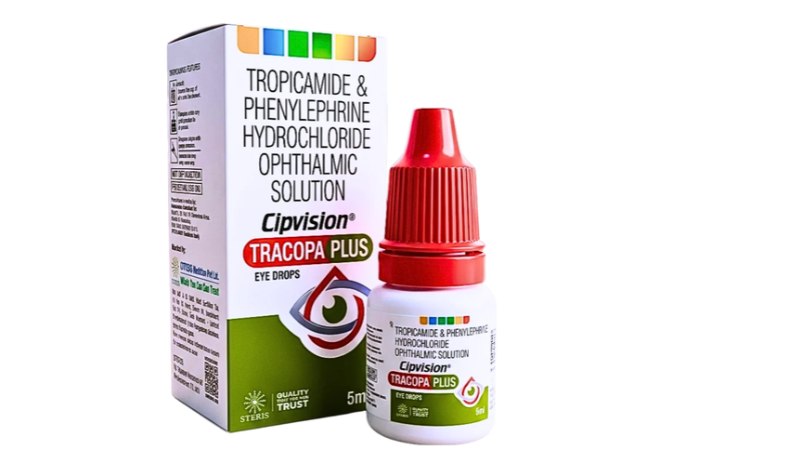


Tropicamide and Phenylephrine Hydrochloride Ophthalmic Solution: Uses, Benefits & Precautions
Nov 14, 2026
What Is Tropicamide and Phenylephrine Hydrochloride Ophthalmic Solution Used For?
CIPVISION TRACOPA PLUS by Steris Healthcare is an ophthalmic formulation containing Tropicamide and Phenylephrine Hydrochloride, two medicines that help dilate the pupil of the eye. This combination is commonly used in ophthalmology to produce mydriasis (pupil dilation) during diagnostic eye examinations and selected ophthalmic procedures.
Tropicamide is an anticholinergic medicine that temporarily relaxes the iris sphincter muscle, allowing the pupil to enlarge. Phenylephrine Hydrochloride is an alpha-1 adrenergic receptor agonist that stimulates the iris dilator muscle, further contributing to pupil dilation.
By combining these two mechanisms, the formulation helps healthcare professionals achieve pupil dilation for examining internal eye structures, including the retina and other posterior segments.
CIPVISION TRACOPA PLUS is intended for ophthalmic use under professional supervision. It may be considered when pupil dilation is required for fundus examination, retinal assessment, and selected ophthalmic diagnostic or procedural applications.
For ophthalmologists, eye-care professionals, pharmacists, and pharmaceutical distributors searching for Tropicamide and Phenylephrine Hydrochloride Ophthalmic Solution, CIPVISION TRACOPA PLUS by Steris Healthcare is a product to evaluate based on its verified composition, concentration, approved indications, and quality documentation.
Why Is Tropicamide and Phenylephrine Hydrochloride Ophthalmic Solution Important?
A detailed examination of the internal structures of the eye often requires adequate pupil dilation. The pupil is the opening in the centre of the iris that regulates the amount of light entering the eye.
When the pupil is small, examining the retina and other internal structures can be more difficult. Ophthalmic mydriatic medicines help temporarily enlarge the pupil, allowing the eye-care professional to obtain a better view.
The combination of Tropicamide and Phenylephrine Hydrochloride is important because both ingredients contribute to pupil dilation through different pharmacological pathways.
Its clinical importance includes:
- Supporting pupil dilation during diagnostic eye examinations.
- Helping ophthalmologists examine the retina and fundus.
- Facilitating selected ophthalmic diagnostic procedures.
- Providing two complementary mechanisms for achieving mydriasis.
- Supporting eye-care professionals during selected pre-procedure assessments.
The combination is particularly useful when a healthcare professional requires adequate pupil dilation for a specific ophthalmic examination.
Key Benefits of – Tropicamide and Phenylephrine Hydrochloride Ophthalmic Solution
CIPVISION TRACOPA PLUS combines two established mydriatic ingredients that act on different muscles of the iris.
What Are the Benefits of Tropicamide and Phenylephrine Hydrochloride Ophthalmic Solution?
1. Effective Pupil Dilation
Tropicamide and Phenylephrine work through complementary mechanisms to enlarge the pupil. This helps healthcare professionals obtain improved access for internal eye examinations.
2. Supports Fundus Examination
Pupil dilation can help ophthalmologists examine the retina, optic disc, and other posterior eye structures during a fundus examination.
3. Supports Retinal Assessment
Adequate mydriasis helps facilitate retinal evaluation, particularly when examining the peripheral retina and other internal structures.
4. Two Complementary Mechanisms
Tropicamide relaxes the iris sphincter muscle, while Phenylephrine stimulates the iris dilator muscle. Their combined action helps produce pupil dilation.
5. Useful in Ophthalmic Diagnostics
The combination may be used when pupil dilation is required for diagnostic procedures and selected ophthalmic assessments.
6. Convenient Ophthalmic Formulation
The eye-drop formulation allows topical administration under the supervision of an ophthalmologist or qualified healthcare professional.
7. Supports Ophthalmic Procedure Preparation
Depending on the procedure and approved product indication, pupil dilation may help prepare the eye for selected ophthalmic examinations or interventions.
Mechanism of Action of Tropicamide and Phenylephrine Hydrochloride Ophthalmic Solution
CIPVISION TRACOPA PLUS contains two active ingredients that produce pupil dilation through different mechanisms.
1. Mechanism of Action of Tropicamide
Tropicamide is an antimuscarinic or anticholinergic medicine.
It temporarily blocks muscarinic acetylcholine receptors in the iris sphincter muscle. Normally, stimulation of these receptors causes the pupil to constrict.
By blocking this action, Tropicamide relaxes the iris sphincter muscle, allowing the pupil to dilate.
Tropicamide also temporarily affects the ciliary muscle, which can reduce the eye's ability to focus on nearby objects. This effect is known as cycloplegia.
2. Mechanism of Action of Phenylephrine Hydrochloride
Phenylephrine Hydrochloride is a selective alpha-1 adrenergic receptor agonist.
It stimulates alpha-1 receptors in the radial dilator muscle of the iris. This causes contraction of the iris dilator muscle and results in pupil enlargement.
Unlike Tropicamide, Phenylephrine generally does not produce significant cycloplegia at standard ophthalmic concentrations.
Combined Mechanism
The two ingredients work together through complementary pathways:
- Tropicamide relaxes the iris sphincter muscle.
- Phenylephrine stimulates the iris dilator muscle.
- Both actions contribute to pupil enlargement.
- The resulting mydriasis helps facilitate internal eye examinations.
Indications, Efficacy and Clinical Evidence of CIPVISION TRACOPA PLUS
Indications
Depending on the actual formulation strengths and approved product labelling, Tropicamide and Phenylephrine Hydrochloride Ophthalmic Solution may be used for:
- Pupil dilation before fundus examination.
- Retinal examination and assessment.
- Diagnostic ophthalmic procedures requiring mydriasis.
- Selected preoperative ophthalmic assessments.
- Other specialist-directed examinations requiring pupil dilation.
The exact indications must be verified against the approved CIPVISION TRACOPA PLUS product information.
Efficacy
Tropicamide and Phenylephrine have established pharmacological roles in producing pupil dilation.
Tropicamide works by reducing parasympathetic stimulation of the iris sphincter, whereas Phenylephrine stimulates alpha-1 adrenergic receptors in the iris dilator muscle.
The combination provides complementary pharmacological activity that can support pupil dilation when clinically required.
The degree and duration of pupil dilation depend on the ingredient concentrations, individual response, iris characteristics, and other patient-specific factors.
Clinical Evidence
The individual active ingredients have established ophthalmic applications supported by pharmacological research and clinical use.
Clinical studies of Tropicamide and Phenylephrine combinations have evaluated pupil dilation, onset of mydriasis, and their usefulness during ophthalmic examinations and procedures.
These findings support the pharmacological rationale for the combination but should not be interpreted as proof of brand-specific clinical superiority for CIPVISION TRACOPA PLUS.
Side Effects of Tropicamide and Phenylephrine Hydrochloride Ophthalmic Solution
Like other pupil-dilating eye drops, CIPVISION TRACOPA PLUS may cause temporary local or systemic side effects.
The likelihood of adverse effects depends on the concentration, amount administered, individual sensitivity, and underlying medical conditions.
Common Side Effects
Possible side effects include:
- Temporary blurred vision.
- Increased sensitivity to light.
- Mild eye irritation.
- Burning or stinging after application.
- Temporary redness of the eye.
- Dryness or discomfort.
- Difficulty focusing on nearby objects.
- Temporary increase in intraocular pressure in susceptible individuals.
These effects are generally associated with the temporary pharmacological action of pupil-dilating medicines.
Serious Side Effects of CIPVISION TRACOPA PLUS
Although uncommon, serious adverse reactions may occur.
1. Increased Heart Rate: Phenylephrine may cause palpitations or an increase in heart rate.
2. Blood Pressure Changes: Systemic absorption may cause elevated blood pressure, particularly in susceptible patients.
3. Cardiovascular Reactions: Rarely, serious cardiovascular complications may occur, especially in patients with pre-existing cardiovascular conditions.
4. Acute Angle-Closure Glaucoma: Pupil dilation can trigger an acute angle-closure attack in individuals with anatomically narrow anterior chamber angles.
Warning symptoms include severe eye pain, headache, redness, blurred vision, halos around lights, and nausea. These symptoms require immediate emergency ophthalmological assessment.
5. Allergic Reactions: Severe itching, eyelid swelling, rash, or breathing difficulty may indicate an allergic reaction and require urgent medical attention.
Patients should inform their ophthalmologist about any unusual or severe symptoms following administration.
Available Substitutes for Tropicamide and Phenylephrine Hydrochloride Ophthalmic Solution
Alternative ophthalmic mydriatic preparations may be considered depending on the patient's examination requirements, medical history, and the ophthalmologist's preference.
Possible alternatives include:
- Tropicamide ophthalmic solution.
- Phenylephrine hydrochloride ophthalmic solution.
- Tropicamide and Phenylephrine combination eye drops.
- Other ophthalmic mydriatic preparations selected by the treating specialist.
These products may differ in their active ingredient strengths, onset of action, duration, and clinical applications.
A substitute for CIPVISION TRACOPA PLUS should be selected only after verifying the composition and intended clinical use. Different ophthalmic mydriatics are not automatically interchangeable.
Dosage Guidelines for CIPVISION TRACOPA PLUS
CIPVISION TRACOPA PLUS should be administered only according to the ophthalmologist's instructions and approved product labelling.
The appropriate dosage depends on the concentration of Tropicamide and Phenylephrine Hydrochloride, the reason for pupil dilation, patient age, medical history, and clinical requirements.
General administration recommendations include:
- Follow the exact number of drops prescribed by the ophthalmologist.
- Use the medicine only for the intended ophthalmic examination or procedure.
- Wash hands before administration.
- Avoid touching the dropper tip to the eye or surrounding surfaces.
- Close the bottle properly after use.
- Follow professional instructions regarding any repeat administration.
Important Administration Precautions
The patient should remain under appropriate supervision when pupil-dilating drops are administered, particularly if there is a history of cardiovascular disease, glaucoma, or other relevant medical conditions.
Do not independently repeat the dose or increase the frequency of administration.
Precautions & Warnings for Tropicamide and Phenylephrine Hydrochloride Ophthalmic Solution
1. Glaucoma Precautions: Patients with narrow-angle or angle-closure glaucoma require careful assessment before receiving pupil-dilating medication.
2. Cardiovascular Conditions: Inform the ophthalmologist about hypertension, heart disease, arrhythmias, or other cardiovascular conditions before administration.
3. Thyroid Disorders: Patients with hyperthyroidism should inform their healthcare professional because Phenylephrine may require additional precautions.
4. Pregnancy and Breastfeeding: Use during pregnancy or breastfeeding should be assessed by a healthcare professional based on individual benefits and potential risks.
5. Children and Older Adults: Age-specific precautions are important. Systemic adverse effects may be more concerning in young children and susceptible older adults.
6. Medication Interactions: Inform the doctor about all current medicines, particularly monoamine oxidase inhibitors, tricyclic antidepressants, and other medicines that may affect blood pressure or adrenergic activity.
7. Driving and Machinery: Pupil dilation can cause temporary blurred vision and light sensitivity. Avoid driving or operating machinery until vision has returned to normal.
8. Contact Lenses: Follow the product instructions and ophthalmologist's advice regarding contact lens removal and reinsertion.
9. Correct Administration: The medicine is intended for ophthalmic use only. Do not swallow or use it in any other way.
Why Consider CIPVISION TRACOPA PLUS by Steris Healthcare?
CIPVISION TRACOPA PLUS is the brand name provided for the Tropicamide and Phenylephrine Hydrochloride ophthalmic combination under Steris Healthcare.
For ophthalmologists, optometrists, pharmacists, pharmaceutical distributors, and healthcare buyers researching mydriatic eye drops, product evaluation should include:
- Verified composition and individual ingredient strengths.
- Sterile ophthalmic formulation.
- Manufacturing and quality documentation.
- Applicable regulatory approvals.
- Batch number and expiry date.
- Packaging integrity and storage conditions.
- Availability through authorised pharmaceutical distribution channels.
For product-related enquiries, distribution information, and commercial requirements, contact Steris Healthcare through its verified business channels.
Conclusion
CIPVISION TRACOPA PLUS by Steris Healthcare is presented as a combination ophthalmic formulation containing Tropicamide and Phenylephrine Hydrochloride, two established mydriatic ingredients used to produce pupil dilation.
Tropicamide works by blocking muscarinic receptors in the iris sphincter muscle, while Phenylephrine stimulates alpha-1 adrenergic receptors in the iris dilator muscle. Their complementary mechanisms help enlarge the pupil for fundus examination, retinal assessment, and selected ophthalmic diagnostic procedures.
The combination offers an established pharmacological approach to achieving mydriasis. However, appropriate patient selection, correct administration, and awareness of potential side effects are essential.
Patients with glaucoma risk, hypertension, cardiovascular conditions, or relevant medication interactions require particular attention before administration.
CIPVISION TRACOPA PLUS should only be used under the supervision of a qualified ophthalmologist and according to verified product instructions. For composition details, product availability, and commercial enquiries, refer to authorised Steris Healthcare product documentation and distribution channels.
Frequently Asked Questions
1. What is CIPVISION TRACOPA PLUS used for?
CIPVISION TRACOPA PLUS is a brand formulation described as containing Tropicamide and Phenylephrine Hydrochloride. This combination is used to dilate the pupil during fundus examinations, retinal assessments, and selected ophthalmic diagnostic procedures.
2. What is the composition of CIPVISION TRACOPA PLUS?
The stated composition of CIPVISION TRACOPA PLUS is Tropicamide and Phenylephrine Hydrochloride Ophthalmic Solution. The exact concentration of each ingredient should be confirmed from the approved product packaging.
3. How do Tropicamide and Phenylephrine eye drops work?
Tropicamide blocks muscarinic receptors and relaxes the iris sphincter muscle, while Phenylephrine stimulates alpha-1 receptors and contracts the iris dilator muscle. Both actions help enlarge the pupil.
4. What are the benefits of Tropicamide and Phenylephrine eye drops?
The combination helps produce pupil dilation, supports fundus examination, facilitates retinal assessment, and assists ophthalmologists during selected diagnostic procedures.
5. What are the common side effects of CIPVISION TRACOPA PLUS?
Possible side effects include temporary blurred vision, light sensitivity, mild eye irritation, burning, redness, and difficulty focusing on nearby objects.
6. Can Tropicamide and Phenylephrine eye drops increase blood pressure?
Phenylephrine may be absorbed systemically and can increase blood pressure or cause cardiovascular effects in susceptible patients. Patients with hypertension or heart disease should inform their ophthalmologist before use.
7. Can CIPVISION TRACOPA PLUS be used in glaucoma patients?
Patients with narrow-angle glaucoma or a risk of angle closure require careful ophthalmological assessment before receiving pupil-dilating medicines because dilation may trigger an acute angle-closure attack.
8. How long does pupil dilation last after using Tropicamide and Phenylephrine?
The duration depends on the individual ingredients, their concentrations, and the patient's response. Temporary blurred near vision and light sensitivity may continue after the examination. Follow the ophthalmologist's advice until vision returns to normal.
9. Can I drive after using Tropicamide and Phenylephrine eye drops?
Driving should be avoided while vision is blurred or light sensitivity is present. Resume driving only when vision has returned to normal and it is safe to do so.
10. Are there substitutes for CIPVISION TRACOPA PLUS?
Possible alternatives include Tropicamide-only drops, Phenylephrine-only drops, and other ophthalmic mydriatic combinations. The appropriate option depends on the patient's condition and the ophthalmologist's assessment.
11. Who manufactures or markets CIPVISION TRACOPA PLUS?
CIPVISION TRACOPA PLUS is the brand name supplied for this product under Steris Healthcare. Check the actual product packaging and official company documentation to confirm the manufacturer and marketer details.
12. Where can I find CIPVISION TRACOPA PLUS by Steris Healthcare?
For product availability, composition information, and commercial enquiries, contact Steris Healthcare through its verified business channels or authorised pharmaceutical distributors.
Recent Post
Levofloxacin Ophthalmic Solution 1.5% w/v – Uses, Benefits & Side Effects

Myo-inositol, Vitamin D3 & Folic Acid Sachets: Uses, Benefits & Side Effects

Warfarin Sodium IP 1mg Uses, Benefits, Side Effects & Precautions

Warfarin Sodium IP 2mg Helps Prevent Blood Clots

Warfarin Sodium IP 3mg Uses, Benefits, Side Effects & Dosage Guide
Warfarin Sodium IP 5mg Uses, Benefits, Dosage, Side Effects

Mecobalamin Injection 1500 mcg/ml Uses, Benefits, Dosage & Side Effects

Methylcobalmine 1500mcg+Ala+Etc Capsules Uses, Benefits, Dosage, Side Effects

ZENCOBAL D3 Uses, Benefits & Price in India | Steris Healthcare

Zinc Acetate 50mg: Uses, Benefits, Dosage, Side Effects

