


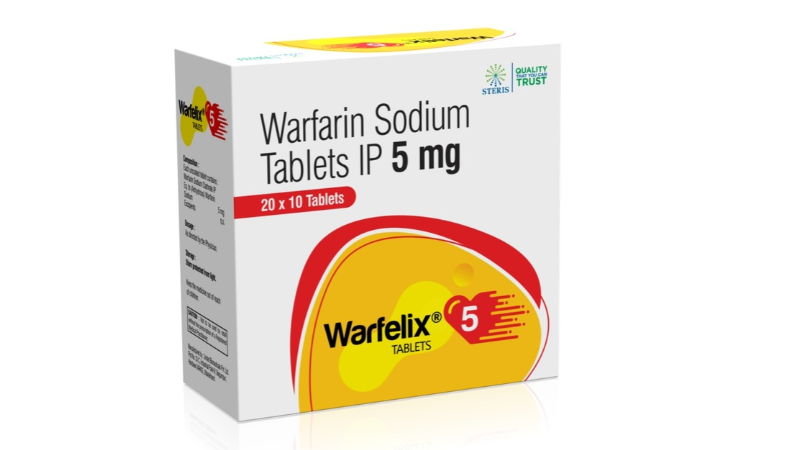


Warfarin Sodium IP 5mg Uses, Benefits, Dosage, Side Effects
Nov 14, 2026
What Is Warfarin sodium IP 5mg Used For?
Warfarin sodium IP 5mg is an oral anticoagulant medicine belonging to the vitamin K antagonist class. It is prescribed to help prevent the formation of harmful blood clots and reduce the risk of complications associated with certain cardiovascular and thromboembolic conditions.
WARFELIX 5, presented under the Steris Healthcare brand, contains Warfarin sodium IP 5mg as its stated composition. It is intended for use when a qualified healthcare professional determines that anticoagulant treatment is appropriate.
Warfarin does not dissolve an existing blood clot directly. Instead, it reduces the blood's ability to form new clots and prevents existing clots from growing. This action can help reduce the risk of serious complications, including stroke and pulmonary embolism, in appropriately selected patients.
Common Indications of Warfarin Sodium
Warfarin may be prescribed for:
- Prevention of stroke and systemic embolism in eligible patients with atrial fibrillation.
- Prevention and treatment of venous thromboembolism (VTE).
- Treatment and prevention of deep vein thrombosis (DVT).
- Prevention of pulmonary embolism (PE).
- Prevention of thromboembolic complications in patients with certain mechanical heart valves.
- Prevention of recurrent blood clots in patients requiring long-term anticoagulation.
The exact indication, treatment duration, and dose depend on the patient's diagnosis, medical history, and INR results.
Why Is Warfarin Sodium IP 5mg Important?
Blood clotting is a natural protective process that prevents excessive bleeding after an injury. However, abnormal clot formation inside blood vessels can obstruct circulation and lead to serious medical emergencies.
Conditions such as atrial fibrillation, deep vein thrombosis, pulmonary embolism, and certain heart valve disorders can increase the risk of dangerous blood clots.
Warfarin is important because it helps reduce this risk by interfering with the body's vitamin K-dependent clotting process.
For patients who require anticoagulation, carefully monitored warfarin treatment can provide long-term protection against specific thromboembolic complications.
WARFELIX 5 provides a stated 5 mg tablet strength of warfarin sodium. However, the appropriate daily dose must always be individualised by the treating physician.
Key Benefits of Warfarin Sodium IP 5mg
Warfarin has an established role in anticoagulation therapy and is used in several clinical situations where reducing blood clot formation is essential.
What Are the Benefits of Warfarin Sodium?
1. Helps prevent harmful blood clots
Warfarin reduces the production of important clotting factors, helping lower the likelihood of developing certain dangerous blood clots.
2. Supports stroke prevention in eligible patients
In patients with atrial fibrillation who have an appropriate indication, warfarin can reduce the risk of stroke caused by blood clots originating in the heart.
3. Used in deep vein thrombosis management
Warfarin is used in the treatment and secondary prevention of DVT as part of an appropriately managed anticoagulation plan.
4. Helps prevent pulmonary embolism
By reducing the formation and growth of blood clots, warfarin can help prevent recurrent pulmonary embolism in patients who require anticoagulation.
5. Established option for mechanical heart valve patients
Warfarin remains an important anticoagulant option for many patients with mechanical heart valves, for whom direct oral anticoagulants are generally not suitable.
6. Suitable for long-term anticoagulation when indicated
Some medical conditions require extended anticoagulant treatment. Warfarin can be used for long-term therapy with regular INR monitoring.
These benefits depend on correct patient selection, appropriate dosing, adherence, and consistent clinical monitoring. No medicine can guarantee complete protection against blood clots.
Mechanism of Action of Warfarin Sodium IP 5mg
Warfarin works by inhibiting an enzyme called vitamin K epoxide reductase complex 1 (VKORC1).
Vitamin K is essential for the production of several blood clotting proteins. These include:
- Factor II (prothrombin)
- Factor VII
- Factor IX
- Factor X
- Protein C
- Protein S
Warfarin inhibits the recycling of vitamin K into its active form. As a result, the liver produces clotting factors with reduced biological activity.
This decreases the blood's ability to form clots.
The anticoagulant effect does not occur immediately because previously produced clotting factors must first be cleared from the circulation. This is why INR monitoring and, in selected clinical situations, temporary overlap with another anticoagulant may be necessary.
The International Normalized Ratio (INR) measures the effect of warfarin on blood clotting and helps clinicians adjust treatment safely.
Indications, Efficacy and Clinical Evidence of Warfarin
Warfarin has been used in clinical practice for decades and has substantial clinical evidence supporting its role in preventing and treating thromboembolic conditions.
Indications
Its established clinical indications include:
- Atrial fibrillation with an appropriate stroke-prevention indication.
- Venous thromboembolism.
- Deep vein thrombosis.
- Pulmonary embolism.
- Thromboembolism prevention in eligible mechanical heart valve patients.
Efficacy
Warfarin can be effective when the patient's anticoagulation is maintained within the INR target prescribed for their condition.
Its efficacy and safety are influenced by several factors, including:
- Individual patient characteristics.
- INR control and monitoring frequency.
- Consistency of vitamin K intake.
- Interactions with other medicines.
- Liver function and other medical conditions.
- Adherence to the prescribed treatment schedule.
Clinical Evidence
Clinical research and established anticoagulation guidelines support warfarin's use in appropriate patients with atrial fibrillation, venous thromboembolism, and mechanical heart valves.
The landmark RE-LY trial compared dabigatran with warfarin in patients with atrial fibrillation, while the ROCKET AF trial compared rivaroxaban with warfarin. These trials contributed to the evidence base for modern anticoagulation treatment.
Importantly, evidence supporting warfarin as an active ingredient should not automatically be interpreted as product-specific clinical evidence for WARFELIX 5. Brand-specific efficacy and quality claims require appropriate product documentation.
Side Effects of Warfarin Sodium IP 5mg
Like all anticoagulants, warfarin can cause side effects. Its most important safety concern is excessive bleeding.
Patients taking WARFELIX 5 should understand the possible adverse effects and seek medical advice when unusual symptoms occur.
Commonly reported concerns include:
- Easy bruising.
- Nosebleeds.
- Bleeding gums.
- Prolonged bleeding from minor cuts.
- Heavier or prolonged menstrual bleeding.
- Blood in the urine.
- Blood in the stool.
- Gastrointestinal bleeding.
The severity of bleeding can vary. Any unusual or persistent bleeding should be discussed promptly with a healthcare professional.
Serious Side Effects of Warfarin
Serious adverse reactions may include:
1. Major internal bleeding: Bleeding in the gastrointestinal tract, brain, or other internal organs can be life-threatening.
2. Intracranial haemorrhage: Sudden severe headache, weakness, confusion, difficulty speaking, or loss of coordination may indicate bleeding inside the brain.
3. Skin necrosis: A rare but serious reaction that may cause painful skin changes and tissue damage.
4. Purple toe syndrome: A rare complication associated with cholesterol microembolisation, which can cause painful purple or discoloured toes.
5. Severe allergic reactions: Unusual swelling, breathing difficulty, or widespread allergic symptoms require immediate medical attention.
Seek emergency medical care for uncontrolled bleeding, vomiting blood, black tarry stools, severe headache following a head injury, or sudden neurological symptoms.
Available Substitutes for WARFELIX 5
Substitutes for WARFELIX 5 should be considered according to the active ingredient, tablet strength, manufacturer, product quality, and prescription requirements.
Potential alternatives may include:
- Another appropriately authorised warfarin sodium 5 mg tablet.
- Other warfarin tablet strengths when specifically prescribed and adjusted by a clinician.
- Other anticoagulants, such as apixaban, rivaroxaban, dabigatran, or edoxaban, when clinically appropriate.
Important: These medicines are not automatically interchangeable. Direct oral anticoagulants are not suitable for every patient, particularly many patients with mechanical heart valves. Do not switch from warfarin to another anticoagulant without a physician-directed treatment plan.
A pharmacist or prescribing doctor should verify the alternative's composition, strength, regulatory status, and suitability.
Dosage Guidelines for Warfarin Sodium IP 5mg
Warfarin dosage is individualised. Although WARFELIX 5 contains a stated strength of 5 mg, this does not mean that every patient should take one 5 mg tablet daily.
The prescribed dose depends on:
- Patient age and body weight.
- Medical condition being treated.
- INR results.
- Liver function.
- Other medicines and supplements.
- Dietary vitamin K intake.
- Bleeding risk and previous medical history.
Important INR Monitoring
INR monitoring is essential during warfarin treatment.
The doctor determines the appropriate INR target according to the patient's medical condition. A commonly used target for many indications is 2.0–3.0, while certain mechanical heart valve situations require different targets.
Patients may need more frequent INR testing when treatment starts, after dose adjustments, during illness, or when interacting medicines are introduced.
What If a Dose Is Missed?
Patients should follow their prescribed missed-dose instructions and contact their healthcare professional if uncertain. They should never double the next dose to compensate for a missed dose unless specifically instructed by their clinician.
Never change or discontinue warfarin independently.
Precautions & Warnings While Using WARFELIX 5
Warfarin requires careful medical supervision because an excessive anticoagulant effect can cause serious bleeding.
1. Pregnancy: Warfarin can cause fetal harm and is contraindicated during pregnancy in most circumstances. Certain mechanical heart valve situations require specialist risk assessment.
2. Surgery and dental procedures: Inform the surgeon or dentist that you are taking warfarin. Never stop treatment independently before a procedure.
3. Drug interactions: Antibiotics, antifungals, pain medicines, herbal products, and several other medicines can change INR levels or bleeding risk.
4. Alcohol: Avoid excessive alcohol consumption because it can affect anticoagulation and bleeding risk.
5. Dietary vitamin K: Maintain a reasonably consistent intake of vitamin K-containing foods, such as spinach, broccoli, and other green vegetables. Sudden dietary changes may alter INR.
6. Liver disease: Patients with impaired liver function may require closer monitoring and individualised treatment.
7. History of bleeding: Patients with previous gastrointestinal bleeding, haemorrhagic stroke, or other bleeding disorders need careful assessment.
8. Regular monitoring: Attend scheduled INR tests and maintain communication with the treating healthcare professional.
Why Choose WARFELIX 5 by Steris Healthcare?
WARFELIX 5 is presented as a warfarin sodium IP 5mg formulation under the Steris Healthcare brand.
When evaluating an anticoagulant product, healthcare professionals and procurement teams should consider:
- Verified active ingredient and tablet strength.
- Compliance with applicable Indian pharmacopoeial and regulatory requirements.
- Manufacturing and quality documentation.
- Product batch details and expiry information.
- Appropriate storage and packaging.
- Availability through authorised pharmaceutical distribution channels.
For Steris Healthcare, product-specific manufacturing, quality, distribution, and availability information should be confirmed using current company documentation.
WARFELIX 5 should only be used against a valid prescription and under appropriate INR monitoring.
Conclusion
Warfarin sodium IP 5mg is an established anticoagulant composition used to prevent and manage serious blood clot-related conditions, including atrial fibrillation-associated thromboembolism, deep vein thrombosis, pulmonary embolism, and selected mechanical heart valve complications.
WARFELIX 5, presented under the Steris Healthcare brand, identifies a 5 mg warfarin sodium tablet strength. Its appropriate use depends on accurate diagnosis, individualised dosing, regular INR monitoring, and careful attention to medicine and dietary interactions.
For patients, doctors, pharmacists, and pharmaceutical procurement professionals, understanding the indications, mechanism of action, efficacy, side effects, and precautions of warfarin is essential for responsible anticoagulant therapy.
WARFELIX 5 – Warfarin sodium IP 5mg by Steris Healthcare: anticoagulant treatment that requires informed prescribing and regular clinical monitoring.
Frequently Asked Questions
1. What is WARFELIX 5 used for?
WARFELIX 5 is presented as a Warfarin sodium IP 5mg formulation. Warfarin is an anticoagulant used to prevent and manage certain blood clot-related conditions, including deep vein thrombosis, pulmonary embolism, and stroke prevention in eligible patients with atrial fibrillation.
2. What is the composition of WARFELIX 5?
The stated composition of WARFELIX 5 is Warfarin sodium IP 5mg. It is presented under the Steris Healthcare brand.
3. How does Warfarin sodium IP 5mg work?
Warfarin inhibits the vitamin K recycling enzyme VKORC1. This reduces the production of active vitamin K-dependent clotting factors and decreases the blood's ability to form clots.
4. Is WARFELIX 5 a blood thinner?
Yes. Warfarin is commonly described as a blood thinner, although it does not physically thin the blood. It reduces the blood's ability to form clots by interfering with vitamin K-dependent clotting factors.
5. What are the major side effects of Warfarin 5mg?
The most important side effect is bleeding. Other concerns include bruising, nosebleeds, bleeding gums, blood in urine, gastrointestinal bleeding, and, rarely, serious internal bleeding or skin necrosis.
6. Does WARFELIX 5 require an INR test?
Yes. Warfarin treatment requires regular INR monitoring to assess its anticoagulant effect and guide dose adjustments. The frequency depends on the patient's stability and clinical condition.
7. Can Warfarin sodium IP 5mg be taken daily?
Warfarin is often prescribed as a daily medicine, but the dose and schedule must be determined by a doctor using the patient's INR results and medical history. A 5 mg tablet does not mean that 5 mg daily is suitable for everyone.
8. Can Warfarin 5mg be taken during pregnancy?
Warfarin can cause serious fetal harm and is generally contraindicated during pregnancy. Patients with mechanical heart valves require specialist assessment because anticoagulation decisions can be complex.
9. What are the alternatives to WARFELIX 5?
Alternatives may include other authorised warfarin formulations or, for selected patients, anticoagulants such as apixaban, rivaroxaban, dabigatran, and edoxaban. The appropriate alternative depends on the diagnosis and clinical circumstances.
10. Can Warfarin be taken with other medicines?
Warfarin interacts with many prescription medicines, over-the-counter products, antibiotics, antifungals, pain relievers, and herbal supplements. Patients should inform their doctor or pharmacist before starting or stopping any medicine.
11. Does Warfarin dissolve existing blood clots?
No. Warfarin does not directly dissolve existing blood clots. It reduces the formation of new clots and prevents existing clots from growing while the body's natural processes gradually break them down.
12. Who manufactures WARFELIX 5?
WARFELIX 5 is presented in this product description under the Steris Healthcare brand. The legal manufacturer, marketing authorisation holder, and current product registration should be confirmed from the approved product label and company documentation.
Recent Post
Warfarin Sodium IP 2mg Helps Prevent Blood Clots
Warfarin Sodium IP 3mg Uses, Benefits, Side Effects & Dosage Guide
Mecobalamin Injection 1500 mcg/ml Uses, Benefits, Dosage & Side Effects
Methylcobalmine 1500mcg+Ala+Etc Capsules Uses, Benefits, Dosage, Side Effects
ZENCOBAL D3 Uses, Benefits & Price in India | Steris Healthcare
Zinc Acetate 50mg: Uses, Benefits, Dosage, Side Effects
Ziprasidone Capsules 40mg Uses, Benefits, Dosage, Side Effects
Zoledronic Acid 5 mg: Uses, Benefits & Dosage – Steris Healthcare
Paracetamol Diclofenac Sodium and Chlorzoxazone Tablets: Uses, Benefits, Dosage, Side Effects
Cefuroxime Axetil 500mg + Potassium Clavulanate 125mg Uses, Benefits & Side Effects

