


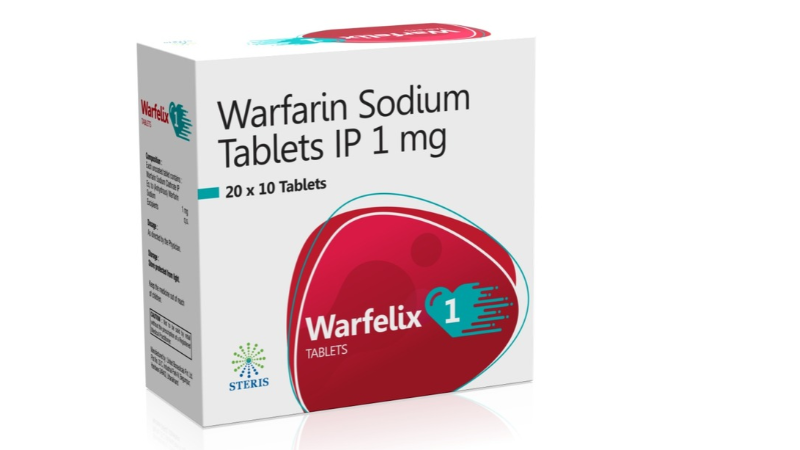


Warfarin Sodium IP 1mg Uses, Benefits, Side Effects & Precautions
Nov 14, 2026
What Is Warfarin Sodium IP 1mg Used For?
WARFELIX 1 by Steris Healthcare contains Warfarin Sodium IP 1mg, an oral anticoagulant medication used under medical supervision to help prevent and manage harmful blood clot formation. Warfarin belongs to the vitamin K antagonist category of medicines and is commonly known as a blood thinner. It works by reducing the activity of specific blood-clotting factors, helping lower the risk of certain serious thromboembolic complications.
Warfarin sodium IP 1mg is prescribed for selected patients with conditions such as deep vein thrombosis (DVT), pulmonary embolism (PE), atrial fibrillation, and certain mechanical heart valve-related clotting risks. It helps reduce the likelihood of new blood clots forming and prevents existing clots from becoming larger.
WARFELIX 1, marketed under the Steris Healthcare brand, offers a 1mg tablet strength that healthcare professionals can use when individualising anticoagulation treatment. The appropriate dose is determined according to the patient's medical condition, INR test results, age, dietary habits, other medications, and overall health.
For patients and healthcare professionals looking for information about Warfarin Sodium IP 1mg, understanding its indications, efficacy, clinical use, safety precautions, and monitoring requirements is essential. WARFELIX 1 should only be used according to a qualified doctor's prescription.
Why Is Warfarin Sodium IP 1mg Important?
Blood clotting is a natural process that helps prevent excessive bleeding following an injury. However, abnormal clot formation inside blood vessels can restrict blood circulation and lead to serious complications, including stroke and pulmonary embolism.
Warfarin plays an important role in anticoagulation therapy by reducing the production of functional vitamin K-dependent clotting factors in the liver. This helps control abnormal clot formation in patients who have a medical indication for anticoagulation.
The importance of Warfarin Sodium IP 1mg lies in its established clinical applications, including:
- Helping prevent blood clot formation in appropriately selected patients.
- Supporting the management of deep vein thrombosis.
- Reducing the risk of recurrent pulmonary embolism.
- Helping prevent ischaemic stroke in eligible patients with atrial fibrillation.
- Providing anticoagulation for patients with certain mechanical heart valves.
- Supporting long-term anticoagulation when medically indicated.
Regular INR monitoring is essential during Warfarin treatment to maintain the prescribed anticoagulation range and minimise bleeding complications.
Key Benefits of – Warfarin Sodium IP 1mg
WARFELIX 1 contains an established anticoagulant ingredient that healthcare professionals may prescribe for selected blood clot-related conditions. Its clinical benefits depend on the patient's diagnosis, individual response, and appropriate INR monitoring.
What Are the Benefits of Warfarin Sodium IP 1mg?
1. Helps Prevent Harmful Blood Clots
Warfarin reduces the activity of vitamin K-dependent clotting factors, helping decrease the risk of harmful blood clot formation in patients requiring anticoagulation.
2. Supports DVT Management
Warfarin is used in the treatment and prevention of recurrent deep vein thrombosis. It helps prevent additional clot formation and reduces the risk of clot-related complications.
3. Helps Reduce Stroke Risk
In appropriately selected patients with atrial fibrillation, Warfarin helps reduce the risk of ischaemic stroke caused by blood clots originating in the heart.
4. Helps Prevent Recurrent Pulmonary Embolism
Warfarin may be prescribed to reduce the risk of recurrent pulmonary embolism by limiting the formation of additional blood clots.
5. Important for Certain Mechanical Heart Valve Patients
Patients with mechanical heart valves may require long-term anticoagulation. Warfarin is an established treatment option for reducing valve-associated clotting risks.
6. Supports Individualised Anticoagulation Treatment
The 1mg tablet strength can be useful as part of an individually prescribed dosing regimen. The actual dose must always be determined through clinical assessment and INR results.
Mechanism of Action of Warfarin Sodium IP 1mg
Warfarin works by inhibiting an enzyme called vitamin K epoxide reductase complex 1 (VKORC1). This enzyme helps recycle vitamin K into its active form.
Vitamin K is essential for the liver to produce functional clotting factors II, VII, IX, and X, as well as anticoagulant proteins C and S.
By inhibiting vitamin K recycling, Warfarin reduces the production of functional vitamin K-dependent clotting factors. Consequently, the blood takes longer to clot, helping reduce the likelihood of harmful thrombus formation.
Warfarin does not directly dissolve existing blood clots. Instead, it helps prevent further clot formation while the body's natural processes gradually break down existing clots.
The anticoagulant effect is assessed through an International Normalised Ratio (INR) blood test. Doctors use INR results to evaluate treatment response and adjust the prescribed dose when necessary.
Indications, Efficacy and Clinical Evidence of WARFELIX 1
Warfarin sodium is an established vitamin K antagonist with recognised clinical applications in anticoagulation therapy.
Indications
Depending on the patient's clinical condition, Warfarin may be prescribed for:
- Deep vein thrombosis (DVT).
- Pulmonary embolism (PE).
- Stroke prevention in selected patients with atrial fibrillation.
- Thromboembolic prevention in patients with certain mechanical heart valves.
- Selected thromboembolic complications following myocardial infarction.
Efficacy
The effectiveness of Warfarin depends on maintaining an appropriate anticoagulation level. Regular INR testing helps doctors evaluate its therapeutic effect and maintain the recommended target range.
For many indications, an INR target of 2.0–3.0 is commonly used, while certain mechanical heart valve patients require different targets.
Clinical Evidence
Warfarin has a long-established history of clinical use and is supported by published clinical research and professional anticoagulation guidelines.
Its effectiveness and safety are influenced by patient-specific factors, adherence to prescribed treatment, dietary consistency, interacting medications, and regular INR monitoring.
Product-specific note: Clinical evidence supporting the active ingredient Warfarin does not independently establish brand-specific clinical superiority for WARFELIX 1. Brand-specific claims should only be made when supported by appropriate product documentation and evidence.
Side Effects of Warfarin Sodium IP 1mg
Like other anticoagulant medications, WARFELIX 1 may cause side effects. The most significant risk associated with Warfarin is bleeding because it reduces the blood's ability to form clots.
Common Side Effects
- Easy bruising.
- Nosebleeds.
- Bleeding gums.
- Prolonged bleeding from minor cuts.
- Heavier menstrual bleeding.
- Blood in urine.
- Gastrointestinal bleeding.
Serious Side Effects of Warfarin Sodium IP 1mg
Some complications require immediate medical attention.
These include:
- Severe or uncontrolled bleeding.
- Vomiting blood or material resembling coffee grounds.
- Black, tarry stools.
- Severe sudden headache.
- Sudden weakness, confusion, or difficulty speaking.
- Severe abdominal pain.
- Painful skin changes or skin necrosis.
- Symptoms of a serious allergic reaction.
Patients experiencing significant bleeding, severe headache, or a head injury while taking Warfarin should seek urgent medical attention.
Available Substitutes for Warfarin Sodium IP 1mg
Alternative anticoagulant medicines may be considered by doctors depending on the patient's medical condition, treatment goals, kidney and liver function, bleeding risk, and other clinical factors.
Possible alternatives include:
- Acenocoumarol – another vitamin K antagonist.
- Apixaban – a direct oral factor Xa inhibitor.
- Rivaroxaban – a direct oral factor Xa inhibitor.
- Dabigatran – a direct thrombin inhibitor.
- Edoxaban – a direct oral factor Xa inhibitor.
These medicines are not automatically interchangeable with Warfarin. In particular, direct oral anticoagulants are not appropriate substitutes for Warfarin in patients with mechanical heart valves.
Patients should never switch anticoagulants without medical supervision.
Dosage Guidelines for WARFELIX 1
WARFELIX 1 contains Warfarin Sodium IP 1mg. It should be administered strictly according to the treating doctor's prescription.
The appropriate daily Warfarin dose varies between patients and is influenced by INR results, medical indication, age, dietary habits, interacting medicines, and overall health.
General treatment guidelines include:
- Take the medicine at the prescribed time.
- Follow the exact dose recommended by the doctor.
- Attend regular INR testing appointments.
- Do not independently increase or decrease the dose.
- Do not take a double dose to compensate for a missed tablet.
- Consult your healthcare professional if an extra dose is accidentally taken.
The 1mg strength represents the amount of active ingredient per tablet and is not a universal daily dosage recommendation.
Precautions & Warnings for Warfarin Sodium IP 1mg
1. INR Monitoring: Regular INR testing is essential to ensure that anticoagulation remains within the prescribed therapeutic range.
2. Pregnancy: Warfarin can cause serious fetal harm and is generally contraindicated during pregnancy, although specialist-managed exceptions may apply in selected mechanical heart valve patients.
3. Drug Interactions: Antibiotics, antifungal medicines, aspirin, NSAIDs, other anticoagulants, and herbal supplements may interact with Warfarin.
4. Dietary Precautions: Maintain a consistent intake of vitamin K-rich foods such as spinach, broccoli, and cabbage. Avoid sudden major dietary changes without medical advice.
5. Surgery and Dental Procedures: Inform your doctor and dentist about Warfarin treatment before any surgical or invasive procedure.
6. Liver Conditions: Patients with liver disease may require additional assessment and closer monitoring.
7. Alcohol: Alcohol consumption may affect Warfarin response and bleeding risk. Discuss consumption with your doctor.
8. Injury Prevention: Patients should take care to avoid injuries and seek medical advice after significant falls or head injuries.
Why Choose WARFELIX 1 by Steris Healthcare?
WARFELIX 1 is the Steris Healthcare-branded product containing Warfarin Sodium IP 1mg.
For patients, pharmacists, and healthcare professionals researching this formulation, product selection should consider the prescribed strength, verified product identity, manufacturing quality, appropriate storage, and availability through authorised pharmaceutical distribution channels.
Steris Healthcare's brand identity can be presented alongside verified product information to help healthcare professionals and buyers identify the formulation.
Before purchasing, confirm the product name, composition, strength, manufacturer or marketer details, batch information, expiry date, and prescription requirements on the actual packaging.
For commercial enquiries, product availability, and authorised distribution information, contact Steris Healthcare through its verified business channels.
Conclusion
WARFELIX 1 by Steris Healthcare contains Warfarin Sodium IP 1mg, an established oral anticoagulant used to help prevent and manage certain serious blood clot-related conditions.
Its key clinical applications include deep vein thrombosis, pulmonary embolism, selected cases of atrial fibrillation, and anticoagulation in patients with certain mechanical heart valves. Its mechanism of action involves inhibiting vitamin K recycling, thereby reducing the production of functional clotting factors.
While Warfarin provides important clinical benefits, responsible use requires individualised dosing, regular INR monitoring, awareness of potential drug interactions, and careful attention to bleeding symptoms.
WARFELIX 1 should only be used under qualified medical supervision. For product-related information and commercial enquiries, refer to verified Steris Healthcare product and distribution channels.
Frequently Asked Questions
1. What is WARFELIX 1 used for?
WARFELIX 1 contains Warfarin Sodium IP 1mg and is used under medical supervision to help prevent and manage certain blood clot-related conditions, including DVT, pulmonary embolism, and selected cases of atrial fibrillation and mechanical heart valve-related thrombosis.
2. What is the composition of WARFELIX 1?
The stated active pharmaceutical ingredient in WARFELIX 1 is Warfarin Sodium IP 1mg. Refer to the approved product label for the complete formulation and excipient details.
3. Who manufactures WARFELIX 1?
WARFELIX 1 is the brand name provided for this product under Steris Healthcare. Refer to the actual packaging to verify the manufacturing and marketing details.
4. What are the main benefits of Warfarin Sodium IP 1mg?
Warfarin helps reduce the risk of harmful blood clot formation, supports DVT and pulmonary embolism management, reduces stroke risk in eligible patients with atrial fibrillation, and provides anticoagulation for certain mechanical heart valve patients.
5. What are the side effects of WARFELIX 1?
The most important side effect is bleeding. Other possible effects include bruising, nosebleeds, bleeding gums, and prolonged bleeding from cuts. Severe or uncontrolled bleeding requires emergency medical attention.
6. How does WARFELIX 1 work?
Warfarin inhibits the vitamin K recycling enzyme VKORC1, reducing the production of functional clotting factors in the liver. This decreases blood-clotting activity and helps prevent harmful blood clots.
7. Why is INR monitoring necessary with Warfarin Sodium IP 1mg?
INR monitoring helps doctors evaluate the anticoagulant effect of Warfarin. Regular testing helps maintain the prescribed therapeutic range and reduces the risks associated with inadequate anticoagulation or excessive bleeding.
8. Can WARFELIX 1 be used for long-term treatment?
Warfarin may be prescribed for long-term or lifelong anticoagulation in certain medical conditions. The treatment duration depends on the patient's diagnosis and clinical assessment.
9. Are there substitutes for WARFELIX 1?
Other anticoagulants, including acenocoumarol, apixaban, rivaroxaban, dabigatran, and edoxaban, may be considered in selected patients. They are not universally interchangeable with Warfarin. A doctor must decide whether an alternative is suitable.
10. Is WARFELIX 1 available for purchase without a prescription?
No. Warfarin is a prescription anticoagulant that requires individualised dosing and regular INR monitoring. It should only be obtained and used according to applicable prescription requirements and medical advice.
Recent Post
Warfarin Sodium IP 2mg Helps Prevent Blood Clots
Warfarin Sodium IP 3mg Uses, Benefits, Side Effects & Dosage Guide
Warfarin Sodium IP 5mg Uses, Benefits, Dosage, Side Effects
Mecobalamin Injection 1500 mcg/ml Uses, Benefits, Dosage & Side Effects
Methylcobalmine 1500mcg+Ala+Etc Capsules Uses, Benefits, Dosage, Side Effects
ZENCOBAL D3 Uses, Benefits & Price in India | Steris Healthcare
Zinc Acetate 50mg: Uses, Benefits, Dosage, Side Effects
Ziprasidone Capsules 40mg Uses, Benefits, Dosage, Side Effects
Paracetamol Diclofenac Sodium and Chlorzoxazone Tablets: Uses, Benefits, Dosage, Side Effects
Cefuroxime Axetil 500mg + Potassium Clavulanate 125mg Uses, Benefits & Side Effects

