


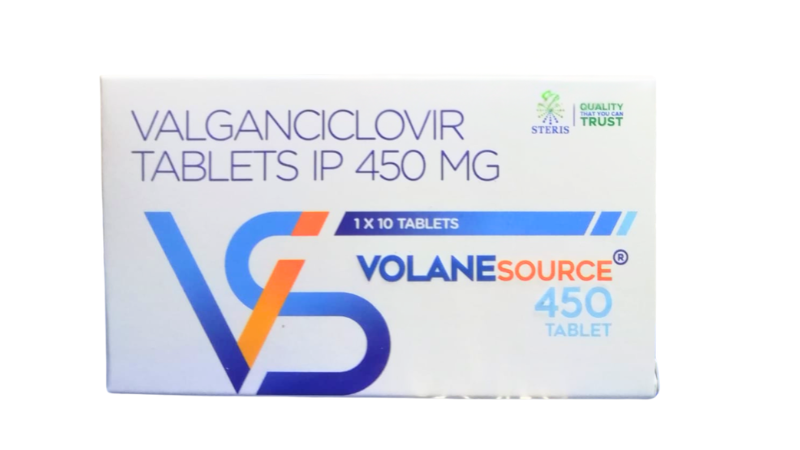


Valganciclovir Tablet IP 450 mg: Uses, Benefits, Dosage, Side Effects
Nov 16, 2026
What Is Valganciclovir Tablet IP 450 mg?
Valganciclovir Tablet IP 450 mg is a prescription antiviral medicine used for the treatment and prevention of certain infections caused by Cytomegalovirus (CMV). It contains valganciclovir as its active pharmaceutical ingredient and belongs to the antiviral medication category.
Cytomegalovirus (CMV) is a common virus belonging to the herpesvirus family. Although CMV infection may not cause serious symptoms in healthy individuals, it can lead to significant complications in people with weakened immune systems, including organ transplant recipients and individuals with advanced HIV infection.
Valganciclovir is an oral prodrug of ganciclovir. After absorption, it is converted into ganciclovir in the body, where it works by interfering with viral DNA replication. This helps prevent the virus from multiplying and spreading.
Valganciclovir 450 mg tablets are commonly used in specialist-supervised treatment plans for CMV retinitis and the prevention of CMV disease in certain organ transplant recipients.
What Are the Main Uses of Valganciclovir Tablet IP 450 mg?
Valganciclovir 450 mg is prescribed for specific CMV-related conditions. Its approved uses may vary depending on the country and product authorization.
1. Treatment of Cytomegalovirus (CMV) Retinitis
CMV retinitis is a serious viral infection affecting the retina, the light-sensitive tissue at the back of the eye. It is particularly concerning in individuals with severely weakened immune systems.
Valganciclovir helps control CMV viral replication and is used to treat CMV retinitis in eligible patients with AIDS. Early diagnosis and specialist treatment are important because untreated CMV retinitis can result in permanent vision loss.
2. Prevention of CMV Infection After Organ Transplantation
People who receive organ transplants may have an increased risk of CMV disease because medicines used to prevent organ rejection suppress the immune system.
Valganciclovir is prescribed to prevent CMV disease in certain high-risk kidney, heart, and kidney-pancreas transplant recipients.
3. Prevention of CMV Disease in High-Risk Patients
Patients with weakened immune systems may be particularly vulnerable to serious CMV complications.
Under appropriate medical supervision, valganciclovir can help prevent CMV disease in patients who meet approved treatment criteria.
4. Treatment in Patients with Weakened Immunity
CMV infection can become severe in people with advanced immunosuppression. Healthcare professionals may prescribe valganciclovir as part of a carefully monitored antiviral treatment plan.
The exact indication, dosage, and duration depend on the patient's condition, immune status, kidney function, and treatment response.
How Does Valganciclovir 450 mg Work?
Valganciclovir works by preventing the replication of Cytomegalovirus.
After oral administration, valganciclovir is converted into ganciclovir. Inside infected cells, ganciclovir undergoes phosphorylation to form an active compound called ganciclovir triphosphate.
This active form interferes with viral DNA polymerase, an enzyme required for viral DNA production.
The mechanism of action involves:
- Conversion into ganciclovir: Valganciclovir is absorbed and converted into its active antiviral form.
- Viral enzyme inhibition: The active compound interferes with viral DNA polymerase.
- Reduced viral replication: It prevents CMV from efficiently producing new viral DNA.
- Control of infection: This helps manage CMV infection and reduces the risk of disease progression in appropriate patients.
Valganciclovir does not completely eliminate latent CMV from the body. Treatment is intended to control active viral replication or prevent CMV disease in patients at risk.
Key Benefits of Valganciclovir Tablet IP 450 mg
When prescribed for an appropriate medical condition, Valganciclovir 450 mg offers several important therapeutic benefits.
1. Helps Control CMV Infection
Valganciclovir interferes with CMV replication and helps control active infection in patients who require antiviral treatment.
2. Supports the Treatment of CMV Retinitis
It is an established treatment option for CMV retinitis in eligible patients with AIDS. Controlling viral replication can help protect against further retinal damage.
3. Helps Prevent CMV Disease After Transplantation
The medicine is used as preventive antiviral therapy in certain high-risk organ transplant recipients, helping reduce the risk of CMV disease.
4. Oral Administration
Valganciclovir is available as an oral tablet, allowing patients to receive prescribed antiviral treatment without requiring every dose to be administered intravenously.
5. Useful in Specialist-Supervised Antiviral Treatment
Its established antiviral activity makes it an important medicine in the management of selected CMV infections, particularly in immunocompromised patients.
Valganciclovir 450 mg Dosage: How Should You Take It?
The dosage of Valganciclovir Tablet IP 450 mg depends on the medical condition being treated, kidney function, body weight in pediatric patients, and the patient's overall health.
According to US-approved prescribing information, examples of adult treatment schedules in patients with normal kidney function include:
- CMV retinitis induction treatment: 900 mg twice daily for 21 days.
- CMV retinitis maintenance treatment: 900 mg once daily.
- CMV prevention after kidney transplantation: 900 mg once daily, generally for up to 200 days.
- CMV prevention after heart or kidney-pancreas transplantation: 900 mg once daily, generally for up to 100 days.
These are indication-specific examples, not personalized treatment recommendations. Kidney impairment can require substantial dose adjustments.
Important Instructions for Taking Valganciclovir
- Take the medicine exactly as prescribed by your doctor.
- Take valganciclovir with food.
- Swallow the tablet whole.
- Do not break, crush, or chew the tablet.
- Do not change the dose or stop treatment without medical advice.
- Follow the recommended blood tests and kidney-function monitoring schedule.
Important: One tablet contains 450 mg of valganciclovir. The 450 mg tablet strength does not mean every patient should take one tablet daily. Some prescribed regimens require different doses and frequencies.
Side Effects
Like other antiviral medicines, valganciclovir may cause side effects. Some are mild, while others can be serious and require medical attention.
Common Side Effects
Reported adverse reactions include:
- Diarrhea
- Nausea
- Vomiting
- Fever
- Fatigue
- Headache
- Tremors
- Insomnia
- Urinary tract infections
Serious Side Effects
Valganciclovir can cause significant suppression of bone marrow activity, resulting in reduced blood cell counts.
Important potential complications include:
1. Neutropenia: A reduction in neutrophils, which increases the risk of infections.
2. Anemia: A reduction in red blood cells that may cause weakness, tiredness, and breathlessness.
3. Thrombocytopenia: A reduction in platelets that can increase the risk of bleeding and bruising.
4. Leukopenia: A reduction in white blood cells, potentially weakening the body's ability to fight infections.
5. Kidney problems: Valganciclovir may contribute to acute kidney injury, particularly in susceptible patients or when the dosage is not appropriately adjusted.
6. Reproductive risks: Based on animal studies, valganciclovir may cause fetal harm and impair fertility. It also carries mutagenic and carcinogenic potential based on nonclinical findings.
Seek immediate medical attention if you experience unusual bleeding, severe weakness, fever with signs of infection, reduced urination, or a severe allergic reaction.
Precautions Before Taking Valganciclovir 450 mg
Before starting treatment, inform your healthcare professional about your medical history and all medicines you currently use.
Special precautions are necessary for:
- Patients with kidney disease or reduced kidney function.
- Individuals with low white blood cell, red blood cell, or platelet counts.
- Pregnant women or individuals planning pregnancy.
- Breastfeeding women.
- Patients receiving chemotherapy or other medicines that suppress bone marrow.
- Individuals taking medicines that may affect kidney function.
Important Medical Monitoring
During treatment, your doctor may recommend:
- Complete blood count (CBC).
- Neutrophil and platelet monitoring.
- Kidney-function tests.
- Monitoring for signs of infection or bleeding.
Broken or crushed tablets should not be handled casually. If direct contact with a broken tablet occurs, follow the product instructions for washing the affected skin or eyes.
Valganciclovir should only be used under specialist medical supervision. It is not a general-purpose medicine for common colds, seasonal flu, or ordinary viral fever.
Writing
Frequently Asked Questions
1. What is Valganciclovir Tablet IP 450 mg used for?
Valganciclovir 450 mg is an antiviral medicine used to treat CMV retinitis in eligible patients with AIDS and prevent CMV disease in certain high-risk organ transplant recipients.
2. How does Valganciclovir 450 mg work?
It is converted into ganciclovir in the body. The active compound inhibits viral DNA polymerase, interfering with CMV replication and helping control the infection.
3. Can Valganciclovir 450 mg prevent CMV infection after a kidney transplant?
Yes. It is prescribed to prevent CMV disease in certain high-risk kidney transplant recipients. The treatment schedule and duration depend on transplant-related risk factors and kidney function.
4. What are the common side effects of Valganciclovir 450 mg?
Common side effects include diarrhea, nausea, vomiting, fever, fatigue, headache, tremors, and insomnia. It can also cause serious reductions in blood cell counts.
5. Should Valganciclovir 450 mg be taken with food?
Yes. Valganciclovir tablets should be taken with food according to prescribing instructions to support appropriate absorption.
6. Can Valganciclovir 450 mg affect kidney function?
Yes. Kidney problems can occur, and the medicine is eliminated primarily through the kidneys. Patients with reduced kidney function require appropriate dosage adjustments and medical monitoring.
7. Is Valganciclovir 450 mg an antibiotic or an antiviral?
Valganciclovir is an antiviral medicine, not an antibiotic. It is specifically used against certain viral infections, particularly Cytomegalovirus (CMV).
8. Can Valganciclovir 450 mg be used during pregnancy?
Valganciclovir may cause fetal harm based on animal studies. Pregnant women or individuals planning pregnancy must discuss the risks and alternative treatment options with their specialist before using it.
9. How long should Valganciclovir 450 mg be taken?
Treatment duration depends on the condition. For example, CMV retinitis has an initial induction phase followed by maintenance treatment, while transplant prevention follows a different schedule. Only the treating specialist should determine the duration.
10. Does Valganciclovir 450 mg completely cure CMV?
Valganciclovir controls active CMV replication but does not eliminate latent CMV from the body. The virus can remain dormant and may reactivate, particularly when immunity is weakened.
Conclusion
Valganciclovir Tablet IP 450 mg is an important prescription antiviral medicine used in the management and prevention of certain Cytomegalovirus (CMV) infections. Its active ingredient, valganciclovir, is converted into ganciclovir and works by interfering with viral DNA replication.
Its key therapeutic benefits include controlling CMV retinitis, helping prevent CMV disease in certain high-risk organ transplant recipients, and providing an oral treatment option for patients who require antiviral therapy.
Recent Post
Vonoprazan 10 mg: for Acid Reflux and GERD
Vonoprazan 20 mg: Uses, Benefits, Dosage, Side Effects
Ondansetron 4 mg Orally Disintegrating Tablets IP – Uses, Benefits & Precautions
Ondansetron 8 mg Orally Disintegrating Tablets IP : Uses, Benefits, Dosage & Side Effects
Tropicamide and Phenylephrine Hydrochloride Ophthalmic Solution: Uses, Benefits & Precautions
Levofloxacin Ophthalmic Solution 1.5% w/v – Uses, Benefits & Side Effects
Myo-inositol, Vitamin D3 & Folic Acid Sachets: Uses, Benefits & Side Effects
Warfarin Sodium IP 1mg Uses, Benefits, Side Effects & Precautions
Warfarin Sodium IP 2mg Helps Prevent Blood Clots
Warfarin Sodium IP 3mg Uses, Benefits, Side Effects & Dosage Guide

