


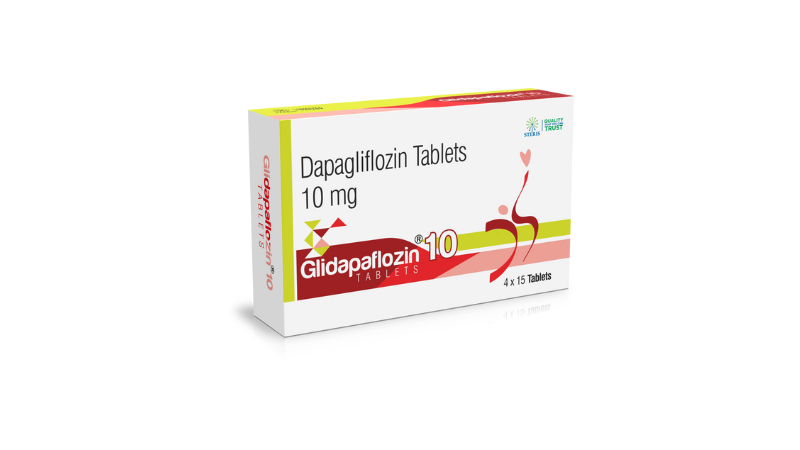



Dapagliflozin (10mg) & GLIDAPAFLOZIN 10 Tablet - Steris Healthcare PVT LTD………
May 14, 2024
Diabetes treatment has evolved significantly beyond simply lowering blood sugar — modern medications are increasingly valued for the broader protective effects they offer to the heart and kidneys, organs that bear much of the long-term burden of poorly controlled diabetes. Glidapaflozin 10, manufactured by Steris Healthcare, is a dapagliflozin 10 mg tablet belonging to the SGLT2 inhibitor class, used for the management of type 2 diabetes mellitus, and, notably, for heart failure and chronic kidney disease in appropriately selected patients.
This article explains dapagliflozin 10 mg uses, why this medication has become such a significant addition to modern chronic disease management, how it works, its key benefits, potential side effects, dosage guidelines, and important precautions.
Glidapaflozin 10 is a prescription-only medication. It should be used only under the guidance of a physician, following proper diagnosis and clinical assessment, and should never be started, stopped, or adjusted without medical supervision.
Why It's Important
For decades, diabetes medications were judged almost entirely by how well they lowered blood sugar. But large-scale clinical research over the past several years has revealed something remarkable about SGLT2 inhibitors like dapagliflozin: their benefits extend well beyond glucose control, offering meaningful protective effects for the heart and kidneys — organs that are frequently damaged by the long-term effects of diabetes, high blood pressure, and related metabolic conditions.
This matters enormously in real-world practice. Heart failure and chronic kidney disease are two of the most common and serious complications associated with type 2 diabetes, and they significantly affect both quality of life and long-term survival. Dapagliflozin has been shown in major clinical trials to reduce hospitalizations for heart failure and to slow the progression of chronic kidney disease — benefits that appear to occur independently of, and in addition to, its blood-sugar-lowering effects. This has led to dapagliflozin being approved not just for diabetes management, but specifically for heart failure and chronic kidney disease treatment, even in some patients who don't have diabetes at all.
This expanded role reflects a broader shift in how modern medicine approaches metabolic and cardiovascular disease — recognizing that diabetes, heart disease, and kidney disease are deeply interconnected, and that treating one condition effectively can meaningfully protect against the others. This is precisely why dapagliflozin has become one of the more significant additions to chronic disease management in recent years, valued for its multi-organ protective profile rather than glucose control alone.
Key Benefits
What Are the Benefits?
- Effective blood sugar control – Dapagliflozin helps lower blood glucose by promoting glucose excretion through the urine, working independently of insulin, which is particularly valuable for patients whose diabetes involves declining insulin production or significant insulin resistance.
- Reduces risk of heart failure hospitalization – Clinical studies have demonstrated that dapagliflozin significantly reduces the risk of hospitalization for heart failure, a benefit that has expanded its use well beyond diabetes management alone.
- Slows chronic kidney disease progression – Dapagliflozin has been shown to help slow the decline in kidney function in patients with chronic kidney disease, offering meaningful long-term renal protection.
- Supports modest weight reduction – Because dapagliflozin promotes glucose (and associated calorie) excretion through urine, many patients experience modest weight loss as an additional benefit alongside blood sugar improvement.
- May help lower blood pressure slightly – Dapagliflozin's mild diuretic-like effect can contribute to small reductions in blood pressure, offering an additional metabolic benefit for many patients.
- Low intrinsic risk of hypoglycemia – Because its mechanism doesn't rely on stimulating insulin secretion, dapagliflozin carries a comparatively low risk of causing low blood sugar when used alone.
- Once-daily oral dosing – As a once-daily tablet, dapagliflozin is straightforward to incorporate into a daily routine, supporting long-term treatment adherence.
Dapagliflozin 10 mg uses
- Management of type 2 diabetes mellitus, as monotherapy or in combination with other antidiabetic medications
- Treatment of heart failure with reduced or preserved ejection fraction, in appropriately diagnosed patients, regardless of diabetes status
- Treatment of chronic kidney disease to slow progression of kidney function decline, in patients meeting specific clinical criteria, regardless of diabetes status
- Reducing cardiovascular risk in patients with type 2 diabetes and established cardiovascular disease or multiple cardiovascular risk factors, as determined by a physician
Mechanism of action:
Dapagliflozin belongs to a class of medications called SGLT2 inhibitors (sodium-glucose cotransporter-2 inhibitors). It works by blocking SGLT2, a protein located in the kidneys' proximal tubules that is normally responsible for reabsorbing filtered glucose back into the bloodstream. Under normal physiology, nearly all glucose that passes through the kidney's filtering system is reabsorbed back into the blood via this transporter, preventing glucose loss in urine.
By inhibiting SGLT2, dapagliflozin prevents this glucose reabsorption, causing excess glucose to be excreted in the urine instead of being returned to the bloodstream. This lowers blood glucose levels in a way that is entirely independent of insulin — meaning it doesn't rely on the pancreas producing more insulin or on cells responding better to existing insulin, which is part of why it carries a low intrinsic hypoglycemia risk on its own.
Beyond its glucose-lowering effect, dapagliflozin's cardiovascular and renal benefits are thought to involve several additional mechanisms, including reduced intraglomerular pressure within the kidney's filtering units (which may help slow kidney damage over time), mild diuretic and blood-pressure-lowering effects that reduce cardiac workload, and potential favorable effects on cardiac energy metabolism. These multiple, complementary mechanisms are part of why dapagliflozin's clinical benefits extend well beyond glucose control alone, supporting its expanded use in heart failure and chronic kidney disease treatment.
Side Effects
Dapagliflozin 10 mg, like all medications, can cause side effects, and understanding these helps set realistic expectations before starting treatment.
Common side effects may include:
- Increased urination
- Increased thirst
- Genital yeast infections (more common in women, but can occur in men), related to increased glucose in the urine creating a favorable environment for fungal growth
- Urinary tract infections
- Mild dizziness, particularly related to fluid loss
- Headache
Available Substitutes
Depending on the specific indication and patient profile, doctors may consider alternative SGLT2 inhibitors (such as empagliflozin or canagliflozin), other diabetes medication classes such as DPP-4 inhibitors or GLP-1 receptor agonists, or different heart failure and kidney disease management strategies depending on individual clinical circumstances. Any substitution should be made only under medical guidance based on your specific diagnosis and treatment goals.
Dosage Guidelines
- Dosage should be determined by your physician based on your specific indication (diabetes, heart failure, or chronic kidney disease) and kidney function.
- Glidapaflozin 10 is typically taken once daily, in the morning, with or without food.
- Maintain adequate fluid intake while on this medication, particularly during illness, hot weather, or increased physical activity, to reduce the risk of dehydration.
- Regular monitoring of kidney function, blood glucose, and general clinical status is an important part of ongoing treatment.
- Practice good genital hygiene to help reduce the risk of urinary tract and genital yeast infections associated with this medication class.
- If a dose is missed, take it as soon as you remember, unless it's close to your next scheduled dose — do not double up. Follow your doctor's specific missed-dose guidance.
- Do not adjust your dose independently, and inform your doctor promptly if you become significantly ill, are unable to eat or drink normally, or are scheduled for surgery, as temporary discontinuation may be advised in these situations.
This is general educational information only. Your actual dose and monitoring plan must be determined by your doctor based on your specific clinical picture.
Precautions & Warnings
- Prescription-only medication: Should be used only following a confirmed diagnosis and under continuous medical supervision.
- Risk of diabetic ketoacidosis: Be aware of DKA symptoms, and seek medical attention promptly if they occur, even if your blood sugar readings appear normal or only mildly elevated.
- Dehydration risk: Use with caution in older adults, those on diuretics, or anyone at risk of volume depletion; maintain adequate fluid intake, especially during illness or hot weather.
- Genital and urinary infections: Practice good hygiene and report persistent or worsening genital or urinary symptoms to your doctor promptly.
- Fournier's gangrene: Seek immediate medical attention for any severe pain, swelling, or redness in the genital or perineal region, along with fever, as this rare but serious infection requires urgent treatment.
- Kidney function: Regular kidney function monitoring is important, particularly when starting treatment or during illness involving significant fluid loss.
- Before surgery: Inform your doctor and surgical team that you're taking this medication, as temporary discontinuation is often advised before certain surgical procedures.
- Pregnancy and breastfeeding: Not generally recommended; consult your doctor, as alternative treatments are typically preferred during these periods.
- Peripheral vascular disease: Discuss any history of peripheral vascular disease or prior lower limb complications with your doctor before starting this medication.
- Drug interactions: May interact with diuretics and other blood-pressure-lowering medications; always disclose your complete medication list to your doctor.
- Storage: Store away from heat and moisture, and keep out of reach of children.
Frequently Asked Questions
1. What is Glidapaflozin 10 used for?
Glidapaflozin 10 is used to manage type 2 diabetes, and is also approved for heart failure and chronic kidney disease treatment in appropriately diagnosed patients.
2. What is dapagliflozin 10 mg used for?
Dapagliflozin 10 mg is used to lower blood sugar in type 2 diabetes by promoting glucose excretion through urine, and separately, to reduce heart failure hospitalizations and slow chronic kidney disease progression.
3. Dapagliflozin 10 mg uses in Hindi — क्या है?
Dapagliflozin 10 mg का उपयोग टाइप 2 डायबिटीज़ में ब्लड शुगर को नियंत्रित करने और साथ ही हार्ट फेलियर तथा किडनी रोग की प्रगति को धीमा करने के लिए किया जाता है। (डॉक्टर की सलाह अनुसार ही लें।)
4. What does tab dapagliflozin 10 mg do in the body?
Tab dapagliflozin 10 mg blocks a kidney protein called SGLT2, preventing glucose reabsorption and causing excess glucose to be excreted in the urine, which lowers blood sugar independently of insulin.
5. Dapagliflozin tablet uses in Hindi — विस्तार से जानकारी?
Dapagliflozin टैबलेट किडनी में ग्लूकोज़ के पुनः अवशोषण को रोककर अतिरिक्त शुगर को पेशाब के माध्यम से बाहर निकालने में मदद करता है, जिससे ब्लड शुगर नियंत्रित रहता है। (डॉक्टर की सलाह अनुसार ही लें।)
6. What are the common side effects of dapagliflozin 10 mg?
Common side effects include increased urination, increased thirst, genital yeast infections, and urinary tract infections.
7. Can dapagliflozin cause low blood sugar?
It carries a comparatively low hypoglycemia risk on its own, since it doesn't stimulate insulin secretion, though risk can increase when combined with other diabetes medications like sulfonylureas or insulin.
8. What is diabetic ketoacidosis, and is it a risk with dapagliflozin?
Diabetic ketoacidosis is a rare but serious complication associated with SGLT2 inhibitors like dapagliflozin, which can occur even with near-normal blood sugar levels; symptoms include nausea, vomiting, and abdominal pain, requiring emergency care.
9. Does dapagliflozin help with weight loss?
Yes, many patients experience modest weight reduction due to the calorie loss associated with increased glucose excretion in the urine.
10. Can dapagliflozin be used for heart failure without diabetes?
Yes, dapagliflozin is approved for heart failure treatment in appropriately diagnosed patients regardless of whether they have diabetes.
11. Is dapagliflozin safe for the kidneys?
Dapagliflozin has been shown to help slow chronic kidney disease progression in appropriate patients, though kidney function should still be monitored regularly during treatment.
12. What is Fournier's gangrene, and how is it related to dapagliflozin?
Fournier's gangrene is a rare but serious bacterial infection of the genital and perineal tissue that has been reported with SGLT2 inhibitor use; severe pain, swelling, or fever in this area requires immediate emergency care.
13. Can dapagliflozin cause urinary tract or genital infections?
Yes, increased glucose in the urine can create a favorable environment for yeast and bacterial growth, making urinary tract and genital infections more common with this medication class.
14. Is a prescription required for dapagliflozin 10 mg tablets?
Yes, dapagliflozin is a prescription-only medication and should only be used under the guidance of a licensed physician following a confirmed diagnosis.
15. Should dapagliflozin be stopped before surgery?
Yes, temporary discontinuation is often advised before certain surgical procedures; inform your doctor and surgical team that you're taking this medication.
16. Can dapagliflozin 10 mg be combined with metformin?
Yes, it's commonly combined with metformin and other antidiabetic medications as part of a comprehensive treatment plan for type 2 diabetes.
17. What should I do if I miss a dose of dapagliflozin 10 mg?
Take it as soon as you remember unless it's close to your next scheduled dose — don't double up, and follow your doctor's specific missed-dose guidance.
18. Can dapagliflozin be taken during pregnancy?
It's generally not recommended during pregnancy; alternative treatments are typically preferred — consult your doctor for guidance specific to your situation.
19. How does dehydration risk relate to dapagliflozin use?
Because of its diuretic-like effect, dapagliflozin can increase the risk of dehydration, particularly in older adults or those on other diuretics — maintaining adequate fluid intake is important, especially during illness or hot weather.
20. What monitoring is needed while taking dapagliflozin 10 mg?
Regular monitoring typically includes blood glucose, kidney function, and periodic assessment for signs of infection or dehydration, with the specific schedule determined by your doctor based on your indication for use.
Conclusion
Glidapaflozin 10, containing dapagliflozin 10 mg, represents a genuinely versatile addition to modern chronic disease management — offering effective blood sugar control for type 2 diabetes while also providing meaningful protective benefits for the heart and kidneys, conditions that frequently coexist with and complicate diabetes management. This Steris Healthcare formulation reflects the broader shift in diabetes care toward medications valued for their multi-organ benefits rather than glucose control alone.
That said, getting the full benefit of this medication safely requires attention to its specific risk profile — staying well hydrated, practicing good hygiene to reduce infection risk, recognizing the signs of rare but serious complications like DKA and Fournier's gangrene, and maintaining regular follow-up with your doctor. If you have type 2 diabetes, heart failure, or chronic kidney disease and your doctor is considering Glidapaflozin 10 as part of your treatment plan, understanding both its substantial benefits and its specific precautions will help you use this medication safely and effectively over the long term.
For Further Information:
Mail Us: contact@sterispharma.com or info@sterispharma.com
Call Now: +91 8824175417, +91 9982524671
Recent Post
Semaglutide 4mg vs Pancreatitis Risk: What Doctors Want You to Know
Semaglutide 8mg Injection: Frequently Asked Questions Answered by Experts

Mycophenolate Mofetil 500mg (Mycofortic M 500): Uses, Benefits & Precautions – Complete Guide
What is Bisogard 1.25? Bisoprolol 1.25mg Uses, Dosage & Side Effects Explained

Can Semaglutide Injection Be Used Without Diabetes?

What Are Nintedanib Soft Gelatin Capsules Used For? Complete Guide

Where to Buy Semaglutide Injection in India: Price, Pen & Prescription Guide
ERITOCOX BENZ 60/5 Dosage Guide: How to Take Etoricoxib & Cyclobenzaprine Tablets Safely

Gabapentin and Methylcobalamin Tablets Side Effects: What Patients Should Know
Thyroxine sodium tablets IP: उपयोग, फायदे और साइड इफेक्ट्स