


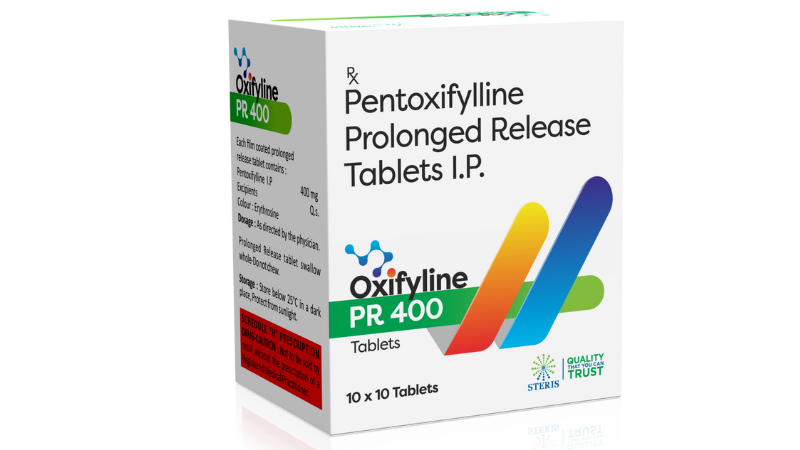



OXIFYLINE PR 400 & Pentoxifylline (400mg): Uses , Side effects and other information.
Jul 11, 2024
OXIFYLINE PR 400 is a prolonged-release formulation containing Pentoxifylline 400 mg, designed to support better blood flow and improve oxygen delivery to tissues. Pentoxifylline is a well-established methylxanthine derivative widely used for conditions related to poor circulation. Its primary therapeutic use is in managing peripheral vascular disease (PVD), including intermittent claudication, where restricted blood flow leads to pain, cramps, and difficulty walking.
With its prolonged-release technology, OXIFYLINE PR 400 ensures a steady therapeutic effect, reducing dosing frequency and improving patient adherence. The tablet is formulated to deliver Pentoxifylline gradually, allowing consistent plasma levels and sustained symptom relief throughout the day.
In the Indian healthcare setting—where vascular disorders are increasingly linked to diabetes, lifestyle factors, and aging—OXIFYLINE PR 400 offers a reliable option to support healthier circulation, reduce discomfort, and improve daily mobility.
What is Pentoxifylline?
Pentoxifylline is classified as a hemorheologic agent, meaning it improves blood flow by enhancing the flexibility of red blood cells, reducing blood viscosity, and improving microcirculation. This mechanism benefits individuals experiencing symptoms caused by narrowed blood vessels, poor oxygen supply, or compromised blood flow.
OXIFYLINE PR 400 uses the same mechanism to help manage conditions where improving circulation can significantly enhance quality of life.
Uses of OXIFYLINE PR 400 (Pentoxifylline 400 mg)
OXIFYLINE PR 400 is commonly prescribed for:
1. Peripheral Artery Disease (PAD)
A condition where blood vessels become narrowed, reducing blood flow to the limbs. Pentoxifylline helps improve walking distance and reduces pain associated with PAD.
2. Intermittent Claudication
Cramping or pain in the legs triggered by walking or physical exertion due to inadequate blood flow. OXIFYLINE PR 400 helps lessen the intensity and frequency of these symptoms.
3. Chronic Cerebral Circulatory Insufficiency
In situations where the brain receives insufficient oxygenated blood, Pentoxifylline may support better cognitive and neurological function by enhancing microcirculation.
4. Diabetic Microangiopathy
Diabetes often leads to impaired microcirculation. Pentoxifylline may help reduce symptoms associated with poor tissue oxygenation.
5. Venous Ulcers
Improved blood flow and oxygen delivery support better wound healing in patients with chronic venous insufficiency and leg ulcers.
6. Peripheral Neuropathy with Circulation Problems
Some forms of neuropathy worsen due to poor blood supply. Pentoxifylline helps enhance microvascular flow and nourishment to nerves.
7. Post-Stroke Circulatory Support
Though not a primary treatment, Pentoxifylline may be used as an adjunct in chronic stages of stroke recovery to improve cerebral circulation.
8. Raynaud’s Phenomenon
By promoting blood flow, OXIFYLINE PR 400 may help patients suffering from cold-triggered circulation problems in the fingers and toes.
Key Benefits of OXIFYLINE PR 400
OXIFYLINE PR 400 offers several clinically relevant benefits due to its prolonged-release Pentoxifylline formulation:
1. Improves Blood Flow Naturally
The tablet makes red blood cells more flexible and decreases blood thickness, ensuring smoother circulation through even the smallest vessels.
2. Reduces Leg Pain and Cramps
Patients suffering from intermittent claudication or peripheral artery disease often experience pain on walking. OXIFYLINE PR 400 increases pain-free walking time and reduces discomfort.
3. Supports Better Oxygen Delivery
Improved microcirculation ensures tissues and organs receive sufficient oxygen, promoting healing and reduced inflammation.
4. Prolonged-Release Advantage
Unlike immediate-release formulations, OXIFYLINE PR 400 offers:
-
Steady drug levels
-
Fewer fluctuations
-
Better adherence
-
Lower gastrointestinal discomfort
This makes it ideal for chronic conditions requiring long-term therapy.
5. Helpful for Diabetic Patients with Vascular Issues
Diabetes affects small blood vessels, leading to complications in the legs, nerves, kidneys, and eyes. Pentoxifylline supports healthier microcirculation in such cases.
6. Boosts Wound Healing
Patients with venous ulcers, diabetic foot problems, or chronic wounds may experience improved healing due to enhanced oxygen supply.
7. Supports Brain Circulation
Patients experiencing symptoms like dizziness, reduced alertness, memory issues, or chronic cerebrovascular insufficiency may benefit from better blood flow to the brain.
8. Enhances Mobility and Daily Activity
By reducing pain and improving circulation, OXIFYLINE PR 400 helps patients walk more comfortably, stay active, and maintain independence.
9. Suitable for Long-Term Use
When taken as prescribed, Pentoxifylline is well tolerated for extended therapy in chronic vascular conditions.
How OXIFYLINE PR 400 Works (Mechanism of Action)
Pentoxifylline acts through:
✔ Improved Red Blood Cell Flexibility
Stiff or rigid cells affect blood flow. Pentoxifylline makes them more flexible.
✔ Decreased Blood Viscosity
Thinner blood flows more easily through narrowed vessels.
✔ Improved Microcirculation
Better flow in small blood vessels ensures tissues get enough oxygen.
✔ Reduced Platelet Aggregation
Pentoxifylline reduces the tendency of platelets to clump, improving circulation.
✔ Anti-inflammatory Properties
It helps reduce inflammation in vessel walls and improves tissue health.
Dosage & Administration
Recommended Dosage
-
OXIFYLINE PR 400 is usually prescribed as one tablet twice or thrice daily, depending on the severity of the condition.
-
Dosage may vary based on the patient’s age, medical history, and response to treatment.
How to Take
-
Swallow the tablet whole with a glass of water.
-
Do not crush, chew, or break the prolonged-release tablet, as this will affect its controlled-release properties.
-
Take after meals to minimize stomach irritation.
Duration of Therapy
-
Benefits may take 2–4 weeks to appear.
-
Full therapeutic improvement may take 8–12 weeks.
-
Continue medication as advised by the healthcare provider.
Missed Dose
-
Take as soon as remembered.
-
Skip if close to the next dose.
-
Avoid doubling doses.
Important
Always follow the physician’s dosage recommendations, especially if the patient has:
-
Low blood pressure
-
Heart disease
-
Kidney or liver impairment
-
Bleeding disorders
Side Effects of OXIFYLINE PR 400
Pentoxifylline is generally well tolerated, but some patients may experience mild to moderate side effects.
Common Side Effects
-
Nausea
-
Indigestion
-
Bloating
-
Dizziness
-
Headache
-
Vomiting
-
Diarrhoea
-
Flushing or warmth
These are usually temporary and improve with continued use.
Less Common Side Effects
-
Rapid heartbeat
-
Chest discomfort
-
Skin rash
-
Weakness or fatigue
Rare but Serious Side Effects
Seek medical help if the patient experiences:
-
Severe bleeding
-
Unusual bruising
-
Fainting episodes
-
Severe allergic reactions (swelling, difficulty breathing)
Patients on blood thinners such as warfarin should be monitored closely.
Precautions & Warnings
1. Not for Patients with Active Bleeding
Pentoxifylline may increase the risk of bleeding.
2. Avoid in Recent Stroke or Severe Heart Attack
Not recommended during acute cardiovascular events.
3. Kidney Impairment
Dose adjustment may be necessary.
4. Liver Disorders
Monitor liver function regularly.
5. Pregnancy & Breastfeeding
Use only if clearly needed and under medical guidance.
6. Avoid Alcohol
Alcohol increases dizziness and gastric irritation.
7. Drug Interactions
Inform the doctor if the patient is taking:
-
Blood thinners
-
Antihypertensives
-
Antidiabetic medicines
-
Theophylline
-
NSAIDs
8. Low Blood Pressure
Monitor regularly, especially in elderly patients.
9. Surgery
Pentoxifylline may need to be stopped before major surgery.
Who Should Avoid OXIFYLINE PR 400?
-
Patients with severe heart disease
-
Individuals with recent retinal bleeding
-
Those with severe kidney impairment unless advised
-
Patients allergic to Pentoxifylline or xanthine derivatives
Conclusion
Pentoxifylline 400 mg Prolonged-Release Tablets is a dependable, well-researched therapy for improving blood flow and supporting patients with circulation-related disorders. From helping manage intermittent claudication to enhancing overall microvascular health, it plays a vital role in improving mobility, oxygen delivery, and tissue healing.
Its prolonged-release formulation ensures steady relief, fewer fluctuations, and better long-term outcomes—making OXIFYLINE PR 400 a preferred choice for doctors and patients across India dealing with vascular insufficiency, diabetic circulation problems, and chronic ischemic symptoms.
Recent Post
Semaglutide 4mg vs Pancreatitis Risk: What Doctors Want You to Know
Semaglutide 8mg Injection: Frequently Asked Questions Answered by Experts
Mycophenolate Mofetil 500mg (Mycofortic M 500): Uses, Benefits & Precautions – Complete Guide
What is Bisogard 1.25? Bisoprolol 1.25mg Uses, Dosage & Side Effects Explained

Can Semaglutide Injection Be Used Without Diabetes?

What Are Nintedanib Soft Gelatin Capsules Used For? Complete Guide

Where to Buy Semaglutide Injection in India: Price, Pen & Prescription Guide

ERITOCOX BENZ 60/5 Dosage Guide: How to Take Etoricoxib & Cyclobenzaprine Tablets Safely

Gabapentin and Methylcobalamin Tablets Side Effects: What Patients Should Know
Thyroxine sodium tablets IP: उपयोग, फायदे और साइड इफेक्ट्स

