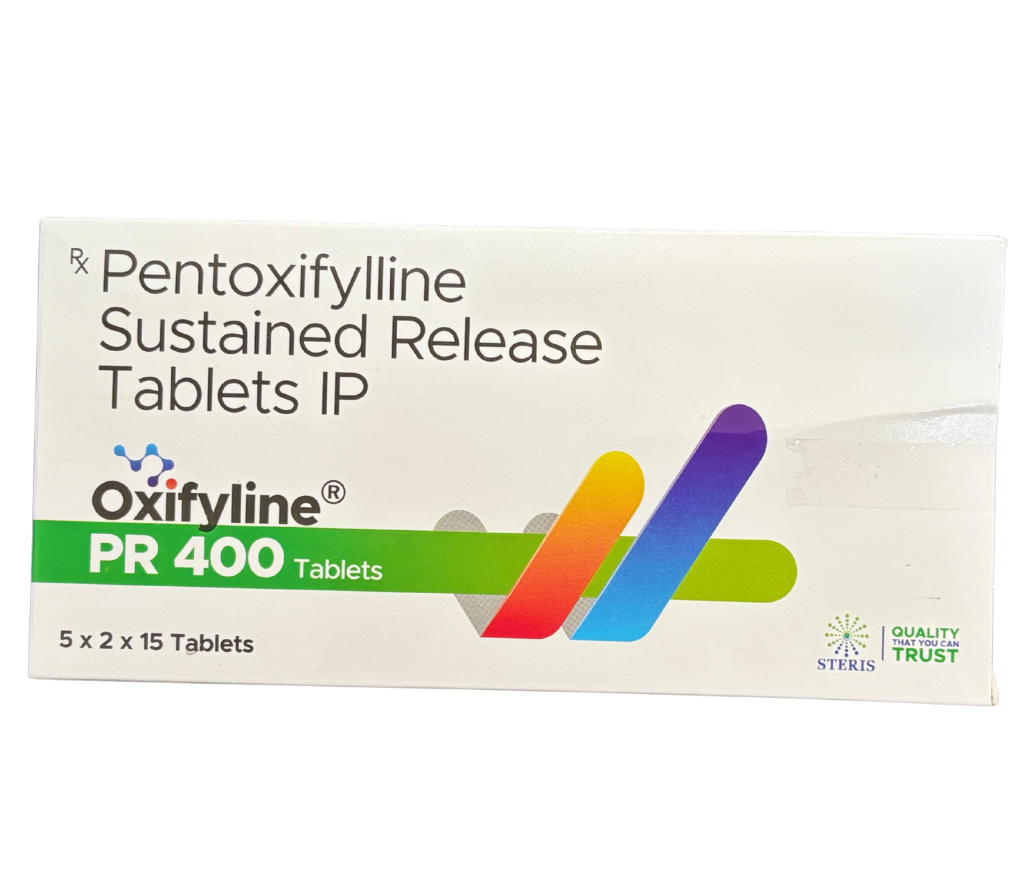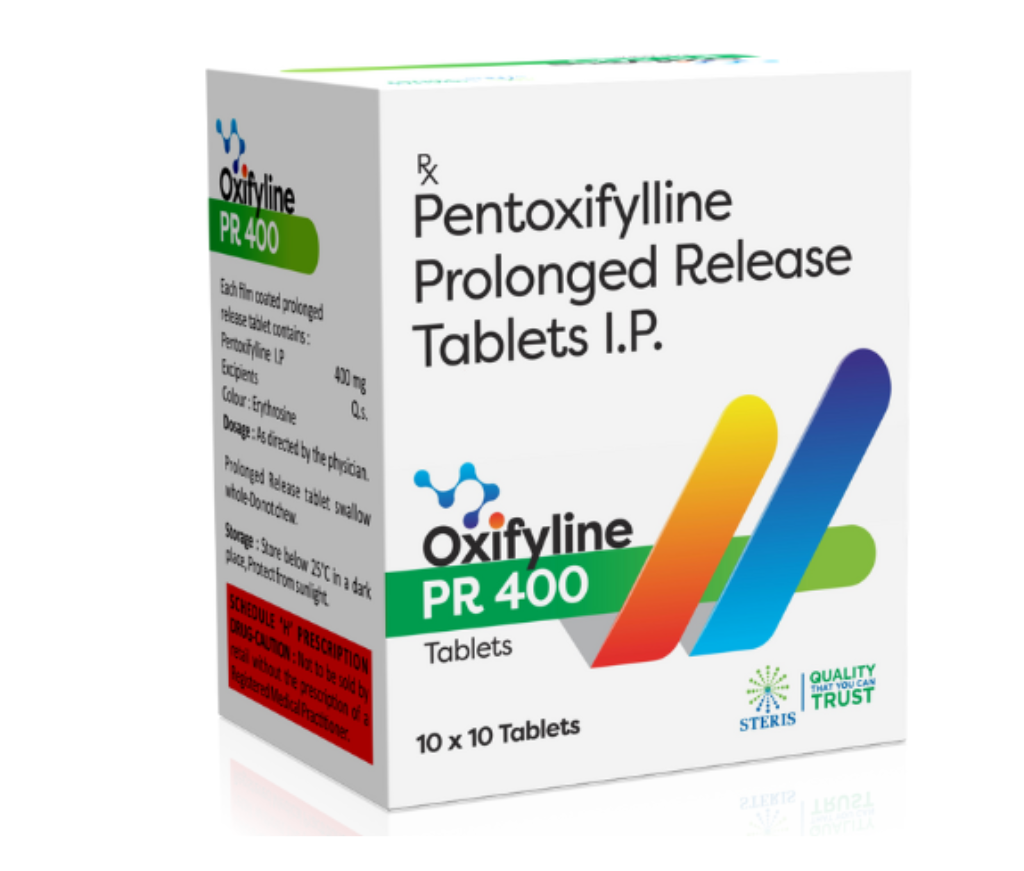
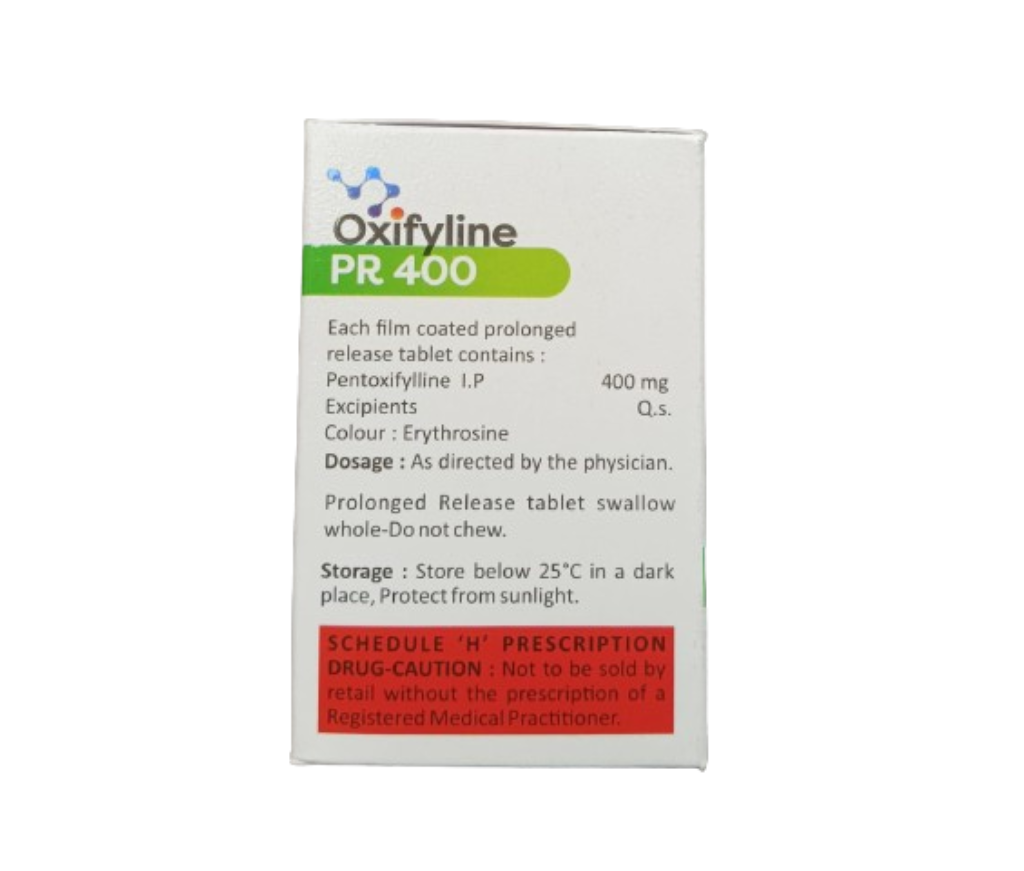
Pentoxifylline 400mg | OXIFYLINE PR 400
 Item requires a valid prescription
Manufactured By Steris Healthcare Pvt Ltd
Composition pentoxifylline 400mg
Rs 80.00
MRP Rs 196.00
(59% OFF)
Includes all taxes
Package SIZE
( For 10 Tablets )

100% Authentic
Products

Free
Shipping*

Products
Return Policy
Description:
Pentoxifylline 400mg tablet is a prescription medicine that enhances blood circulation by thinning blood viscosity and improving the flexibility of red blood cells.peripheral vascular disease, most commonly to relieve the leg pain, cramping, and fatigue caused by intermittent claudication. It works by making red blood cells more flexible and reducing blood viscosity, allowing blood to flow more easily through narrowed blood vessels. It is typically taken with food, 2-3 times daily as prescribed. Common side effects include nausea, dizziness, and stomach upset.
What Is Pentoxifylline 400mg Tablet?
Pentoxifylline 400mg tablet is a hemorheologic agent — a medicine that improves the flow properties of blood — prescribed primarily for the management of intermittent claudication associated with chronic peripheral arterial disease (PAD). People with this condition often experience pain, cramping, or fatigue in their calf muscles during walking or exercise due to reduced blood supply to the limbs, which improves with rest. Pentoxifylline helps address this at a microcirculatory level rather than simply masking the symptom.
Pentoxifylline is also known by the older international non-proprietary name oxpentifylline, particularly in some regions and older medical literature, though "pentoxifylline" is the more widely used and currently standardized name globally, including in India. It has been used in clinical practice for several decades and is considered a well-established medicine, not a newly developed drug, with a long track record of use in vascular medicine.
How Pentoxifylline Works
Pentoxifylline improves blood flow through several complementary actions on blood cells and vessel dynamics:
- Improved Red Blood Cell Flexibility – Pentoxifylline increases the deformability (flexibility) of red blood cells, allowing them to pass more easily through narrowed or partially blocked small blood vessels.
- Reduced Blood Viscosity – By lowering plasma fibrinogen levels and altering blood cell interactions, it reduces the overall thickness (viscosity) of blood, easing its passage through the circulatory system.
- Decreased Platelet Aggregation – It reduces the tendency of platelets to clump together, supporting smoother blood flow and reducing clot-related blockages in small vessels.
- Enhanced Microcirculation – The combined effect of these actions improves oxygen delivery to tissues in the extremities, particularly the legs, helping to relieve symptoms of poor circulation such as pain and cramping during activity.
Clinical Indications
| Indication | Details |
|---|---|
| Intermittent Claudication | Pain, cramping, or fatigue in leg muscles during walking, due to peripheral arterial disease |
| Peripheral Vascular Disease (PVD) | Chronic conditions involving reduced blood flow to the limbs |
| Circulatory Disorders | Supportive use in select microcirculatory and vascular insufficiency conditions as advised by a physician |
Dosage Guidelines
| Parameter | Recommendation |
|---|---|
| Standard Dose | 400mg, 2 to 3 times daily |
| Administration | Taken orally with or immediately after food to reduce stomach upset |
| Tablet Handling | Swallow whole; do not crush, break, or chew extended-release formulations |
| Duration for Effect | Clinical benefit may take 4 to 8 weeks of consistent use to become noticeable |
| Missed Dose | Take as soon as remembered; skip if close to the next dose — do not double up |
| Course Continuity | Should be taken consistently as prescribed for the full recommended duration |
Key Benefits of Pentoxifylline 400mg
- Improves Walking Distance: Helps reduce leg pain and cramping during physical activity in people with intermittent claudication.
- Enhances Blood Flow: Makes red blood cells more flexible and reduces blood viscosity for smoother circulation.
- Supports Tissue Oxygenation: Improves oxygen delivery to muscles and tissues in the extremities.
- Well-Established Safety Profile: A long-standing, extensively studied medicine with decades of clinical use.
- Non-Vasodilator Mechanism: Offers a distinct approach to improving circulation compared to medicines that simply widen blood vessels.
- Oral Convenience: Available as an easy-to-administer oral tablet for long-term outpatient management.
Precautions Before Taking Pentoxifylline
- Inform your doctor if you have a history of bleeding disorders, recent stroke, or recent heart attack, as Pentoxifylline affects blood flow properties.
- Use with caution in people with severe kidney or liver impairment; dose adjustment may be required.
- Inform your doctor if you are taking blood thinners (anticoagulants) or other medicines that affect bleeding risk, due to potential interactions.
- Should be used cautiously in people with low blood pressure, as it may contribute to further lowering of blood pressure in some individuals.
- Take with food to minimize gastrointestinal side effects such as nausea or stomach upset.
- Inform your doctor about all other medications, including those for diabetes and blood pressure, before starting treatment.
- Not recommended during pregnancy or breastfeeding unless specifically advised by a doctor.
- Should not be stopped abruptly without medical advice, even if symptoms improve.
Side Effects of Pentoxifylline 400mg
Common Side Effects
- Nausea
- Dizziness
- Stomach upset or bloating
- Headache
- Flushing
- Vomiting
Serious Side Effects
- Signs of bleeding: unusual bruising, blood in stool or urine, prolonged bleeding from cuts
- Chest pain or irregular heartbeat
- Severe dizziness or fainting
- Signs of liver problems: yellowing of skin/eyes, dark urine, severe stomach pain
- Severe allergic reaction: swelling of face/lips/tongue, difficulty breathing, rash
Pentoxifylline vs Other Circulatory Treatment Options
| Option | Type | Mechanism | Duration of Use |
|---|---|---|---|
| Pentoxifylline 400mg | Hemorheologic agent | Improves RBC flexibility, reduces blood viscosity | Long-term, consistent daily use |
| Cilostazol | Antiplatelet/vasodilator | Inhibits platelet aggregation, dilates vessels | Long-term, consistent daily use |
| Aspirin (low-dose) | Antiplatelet | Reduces platelet clumping | Long-term daily use |
| Statins | Lipid-lowering agents | Reduces atherosclerotic plaque progression | Long-term daily use |
| Supervised exercise therapy | Non-pharmacological | Improves collateral circulation | Ongoing structured programs |
Key Statistics
| Statistic | Data Point | Source |
|---|---|---|
| Approval history | Pentoxifylline has been used in clinical practice since the 1970s-1980s, an established, well-studied medicine | Pharmacological/clinical literature |
| Time to clinical benefit | Improvement in walking distance may take approximately 4-8 weeks of consistent use | Clinical vascular medicine literature |
| Global prevalence of PAD | Peripheral arterial disease affects a significant proportion of adults over 60, particularly those with diabetes or smoking history | Peer-reviewed vascular medicine literature |
| Dosing frequency | Commonly prescribed 2-3 times daily with food | Standard prescribing information. |
Frequently Asked Questions
1. What is Pentoxifylline 400mg used for?
Pentoxifylline 400mg is primarily used to improve blood flow and relieve symptoms of intermittent claudication — leg pain, cramping, and fatigue caused by peripheral arterial disease — that occurs during walking or physical activity.
2. What is the other name for Pentoxifylline?
Pentoxifylline is also known by the older name oxpentifylline, which is still used in some regions and in older medical literature. Pentoxifylline is the more commonly used and internationally standardized name today.
3. Is Pentoxifylline a new drug?
No, Pentoxifylline is not a new drug. It has been used in clinical practice for several decades, since the 1970s-1980s, and is considered a well-established medicine in the management of peripheral vascular disease, with an extensive history of clinical use and study.
4. What is the best time to take Pentoxifylline?
Pentoxifylline is generally best taken with or immediately after meals to help reduce the risk of stomach upset or nausea. It is typically taken 2 to 3 times a day at evenly spaced intervals, as advised by your doctor, to maintain consistent blood levels.
5. How long does it take for Pentoxifylline to work?
Noticeable improvement in walking distance and reduction in leg cramping may take approximately 4 to 8 weeks of consistent, regular use. It is important not to stop the medicine early even if benefits are not immediately apparent.
6. Can Pentoxifylline be taken with blood thinners?
Pentoxifylline should be used cautiously with blood thinners or other medicines that affect bleeding risk, as it can influence blood flow properties. Always inform your doctor about all medicines you are taking.
7. Does Pentoxifylline cure peripheral arterial disease?
No, Pentoxifylline does not cure the underlying arterial blockage or disease. It helps manage symptoms by improving blood flow and should be used alongside other recommended lifestyle measures, such as exercise and smoking cessation, as advised by your doctor.
8. Oxifyline pr 400?
Oxifylline PR 400 is used to improve blood circulation, relieve leg pain from poor blood flow, and treat peripheral vascular disease.
Conclusion
Pentoxifylline 400mg tablet is a well-established, evidence-backed medicine that helps improve blood flow and relieve the pain and cramping associated with intermittent claudication in people with peripheral vascular disease. By enhancing red blood cell flexibility and reducing blood viscosity, it supports better circulation to the limbs, helping many patients walk farther with less discomfort. While not a cure for underlying vascular disease, it plays a valuable role as part of a broader, doctor-guided management plan that may include lifestyle changes and other therapies. As with any prescription medicine, consistent use, attention to precautions, and open communication with your doctor are key to getting the best results.
Available Substitutes