


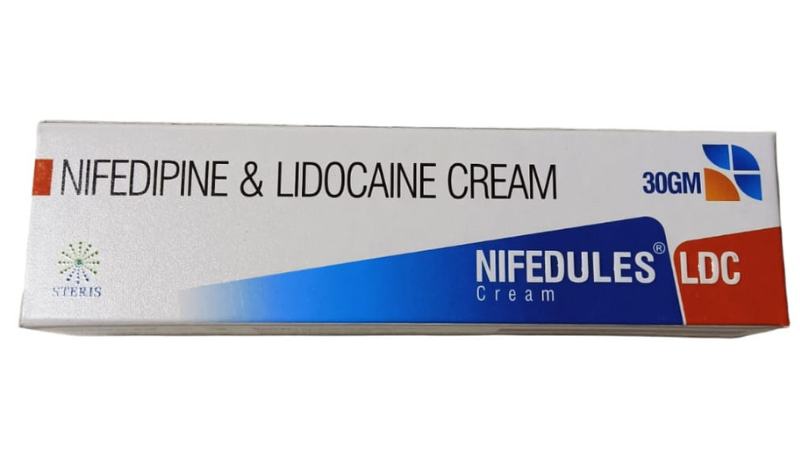



Nifedipine lidocaine cream
Jun 14, 2023
What Is Nifedipine and Lidocaine Cream?
Nifedipine and lidocaine cream is a topical preparation containing two active ingredients that address different aspects of painful anorectal conditions.
Nifedipine
Nifedipine is a calcium-channel blocker. When applied topically around the anal area, it can relax the internal anal sphincter and reduce resting anal pressure. This relaxation can improve local blood flow and reduce the mechanical tension that can interfere with healing of an anal fissure.
Lidocaine
Lidocaine is a local anesthetic. It temporarily reduces pain by decreasing the ability of nerves in the treated area to transmit pain signals.
This gives the combination a two-part approach:
Nifedipine → relaxes the anal sphincter and supports fissure healing.
Lidocaine → provides local pain relief.
A 2025 clinical review specifically evaluated topical 0.3% nifedipine + 1.5% lidocaine for anal fissure and hemorrhoidal disease and found evidence supporting pain relief and fissure healing.
Nifedipine And Lidocaine Cream How to Use
The principal use of nifedipine and lidocaine cream is anal fissure, particularly when pain and increased anal sphincter tone are present.
An anal fissure is a small tear in the anal lining. Typical symptoms include:
- Sharp pain during or after passing stool
- Burning or discomfort around the anus
- A small amount of bright-red bleeding
- Anal muscle spasm or tightness
- Fear of bowel movements because of pain
Topical nifedipine can help relax the internal anal sphincter, while lidocaine can temporarily reduce the pain associated with the fissure.
Clinical guidance from the Italian Unitary Society of Colon-Proctology considers topical 0.3% nifedipine plus 1.5% lidocaine a possible first-line conservative option for chronic anal fissure.
The formulation has also been studied for hemorrhoidal disease and pain following hemorrhoidectomy, but patients should not assume that every anal symptom is hemorrhoids or that this cream is appropriate without a diagnosis.
How Does Nifedipine and Lidocaine Cream Work?
Understanding how each ingredient works helps explain why this combination is used.
Nifedipine's role
An anal fissure can trigger spasm of the internal anal sphincter. Increased resting pressure can contribute to pain and may impair local blood flow.
Topical nifedipine relaxes the sphincter. Lower resting pressure may reduce pain and create more favorable conditions for the fissure to heal.
Lidocaine's role
Lidocaine works locally as an anesthetic. It temporarily numbs the treated area and can reduce the sensation of pain.
Therefore, the combination does not simply "numb" an anal fissure. The lidocaine component primarily targets pain, while nifedipine targets sphincter spasm and pressure.
Key Benefits of Nifedipine and Lidocaine Cream
1. Helps Relieve Anal Fissure Pain
Lidocaine can provide local anesthetic relief, which may make bowel movements more tolerable while the underlying fissure is being treated.
2. Helps Relax the Anal Sphincter
Topical nifedipine reduces internal anal sphincter tone. This is an important part of conservative treatment for fissures associated with sphincter hypertonia.
3. May Support Fissure Healing
The goal of topical nifedipine is not simply temporary pain relief. By reducing sphincter pressure, it may support healing of the fissure.
A randomized double-blind study of 110 patients with chronic anal fissure found healing after six weeks in 94.5% of patients receiving 0.3% nifedipine + 1.5% lidocaine, compared with 16.4% in the control group receiving lidocaine plus hydrocortisone. However, this was a relatively small single study and should not be interpreted as a guaranteed healing rate for every patient.
4. May Reduce Bleeding Associated With Fissure
As fissure healing progresses, bleeding can decrease. A recent multicenter post-marketing surveillance study involving 431 patients reported significant reductions in fissure symptoms, pain and bleeding during treatment with twice-daily 0.3% nifedipine + 1.5% lidocaine, with reported adverse events described as mild and self-limiting.
Because this was a retrospective post-marketing study rather than a randomized placebo-controlled trial, its findings should be interpreted accordingly.
5. Offers a Non-Surgical Treatment Option
Topical treatment can be useful before invasive treatment is considered. Clinical guidelines recognize topical calcium-channel blockers as an important conservative option for chronic anal fissure.
A 2026 randomized trial comparing nifedipine + lidocaine with diltiazem + lidocaine also reported improvement in both groups, with comparable healing rates at six weeks. This supports the role of topical calcium-channel-blocker therapy while also showing that nifedipine is not necessarily the only effective topical option.
Nifedipine and Lidocaine Cream Side Effects
Most topical treatments are designed to act locally, but side effects can still occur.
Possible side effects may include:
- Local burning or stinging
- Redness
- Itching
- Skin irritation
- Temporary discomfort at the application site
- Headache
- Dizziness
- Light-headedness
Because nifedipine is a calcium-channel blocker, some systemic absorption is possible. Although topical administration generally aims to limit systemic exposure, patients who experience significant dizziness, faintness, unusual weakness or other concerning symptoms should contact their healthcare professional.
Lidocaine can also cause local irritation or allergic reactions in susceptible people.
When Should You Stop and Seek Medical Advice?
Seek medical attention if you develop:
- Severe or rapidly worsening pain
- Significant swelling
- Extensive rash
- Facial or throat swelling
- Difficulty breathing
- Fainting or severe dizziness
- Heavy or persistent rectal bleeding
- Fever or signs of infection
Rectal bleeding should not automatically be attributed to an anal fissure. Other conditions, including gastrointestinal disease, polyps and colorectal cancer, can cause bleeding. Persistent, recurrent or unexplained bleeding deserves medical assessment.
How to Apply Nifedipine and Lidocaine Cream
The exact application instructions depend on the product prescribed.
A commonly studied 0.3% nifedipine + 1.5% lidocaine preparation was applied every 12 hours for six weeks in a randomized trial.
However, do not automatically copy the dose or duration from a clinical trial. Your doctor may prescribe a different schedule based on your diagnosis, formulation and medical history.
General application principles include:
- Wash your hands before and after application.
- Clean the anal area gently and pat it dry.
- Apply the prescribed amount as directed.
- Avoid getting the medicine into the eyes or mouth.
- Do not apply more frequently than instructed.
- Do not share the product with another person.
If the product comes with a specific applicator, follow the manufacturer's instructions.
How Long Does Nifedipine and Lidocaine Cream Take to Work?
The answer depends on what symptom you mean.
Pain relief: Lidocaine can provide relatively rapid local numbing.
Fissure healing: Healing takes longer. Clinical studies have evaluated treatment over several weeks rather than expecting the fissure to disappear after one or two applications. The 2026 comparative trial, for example, assessed outcomes after six weeks.
If symptoms do not improve or become worse, consult your doctor rather than increasing the amount of cream.
Nifedipine and Lidocaine Cream for Acute vs Chronic Anal Fissure
An important buyer-intent question is whether this cream is only for chronic fissures.
Clinical guidelines distinguish between acute and chronic anal fissures.
For an acute fissure, conservative measures such as adequate fiber, water intake and measures that keep stools soft are important. Topical medication may be considered when symptoms persist or when pain and sphincter spasm require additional treatment.
For a chronic fissure, topical calcium-channel blockers such as nifedipine are recognized as a conservative treatment option.
The underlying cause also matters. Constipation, hard stools, repeated diarrhea, childbirth and other factors can contribute to fissures. Treating the cause is an important part of preventing recurrence.
Nifedipine and Lidocaine Cream vs Lidocaine Alone
This is a common search question.
Lidocaine alone primarily provides local pain relief.
Nifedipine + lidocaine combines pain relief with sphincter relaxation.
This difference is important because pain is not the only problem in an anal fissure. Persistent sphincter spasm can contribute to ongoing symptoms and delayed healing.
Clinical evidence and guidelines therefore support the use of topical nifedipine-containing preparations in appropriate fissure patients rather than relying only on a topical anesthetic.
Nifedipine and Lidocaine Cream vs Other Fissure Treatments
Treatment depends on whether the fissure is acute or chronic and whether conservative therapy works.
Possible approaches include:
- High-fiber diet
- Adequate fluid intake
- Stool-softening strategies when appropriate
- Warm sitz baths
- Topical calcium-channel blockers such as nifedipine
- Topical nitrates
- Other prescription treatments
- Botulinum toxin in selected patients
- Surgical treatment for persistent cases
Clinical guidance notes that topical calcium-channel blockers generally have a favorable side-effect profile compared with nitrates.
Surgery may be considered when medical treatment fails, but the appropriate option depends on the patient's individual risk factors and clinical findings.
Who Should Use Nifedipine and Lidocaine Cream With Caution?
Tell your doctor before using this cream if you:
- Have low blood pressure
- Have significant cardiovascular disease
- Take blood-pressure medicines
- Have known allergies to nifedipine, lidocaine or related medicines
- Are pregnant or breastfeeding
- Have unexplained rectal bleeding
- Have severe or recurrent anorectal disease
- Have previously undergone anorectal surgery
Do not use someone else's prescription.
Can Nifedipine and Lidocaine Cream Be Used for Hemorrhoids?
It may be used in selected hemorrhoidal conditions, but its best-established clinical role in the literature is particularly associated with anal fissure.
A 2025 review found evidence for topical nifedipine + lidocaine in anorectal diseases including hemorrhoidal disease, particularly pain and thrombosed hemorrhoids, but the authors emphasized that available evidence remains limited.
If you have a painful lump, bleeding or itching around the anus, obtain an appropriate diagnosis rather than assuming it is a fissure or hemorrhoid.
What Should You Check Before Buying?
Before purchasing nifedipine and lidocaine cream online, verify:
- Nifedipine concentration
- Lidocaine concentration
- Net quantity
- Manufacturer
- Prescription requirements
- Batch number
- Expiry date
- Seller or pharmacy
- Storage instructions
- Whether the formulation matches your prescription
Do not select a product based only on the cheapest price.
Most importantly, 0.3% nifedipine + 1.5% lidocaine is not necessarily interchangeable with every cream containing nifedipine and lidocaine. Concentrations and formulations matter.
Conclusion: Is Nifedipine and Lidocaine Cream Right for You?
Nifedipine and lidocaine cream is a topical treatment primarily used for anal fissures, especially when anal sphincter spasm and pain are important parts of the condition. Nifedipine helps relax the internal anal sphincter, while lidocaine provides local anesthetic pain relief.
The strongest practical benefit is therefore twofold: less pain and reduced sphincter pressure that may support healing. Clinical guidelines recognize topical nifedipine + lidocaine as a conservative treatment option for chronic anal fissure, and newer evidence continues to support its effectiveness and tolerability.
However, this cream is not appropriate for every cause of anal pain or bleeding. Persistent bleeding, severe pain, fever, swelling or recurrent symptoms should be evaluated by a healthcare professional. Likewise, patients should not assume that every nifedipine/lidocaine formulation has the same strength or is interchangeable.
For buyers, check the nifedipine and lidocaine concentrations, formulation, pack size, manufacturer, expiry date and current price before ordering. Current Indian marketplace listings demonstrate that prices can vary between brands and sellers.
The best results generally come from combining prescribed topical treatment with measures that keep stools soft and reduce straining. If a fissure does not heal with conservative management, a colorectal or general surgeon may recommend another treatment.
Frequently Asked Questions About Nifedipine and Lidocaine Cream
1. What is nifedipine and lidocaine cream used for?
Nifedipine and lidocaine cream is primarily used to treat anal fissures. Nifedipine relaxes the anal sphincter, while lidocaine temporarily reduces local pain. It may also be used in selected anorectal conditions under medical guidance.
2. How does nifedipine and lidocaine cream help an anal fissure heal?
Nifedipine helps relax the internal anal sphincter and reduce resting anal pressure. This can improve local conditions for healing, while lidocaine helps control pain. Clinical guidelines recognize topical nifedipine as a conservative treatment for chronic anal fissure.
3. What are the benefits of nifedipine and lidocaine cream?
The main potential benefits are anal pain relief, reduced sphincter spasm and support for fissure healing. Recent clinical evidence also reports reductions in bleeding and pain during treatment.
4. What are the side effects of nifedipine and lidocaine cream?
Possible side effects include local burning, irritation, itching, redness, headache, dizziness or light-headedness. Serious allergic reactions are uncommon but require urgent medical attention.
5. How often should nifedipine and lidocaine cream be applied?
The schedule depends on the prescribed product. A commonly studied 0.3% nifedipine + 1.5% lidocaine formulation was applied every 12 hours, but patients should follow their own prescription rather than copying a clinical-trial regimen.
6. How long does nifedipine and lidocaine cream take to heal an anal fissure?
Healing generally takes weeks rather than days. Clinical studies have assessed treatment over approximately six weeks, although individual response varies.
7. Can nifedipine and lidocaine cream be used for hemorrhoids?
It can be considered for certain hemorrhoidal conditions, particularly painful or thrombosed hemorrhoids, but it should not be used automatically for every hemorrhoid symptom. A 2025 review found evidence for its use in selected anorectal conditions.
8. Can I buy nifedipine and lidocaine cream online?
Yes, products containing nifedipine and lidocaine are listed by Indian online marketplaces. Current listings show brands such as Anobliss and Nifecaine, with displayed prices varying by product and seller. Verify the formulation and prescription requirements before purchase.
9. What is the price of nifedipine and lidocaine cream in India?
The price varies by brand, concentration, tube size and seller. Recent marketplace listings showed 30 g products at approximately ₹141–₹160, but these prices can change and should be verified at the time of purchase.
10. Is nifedipine and lidocaine cream better than lidocaine alone?
They serve different purposes. Lidocaine primarily provides local pain relief, whereas nifedipine additionally relaxes the anal sphincter. For an anal fissure associated with sphincter spasm, the combination may therefore address more than pain alone.
11. Can nifedipine and lidocaine cream completely cure an anal fissure?
It can help many appropriately selected patients, but no treatment guarantees healing in every person. Chronic fissures that do not respond to conservative treatment may require another medical or surgical approach.
12. What should I do if the fissure does not improve with nifedipine and lidocaine cream?
Do not simply increase the amount or continue treatment indefinitely. Contact your doctor for reassessment. Persistent symptoms may indicate an incorrect diagnosis, an underlying cause that has not been addressed or the need for another treatment option.
Recent Post
ERITOCOX BENZ 60/5 Dosage Guide: How to Take Etoricoxib & Cyclobenzaprine Tablets Safely
Gabapentin and Methylcobalamin Tablets Side Effects: What Patients Should Know
Thyroxine sodium tablets IP: उपयोग, फायदे और साइड इफेक्ट्स
Semaglutide 2 mg Injection Dosage Guide: How to Use It Safely
Buy Multivitamin + L-Carnitine + Taurine Protein Powder | Sterimmune
Semaglutide Injection Pen 8 mg: Step-by-Step Dosage & Precautions
BEST semaglutide injection price in india
How Semaglutide Injection 4 mg Helps Control Blood Sugar
What Is Telmisartan and Metoprolol Succinate Combination Used For?
TELMISTRUM TRIO 6.25: Telmisartan, Cilnidipine & Chlorthalidone Uses & Side Effects