


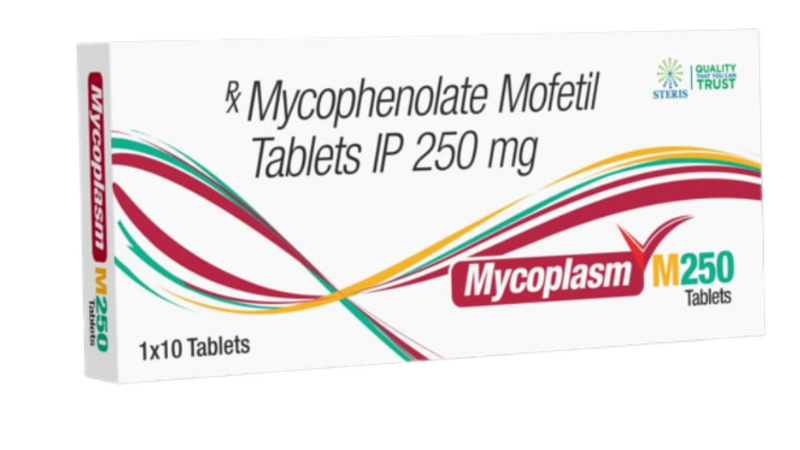



Mycophenolate mofetil (250mg) & MYCOPLASM M 250 : Dosage, Side Effects, Price, Composition and More…..
May 22, 2024
Modern medicine has made remarkable progress in managing autoimmune diseases and improving survival after organ transplantation. However, one of the biggest challenges in these conditions is controlling the body’s immune response. When the immune system becomes overactive or starts attacking transplanted organs or healthy tissues, it can lead to serious complications.
MYCOPLASM M 250, containing Mycophenolate Mofetil 250 mg, is a widely used immunosuppressive medication that helps regulate abnormal immune activity. It plays a crucial role in preventing organ rejection after transplantation and in managing various autoimmune disorders.
This detailed blog explains everything you need to know about MYCOPLASM M 250—its composition, mechanism of action, uses, benefits, dosage, side effects, precautions, and lifestyle considerations—in clear and easy-to-understand language for Indian patients, caregivers, and healthcare readers.
Understanding the Immune System and Immunosuppression
The immune system is designed to protect the body from infections, viruses, and harmful foreign substances. However, in certain medical conditions, the immune system becomes overly aggressive.
When the Immune System Becomes a Problem
-
After organ transplantation, the immune system may attack the new organ, considering it foreign
-
In autoimmune diseases, the immune system mistakenly attacks healthy tissues
To control this harmful immune response, doctors prescribe immunosuppressive medicines.
What is MYCOPLASM M 250?
MYCOPLASM M 250 is an oral tablet containing Mycophenolate Mofetil 250 mg, a powerful and selective immunosuppressive agent.
It is commonly prescribed for:
-
Prevention of organ rejection after kidney, heart, or liver transplant
-
Management of autoimmune disorders such as lupus nephritis
-
Conditions where controlled suppression of immune activity is required
MYCOPLASM M 250 helps maintain immune balance without completely shutting down the body’s defence mechanisms.
Composition of MYCOPLASM M 250
Each tablet contains:
-
Mycophenolate Mofetil – 250 mg
-
Excipients as required
This dosage allows flexible titration as per patient requirement, especially in long-term therapy.
How MYCOPLASM M 250 Works
Mycophenolate mofetil is a selective immunosuppressant.
Mechanism of Action
-
Converted in the body to its active form, mycophenolic acid
-
Inhibits an enzyme called inosine monophosphate dehydrogenase (IMPDH)
-
This enzyme is essential for the growth and multiplication of lymphocytes (T and B cells)
-
Reduces immune cell proliferation
-
Suppresses abnormal immune response
Because lymphocytes depend heavily on this pathway, MYCOPLASM M 250 selectively targets immune activity without significantly affecting other cells.
Why Mycophenolate Mofetil is Preferred
Compared to older immunosuppressants, mycophenolate mofetil:
-
Offers targeted immune suppression
-
Has a better safety profile for long-term use
-
Reduces rejection risk effectively
-
Allows combination therapy with steroids and calcineurin inhibitors
Uses of MYCOPLASM M 250
MYCOPLASM M 250 is prescribed for several critical medical conditions.
1. Organ Transplant Rejection Prevention
Used after:
-
Kidney transplant
-
Heart transplant
-
Liver transplant
It helps prevent the immune system from attacking the transplanted organ.
2. Lupus Nephritis
MYCOPLASM M 250 is widely used in patients with systemic lupus erythematosus (SLE) affecting the kidneys.
3. Other Autoimmune Disorders
In selected cases, it may be used for:
-
Vasculitis
-
Severe rheumatoid conditions
-
Certain inflammatory immune-mediated diseases
Benefits of MYCOPLASM M 250
-
Effective prevention of organ rejection
-
Selective suppression of immune response
-
Suitable for long-term treatment
-
Helps preserve transplanted organ function
-
Reduces disease progression in autoimmune conditions
-
Can be combined safely with other immunosuppressants
Dosage and Administration
Recommended Dosage
-
Dosage is individualized based on condition, body weight, and response
-
Commonly taken twice daily, as advised by the doctor
How to Take
-
Swallow the tablet whole with water
-
Take at the same time every day
-
Can be taken with or without food
-
Do not crush or chew the tablet
Strict adherence to dosage is essential for treatment success.
Duration of Treatment
-
Transplant patients may require lifelong therapy
-
Autoimmune conditions may require long-term or maintenance therapy
-
Regular monitoring is mandatory
Never stop MYCOPLASM M 250 without medical guidance.
Who Can Take MYCOPLASM M 250?
Suitable for:
-
Organ transplant recipients
-
Patients with autoimmune kidney disease
-
Adults requiring immune suppression
Not recommended for:
-
Pregnant women
-
Breastfeeding mothers
-
Patients with severe active infections
-
Individuals allergic to mycophenolate
Possible Side Effects
Like all immunosuppressants, MYCOPLASM M 250 may cause side effects.
Common Side Effects
-
Nausea
-
Vomiting
-
Diarrhoea
-
Abdominal pain
Moderate Side Effects
-
Increased risk of infections
-
Low white blood cell count
-
Anaemia
Serious Side Effects (Rare)
-
Severe infections
-
Gastrointestinal bleeding
-
Increased risk of certain cancers with long-term use
Regular blood tests help detect side effects early.
Precautions and Warnings
-
Regular blood count monitoring is essential
-
Avoid contact with infected individuals
-
Inform doctor if fever or infection develops
-
Use effective contraception during treatment
-
Avoid live vaccines unless advised
Use During Pregnancy and Breastfeeding
-
MYCOPLASM M 250 is not recommended during pregnancy
-
Can cause birth defects and miscarriage
-
Women of childbearing age must use effective contraception
-
Not recommended during breastfeeding
Drug Interactions
Inform your doctor if you are taking:
-
Antacids
-
Cholestyramine
-
Other immunosuppressants
-
Antibiotics
-
Vaccines
Some medicines may reduce effectiveness or increase side effects.
Lifestyle and Safety Tips During Treatment
Because MYCOPLASM M 250 suppresses immunity, patients should follow certain precautions.
Daily Safety Measures
-
Maintain good hygiene
-
Avoid crowded places during infections
-
Wear masks if advised
-
Eat well-cooked food
Regular Monitoring
-
Blood counts
-
Kidney function tests
-
Liver function tests
Why Choose MYCOPLASM M 250?
MYCOPLASM M 250 stands out because:
-
Proven immunosuppressive efficacy
-
Widely used in transplant medicine
-
Selective action on immune cells
-
Flexible dosing options
-
Trusted in long-term therapy
It plays a vital role in protecting transplanted organs and controlling autoimmune diseases.
Conclusion
MYCOPLASM M 250, containing Mycophenolate Mofetil 250 mg, is an essential immunosuppressive medication used in organ transplantation and autoimmune disease management. By selectively controlling immune activity, it helps prevent organ rejection, reduces disease progression, and improves long-term outcomes.
Frequently Asked Questions
Is MYCOPLASM M 250 safe for long-term use?
Yes, when taken under strict medical supervision with regular monitoring.
Does MYCOPLASM M 250 cure autoimmune diseases?
It controls disease activity but does not cure the underlying condition.
Can I stop MYCOPLASM M 250 suddenly?
No. Stopping suddenly may cause organ rejection or disease flare.
Does it increase infection risk?
Yes, due to immune suppression, infection risk is higher.
Can elderly patients use this medicine?
Yes, with careful dose adjustment and monitoring.
If You Want To Purchase The Product Click Here.
We Have Our Oncology Range.
Recent Post

Glimepiride 0.5 mg + Voglibose 0.2 mg + Metformin SR 500 mg | Steris Healthcare
Trimetazidine Hydrochloride Modified Release Tablets 35 mg Uses, Benefits

EUROSOFT MOSQUITO SHIELD
Olmesartan and Metoprolol: Uses, Benefits, Dosage & Side Effects | Steris Healthcare
Tofacitinib 11 mg Tablets: A Complete Guide to Uses and Side Effects
Olmesartan Medoxomil + Metoprolol Succinate: Uses, Dosage
Torsemide 100 mg: Uses, Dosage, Side Effects, and Precautions
How Streptococcus Thermophilus Supports Digestive Health
Olmesartan Medoxomil + Metoprolol Succinate: Uses, Benefits & Side Effects
Sirolimus 1 mg: Uses, Dosage, Side Effects, and Precautions

