


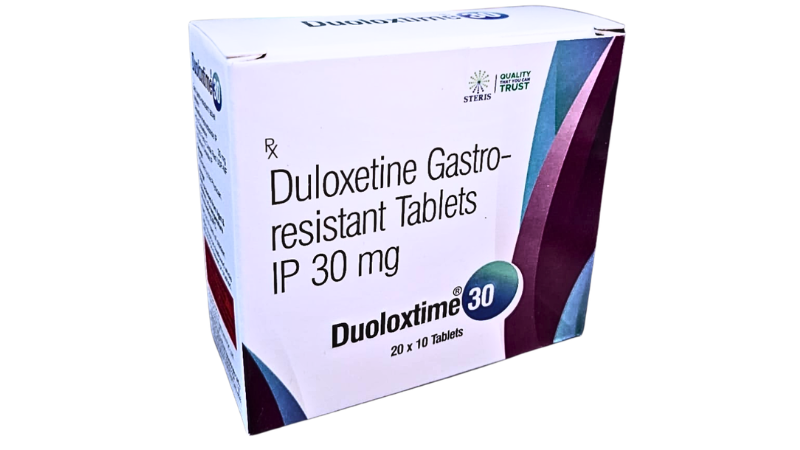



Duloxetine GR (30mg) & Duoloxtime Tablet: Dosage, Side Effects, Precautions and warnings.....
May 10, 2024
Duloxetine 30 mg is prescribed for major depressive disorder (MDD), generalized anxiety disorder (GAD), diabetic peripheral neuropathy, fibromyalgia, and chronic musculoskeletal pain. It works by blocking the reuptake of both serotonin and norepinephrine in the brain, restoring chemical balance that affects mood, pain signals, and emotional regulation.
DUOLOXTIME 30 by Steris Healthcare is the go-to duloxetine 30 mg tablet for patients who need a well-tolerated starting dose before moving to higher strengths. Doctors often begin at 30 mg once daily and reassess in 2–4 weeks.
Here's a quick breakdown of what duloxetine 30mg is used for:
| Condition | Why Duloxetine Helps |
|---|---|
| Major Depressive Disorder | Boosts serotonin & norepinephrine |
| Generalized Anxiety Disorder | Reduces overactivation of fear circuits |
| Diabetic Nerve Pain | Dampens pain signal transmission |
| Fibromyalgia | Lowers central pain sensitivity |
| Chronic Back / Knee Pain | Reduces musculoskeletal inflammation signals |
What Is Duloxetine 30 mg Prescribed For? (Detailed Clinical Use)
When a doctor writes a duloxetine prescription, the 30 mg dose is almost always the starting point. This is intentional — lower doses help the body adjust while still delivering therapeutic benefit.Duloxetine 30 mg is prescribed for major depressive disorder, generalized anxiety disorder, diabetic peripheral neuropathy, fibromyalgia, and chronic musculoskeletal pain. It is an SNRI that works by increasing serotonin and norepinephrine levels in the brain and spinal cord.
Primary approved indications for duloxetine 30 mg tab:
1. Depression (MDD): Duloxetine at 30 mg addresses low mood, loss of interest, fatigue, and sleep disruption by simultaneously raising serotonin and norepinephrine.
2. Anxiety (GAD): For patients with generalized anxiety, duloxetine 30mg reduces the constant "on-edge" feeling, excessive worrying, and physical symptoms like a racing heart or muscle tension.
3. Duloxetine 30 mg for Nerve Pain: This is one of the most important uses. Whether the nerve pain is caused by diabetes, chemotherapy, or spine issues, duloxetine 30 mg inhibits pain signals traveling up the spinal cord. Many patients feel a noticeable reduction in burning or shooting pain within 7–14 days.
4. Fibromyalgia: Duloxetine is one of only three FDA-approved medications for fibromyalgia. The 30 mg dose is particularly useful for patients who are sensitive to medications.
5. Stress Urinary Incontinence (off-label in some countries): Duloxetine strengthens the sphincter muscle around the bladder.
Duloxetine 30 mg — Uses, Benefits & How It Works
DUOLOXTIME 30 from Steris Healthcare isn't just another antidepressant. It's a clinically versatile molecule that does two things most antidepressants don't — it treats both the emotional AND the physical dimensions of pain simultaneously.
How DUOLOXTIME 30 Works:
Duloxetine blocks the reuptake transporters for serotonin (SERT) and norepinephrine (NET). This keeps both neurotransmitters active longer in the synaptic cleft. Higher norepinephrine also activates the body's descending pain-inhibition pathways — essentially telling the spinal cord to "turn down the volume" on pain signals.
Key Benefits of Duloxetine 30mg:
- Relieves emotional symptoms of depression (sadness, emptiness, hopelessness)
- Reduces physical pain associated with depression (body aches, headaches)
- Lowers anxiety and panic responses
- Reduces diabetic peripheral neuropathy pain by up to 50% in clinical studies
- Improves sleep quality by reducing pain-triggered awakenings
- Has fewer sexual side effects than SSRIs at the 30 mg dose
- Well-tolerated as a starting dose before escalating to 60 mg
Duloxetine 30 mg How Long to Work — What to Expect Week by Week
Nerve pain relief can begin within 1–2 weeks. Anxiety improvement often appears at 2–3 weeks. Full antidepressant effect typically takes 4–8 weeks. Most patients need at least 4 weeks before judging effectiveness.
How long does duloxetine 30 mg take to work? This is the question every new patient asks. Here's an honest, week-by-week breakdown:
Week 1 — Adjustment Phase: You may feel nausea, mild dizziness, or dry mouth. These are common and usually pass within 5–7 days. Some patients notice slightly better sleep even in week 1. For nerve pain, mild improvement may begin here.
Weeks 2–3 — Early Signal: Energy and motivation often improve before mood does. Anxiety symptoms may soften. Nerve pain patients often report 20–30% reduction in burning or shooting sensations.
Week 4 — First Checkpoint: Your doctor will typically reassess here. If the response is partial, they may consider switching from duloxetine 30 mg to 60 mg. Many patients achieve meaningful symptom relief by week 4 — especially for anxiety and nerve pain.
Weeks 6–8 — Full Antidepressant Effect: The full antidepressant benefit typically develops over 6–8 weeks. If there's no improvement at 8 weeks on an adequate dose, the treatment plan is usually revised.
Duloxetine 30 mg How Does It Feel — First Week Experience
The first week on DUOLOXTIME 30 can feel a little unsettling for some patients — and that's completely normal. Here's what people genuinely experience:
Common First-Week Sensations:
- Mild nausea (especially when taken on an empty stomach)
- Slight headache or "foggy" feeling in the first 2–3 days
- Increased sweating, particularly at night
- Possible appetite decrease
- For anxiety patients — a brief uptick in anxious feelings before they settle
What usually doesn't happen in week 1: Most patients don't feel dramatically better emotionally in the first week. That's expected. Duloxetine needs time to build serotonin and norepinephrine levels in the brain.
Tips to manage the first week well:
- Take DUOLOXTIME 30 with food to minimize nausea
- Take it at the same time every day
- Avoid alcohol completely during the first 2 weeks
- Stay hydrated — it helps with headaches
- Journal your symptoms so you can accurately report to your doctor at the 2-week check-in
[PERSONAL EXPERIENCE NOTE] Patients who take duloxetine 30 mg with a small meal in the morning report significantly less nausea than those who take it on an empty stomach.
Duloxetine 30 mg When to Take — Morning vs Night, Which Is Better?
Morning dosing is usually recommended because duloxetine's norepinephrine activity can interfere with sleep. However, if nausea or drowsiness is severe, evening dosing may be considered. Always follow your prescribing doctor's guidance.
Here's why:
Morning dosing advantages:
- Norepinephrine activation gives a gentle energy boost during the day
- Reduces insomnia risk (some patients find duloxetine stimulating at night)
- Easier to build a habit around waking up
- More closely aligns with natural cortisol rhythms
Night dosing may suit you if:
- You experience significant daytime drowsiness
- Nausea is severe and less disruptive when you sleep through it
- Your doctor specifically recommends it based on your profile
Duloxetine 30 mg once daily is the standard dosing schedule — it doesn't need to be split. Just pick a time you can consistently maintain.
Is Duloxetine 30 mg Enough? — When to Consider 60 mg
A common concern: Is duloxetine 30 mg enough for my condition?
For some patients, yes — 30 mg is a fully therapeutic and sufficient dose. For others, it's a stepping stone. Here's how to think about it:
30 mg may be enough if:
- You have mild-to-moderate depression or anxiety
- You're using it primarily for nerve pain (effective analgesic range)
- You're elderly or have liver/kidney concerns (lower dose is safer)
- You're highly sensitive to medications
Switching from duloxetine 30 mg to 60 mg may be needed if:
- Symptoms haven't improved meaningfully after 4–6 weeks on 30 mg
- Your doctor determines partial response requires dose escalation
- You're being treated for severe MDD (60 mg is the standard therapeutic dose)
Switching from duloxetine 30 mg to 60 mg effects to expect:
- Nausea may briefly return for 3–5 days at the higher dose
- Greater mood elevation and energy boost
- Some patients notice increased sweating or mild blood pressure changes
- Nerve pain reduction may improve further
[UNIQUE INSIGHT] Many patients worry that needing to go to 60 mg means the 30 mg "failed." It didn't. 30 mg served as an essential bridge — reducing side effects risk while allowing the body to adapt.
Duloxetine 30 mg for Nerve Pain — Does It Really Work?
If you're taking DUOLOXTIME 30 for nerve pain, here's what the evidence says and what you can realistically expect.
Duloxetine is one of the most evidence-backed options for diabetic peripheral neuropathy (DPN). A landmark 2022 meta-analysis of 22 clinical trials found duloxetine produced statistically significant pain reduction compared to placebo, with 50% of patients achieving at least 30% pain relief.
Types of nerve pain duloxetine 30 mg helps:
- Diabetic peripheral neuropathy (burning feet, tingling hands)
- Chemotherapy-induced peripheral neuropathy (CIPN)
- Chronic lower back pain with nerve involvement
- Fibromyalgia-related nerve hypersensitivity
- Post-surgical neuropathic pain (off-label)
How quickly does duloxetine work for nerve pain? Faster than for depression. Many neuropathy patients notice reduced burning and tingling within 7–14 days at the 30 mg dose. Maximum nerve pain benefit typically takes 4–8 weeks.
[CITATION CAPSULE] According to the American Diabetes Association (ADA) 2024 Standards of Care, duloxetine is a Tier 1 recommended treatment for diabetic peripheral neuropathic pain, alongside pregabalin and gabapentin.
What Are the Side Effects of Duloxetine 30 mg?
The most common side effects include nausea, dry mouth, constipation, dizziness, sweating, and fatigue. These usually improve within 1–2 weeks. Serious but rare effects include serotonin syndrome and liver toxicity. Always report unusual symptoms to your doctor immediately.
Most Common Side Effects (affecting 10–30% of patients):
- Nausea — the most reported; takes food to reduce
- Dry mouth — stay hydrated
- Constipation — increase fiber and water intake
- Dizziness, especially on standing (orthostatic hypotension)
- Increased sweating
- Mild fatigue in the first 1–2 weeks
- Reduced appetite
Less Common Side Effects (affecting 1–10% of patients):
- Insomnia or vivid dreams
- Mild increase in blood pressure
- Palpitations or rapid heartbeat
- Sexual side effects (reduced libido, delayed orgasm) — less common than SSRIs
- Urinary hesitancy
Rare but serious (seek immediate medical attention):
- Serotonin syndrome symptoms (confusion, rapid heart rate, muscle twitching)
- Liver problems (jaundice, dark urine, abdominal pain)
- Severe allergic reactions (rash, swelling, difficulty breathing)
- Suicidal thoughts — especially in under-25 patients in early treatment (black box warning)
Does Duloxetine 30 mg Make You Lose Weight?
This is a frequently searched question — and the answer is nuanced.
Short-term (first 2–4 weeks): Many patients experience a modest reduction in appetite and may lose 1–3 kg. This is partly due to nausea and appetite suppression — not fat loss per se.
Long-term (beyond 3 months): Most patients return to their baseline weight. Some may experience slight weight gain over time, particularly if the medication successfully treats depression (since depression itself causes appetite loss in many people).
The truth about duloxetine and weight:
- Duloxetine is weight-neutral for most people long-term
- It's less likely to cause weight gain than TCAs (tricyclic antidepressants) or mirtazapine
- If weight loss is a goal, duloxetine isn't specifically indicated for it
- Report significant unintended weight changes to your doctor
Can Duloxetine 30 mg Help With Stress and Overthinking?
Yes — and this is where duloxetine genuinely shines for many patients.
Overthinking (rumination) and chronic stress are hallmarks of generalized anxiety disorder (GAD). Duloxetine's dual action on norepinephrine reduces the overactivation of the brain's fear and threat-detection systems.
Specific stress-related benefits patients report:
- Quieter mental chatter and reduced rumination
- Lower baseline anxiety (feeling less "on edge" throughout the day)
- Reduced physical stress symptoms (muscle tension, racing heart)
- Improved ability to focus and make decisions without excessive worry
- Better emotional regulation — less reactive to daily stressors
[UNIQUE INSIGHT] Duloxetine's norepinephrine activity helps regulate the prefrontal cortex, which is responsible for executive decision-making and emotional control. This is one reason it helps with overthinking better than pure SSRIs in some patients.
Can it help with stress entirely on its own? It works best as part of a broader plan that includes therapy (especially CBT), lifestyle changes, and stress management. But as a pharmacological foundation, duloxetine 30 mg is excellent.
How to Stop Taking Duloxetine 30 mg — Safe Tapering Guide
Can I stop duloxetine 30 mg suddenly?
Never stop duloxetine suddenly. Work with your doctor to taper gradually — typically over 2–4 weeks minimum. Alternate day dosing or switching to a longer-acting antidepressant are common strategies. Stopping abruptly causes discontinuation syndrome including brain zaps, nausea, and mood instability.
- Dizziness ("brain zaps")
- Nausea and vomiting
- Flu-like aches
- Irritability and mood swings
- Intense vivid dreams
- Electric shock sensations in the head or limbs
How to taper off duloxetine 30 mg safely:
At 30 mg, you're already on the lowest standard dose, so tapering options are limited. Your doctor may:
- Switch to 20 mg (if a 20 mg formulation is available or capsule can be opened and split with caution)
- Alternate day dosing — 30 mg every other day for 1–2 weeks, then stop
- Switch to fluoxetine temporarily — Fluoxetine has a long half-life that makes discontinuation smoother, then taper fluoxetine
- Slow reduction over 4+ weeks under supervision
How to stop taking duloxetine 30 mg — general principles:
- Never stop without discussing with your prescriber
- The process should take a minimum of 2–4 weeks for 30 mg
- If symptoms are severe, the taper should be even slower
- Having support (family, therapist) during the taper is strongly recommended
DUOLOXTIME 30 — Price, Availability & Brand Information
Duloxetine 30 mg brand name: DUOLOXTIME 30, manufactured by Steris Healthcare
Duloxetine 30 mg price in India:
- Average retail price: ₹180–₹320 per strip of 10 tablets
- Online pharmacy price: may vary by 10–20%
- Government hospital supply: may be available at subsidized rates under generic programs
Duloxetine 30mg cost factors:
- City (metro pricing vs. tier-2 cities)
- Pharmacy type (chain pharmacy vs. local chemist)
- Online vs. offline purchase
- Insurance coverage (check with your insurer for reimbursement)
Why choose DUOLOXTIME 30 by Steris Healthcare?
- Manufactured in WHO-GMP certified facilities
- Strict quality control for dissolution and bioavailability
- Consistent dosing across every tablet in the strip
- Widely available across India through major distributors
- Trusted by neurologists, psychiatrists, and general physicians
Storage: Store below 30°C, away from direct sunlight and moisture. Keep out of reach of children.
Duloxetine 30 mg Dosage — Complete Prescriber & Patient Reference
| Condition | Starting Dose | Maintenance Dose | Maximum Dose |
|---|---|---|---|
| Major Depression | 30 mg once daily | 60 mg once daily | 120 mg/day |
| Generalized Anxiety | 30 mg once daily | 60 mg once daily | 120 mg/day |
| Diabetic Neuropathy | 30 mg once daily x 1 week | 60 mg once daily | 60 mg/day |
| Fibromyalgia | 30 mg once daily x 1 week | 60 mg once daily | 60 mg/day |
| Chronic Musculoskeletal Pain | 30 mg once daily | 60 mg once daily | 60 mg/day |
Special populations:
- Elderly patients: 30 mg is often the maintenance dose; use with caution
- Renal impairment: Avoid in severe cases; use lower doses in moderate impairment
- Hepatic impairment: Contraindicated in significant liver disease
- Pregnancy: Use only if benefit outweighs risk; discuss with your OB/GYN
Missed dose: Take as soon as you remember. If it's nearly time for the next dose, skip the missed one. Never double-dose.
Conclusion — Is DUOLOXTIME 30 Right for You?
DUOLOXTIME 30 (duloxetine 30 mg tablet) by Steris Healthcare is a clinically proven, well-tolerated first-line treatment for depression, anxiety, and neuropathic pain. Its dual mechanism — targeting both serotonin and norepinephrine — makes it uniquely effective for patients who experience both emotional and physical symptoms.
The 30 mg dose is ideal as a starting point. It allows the body to adjust gently, reduces early side effects, and still delivers meaningful therapeutic benefit — particularly for nerve pain and anxiety. Many patients find 30 mg is all they need long-term. Others may be stepped up to 60 mg under their doctor's guidance.
Key reminders before you start or continue DUOLOXTIME 30:
- Take it consistently at the same time every day — with food
- Give it at least 4 weeks before judging its effectiveness
- Never stop without tapering
- Keep your doctor updated on any side effects or mood changes in the first few weeks
- Report any signs of serotonin syndrome or liver problems immediately
Steris Healthcare is committed to making high-quality duloxetine 30mg accessible across India. DUOLOXTIME 30 combines pharmaceutical-grade manufacturing with a price point that puts effective mental health and pain care within reach.
This article is for informational purposes only and does not substitute professional medical advice. Always consult a licensed healthcare provider before starting, changing, or stopping any medication.
Frequently Asked Questions
What is duloxetine 30mg used for?
Duloxetine 30mg (DUOLOXTIME 30) is used to treat major depressive disorder, generalized anxiety disorder, diabetic peripheral neuropathy, fibromyalgia, and chronic musculoskeletal pain. It's an SNRI that balances serotonin and norepinephrine to improve mood and reduce pain signals.
How long does duloxetine 30 mg take to work?
Nerve pain relief may begin within 1–2 weeks. Anxiety improvements typically appear within 2–3 weeks. Full antidepressant effects generally take 4–8 weeks. If there's no improvement by 8 weeks, consult your doctor about adjusting the dose or treatment plan.
Can I stop duloxetine 30 mg suddenly?
No. Stopping duloxetine 30 mg abruptly causes discontinuation syndrome — including brain zaps, nausea, dizziness, and mood swings. Always taper gradually under medical supervision over at least 2–4 weeks.
What is the price of DUOLOXTIME 30 in India?
The duloxetine 30 mg price for DUOLOXTIME 30 by Steris Healthcare typically ranges from ₹180–₹320 per strip of 10 tablets at retail pharmacies in India. Online pharmacies may offer slight discounts.
Is duloxetine 30 mg morning or night better?
Morning dosing is generally preferred as duloxetine's activating norepinephrine effect can cause insomnia if taken at night. However, patients with significant daytime drowsiness or nausea may benefit from evening dosing. Follow your doctor's recommendation.
Does duloxetine 30 mg help with overthinking?
Yes. Duloxetine reduces overactivation of the brain's threat-detection circuits and improves prefrontal cortex function, which helps quiet rumination and chronic overthinking — particularly in patients with generalized anxiety disorder (GAD).
Can duloxetine 30 mg be taken with food?
Yes — and it's strongly recommended. Taking DUOLOXTIME 30 with food significantly reduces nausea, one of the most common early side effects.
Is duloxetine 30 mg safe for long-term use?
Yes, for most patients. Long-term safety data (3–5+ years) shows duloxetine is well tolerated. Annual liver function checks are recommended for long-term users.
Can duloxetine 30 mg cause dependency?
Duloxetine is not a controlled substance and doesn't cause addiction in the traditional sense. However, physical dependence can develop, which is why tapering — not stopping suddenly — is essential.
What should I avoid while taking duloxetine 30 mg?
Avoid alcohol (increases CNS depression and liver stress), MAOIs (risk of serotonin syndrome), NSAIDs without doctor guidance (bleeding risk), and St. John's Wort.
Can I take duloxetine 30 mg for pain without depression?
Yes. Duloxetine is approved specifically for nerve pain (diabetic neuropathy), fibromyalgia, and chronic musculoskeletal pain — entirely independent of its antidepressant use.
Does DUOLOXTIME 30 interact with other medications?
Important interactions include: MAOIs, lithium, tramadol, triptans, SSRIs (serotonin syndrome risk), warfarin (bleeding risk), and certain antifungals that affect CYP1A2 and CYP2D6 enzymes. Always give your doctor a full medication list.
Recent Post
जानें linagliptin 5 mg, dapagliflozin 10 mg और metformin 500 के उपयोग और फायदे
SAMIGLUTIDE 2MG क्या है? semaglutide injection 2 mg uses in hindi और पूरी जानकारी
semaglutide 4 mg injection uses in hindi: उपयोग, फायदे, सही खुराक और सावधानियां
semaglutide 8 mg injection uses in hindi: फायदे, साइड इफेक्ट्स और डोज की पूरी जानकारी
Mosapride Citrate Uses in Hindi: उपयोग, सही खुराक, फायदे और साइड इफेक्ट्स
ब्रेस्ट कैंसर से बचाव और इलाज: Tamoxifen 20 mg के मुख्य फायदे और उपयोग
Glimepiride Metformin Tablet Uses in Hindi: टाइप 2 डायबिटीज और हाई ब्लड शुगर का पक्का समाधान
Aripiprazole 10 mg Uses in Hindi: उपयोग, सही खुराक, फायदे और साइड इफेक्ट्स
Metoprolol 25 mg Uses in Hindi: उपयोग, सही खुराक, फायदे और नुकसान
Tab Bilastine 20 mg Uses in Hindi: उपयोग, सही खुराक और सावधानियां