


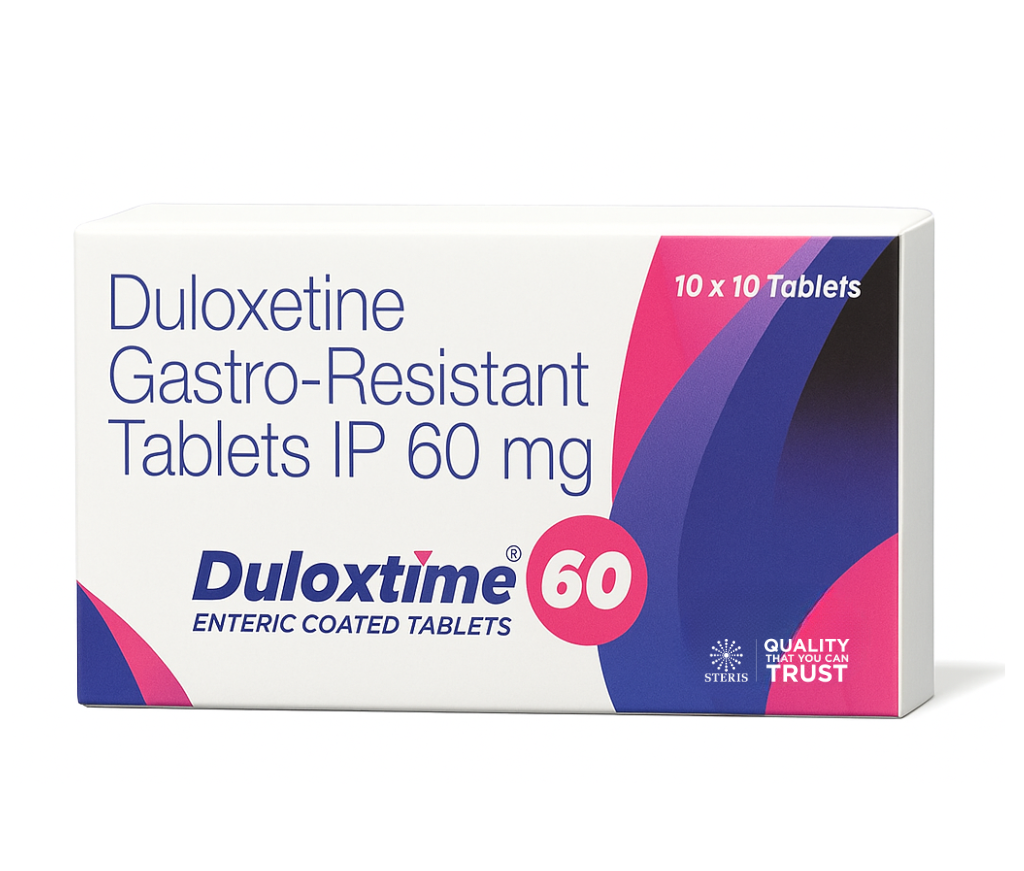
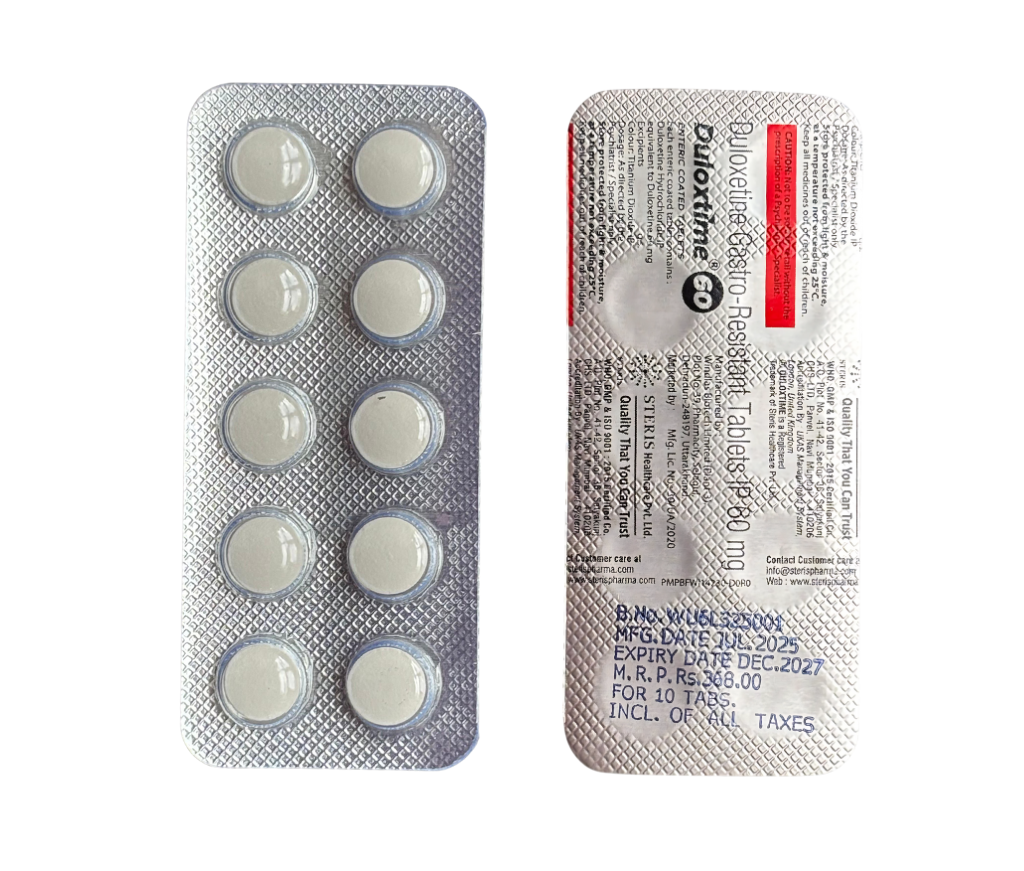
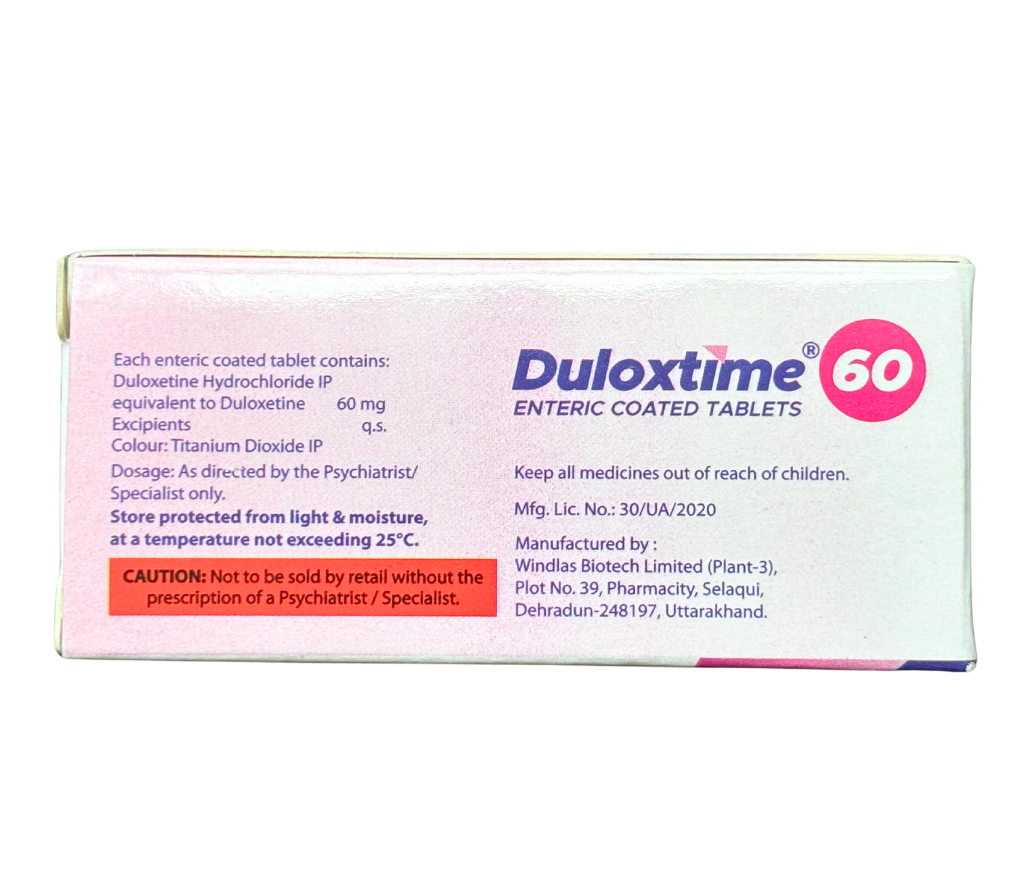
DULOXTIME 60
 Item requires a valid prescription
Manufactured By Steris Healthcare Pvt Ltd
Composition Duloxetine 60 mg Tablet
Rs 257.60
MRP Rs 368.00
(30% OFF)
Includes all taxes
Package SIZE
( FOR 10 TABLETS )

100% Authentic
Products

Free
Shipping*

Products
Return Policy
Description:
Duloxetine 60 mg Tablet refers to a medicine containing 60 mg of duloxetine, an antidepressant belonging to the serotonin-norepinephrine reuptake inhibitor (SNRI) class. Depending on the manufacturer and country, duloxetine may be supplied as a delayed-release capsule or tablet, so consumers should check the exact formulation and instructions on the product packaging.
Duloxetine changes the activity of serotonin and norepinephrine, two chemical messengers involved in mood regulation and the processing of pain signals. Because of this dual action, doctors may prescribe duloxetine for certain depressive and anxiety disorders as well as specific chronic or nerve-related pain conditions.
The 60 mg strength is commonly used as a target or maintenance dose for several adult indications, but the appropriate dose depends on the condition, age, other medicines, medical history, and individual response. For some conditions, treatment may begin at a lower strength before moving to 60 mg.
Duloxetine 60 mg Tablet Uses
Duloxetine 60 mg may be prescribed for several conditions. Its approved uses vary according to the country, product labeling, age group, and formulation.
Common medically recognized uses include:
-
Major depressive disorder (MDD) in adults
-
Generalized anxiety disorder (GAD)
-
Diabetic peripheral neuropathic pain
-
Fibromyalgia
-
Chronic musculoskeletal pain, depending on the product's approved labeling
Current U.S. prescribing information lists duloxetine as an SNRI indicated for major depressive disorder in adults, generalized anxiety disorder, diabetic peripheral neuropathic pain, fibromyalgia, and chronic musculoskeletal pain.
Duloxetine can also be prescribed for certain types of persistent or neuropathic pain under specialist supervision. NHS hospital guidance describes its role in pain management, particularly for burning, shooting, stabbing, electric-shock-like, or other nerve-related pain.
Is Duloxetine 60 mg used for depression?
Yes. Duloxetine is an established SNRI treatment for major depressive disorder in adults. It works on serotonin and norepinephrine signaling and may help improve depressive symptoms when prescribed appropriately.
Is Duloxetine 60 mg used for anxiety?
Yes. Duloxetine is indicated for generalized anxiety disorder in appropriate patients. The dose is determined by the prescriber and may differ according to age and individual circumstances.
Is Duloxetine 60 mg a painkiller?
It is not a conventional painkiller such as paracetamol or an opioid. Instead, duloxetine can influence how the nervous system processes pain signals. This makes it useful for certain types of neuropathic and chronic pain.
How Does Duloxetine 60 mg Work?
Duloxetine inhibits the reuptake of serotonin and norepinephrine in the nervous system. Increasing the availability of these neurotransmitters can influence mood, anxiety, and the way the brain and spinal cord process pain.
For pain conditions, this mechanism is particularly relevant because duloxetine can reduce the transmission or perception of pain signals rather than simply acting as a conventional analgesic.
This is also why one prescription may be used for a person experiencing both mood symptoms and certain forms of chronic pain. However, the medicine should be used only for conditions for which a healthcare professional considers it appropriate.
Key Benefits of Duloxetine 60 mg Tablet
The potential benefits depend on why the medicine has been prescribed.
1. May improve symptoms of depression
For adults with major depressive disorder, duloxetine may reduce depressive symptoms and support improvement in daily functioning when used as prescribed.
2. May reduce generalized anxiety symptoms
For people diagnosed with generalized anxiety disorder, duloxetine can help manage persistent anxiety symptoms as part of an individualized treatment plan.
3. Can help certain nerve-related pain
Duloxetine is particularly relevant to neuropathic pain, which can feel burning, stabbing, shooting, tingling, or like electric shocks.
4. May benefit some chronic pain conditions
Depending on the indication and local prescribing approval, duloxetine may be used for fibromyalgia and chronic musculoskeletal pain.
5. One medicine may address overlapping symptoms
Because duloxetine affects both mood-related neurotransmission and pain processing, a physician may consider it when depression, anxiety, and an appropriate chronic pain condition occur together.
Important: These are potential therapeutic benefits, not a guarantee that Duloxetine 60 mg will work for every person.
Duloxetine 60 mg Dosage and How to Take It
The correct dose should come from your prescriber. Do not assume that 60 mg is the correct starting dose simply because it is a commonly available strength.
Official prescribing information gives different dosing schedules for different conditions. For example, 60 mg once daily is commonly listed as a target dose for several adult indications, while some patients may initially receive a lower dose.
Depending on the formulation, duloxetine delayed-release medicine is generally taken once daily, with or without food, and should be swallowed as directed rather than crushed or chewed.
What if you miss a dose?
If you forget a dose, follow the instructions supplied with your prescription or ask your pharmacist. Do not routinely take two doses together to compensate for a missed dose unless a healthcare professional specifically tells you to do so.
Can you stop Duloxetine 60 mg suddenly?
Generally, do not stop duloxetine abruptly. Discontinuation symptoms can occur, so prescribers commonly reduce the dose gradually when treatment is being stopped.
Common Duloxetine 60 mg Side Effects
Like all medicines, duloxetine can cause side effects. Many are mild or temporary, but some require prompt medical attention.
Commonly reported adverse effects include:
-
Nausea
-
Dry mouth
-
Sleepiness or drowsiness
-
Constipation
-
Reduced appetite
-
Increased sweating
-
Dizziness
-
Headache
-
Fatigue
The current DailyMed prescribing information identifies nausea, dry mouth, somnolence, constipation, decreased appetite, and increased sweating among the common adverse reactions in adults.
NHS and hospital patient information also describes symptoms such as dizziness, drowsiness, headache, nausea, blurred vision, and dry mouth.
Side effects may improve as the body adjusts, but persistent or troublesome symptoms should be discussed with a healthcare professional.
Serious Duloxetine Side Effects
Some reactions can be serious.
Suicidal thoughts or significant mood changes
Antidepressants carry an important warning concerning suicidal thoughts and behaviors, particularly in children, adolescents, and young adults. Patients beginning treatment should be monitored for worsening depression, unusual behavioral changes, agitation, or suicidal thinking.
Liver problems
Duloxetine has been associated with serious liver injury, including hepatic failure in rare cases. The prescribing information advises caution or avoidance in people with substantial alcohol use or evidence of chronic liver disease.
Seek medical attention for symptoms such as yellowing of the skin or eyes, unusually dark urine, or other signs of significant liver dysfunction.
Blood pressure changes
Duloxetine can increase blood pressure in some patients. Blood pressure should be assessed before treatment and monitored periodically when clinically appropriate.
Serotonin syndrome
Combining duloxetine with certain serotonergic medicines can increase the risk of serotonin syndrome, a potentially serious condition. Symptoms can include agitation, confusion, sweating, fever, rapid heartbeat, muscle rigidity, tremor, or coordination problems.
Severe allergic reaction
Swelling of the face, lips, tongue, or throat, difficulty breathing, or a severe rash requires urgent medical evaluation.
Duloxetine 60 mg Drug Interactions
Before taking Duloxetine 60 mg, tell your doctor or pharmacist about all prescription medicines, non-prescription medicines, supplements, and herbal products you use.
Particularly important interactions include certain antidepressants and other serotonergic medicines. Monoamine oxidase inhibitors (MAOIs) are specifically contraindicated with duloxetine, and there are required waiting periods when switching between duloxetine and an MAOI.
Your healthcare professional may also need to consider:
-
Other antidepressants
-
Certain migraine medicines
-
Medicines affecting serotonin
-
Drugs affecting duloxetine metabolism
-
Medicines that increase bleeding risk
-
Certain medicines affecting blood pressure
-
Alcohol consumption
-
Medicines that can cause sedation
Never assume that an over-the-counter product or herbal supplement is automatically safe to combine with duloxetine.
Who Should Be Careful With Duloxetine 60 mg?
Tell your doctor before treatment if you have or have had:
-
Liver disease
-
Kidney problems
-
High or low blood pressure
-
Seizures
-
Bipolar disorder or mania
-
Glaucoma or increased eye pressure
-
Significant alcohol use
-
Problems with sodium levels
-
Conditions affecting stomach emptying
-
Diabetes
-
A history of unusual reactions to antidepressants
The prescribing information includes precautions involving liver toxicity, blood pressure, falls and fainting, seizures, hyponatremia, glucose control in diabetes, and other conditions.
Duloxetine 60 mg and Alcohol
Alcohol deserves particular attention because duloxetine can cause dizziness or drowsiness, while significant alcohol use may increase concern about liver injury.
If you take Duloxetine 60 mg, ask your doctor or pharmacist whether alcohol is appropriate for you, particularly if you drink regularly or have a history of liver problems.
Duloxetine 60 mg: When Does It Start Working?
Duloxetine does not necessarily produce its full therapeutic effect immediately.
The timeframe varies according to the condition being treated and the individual. Patient guidance from an NHS hospital notes that significant benefit for pain may take several weeks, with some patients requiring six to eight weeks to notice substantial improvement.
For depression or anxiety, improvement may also develop gradually.
If symptoms are not improving, do not increase the dose yourself. Contact the healthcare professional managing your treatment.
Buying Duloxetine 60 mg: What Consumers Should Check
If you are searching online for Duloxetine 60 mg Tablet price, availability, or purchase options, the most important consideration is not simply finding the lowest advertised price.
Because duloxetine is a prescription medicine, purchase it only through a licensed pharmacy or legitimate healthcare channel and use a product prescribed for you.
Before purchasing, check:
-
The exact generic name and strength.
-
Whether the product is a tablet or delayed-release capsule.
-
Manufacturer information.
-
Batch/lot information and expiry date.
-
Packaging integrity.
-
Prescription requirements in your country.
-
Whether the pharmacy is properly licensed.
-
Storage instructions.
-
Whether the product matches your doctor's prescription.
Avoid products with unexplained discounts, damaged packaging, missing labeling, or claims that the medicine can safely be used without medical supervision.
Buyer-intent takeaway: If you are comparing Duloxetine 60 mg products, compare the exact formulation, manufacturer, regulatory status, pharmacy reliability, pack size, and prescription requirements, not price alone.
Duloxetine 60 mg Tablet vs. Other Strengths
Duloxetine may be supplied in different strengths, depending on the manufacturer and market. A 60 mg product is not necessarily appropriate for everyone.
A doctor may select a lower strength when initiating treatment, when managing tolerability, or when a particular indication requires a different dosing strategy. Conversely, changing from a lower strength to 60 mg should be done only according to the prescribed treatment plan.
Never split, crush, chew, or otherwise alter a delayed-release formulation unless the specific product instructions explicitly permit it.
Expert E-E-A-T Safety Perspective
High-quality health content should distinguish between what a medicine is approved to treat, what doctors sometimes prescribe it for, and what a consumer may see advertised online.
For Duloxetine 60 mg:
-
It is an SNRI prescription medicine, not an ordinary over-the-counter painkiller.
-
Its approved indications differ by country and product.
-
A 60 mg strength does not mean 60 mg is the correct dose for every patient.
-
Side effects and drug interactions should be assessed against the individual's medical history.
-
Abrupt discontinuation should generally be avoided.
-
Serious symptoms require medical evaluation.
-
Official prescribing information and qualified healthcare professionals should take priority over online product claims.
Current official drug labeling and recent NHS patient guidance support these safety considerations.
Frequently Asked Questions
1. What is Duloxetine 60 mg Tablet used for?
Duloxetine 60 mg is used, depending on the approved indication and medical advice, for conditions including depression, generalized anxiety disorder, diabetic nerve pain, fibromyalgia, and certain chronic musculoskeletal pain conditions.
2. Is Duloxetine 60 mg a painkiller?
No. Duloxetine is an SNRI antidepressant that can also treat certain types of chronic and neuropathic pain by influencing pain signaling in the nervous system.
3. Is Duloxetine 60 mg used for depression?
Yes. It is indicated for major depressive disorder in adults.
4. Is Duloxetine 60 mg good for anxiety?
Duloxetine is an approved treatment for generalized anxiety disorder in appropriate patients. Your doctor determines whether it is suitable for you.
5. Does Duloxetine 60 mg help nerve pain?
Yes. Duloxetine is used for certain neuropathic pain conditions, including diabetic peripheral neuropathic pain, and may also be prescribed for other persistent nerve pain depending on clinical circumstances and local approvals.
6. What are the most common side effects of Duloxetine 60 mg?
Common side effects can include nausea, dry mouth, constipation, sweating, reduced appetite, dizziness, sleepiness, headache, and fatigue.
7. Can Duloxetine 60 mg cause sleepiness?
Yes. Somnolence or drowsiness is a recognized adverse effect. Be cautious with driving or operating machinery until you know how the medicine affects you.
8. Can Duloxetine 60 mg cause nausea?
Yes. Nausea is one of the commonly reported adverse effects of duloxetine.
9. Can I stop Duloxetine 60 mg suddenly?
You generally should not stop duloxetine abruptly. A healthcare professional can advise you on a gradual dose reduction to reduce the risk of discontinuation symptoms.
10. How long does Duloxetine 60 mg take to work?
The response varies. Some effects may appear earlier, while meaningful improvement can take several weeks. For pain, NHS patient guidance notes that significant benefit may take six to eight weeks for some patients.
11. Can I take Duloxetine 60 mg with alcohol?
Ask your doctor or pharmacist. Alcohol may increase concerns about dizziness or drowsiness, and substantial alcohol use is particularly important because duloxetine can cause liver injury.
12. Can Duloxetine 60 mg increase blood pressure?
It can. Official prescribing information recommends checking blood pressure before treatment and monitoring it periodically.
13. Is Duloxetine 60 mg addictive?
Duloxetine is not classified as an addictive opioid or controlled painkiller. However, stopping it suddenly can produce discontinuation symptoms, which is why treatment should generally be tapered under medical supervision.
14. Can Duloxetine 60 mg be taken once daily?
Many approved adult dosing schedules use 60 mg once daily, but the appropriate schedule depends on the indication, formulation, and individual patient. Follow the prescription rather than changing the frequency yourself.
15. Can I take Duloxetine 60 mg for back pain?
Duloxetine may be prescribed for certain chronic musculoskeletal pain conditions, but ordinary short-term back pain does not automatically mean duloxetine is appropriate. A healthcare professional should determine the cause of pain and treatment strategy.
16. Is Duloxetine 60 mg suitable for everyone?
No. Medical history, other medicines, age, kidney and liver function, blood pressure, psychiatric history, and the specific condition being treated all matter.
17. What happens if I miss a Duloxetine 60 mg dose?
Follow your prescription's missed-dose instructions or ask your pharmacist. Avoid doubling the next dose unless specifically instructed by a healthcare professional.
18. Can Duloxetine 60 mg be used long term?
Some people require longer-term treatment for depression, anxiety, or chronic pain. The duration should be reviewed periodically by the prescribing clinician to determine whether benefits continue to outweigh risks.
19. Is Duloxetine 60 mg available without a prescription?
Duloxetine is a prescription medicine in many markets. The legal dispensing requirements depend on the country. Use a licensed pharmacy and follow local prescription requirements.
20. What should I check before buying Duloxetine 60 mg online?
Verify that the seller is a legitimate, licensed pharmacy, the medicine matches your prescription, the packaging is intact, the expiry date is valid, and the formulation and strength are correct. Avoid websites offering prescription duloxetine with no medical oversight.
Conclusion
Duloxetine 60 mg Tablet is a prescription SNRI medicine used for several conditions involving mood, anxiety, and certain types of chronic or neuropathic pain. Its potential benefits include improvement in depressive or anxiety symptoms and reduction of certain persistent pain symptoms. However, it is not suitable for everyone, and 60 mg is not automatically the correct dose for every patient.
The most important points are simple: use Duloxetine 60 mg only as prescribed, understand the formulation you have been given, review possible drug interactions, monitor for side effects, avoid abrupt discontinuation, and seek professional advice before making changes. Official prescribing information confirms important precautions involving suicidal thoughts and behaviors, liver injury, blood pressure, seizures, hyponatremia, and drug interactions.
For someone researching Duloxetine 60 mg Tablet uses, benefits, side effects, dosage, price, or purchase options, the safest buyer-intent approach is to verify the exact product and obtain it through a legitimate pharmacy rather than choosing solely on price.