




Teneligliptin and Dapagliflozin Tablets: A Complete Guide
Oct 30, 2026
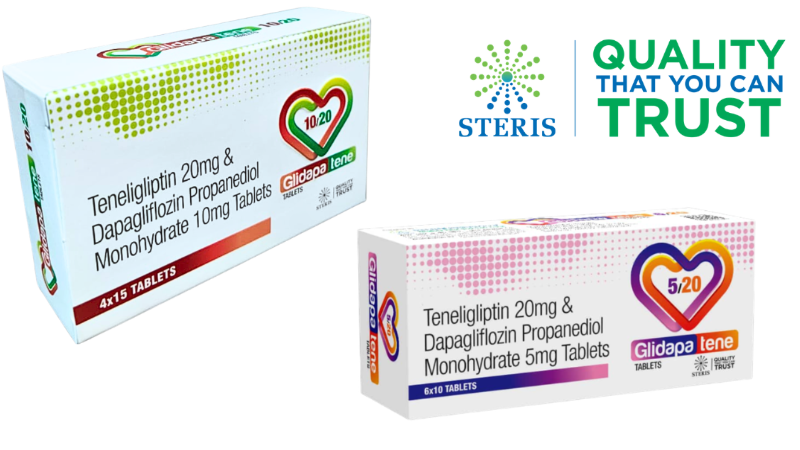
GLIDAPA TENE is a prescription-only fixed-dose combination tablet for adults with type 2 diabetes mellitus. It combines Teneligliptin 20mg (a DPP-4 inhibitor) with Dapagliflozin Propanediol Monohydrate, available as 5mg (GLIDAPA TENE 5/20) or 10mg (GLIDAPA TENE 10/20), which is an SGLT2 inhibitor. The two medicines lower blood sugar through different mechanisms, one working on the gut hormone (incretin) pathway and the other on the kidneys, and are taken together as one tablet to simplify treatment.
Product Overview
The GLIDAPA TENE range is designed for adults with type 2 diabetes who need two complementary medicines to reach their HbA1c target. It comes in two strengths:
- GLIDAPA TENE 5/20: Teneligliptin 20mg + Dapagliflozin Propanediol Monohydrate 5mg
- GLIDAPA TENE 10/20: Teneligliptin 20mg + Dapagliflozin Propanediol Monohydrate 10mg
The teneligliptin dose stays the same at 20mg in both. Only the dapagliflozin strength changes. Your doctor chooses the strength depending on your blood sugar control, kidney function, age, hydration status and other medicines. Always check the strip or carton for the exact strength before use.
Teneligliptin dapagliflozin combinations are popular in India because both molecules are well known to diabetes specialists, and a single tablet means fewer pills, better convenience and often better adherence.
Composition and How Each Ingredient Works
1. Teneligliptin 20mg (DPP-4 inhibitor)
Teneligliptin blocks the enzyme dipeptidyl peptidase-4 (DPP-4). This enzyme normally breaks down incretin hormones such as GLP-1 and GIP, which are released after meals. When DPP-4 is blocked, incretin levels stay higher for longer. This leads to more insulin release from the pancreas when blood sugar is high, and less glucagon release from the pancreas. Because the effect depends on glucose levels, the risk of hypoglycaemia is low when teneligliptin is used without insulin or sulfonylureas.
A distinctive feature is its structure. Teneligliptin has a unique “J-shaped” structure with five rings that gives it a long half-life of roughly 24 hours, which supports once-daily dosing. It is eliminated by both the liver and the kidneys, so a dose adjustment is generally not required in mild to severe renal impairment, although your doctor decides based on the product label.
2. Dapagliflozin Propanediol Monohydrate (5mg or 10mg) (SGLT2 inhibitor)
Dapagliflozin propanediol monohydrate is the stable crystalline form of dapagliflozin used in tablets. It inhibits sodium-glucose co-transporter 2 (SGLT2) in the proximal tubule of the kidney. SGLT2 is responsible for reabsorbing most of the glucose filtered by the kidney. By blocking it, dapagliflozin makes the body excrete extra glucose in the urine. This action does not depend on insulin, so it can work at different stages of diabetes. Along with glucose loss, a mild diuretic effect and calorie loss can bring modest reductions in body weight and blood pressure.
Why combine them? DPP-4 inhibitors act mainly on insulin and glucagon regulation after meals. SGLT2 inhibitors act on the kidney. Since the two mechanisms are different, their effects on HbA1c are additive. Teneligliptin also does not tend to cause weight gain, which fits well with dapagliflozin.
Indications: What Is GLIDAPA TENE Used For?
GLIDAPA TENE tablets are used as an adjunct to diet and exercise to improve blood sugar control in adults with type 2 diabetes mellitus when:
- Blood sugar is not adequately controlled on teneligliptin alone
- Blood sugar is not adequately controlled on dapagliflozin alone
- Blood sugar is not adequately controlled on metformin plus either of these medicines, as decided by the physician
- The patient is already taking both medicines as separate tablets and the doctor wants to switch to a single fixed-dose tablet
It is not meant for type 1 diabetes or for treating diabetic ketoacidosis.
Teneligliptin 20 mg Uses
People often search for “teneligliptin 20 mg uses,” “tab teneligliptin 20 mg” and “teneligliptin 20 mg tablet uses.” The key points are:
- Teneligliptin 20 mg is taken once daily to improve glycaemic control in adults with type 2 diabetes.
- It can be used alone with diet and exercise, or with metformin, sulfonylureas, pioglitazone, insulin or other antidiabetic drugs, as the doctor decides.
- The doctor may increase the dose to 40 mg once daily in patients whose blood sugar remains inadequately controlled, depending on local approval.
- It can be taken with or without food.
- It is not a treatment for type 1 diabetes.
Teneligliptin 20 mg price: The price of teneligliptin 20 mg varies by brand, pack size, city and pharmacy. In India, the price of the single teneligliptin 20 mg tablet is generally lower than the price of premium branded combinations, and the price of fixed-dose combinations like teneligliptin plus dapagliflozin depends on the manufacturer and strength. For an accurate current price of GLIDAPA TENE 5/20 or 10/20, check the MRP printed on the pack or ask your pharmacist. A combination tablet is often more economical than buying the two medicines separately.
Dapagliflozin 5 mg and Dapagliflozin 10 mg Uses
Searches such as “dapagliflozin 10 mg uses,” “tab dapagliflozin 10 mg,” “dapagliflozin 5 mg” and “tab dapagliflozin 5 mg” are common. Here is what each strength is generally used for:
- Dapagliflozin 10 mg: This is the standard dose in adults. It is used to improve glycaemic control in type 2 diabetes. As a standalone product, it is also approved to reduce the risk of hospitalisation for heart failure in adults with type 2 diabetes and cardiovascular disease or risk factors, to treat heart failure with reduced ejection fraction, and to slow kidney function decline in selected adults with chronic kidney disease.
- Dapagliflozin 5 mg: This is a lower starting strength used in some patients, for example when a doctor wants to begin with a lower dose because of volume depletion risk, older age or reduced kidney function, or when the patient needs gradual titration.
Please note that the heart failure and kidney indications belong to the single-ingredient dapagliflozin product. In a fixed-dose combination such as GLIDAPA TENE, the labelled indication is blood sugar control in type 2 diabetes. Your doctor decides whether the extra cardiorenal benefits are relevant to you.
Efficacy and Clinical Evidence
The evidence for this combination comes from trials of each ingredient and from studies of the combination or add-on use.
Teneligliptin evidence: Phase 3 trials in Japan and Korea showed that teneligliptin 20 mg and 40 mg once daily significantly reduced HbA1c compared with placebo, both as monotherapy and as add-on to metformin, glimepiride and pioglitazone. The Japanese long-term studies showed that the effect was maintained for up to 52 weeks. Indian studies have also reported HbA1c and post-meal glucose reductions with a favourable tolerability profile, including in patients with renal impairment.
Dapagliflozin evidence: In randomised, placebo-controlled trials, dapagliflozin added to metformin produced meaningful reductions in HbA1c, fasting plasma glucose and body weight (Bailey et al., Lancet 2010). A 52-week comparison with glipizide added to metformin (Nauck et al., Diabetes Care 2011) showed similar HbA1c reductions but weight loss and far fewer hypoglycaemic episodes with dapagliflozin. DECLARE-TIMI 58 showed a lower combined rate of cardiovascular death or hospitalisation for heart failure. DAPA-HF and DAPA-CKD extended the evidence to heart failure and chronic kidney disease.
Combination evidence: Studies of an SGLT2 inhibitor plus a DPP-4 inhibitor show additive HbA1c lowering without a major increase in hypoglycaemia. Trials of dapagliflozin added to a DPP-4 inhibitor (such as sitagliptin) with or without metformin reported additional HbA1c reduction and weight loss compared with placebo. Smaller Indian clinical studies of teneligliptin with dapagliflozin report good glycaemic control and acceptable tolerability, although most are small, short or observational.
Key Benefits of GLIDAPA TENE
- Dual-pathway glucose control: Works on incretin hormones and kidney glucose excretion together.
- Low hypoglycaemia risk: Neither ingredient usually causes low blood sugar on its own, unless combined with insulin or a sulfonylurea.
- Weight-friendly: Dapagliflozin may produce modest weight loss, while teneligliptin is generally weight-neutral.
- Possible mild blood pressure reduction: Seen with dapagliflozin.
- Once-daily convenience: One tablet instead of two, which supports adherence.
- Insulin-independent action: The dapagliflozin effect does not rely on beta-cell function.
- Flexible strengths: Two options (5/20 and 10/20) allow dose individualisation.
Dosage and How to Take
Follow your doctor’s prescription exactly. General guidance:
- Take one tablet once daily, usually in the morning, with or without food.
- Swallow the tablet whole with water.
- Stay well hydrated unless fluid intake has been restricted for another medical reason.
- Maintain good genital hygiene to reduce the chance of fungal infections.
- Do not change the dose or stop the medicine without medical advice.
Side Effects
Common: increased urination, genital fungal infections, urinary tract infections, nausea, headache, nasopharyngitis (cold-like symptoms), constipation, dizziness, thirst.
Less common but important:
- Dehydration or low blood pressure, especially in older adults or those on diuretics
- Diabetic ketoacidosis, including a form with near-normal blood sugar (euglycaemic DKA)
- Reduced kidney function
- Pancreatitis (reported with DPP-4 inhibitors)
- Severe joint pain (reported with DPP-4 inhibitors)
- Serious genital infection called Fournier’s gangrene (very rare)
Seek urgent medical care for severe stomach pain, persistent vomiting, rapid breathing, unusual tiredness, severe joint pain, or pain, redness and swelling around the genitals with fever.
Precautions and Who Should Avoid It
- Avoid in type 1 diabetes and diabetic ketoacidosis.
- Avoid in people allergic to teneligliptin, dapagliflozin or any ingredient.
- The glucose-lowering effect of dapagliflozin falls with reduced kidney function, so your doctor will check eGFR before and during treatment.
- Tell your doctor if you have a history of pancreatitis, recurrent genital or urinary infections, low blood pressure, or are on diuretics or insulin.
- Pregnancy and breastfeeding: generally not recommended. Speak with your doctor.
- Stop the medicine and consult your doctor before major surgery, during prolonged fasting, or during illness with vomiting or diarrhoea.
- When used with insulin or a sulfonylurea, the dose of those may need reducing to prevent hypoglycaemia.
- Alcohol should be limited.
Storage
Store below 30°C in a cool, dry place, away from light and out of the reach of children. Follow the manufacturer’s instructions on the pack.
Frequently Asked Questions
1. What is GLIDAPA TENE tablet used for?
It is used to control blood sugar in adults with type 2 diabetes. It contains teneligliptin 20mg and dapagliflozin propanediol monohydrate 5mg or 10mg.
2. What is the difference between GLIDAPA TENE 5/20 and GLIDAPA TENE 10/20?
Both contain teneligliptin 20mg. The 5/20 has dapagliflozin 5mg and the 10/20 has dapagliflozin 10mg. Your doctor selects the strength.
3. What are teneligliptin 20 mg uses?
Teneligliptin 20 mg is used once daily to improve blood sugar control in adults with type 2 diabetes, alone or with other antidiabetic medicines.
4. What are teneligliptin 20 mg tablet uses in simple words?
It helps the body release more insulin when blood sugar is high and lowers the sugar-raising hormone glucagon, which brings down blood glucose.
5. What is the teneligliptin 20 mg price?
The price varies by brand, pack and pharmacy. Check the MRP on the pack or ask your pharmacist for the current price.
6. What is dapagliflozin and how does it work?
Dapagliflozin is an SGLT2 inhibitor. It makes the kidneys remove extra glucose through urine, which lowers blood sugar.
7. What are dapagliflozin 10 mg uses?
Mainly type 2 diabetes. The standalone drug is also used in selected patients with heart failure or chronic kidney disease, as decided by a doctor.
8. What is dapagliflozin 5 mg used for?
It is a lower strength used in some patients to improve blood sugar control, often chosen when a lower starting dose is preferred. The doctor decides.
9. What is dapagliflozin propanediol monohydrate?
It is the stable crystalline form of dapagliflozin used in tablet manufacturing. It acts the same way as dapagliflozin in the body.
10. Is teneligliptin dapagliflozin combination safe?
It is considered generally well tolerated when prescribed appropriately, but it needs monitoring for dehydration, infections and kidney function.
11. Can this tablet cause low blood sugar?
The risk is low on its own, but it can rise if combined with insulin or a sulfonylurea like glimepiride.
12. Can GLIDAPA TENE cause weight loss?
Dapagliflozin may cause modest weight loss, but this tablet is not a weight-loss medicine and should not be used for that purpose.
13. When should I take this tablet?
Usually once daily in the morning, with or without food, as your doctor directs.
14. What are the common side effects of teneligliptin and dapagliflozin?
Increased urination, genital or urinary infections, headache, nausea, constipation and dizziness are among the common ones.
15. Who should not take this tablet?
People with type 1 diabetes, diabetic ketoacidosis, severe kidney problems or an allergy to either ingredient should avoid it. Pregnant and breastfeeding women should consult a doctor first.
Conclusion
GLIDAPA TENE 5/20 and GLIDAPA TENE 10/20 bring together teneligliptin 20mg and dapagliflozin propanediol monohydrate (5mg or 10mg) in one convenient tablet for adults with type 2 diabetes. The combination targets two different pathways, offers low hypoglycaemia risk, may support modest weight and blood pressure benefits, and reduces pill burden. It must still be used with proper patient selection, regular monitoring of HbA1c and kidney function, and awareness of dehydration, genital infection and ketoacidosis risks. This is a prescription-only medicine, and the right strength must be chosen by your doctor. This article is for information only and is not a substitute for medical advice.
For Further Information:
Mail Us: contact@sterispharma.com or info@sterispharma.com
Call Now: +91 8824175417, +91 9982524671
Recent Post
Sitagliptin and Dapagliflozin: Uses, Benefits and Key Features
How Metformin, Glimepiride and Dapagliflozin Help Manage Type 2 Diabetes
Faropenem Dispersible Tablets 100 mg: Uses, Benefits, Price & Manufacturer in India

Semaglutide Injection: Uses, Prescription Requirements, and Availability in India
Empagliflozin, Sitagliptin and Metformin Tablets: Uses, Benefits & Price in India
D-Panthenol & Sodium Hyaluronate Ophthalmic Solution: Uses, Benefits & Eye Care
Ketorolac Tromethamine Ophthalmic Solution: Uses, Benefits, Side Effects & Dosage
Ofloxacin Dexamethasone Eye/Ear Drops: What Doctors Prescribe
Dapagliflozin and Bisoprolol: Uses, Benefits, Side Effects and Precautions
How Do Dapagliflozin and Metformin Work Together to Manage Type 2 Diabetes?

