




Dapagliflozin and Bisoprolol: Uses, Benefits, Side Effects and Precautions
Oct 28, 2026
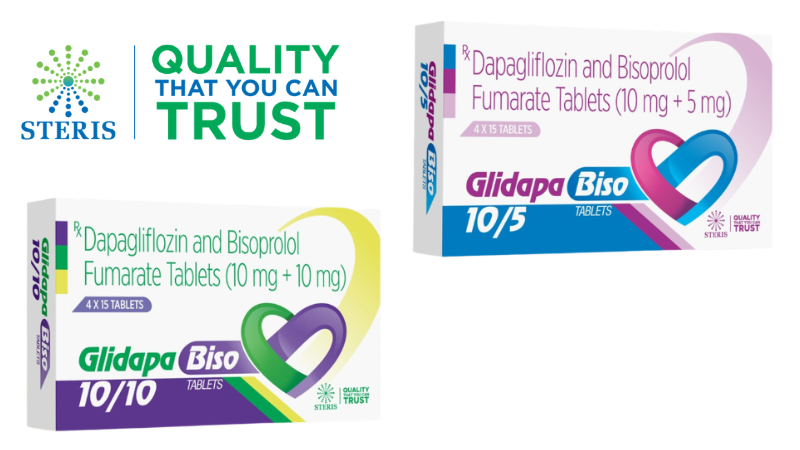
GLIDAPA BISO is a prescription fixed-dose combination tablet from Steris Healthcare Pvt. Ltd. that pairs two heart-protective medicines in one tablet: dapagliflozin 10 mg and bisoprolol fumarate. It is available in two strengths:
- Dapagliflozin 10 mg + Bisoprolol Fumarate 5 mg
- Dapagliflozin 10 mg + Bisoprolol Fumarate 10 mg
Dapagliflozin “dapagliflozin 10 mg uses” or “tab dapagliflozin 10 mg” is an SGLT2 (sodium-glucose co-transporter 2) inhibitor. It was first developed for type 2 diabetes. It acts on the kidneys so that excess glucose and sodium leave the body in the urine. Large trials later showed that it also reduces hospitalisations in heart failure and slows chronic kidney disease, whether or not the patient has diabetes.
Bisoprolol fumarate (also searched as “bisoprolol tablet”, “bisoprolol 5 mg” or “bisoprolol 10 mg”) is a beta-1 selective beta-blocker. It slows the heart rate, lowers blood pressure and reduces the workload on the heart. It is used for high blood pressure, angina and stable chronic heart failure with reduced ejection fraction.
Combining them in one tablet is meant for patients whose doctor has already decided that both medicines are appropriate, most commonly adults with heart failure with reduced ejection fraction who may or may not also have type 2 diabetes. The approved indication of this specific combination should be confirmed from the final product label and regulatory approval.
This is a Schedule H medicine. Start, adjust or stop it only on the advice of a registered doctor, preferably a cardiologist, physician or diabetologist.
Why Is This Combination Important?
Heart failure is a major cause of hospital admission and early death in India, and it often occurs together with diabetes, high blood pressure and kidney disease. Modern guidelines treat heart failure with reduced ejection fraction with several medicines that work in different ways. Two of these are an SGLT2 inhibitor and an evidence-based beta-blocker such as bisoprolol.
- Two proven heart-protective actions. Bisoprolol calms the heart’s response to stress hormones. Dapagliflozin reduces fluid overload and strain on the heart and kidneys. They address different parts of the problem.
- Fewer tablets. Heart failure patients often take several medicines daily. A combination tablet can reduce the pill burden and support adherence, which is a major factor in outcomes.
- Benefits for people with and without diabetes. Dapagliflozin’s heart failure and kidney benefits were seen in patients without diabetes too.
- Low risk of hypoglycaemia from dapagliflozin alone. Its action is glucose-dependent, so it does not usually cause low blood sugar by itself.
- Added effects on weight and blood pressure. Dapagliflozin is associated with modest weight loss and small blood pressure reductions, which can complement bisoprolol.
- Convenience of once-daily dosing. Both ingredients are typically taken once a day.
One practical point matters. In heart failure, bisoprolol is usually started at a very low dose and increased slowly over weeks. A fixed-dose tablet cannot be titrated this way. So doctors typically establish a tolerated bisoprolol dose first and then consider the matching combination strength.
Key Benefits of GLIDAPA BISO
- Combines an SGLT2 inhibitor and a beta-blocker, two cornerstone medicines in heart failure care
- Dapagliflozin reduces the risk of heart failure hospitalisation, with benefits shown in patients with and without diabetes
- Dapagliflozin has evidence for slowing the decline of kidney function in chronic kidney disease
- Bisoprolol is associated with lower mortality in stable chronic heart failure with reduced ejection fraction
- Bisoprolol lowers heart rate and blood pressure and helps relieve angina
- Dapagliflozin helps lower blood sugar in patients with type 2 diabetes
- Modest weight reduction and small blood pressure reduction with dapagliflozin
- Once-daily dosing and fewer tablets may improve adherence
- Two strengths of bisoprolol (5 mg and 10 mg) allow the doctor to match the dose the patient already tolerates
- Both ingredients have long clinical track records
Indications
The ingredients of GLIDAPA BISO are used in the following conditions. Your doctor decides which applies to you.
Dapagliflozin
- Type 2 diabetes mellitus, with diet and exercise, to improve blood sugar control
- Heart failure (reduced, mildly reduced or preserved ejection fraction) to reduce cardiovascular death and heart failure hospitalisation
- Chronic kidney disease at risk of progression
Bisoprolol fumarate
- Stable chronic heart failure with reduced left ventricular systolic function, along with other heart failure treatments
- Hypertension (high blood pressure)
- Angina pectoris (chest pain from reduced blood flow to the heart)
The fixed-dose combination is generally considered when a patient needs both medicines, most commonly in heart failure with reduced ejection fraction. It is not for type 1 diabetes, diabetic ketoacidosis, acute decompensated heart failure needing intravenous support, or cardiogenic shock.
Efficacy and Clinical Evidence
The evidence below comes from large published trials of each ingredient on its own. I’m not aware of large outcome trials of this specific fixed-dose combination, so these findings describe the medicines, not the brand. Individual results vary.
Dapagliflozin in heart failure with reduced ejection fraction
- DAPA-HF (about 4,700 patients, NEJM 2019): dapagliflozin 10 mg reduced the combined risk of worsening heart failure or cardiovascular death by about 26% compared with placebo, in patients with and without diabetes. Almost all patients in the trial were already on background heart failure therapy, including beta-blockers such as bisoprolol, which supports using the two together.
Dapagliflozin in mildly reduced and preserved ejection fraction
- DELIVER (about 6,260 patients, NEJM 2022): dapagliflozin reduced the combined risk of worsening heart failure or cardiovascular death by roughly 18%, extending the evidence to patients with higher ejection fractions.
Guideline context
- Major heart failure guidelines (including ESC and AHA/ACC/HFSA) list SGLT2 inhibitors such as dapagliflozin and evidence-based beta-blockers such as bisoprolol among the core medicines for heart failure with reduced ejection fraction.
What this means for you: Each ingredient has strong trial evidence in heart failure. The combination tablet is a convenience that lets a doctor deliver both in one daily dose once the patient has been stabilised. Your doctor decides whether it suits your condition.
Dapagliflozin 10 mg and Bisoprolol: How to Take
- Take exactly as your doctor prescribes, usually once daily at the same time each day.
- Swallow the tablet whole with water.
- Do not stop the tablet suddenly. Abruptly stopping bisoprolol can worsen angina or heart rhythm, or trigger a heart attack. Any change should be gradual and supervised.
- Stay well hydrated unless your doctor has restricted fluids because of heart failure. Follow your doctor’s guidance on fluids and salt.
- If you miss a dose, take it when you remember the same day. Do not double up.
- Check your pulse and blood pressure at home if advised, and report a very slow pulse or dizziness.
Precautions and Warnings
- Do not stop suddenly. Sudden withdrawal of bisoprolol can cause serious heart problems.
- Slow heart rate and low blood pressure. Bisoprolol can cause bradycardia and dizziness. Report fainting, a pulse below about 50 beats per minute, or severe light-headedness.
- Heart block, sick sinus syndrome, cardiogenic shock, very low blood pressure: bisoprolol is generally not suitable.
- Asthma and COPD. Bisoprolol is relatively selective but can still worsen airway narrowing at higher doses. Inform your doctor if you have asthma or chronic lung disease.
- Masked low-sugar symptoms. Beta-blockers can hide warning signs of hypoglycaemia, such as fast heartbeat and tremor, in diabetic patients on insulin or sulfonylureas. Sweating may remain.
- Ketoacidosis. Dapagliflozin can cause diabetic ketoacidosis, even with near-normal blood sugar. Seek urgent care for nausea, vomiting, stomach pain, unusual tiredness, fast breathing or fruity-smelling breath.
- Genital and urinary infections. Yeast infections and urinary tract infections are possible. Keep the area clean and dry and report symptoms early.
- Fournier’s gangrene. Very rare but serious. Seek urgent help for pain, redness or swelling in the genital or perineal area with fever.
- Dehydration and low blood pressure. Take care if you are elderly, take diuretics, or have vomiting or diarrhoea. Dapagliflozin has a mild diuretic effect.
- Kidney function. It should be checked before and during treatment. Not suitable for patients on dialysis.
- Liver disease. Discuss with your doctor before use.
- Peripheral artery disease, Raynaud’s phenomenon. Bisoprolol may worsen cold hands and feet or circulation symptoms.
- Surgery and anaesthesia. Tell your surgeon and anaesthetist that you take the tablet. Dapagliflozin may need to be paused a few days before surgery.
- Alcohol. Avoid heavy drinking, which can add to dizziness and dehydration.
- Pregnancy and breastfeeding. Not recommended unless your doctor advises it.
- Children. Not intended for use in children.
- Foot care. Inspect your feet regularly if you have diabetes and report any wound, ulcer or pain.
- Storage. Keep in a cool, dry place away from sunlight and out of reach of children.
Side Effects
Common
- Tiredness or fatigue
- Dizziness, especially on standing up
- Slow heart rate
- Cold hands and feet
- Increased urination
- Genital yeast infection
- Urinary tract infection
- Headache
- Nausea or mild stomach upset
Less common
- Low blood pressure
- Shortness of breath, particularly in people with lung disease
- Sleep disturbance or vivid dreams
- Muscle weakness or cramps
- Rash
- Back pain
Buy GLIDAPA BISO Online in India
Looking to buy dapagliflozin and bisoprolol tablets in India? GLIDAPA BISO is a prescription medicine, so a valid prescription from a registered medical practitioner is required.
Why choose Steris Healthcare Pvt. Ltd.?
- A Jaipur-based pharmaceutical manufacturer, WHO-GMP and ISO certified
- Quality-controlled production with consistent batch standards
- Reliable supply to pharmacies, distributors and healthcare institutions across India
Frequently Asked Questions (FAQs)
1. What is dapagliflozin and bisoprolol used for?
The ingredients are used in heart failure, high blood pressure, angina, type 2 diabetes and chronic kidney disease, depending on the medicine. The combination is mainly considered for patients who need both, as decided by their doctor.
2. What is GLIDAPA BISO?
It is a Steris Healthcare tablet containing dapagliflozin 10 mg with bisoprolol fumarate 5 mg or 10 mg.
3. What is dapagliflozin 10 mg used for?
It is used for type 2 diabetes, heart failure and chronic kidney disease, as prescribed.
4. What is bisoprolol fumarate tablet used for?
It is used for high blood pressure, angina and stable chronic heart failure.
5. How does dapagliflozin work?
It blocks SGLT2 in the kidneys so excess glucose and sodium leave in the urine, which lowers blood sugar and reduces strain on the heart and kidneys.
6. How does bisoprolol work?
It blocks beta-1 receptors in the heart, slowing the heart rate and lowering blood pressure and the heart’s workload.
7. What is the difference between bisoprolol 5 mg and bisoprolol 10 mg?
It is the dose per tablet. Your doctor chooses it based on your heart rate, blood pressure and tolerance, and heart failure doses are increased slowly.
8. Can I take dapagliflozin and bisoprolol together?
Yes, doctors commonly prescribe them together in heart failure. In the DAPA-HF trial, most patients were already on a beta-blocker.
9. Can I take it if I do not have diabetes?
Dapagliflozin’s heart failure and kidney benefits were also seen in patients without diabetes. Your doctor decides whether it suits you.
10. When should I take it?
Usually once daily at the same time each day, as directed by your doctor.
11. Can I stop bisoprolol suddenly?
No. Stopping suddenly can worsen angina, trigger heart rhythm problems or cause a heart attack. Any change should be gradual and supervised.
12. What are the common side effects?
Tiredness, dizziness, slow heart rate, cold hands and feet, increased urination, genital yeast infections and urinary tract infections.
13. Does it cause low blood sugar?
Dapagliflozin alone rarely does. The risk rises with insulin or sulfonylureas, and bisoprolol can hide the warning signs.
14. Is it safe for kidney patients?
Dapagliflozin has evidence in chronic kidney disease, but suitability depends on kidney function. It should be checked before and during treatment.
15. Can it cause slow heart rate?
Yes. Bisoprolol can slow the pulse. Report fainting, severe dizziness or a pulse below about 50 beats per minute.
Conclusion
GLIDAPA BISO brings together dapagliflozin 10 mg and bisoprolol fumarate in a single daily tablet. Dapagliflozin reduces heart failure hospitalisations and slows kidney disease progression, and it helps control blood sugar in type 2 diabetes. Bisoprolol slows the heart rate, lowers blood pressure and has trial evidence for improving survival in chronic heart failure with reduced ejection fraction. Each has strong evidence on its own, and the combination offers convenience once a doctor has established that both are right for the patient.
Treatment works best with consistent use, sensible fluid and salt guidance from your doctor, regular checks of heart rate, blood pressure, kidney function and, if you have diabetes, blood sugar. Never stop the tablet suddenly, and never start or change it on your own. To buy it in India, get a prescription and use a licensed pharmacy.
For Further More Information:
Mail Us: contact@sterispharma.com or info@sterispharma.com
Call Now: +918824175417, +919982524671
Recent Post
Ofloxacin Dexamethasone Eye/Ear Drops: What Doctors Prescribe
How Do Dapagliflozin and Metformin Work Together to Manage Type 2 Diabetes?
Voglibose and Repaglinide Tablets: Uses & Side Effects
Dapagliflozin for Type 2 Diabetes: Uses and Important Precautions
Dapagliflozin and Metformin Tablets: Uses, Benefits, Side Effects and Precautions
Itopride Hydrochloride Uses: What It Treats and How It Works
Glimepiride 0.5 mg + Voglibose 0.2 mg + Metformin SR 500 mg | Steris Healthcare
Trimetazidine Hydrochloride Modified Release Tablets 35 mg Uses, Benefits

EUROSOFT MOSQUITO SHIELD
Olmesartan and Metoprolol: Uses, Benefits, Dosage & Side Effects | Steris Healthcare

