


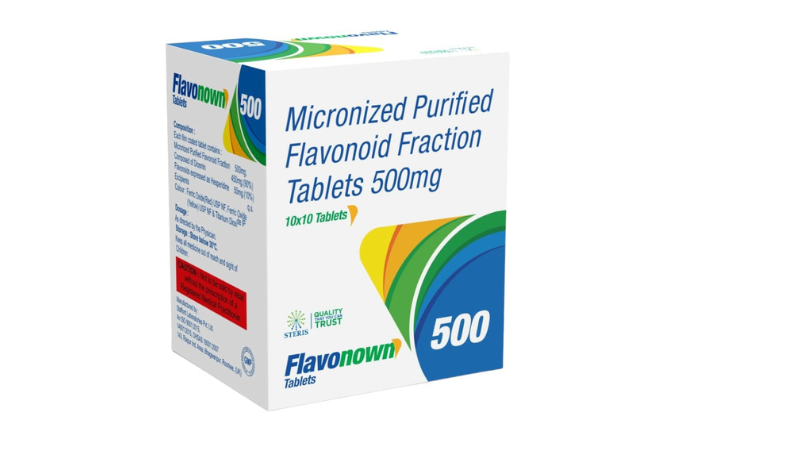



Micronized purified Flavonoid Fraction 500 mg - Uses, Side Effects, Interactions, Dosage and Call to Action.
Jul 27, 2024
What Is a Micronized Purified Flavonoid Fraction Tablet?
A micronized purified flavonoid fraction tablet contains a purified mixture of flavonoids, primarily diosmin with a smaller proportion of flavonoids expressed as hesperidin.
A commonly recognized MPFF formulation contains 90% micronized diosmin and 10% flavonoids expressed as hesperidin. Micronization is used to reduce particle size and is intended to improve the formulation's pharmaceutical characteristics.
MPFF belongs to the group of venoactive drugs, which are used to manage symptoms associated with venous disorders. Research has evaluated MPFF for chronic venous disease, venous ulcers and hemorrhoidal disease.
Micronized Purified Flavonoid Fraction Tablet Uses
The main uses of MPFF depend on the specific formulation and the doctor's diagnosis.
Commonly recognized uses include:
- Hemorrhoids (piles): MPFF may help reduce symptoms associated with acute or chronic hemorrhoidal disease, including swelling, discomfort and bleeding.
- Varicose veins: It may be used to help manage symptoms associated with venous insufficiency and varicose veins.
- Chronic venous disease: MPFF has been studied for symptoms such as leg heaviness, pain, discomfort, cramps and edema.
- Venous ulcers: MPFF may be used as an adjunct to standard treatment in selected patients with venous ulcers.
- Post-venous-intervention symptoms: It may sometimes be considered as supportive treatment following venous procedures.
A recent systematic review and meta-analysis published in 2026 evaluated MPFF 1000 mg daily in people with early-stage chronic venous disease and assessed outcomes including leg pain, heaviness, cramps and quality of life.
How Does Micronized Purified Flavonoid Fraction Work?
MPFF acts on several components involved in venous circulation and inflammation.
Diosmin and hesperidin are flavonoids that may help improve venous tone, microcirculation and lymphatic drainage and reduce capillary hyperpermeability and inflammatory processes.
For patients with chronic venous disease, these effects may help reduce symptoms associated with venous pooling and impaired venous return.
Clinical literature has reported improvements in symptoms such as edema and discomfort in selected chronic venous disease populations.
However, MPFF should not be presented as a permanent cure for varicose veins or as a substitute for appropriate medical evaluation, compression therapy, procedures or surgery when those treatments are indicated.
Key Benefits of Micronized Purified Flavonoid Fraction Tablet
1. Helps manage venous symptoms
MPFF may help reduce symptoms associated with chronic venous disease, including leg discomfort, heaviness, pain and swelling.
Research has found clinically meaningful improvements in symptoms in people with chronic venous disease treated with MPFF.
2. Supports venous circulation
MPFF can influence venous tone and microcirculation, which may help improve symptoms associated with impaired venous return.
3. May help reduce leg swelling
Edema is a common symptom of chronic venous disease. MPFF has been investigated for reducing venous-related edema as part of medical management.
4. May help with hemorrhoidal symptoms
MPFF has been studied in acute and chronic hemorrhoidal disease. Evidence suggests it may reduce the severity, frequency or duration of some hemorrhoidal symptoms.
5. May support treatment of venous ulcers
In selected patients, MPFF has been investigated as an addition to standard venous-ulcer management rather than as a replacement for wound care and compression therapy.
Micronized Purified Flavonoid Fraction 500 mg vs 1000 mg
MPFF is available in different strengths and formulations.
For example, Daflon 500 mg is listed as diosmin 450 mg plus hesperidin 50 mg, while Daflon 1000 mg is listed as diosmin 900 mg plus hesperidin 100 mg.
Clinical research has also compared MPFF 1000 mg once daily with MPFF 500 mg twice daily, with the same total daily dose, in chronic venous disease.
The appropriate strength and schedule should therefore be determined by the specific product and medical indication rather than by assuming that a higher-strength tablet is always better.
How to Take Micronized Purified Flavonoid Fraction Tablet
Take MPFF exactly as directed by your doctor or according to the instructions for the specific product.
Depending on the condition and formulation, the dosing schedule can differ. For this reason, patients should not self-select a dose based solely on the tablet strength.
General precautions include:
- Take the tablet at the recommended time and frequency.
- Follow the prescribed treatment duration.
- If the product causes stomach discomfort, ask your doctor or pharmacist whether it should be taken with food.
- Do not double the dose if you forget a tablet unless specifically instructed.
- Do not use MPFF indefinitely without medical review when symptoms persist.
For example, current Indian product information for Daflon 500 mg states that it should be taken as prescribed by a doctor, while specific dosing can vary according to the indication.
Micronized Purified Flavonoid Fraction Tablet Side Effects
MPFF is generally considered well tolerated, but side effects can occur.
Commonly reported adverse effects may include:
- Nausea
- Diarrhea
- Vomiting
- Indigestion or dyspepsia
- Abdominal discomfort or pain
- Headache
Current Indian medicine information lists nausea, diarrhea, vomiting and indigestion among common side effects of diosmin/hesperidin products.
Most adverse effects are mild, but persistent or severe symptoms should be discussed with a healthcare professional.
Allergic Reactions
People with a known allergy or sensitivity to flavonoid-containing medicines should tell their doctor before taking MPFF.
Seek urgent medical attention for signs of a serious allergic reaction, such as difficulty breathing, facial swelling or severe widespread rash.
Who Should Take Precautions With MPFF?
Before starting a micronized purified flavonoid fraction tablet, speak with a healthcare professional if you:
- Are pregnant or breastfeeding
- Have a history of medicine allergies
- Take medicines that affect bleeding or clotting
- Have unexplained rectal bleeding
- Have persistent or severe abdominal symptoms
- Have leg swelling with sudden onset or significant pain
- Have a history of deep-vein thrombosis or another serious vascular condition
Importantly, not every episode of leg swelling or rectal bleeding is caused by varicose veins or hemorrhoids. A new or unexplained symptom may require diagnostic evaluation.
MPFF for Piles: What Buyers Should Know
Research has evaluated MPFF for both acute and chronic hemorrhoidal symptoms. It may help reduce symptoms such as discomfort, swelling and bleeding in selected patients.
However, rectal bleeding should not automatically be assumed to be caused by piles. Persistent, heavy or unexplained bleeding should be medically evaluated.
MPFF also does not replace dietary measures, adequate hydration, appropriate bowel habits, or procedural treatment when those are clinically necessary.
MPFF for Varicose Veins and Chronic Venous Disease
For chronic venous disease, symptoms may include:
- Heavy or tired legs
- Leg discomfort
- Swelling around the ankles
- Night-time cramps
- Aching after prolonged standing
- Visible varicose veins
MPFF may be used as part of medical management to reduce symptoms. Evidence suggests benefits for some symptoms of chronic venous disease, although treatment should be individualized.
Lifestyle measures such as regular walking, avoiding prolonged sitting or standing and clinician-recommended compression therapy may also form part of an overall treatment plan.
Micronized Purified Flavonoid Fraction Tablet Price in India
The price of a micronized purified flavonoid fraction tablet varies by composition, strength, brand, pack size and pharmacy.
These are current listing examples, not fixed retail prices. Prices, stock status, discounts and availability can change.
Where to Buy Micronized Purified Flavonoid Fraction Tablet Online
If you plan to buy micronized purified flavonoid fraction tablets online in India, verify the exact medicine before ordering.
Check:
- Active ingredients
- MPFF strength
- Brand and manufacturer
- Tablet quantity
- Batch number
- Manufacturing and expiry dates
- Packaging authenticity
- Storage requirements
- Prescription requirements
- Seller/pharmacy information
- Current price and applicable discounts
Several current Indian listings mark MPFF products as prescription medicines, so buyers should follow applicable prescribing and pharmacy requirements.
Quick Facts About Micronized Purified Flavonoid Fraction Tablet
| Feature | Information |
|---|---|
| Medicine type | Venoactive flavonoid |
| Common components | Micronized diosmin + flavonoid fraction expressed as hesperidin |
| Common strengths | 500 mg and 1000 mg formulations |
| Main uses | Venous disease and hemorrhoidal symptoms, depending on product |
| Route | Oral |
| Common side effects | Nausea, diarrhea, indigestion, vomiting |
| Prescription status | Depends on product and jurisdiction |
| Treatment duration | Depends on diagnosis and medical advice |
Frequently Asked Questions About Micronized Purified Flavonoid Fraction Tablet
1. What is a micronized purified flavonoid fraction tablet used for?
A micronized purified flavonoid fraction tablet is used to manage symptoms associated with certain venous disorders and hemorrhoidal disease. It may help with symptoms such as leg discomfort, swelling and heaviness and may also help reduce some hemorrhoidal symptoms.
2. What is MPFF 1000 mg used for?
MPFF 1000 mg formulations are used in the management of certain venous conditions and hemorrhoidal disease, depending on the specific product and indication. Current evidence has evaluated 1000 mg daily MPFF for symptoms of chronic venous disease.
3. Is micronized purified flavonoid fraction good for piles?
MPFF has been studied for acute and chronic hemorrhoidal symptoms and may reduce symptom severity in appropriate patients. However, persistent or unexplained rectal bleeding should always be medically evaluated.
4. Is MPFF used for varicose veins?
Yes. MPFF is used to help manage symptoms associated with chronic venous disease and varicose veins. It may help reduce symptoms such as leg heaviness, discomfort and edema.
5. What are the common side effects of MPFF tablets?
Common side effects can include nausea, diarrhea, vomiting, indigestion and abdominal discomfort. Most reported adverse reactions are mild, but persistent or severe symptoms should be discussed with a healthcare professional.
6. Can I take MPFF 1000 mg without a prescription?
Do not assume that MPFF 1000 mg is appropriate for self-treatment. Current Indian listings for several MPFF products identify them as prescription medicines. The appropriate dose and duration depend on the condition being treated.
7. Is MPFF 1000 mg better than MPFF 500 mg?
Not necessarily. Strength alone does not determine which formulation is appropriate. Clinical research has evaluated 1000 mg once daily against 500 mg twice daily at the same total daily dose, while the appropriate regimen depends on the specific product and medical indication.
8. How long does MPFF take to work?
The time required for symptom improvement varies according to the condition and individual response. Clinical studies have evaluated MPFF over periods ranging from several weeks to months. Your doctor should determine the appropriate treatment duration.
9. Can MPFF cure varicose veins permanently?
MPFF should not be described as a permanent cure for varicose veins. It is primarily used to help manage symptoms and may form part of a broader treatment plan that can include lifestyle measures, compression therapy or procedures when required.
10. Can MPFF stop hemorrhoidal bleeding?
MPFF may help reduce hemorrhoidal symptoms, including bleeding, in selected patients. However, rectal bleeding can have causes other than hemorrhoids, so persistent or significant bleeding requires medical assessment.
11. Can micronized purified flavonoid fraction be taken during pregnancy?
Pregnant or breastfeeding patients should consult their doctor before taking MPFF. Do not start prescription medicines during pregnancy based solely on online information.
12. Where can I buy micronized purified flavonoid fraction tablets online?
MPFF tablets are currently listed by Indian online pharmacies under several brand names and strengths. Before purchasing, verify the exact composition, strength, manufacturer, expiry date, authenticity and prescription requirements. Current listings include 500 mg and 1000 mg products.
13. What is micronized purified flavonoid fraction?
Micronized Purified Flavonoid Fraction is a flavonoid combination commonly used to support venous circulation and reduce related symptoms.
Conclusion
Micronized Purified Flavonoid Fraction Tablet is a venoactive flavonoid medicine used in the management of selected venous conditions and hemorrhoidal disease. Formulations commonly contain micronized diosmin with a flavonoid fraction expressed as hesperidin, and products are available in different strengths such as 500 mg and 1000 mg.
Recent Post
Itopride Hydrochloride Uses: What It Treats and How It Works
Glimepiride 0.5 mg + Voglibose 0.2 mg + Metformin SR 500 mg | Steris Healthcare
Trimetazidine Hydrochloride Modified Release Tablets 35 mg Uses, Benefits
EUROSOFT MOSQUITO SHIELD
Olmesartan and Metoprolol: Uses, Benefits, Dosage & Side Effects | Steris Healthcare
Tofacitinib 11 mg Tablets: A Complete Guide to Uses and Side Effects
Olmesartan Medoxomil + Metoprolol Succinate: Uses, Dosage
Torsemide 100 mg: Uses, Dosage, Side Effects, and Precautions
How Streptococcus Thermophilus Supports Digestive Health
Olmesartan Medoxomil + Metoprolol Succinate: Uses, Benefits & Side Effects