


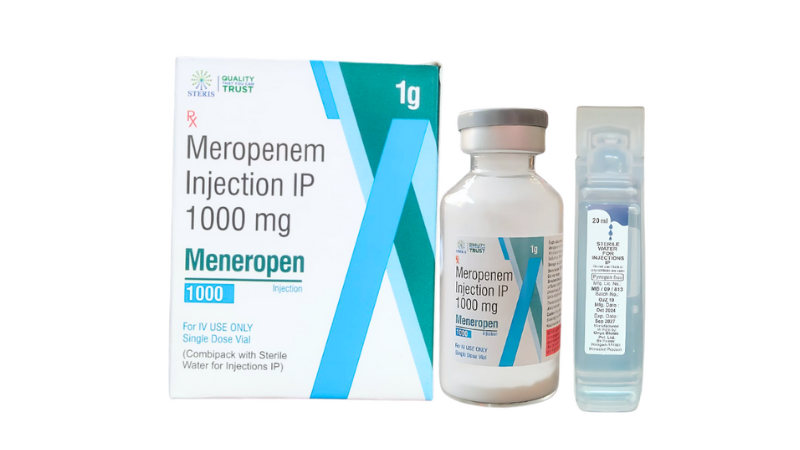



Meropenem Injection Uses: Complete Guide to MENEROPEN 1 GM IV
Aug 13, 2025
What Is Meropenem Injection IP 1000 mg?
Meropenem Injection IP 1000 mg contains meropenem equivalent to 1000 mg (1 g). The medicine is supplied as a sterile powder for preparation before intravenous administration. Authoritative product labeling lists 1 g/vial presentations for intravenous use.
Meropenem works by interfering with bacterial cell-wall formation, which prevents susceptible bacteria from maintaining their protective structure and leads to bacterial death. It is therefore used against certain serious bacterial infections rather than viral illnesses such as influenza or the common cold.
In India, individual meropenem 1 g products may be marketed under different brand names and by different pharmaceutical companies. Therefore, buyers should verify the manufacturer, batch number, expiry date, composition, packaging, prescription status, and storage instructions on the actual product being purchased.
What is Meropenem Injection Used For
Doctors may prescribe meropenem when a serious bacterial infection requires an appropriate broad-spectrum antibiotic. Depending on the patient's diagnosis, local treatment guidelines, bacterial susceptibility and clinical circumstances, meropenem may be used for infections involving different body systems.
Commonly described uses include:
- Severe bacterial infections
- Complicated skin and soft-tissue infections
- Serious intra-abdominal infections
- Certain severe respiratory infections
- Complicated urinary tract infections
- Bacterial meningitis in appropriate clinical settings
- Serious infections in hospitalized or critically ill patients
Indian medicine information sources similarly describe meropenem 1 g injections as medicines used for serious infections involving the skin, lungs, abdomen, urinary tract, blood and brain, including meningitis.
The exact indication should always be determined by the treating physician. The fact that meropenem has activity against many bacteria does not mean it should automatically be used for every infection.
Key Benefits of Meropenem Injection IP 1000 mg
The primary benefit of meropenem is its antibacterial activity against susceptible bacteria. For appropriately selected patients, important advantages can include:
1. Broad antibacterial coverage
Meropenem belongs to the carbapenem antibiotic class and can provide activity against a broad range of susceptible Gram-positive and Gram-negative bacteria.
2. Suitable for serious bacterial infections
Because it is administered intravenously and is available as a 1 g strength, meropenem is commonly used in hospital and other supervised medical settings when serious infection requires parenteral antibiotic treatment.
3. Direct intravenous administration
Meropenem injection is designed for IV administration, allowing healthcare professionals to deliver the medicine directly into the bloodstream. Product labeling specifies intravenous use.
4. Useful when oral treatment is unsuitable
For patients who are seriously ill, unable to take oral medicines, or require an IV antibiotic based on clinical circumstances, an injectable formulation may be appropriate.
5. Established prescription antibiotic
Meropenem has been used clinically for decades, with U.S. initial approval dating to 1996. Current prescribing information continues to identify 1 g vial presentations for intravenous use.
How Is Meropenem Injection 1000 mg Given?
Meropenem 1000 mg injection is normally administered intravenously by a doctor, nurse, or other qualified healthcare professional. It should not be self-injected.
The dose, frequency and duration depend on factors such as:
- Type and severity of infection
- Site of infection
- Suspected or confirmed bacteria
- Patient age and weight
- Kidney function
- Other medicines being taken
- Clinical response to treatment
Importantly, 1000 mg is the strength of the vial, not necessarily the correct dose for every patient. Dose adjustments may be necessary in people with impaired kidney function.
Patients should not change the dose, frequency or duration themselves. Completing treatment exactly as prescribed is important for appropriate infection management and antimicrobial stewardship.
Meropenem Injection IP 1000 mg Side Effects
Like other prescription antibiotics, meropenem can cause side effects. Commonly reported effects may include:
- Diarrhea or loose stools
- Nausea or vomiting
- Headache
- Rash or itching
- Injection-site or infusion-related reactions
- Changes in blood-cell counts or liver-related laboratory results
Most side effects are not necessarily serious, but patients should inform their healthcare professional about troublesome or persistent symptoms.
Serious Side Effects Requiring Medical Attention
Seek urgent medical attention if symptoms suggest:
- Severe allergic or anaphylactic reaction
- Difficulty breathing or facial/throat swelling
- Severe skin reactions or blistering
- Seizures or significant neurological symptoms
- Severe or persistent diarrhea, particularly with abdominal pain or blood
- Unexplained severe muscle symptoms
Current prescribing information warns about serious hypersensitivity reactions, severe cutaneous reactions, seizures, Clostridioides difficile-associated diarrhea and other potentially serious adverse reactions.
Important Drug Interaction: Valproic Acid
One of the most important interactions to know about is valproic acid or divalproex sodium.
Meropenem can substantially reduce blood concentrations of valproic acid, potentially increasing the risk of breakthrough seizures. FDA prescribing information specifically warns about this interaction.
If you take valproic acid or divalproex for seizure control, tell your doctor before receiving meropenem. Do not stop or alter your anticonvulsant medicine without medical advice.
Who Should Take Extra Precautions?
Before treatment, tell your healthcare professional if you have:
- A previous serious allergy to penicillin, cephalosporins, carbapenems or other beta-lactam antibiotics
- Kidney disease
- A history of seizures or neurological disorders
- Liver problems
- Previous antibiotic-associated severe diarrhea
- Pregnancy or breastfeeding
- Any significant medication allergies
- Current treatment with valproic acid or divalproex
Meropenem is contraindicated in patients with known hypersensitivity to the medicine or certain beta-lactam antibiotics, and renal function is an important consideration when determining appropriate treatment.
Meropenem Injection IP 1000 mg Price in India
The price of meropenem injection IP 1000 mg varies by brand, manufacturer, formulation, pack size, seller, location and applicable pricing regulations.
Where to Buy Meropenem Injection IP 1000 mg
Because meropenem is a prescription antibiotic, purchase it only through a licensed pharmacy, hospital pharmacy or legitimate pharmaceutical supplier and use it according to a valid prescription.
Before purchasing, check:
- Meropenem strength: 1000 mg / 1 g
- Product name and manufacturer
- Batch or lot number
- Manufacturing and expiry dates
- Intact packaging and vial
- Prescription requirements
- Storage conditions
- Seller/pharmacy credentials
- Invoice and product traceability
Some Indian online pharmacy listings identify meropenem 1 g products as prescription medicines and provide manufacturer and storage information.
Storage and Handling
Storage instructions can vary between products, so always follow the manufacturer's label and package insert.
For example, some Indian meropenem 1 g listings specify storage below 25°C or below 30°C depending on the particular product.
Healthcare professionals should follow the specific product instructions for reconstitution, dilution, administration and stability after preparation.
Why You Should Not Use Meropenem Without a Prescription
Meropenem is a powerful broad-spectrum antibiotic, but stronger does not mean better for every infection.
Unnecessary or inappropriate antibiotic use can contribute to antimicrobial resistance. It may also expose patients to adverse reactions without providing benefit.
A doctor may consider examination findings, cultures, susceptibility testing, infection severity, previous antibiotic exposure, kidney function and local resistance patterns before selecting treatment.
This is especially important for meropenem because preserving carbapenem antibiotics is an important part of responsible antimicrobial use.
Meropenem Injection IP 1000 mg: Quick Buyer Checklist
Before ordering or receiving the medicine, confirm:
- Active ingredient: Meropenem
- Strength: 1000 mg (1 g)
- Route: Intravenous
- Type: Prescription antibiotic
- Form: Sterile powder for injection/infusion
- Use: Serious susceptible bacterial infections when prescribed
- Do not use for: Viral infections such as common cold or influenza
- Important interaction: Valproic acid/divalproex
- Important precaution: Allergy to beta-lactam antibiotics and kidney impairment
- Administration: By qualified healthcare personnel
Frequently Asked Questions
1. What is meropenem injection IP 1000 mg used for?
Meropenem injection IP 1000 mg is a prescription carbapenem antibiotic used for certain serious bacterial infections. Depending on the clinical diagnosis, it may be used for severe infections involving the lungs, abdomen, urinary tract, skin and soft tissues, bloodstream or brain. It is not effective against viral infections.
2. Is meropenem injection 1000 mg a strong antibiotic?
Meropenem is a broad-spectrum carbapenem antibiotic used for serious bacterial infections. However, the term “strong antibiotic” should not be interpreted as meaning it is appropriate for every infection. The correct antibiotic depends on the organism, infection site, severity and individual patient factors.
3. Can meropenem 1000 mg injection be given at home?
Meropenem injection is intended for intravenous administration and should be given by a qualified healthcare professional according to the prescription and product instructions. Patients should not self-inject meropenem.
4. What are the common side effects of meropenem 1000 mg?
Possible side effects include diarrhea, nausea, vomiting, headache, rash and infusion or injection-site reactions. Serious reactions such as anaphylaxis, severe skin reactions, seizures and C. difficile-associated diarrhea have also been reported.
5. Can meropenem injection be used for fever?
Meropenem does not treat fever itself. It may be prescribed when a doctor determines that the fever is associated with an appropriate serious bacterial infection. Fever caused by a viral illness generally does not require meropenem.
6. Can meropenem be taken with valproic acid?
This combination requires particular caution. Meropenem can lower valproic acid concentrations and increase the risk of breakthrough seizures. Patients taking valproic acid or divalproex should tell their doctor before meropenem treatment.
7. Does meropenem injection 1000 mg require a prescription?
Yes. Meropenem 1 g injection is a prescription antibiotic and should be used under medical supervision. Current Indian pharmacy listings identify meropenem 1 g injections as prescription medicines.
8. What is the price of meropenem injection IP 1000 mg in India?
There is no single price for every meropenem 1000 mg injection. Prices differ according to brand, manufacturer, formulation, pack size, pharmacy and applicable pricing requirements. Current Indian listings demonstrate substantial variation between brands, so buyers should check the exact product and current seller price before ordering.
9. Is meropenem 1000 mg safe for kidney patients?
Meropenem may require dose adjustment in patients with impaired kidney function. Anyone with kidney disease should tell the treating physician before treatment so the appropriate regimen can be determined.
10. How does meropenem injection work?
Meropenem kills susceptible bacteria by interfering with bacterial cell-wall formation. This prevents bacteria from maintaining the structure they need to survive.
Conclusion
Meropenem Injection IP 1000 mg is a prescription intravenous carbapenem antibiotic used for selected serious bacterial infections. Its major clinical advantage is broad activity against susceptible bacteria, but it should be reserved for situations where its use is medically appropriate. The 1000 mg strength represents the amount of meropenem in the vial and does not mean every patient should receive the same dose.
Recent Post
ERITOCOX BENZ 60/5 Dosage Guide: How to Take Etoricoxib & Cyclobenzaprine Tablets Safely
Gabapentin and Methylcobalamin Tablets Side Effects: What Patients Should Know
Thyroxine sodium tablets IP: उपयोग, फायदे और साइड इफेक्ट्स
Semaglutide 2 mg Injection Dosage Guide: How to Use It Safely
Buy Multivitamin + L-Carnitine + Taurine Protein Powder | Sterimmune
Semaglutide Injection Pen 8 mg: Step-by-Step Dosage & Precautions

BEST semaglutide injection price in india
How Semaglutide Injection 4 mg Helps Control Blood Sugar
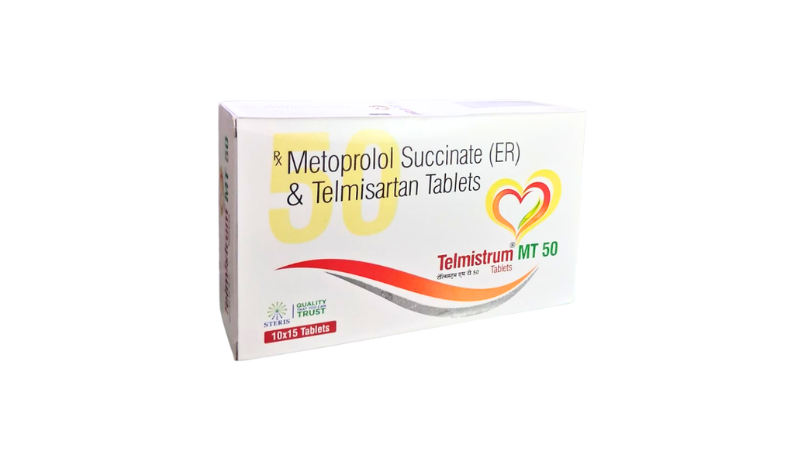
What Is Telmisartan and Metoprolol Succinate Combination Used For?
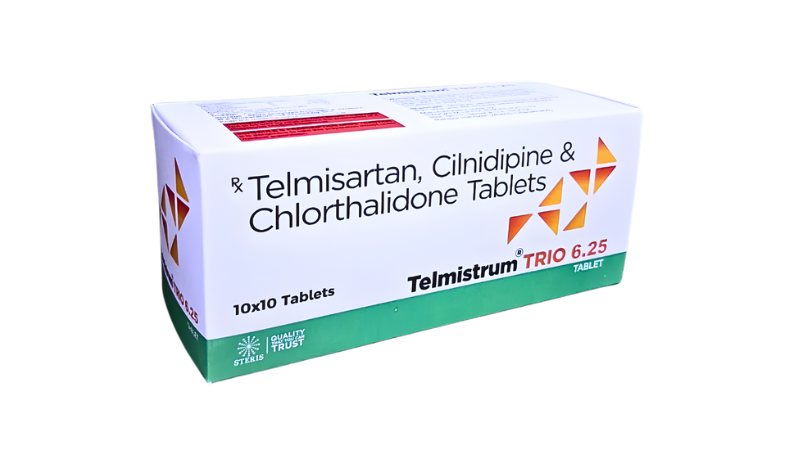
TELMISTRUM TRIO 6.25: Telmisartan, Cilnidipine & Chlorthalidone Uses & Side Effects

