


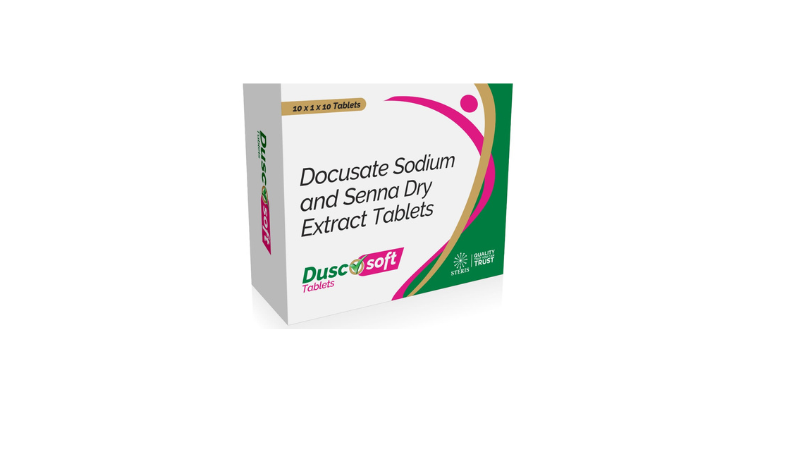



Docusate Sodium and Senna Dry Extract & DUSCO SOFT :Online at Upto 30% OFF
May 13, 2024
Constipation is one of the most common digestive complaints worldwide, affecting people across all age groups due to low dietary fibre intake, inadequate hydration, sedentary lifestyles, certain medications, and underlying gastrointestinal conditions. Docusate sodium and senna dry extract tablets offer a dual-action approach to relieving constipation by combining a stool softener with a natural stimulant laxative. This combination is widely prescribed and recommended for short-term relief of occasional constipation, as well as for specific clinical situations such as post-surgical bowel management, opioid-induced constipation, and constipation associated with bed rest or reduced mobility.
Why Docusate Sodium and Senna Combination Matters
Many people experience constipation that does not respond adequately to a single-mechanism laxative. Bulk-forming agents alone may not be sufficient when stool is already hard and difficult to pass, while stimulant laxatives alone can sometimes cause cramping if the stool remains dry and compacted. The combination of docusate sodium and senna dry extract addresses both problems simultaneously:
- Docusate sodium acts as a stool softener (emollient laxative) that allows water and fats to penetrate the stool, making it easier to pass.
- Senna dry extract is a stimulant laxative derived from the Senna plant that increases peristaltic movement in the intestines, encouraging bowel evacuation.
Together, they provide a synergistic effect — softening the stool while simultaneously stimulating the bowel to move it along — which often results in faster and more comfortable relief than either ingredient used alone. This combination is particularly valuable for patients who must avoid straining during bowel movements, such as those recovering from surgery, childbirth, hernia repair, or cardiac events, as well as patients on long-term opioid therapy who commonly experience opioid-induced constipation.
Key Benefits of Docusate Sodium and Senna Dry Extract Tablets
- Dual-action relief: Combines softening and stimulant action for more effective and often faster relief than single-agent laxatives.
- Reduced straining: Particularly beneficial for patients who need to avoid increased intra-abdominal pressure, such as post-operative or cardiac patients.
- Useful in opioid-induced constipation: Opioids slow gut motility and reduce intestinal fluid secretion; this combination addresses both issues.
- Convenient oral dosing: Available as tablets, allowing flexible, easy-to-administer dosing compared to liquid laxatives or enemas.
- Natural stimulant component: Senna is a plant-derived anthraquinone glycoside laxative with a long history of use in traditional and modern medicine.
- Generally well-tolerated for short-term use: When used as directed, the combination has a favourable safety profile for occasional or short-course constipation relief.
- Helps restore regular bowel habits: Useful as part of a broader bowel management plan that includes dietary fibre, hydration, and physical activity.
Side Effects of Docusate Sodium and Senna Dry Extract Tablets
Like all medications, docusate sodium and senna dry extract tablets can cause side effects, although not everyone experiences them. Common, generally mild side effects include:
- Abdominal cramping or discomfort
- Bloating or gas
- Diarrhoea, particularly with higher doses
- Nausea
- Discoloration of urine (harmless, due to senna metabolites)
- Mild electrolyte disturbances with prolonged use
These effects are often dose-related and tend to improve by adjusting the dose or stopping the medication once normal bowel function resumes.
Serious Side Effects
Although uncommon, the following effects warrant prompt medical attention:
- Severe abdominal pain or cramping that does not subside
- Rectal bleeding or blood in the stool
- Signs of dehydration (excessive thirst, dizziness, reduced urination) due to diarrhoea
- Electrolyte imbalance, particularly low potassium (hypokalaemia), which can occur with chronic or excessive use and may cause muscle weakness or irregular heartbeat
- Allergic reactions, including rash, itching, swelling, or difficulty breathing
- Melanosis coli, a harmless but visible darkening of the colon lining associated with long-term senna use
- Laxative dependence, where the bowel becomes reliant on stimulant laxatives to function normally, typically arising from prolonged, non-medically supervised use
Patients experiencing any of these symptoms should discontinue use and consult a healthcare provider promptly. This combination is intended for short-term or intermittent use; if constipation persists beyond one week despite treatment, medical evaluation is recommended to rule out underlying causes.
Substitutes and Alternatives
If docusate sodium and senna combination is not suitable, not tolerated, or contraindicated, healthcare providers may consider alternatives such as:
- Bulk-forming laxatives (psyllium husk, ispaghula) for long-term, gentler management
- Osmotic laxatives (polyethylene glycol, lactulose) for softer, gradual stool passage without stimulant action
- Bisacodyl, another stimulant laxative, for similar fast-acting relief
- Docusate sodium alone, when stimulant action is not desired
- Senna alone, when emollient action is not required
- Prokinetic agents or prescription medications (e.g., linaclotide, lubiprostone, prucalopride) for chronic constipation unresponsive to standard laxatives
Substitution decisions should always be made in consultation with a physician or pharmacist based on the patient's specific clinical condition.
Dosage Guidelines
Dosage of docusate sodium and senna dry extract tablets should always follow the product label or a healthcare provider's prescription, as strengths and formulations can vary between brands. General guidance includes:
- Adults: Typically one to two tablets taken once daily, usually at bedtime, as senna's stimulant effect generally takes 6–12 hours to produce a bowel movement.
- Elderly patients: May require a lower starting dose due to increased sensitivity to stimulant laxatives and higher risk of electrolyte disturbances.
- Duration of use: Generally recommended for short-term use (up to one week) unless otherwise directed by a physician for specific clinical indications.
- Administration: Tablets should be swallowed whole with a full glass of water; adequate fluid intake supports both the softening and stimulant actions of the medication.
- Missed dose: If a dose is missed, it should be taken as soon as remembered unless it is close to the next scheduled dose; doses should not be doubled.
Dosage should not be increased beyond the recommended amount without medical advice, as excessive use raises the risk of cramping, diarrhoea, and electrolyte imbalance.
Precautions
Before starting docusate sodium and senna dry extract tablets, patients should consider the following precautions:
- Avoid use during intestinal obstruction, undiagnosed abdominal pain, or acute inflammatory bowel conditions, as stimulant laxatives can worsen these conditions.
- Use with caution in elderly or debilitated patients, who are more susceptible to fluid and electrolyte disturbances.
- Pregnancy and breastfeeding: Should only be used under medical supervision, as senna metabolites can pass into breast milk in small amounts.
- Avoid prolonged or habitual use without medical supervision, as this can lead to laxative dependence and reduced natural bowel function over time.
- Monitor electrolyte levels in patients on diuretics, corticosteroids, or other medications that affect potassium levels, since combined use can increase the risk of hypokalaemia.
- Drug interactions: May affect the absorption of certain oral medications due to altered gut transit time; spacing doses from other medications is often advisable.
- Not recommended for children under a certain age without specific paediatric formulation and medical guidance.
- Discontinue and seek medical advice if rectal bleeding occurs or if there is no bowel movement after use, as this may indicate a more serious underlying condition.
Mechanism of Action
The therapeutic effect of this combination arises from two complementary pharmacological mechanisms:
Docusate sodium is an anionic surfactant that reduces the surface tension of the stool, allowing water and lipids to mix more easily into the faecal mass. This softens the stool, making it easier to pass without straining. Docusate sodium does not significantly stimulate intestinal motility on its own; its action is primarily mechanical and softening in nature.
Senna dry extract contains sennosides (A and B), which are anthraquinone glycosides. After oral ingestion, sennosides are minimally absorbed in the small intestine and are metabolised by colonic bacteria into their active form, rhein anthrone. This active metabolite stimulates the myenteric plexus in the colon wall, increasing peristaltic contractions and reducing water and electrolyte absorption from the colon. The net effect is increased intestinal motility and a higher faecal water content, both of which promote bowel evacuation.
When combined, docusate sodium softens the stool while senna stimulates its movement through the colon, addressing both the consistency and the propulsion components of effective bowel evacuation. This complementary mechanism is the pharmacological basis for prescribing the two agents together rather than relying on a single laxative class.
Indications and Clinical Evidence
Docusate sodium and senna dry extract tablets are primarily indicated for:
- Occasional or short-term constipation, including constipation related to low dietary fibre or fluid intake
- Constipation associated with prolonged bed rest or immobility, common in hospitalised or post-surgical patients
- Opioid-induced constipation, where opioid analgesics reduce gut motility and secretions
- Pre- and post-operative bowel management, particularly where straining must be minimised
- Constipation in palliative care settings, where stimulant-softener combinations are frequently used to manage opioid-related bowel changes
Clinical and pharmacological literature on stimulant-softener combination laxatives consistently supports the rationale for combining an emollient agent with a stimulant agent in patients at risk of straining-related complications, such as those with cardiovascular disease, recent abdominal or rectal surgery, or haemorrhoids. Senna-based stimulant laxatives are among the most extensively used and studied agents in this class, with a long-established record of efficacy in promoting bowel evacuation within 6 to 12 hours of administration. Guidelines for opioid-induced constipation management frequently recommend stimulant laxatives, often combined with a stool softener, as first-line therapy alongside non-pharmacological measures such as adequate hydration and mobility.
It is worth noting that combination products are generally positioned for short-term symptomatic relief rather than long-term management of chronic constipation, for which osmotic laxatives, fibre supplementation, or prescription prokinetic agents are typically preferred due to a lower risk of dependence with extended use.
Conclusion
Docusate sodium and senna dry extract tablets provide an effective, dual-mechanism approach to relieving occasional constipation by softening the stool and stimulating bowel motility simultaneously. This combination is particularly useful for patients who need to avoid straining, those experiencing opioid-induced constipation, and individuals with constipation related to reduced mobility or low fibre intake. While generally well-tolerated for short-term use, it is important to follow recommended dosing, observe precautions—especially in elderly patients, pregnant or breastfeeding women, and those with underlying gastrointestinal conditions—and avoid prolonged use without medical supervision. Anyone experiencing persistent constipation, severe abdominal pain, or rectal bleeding should seek medical advice promptly rather than continuing self-treatment.
Frequently Asked Questions
1. How long does it take for docusate sodium and senna tablets to work?
Most people experience a bowel movement within 6 to 12 hours of taking the tablets, which is why they are often recommended to be taken at bedtime for a morning effect.
2. Can docusate sodium and senna tablets be taken every day?
They are generally intended for short-term or occasional use. Daily long-term use without medical supervision is not recommended, as it can lead to laxative dependence and electrolyte imbalance.
3. Is it safe to take docusate sodium and senna tablets during pregnancy?
This combination should only be used during pregnancy or breastfeeding under medical supervision, as senna metabolites can pass into breast milk in small amounts.
4. What should I do if I experience stomach cramps after taking this medication?
Mild cramping is common and often resolves on its own. If cramping is severe or persistent, stop the medication and consult a healthcare provider.
5. Can this medication be used for opioid-induced constipation?
Yes, this combination is commonly recommended for opioid-induced constipation, as it addresses both the reduced gut motility and stool hardening caused by opioid medications.
6. What happens if I take too much of this medication?
Overuse can cause diarrhoea, dehydration, abdominal cramping, and electrolyte imbalances such as low potassium. Seek medical advice if excessive doses have been taken.
7. Are there any foods or drinks I should avoid while taking this medication?
There are no major specific food restrictions, but adequate hydration should be maintained to support the medication's softening and stimulant effects.
8. When should I see a doctor instead of continuing self-treatment?
If constipation persists beyond one week, or if you experience rectal bleeding, severe abdominal pain, or no bowel movement despite treatment, consult a doctor to rule out underlying conditions.
For further information
Email: info@sterispharma.com / contact@sterispharma.com
Call/WhatsApp: 8209542042 , 8824175417
Recent Post
Itopride Hydrochloride Uses: What It Treats and How It Works
Glimepiride 0.5 mg + Voglibose 0.2 mg + Metformin SR 500 mg | Steris Healthcare
Trimetazidine Hydrochloride Modified Release Tablets 35 mg Uses, Benefits
EUROSOFT MOSQUITO SHIELD
Olmesartan and Metoprolol: Uses, Benefits, Dosage & Side Effects | Steris Healthcare
Tofacitinib 11 mg Tablets: A Complete Guide to Uses and Side Effects
Olmesartan Medoxomil + Metoprolol Succinate: Uses, Dosage
Torsemide 100 mg: Uses, Dosage, Side Effects, and Precautions
How Streptococcus Thermophilus Supports Digestive Health
Olmesartan Medoxomil + Metoprolol Succinate: Uses, Benefits & Side Effects